
National Partnership for Women & Families

In the News

Texas adds additional medical inaccuracies in booklet providers must distribute to women seeking abortion care

Texas' proposed revisions to a packet that abortion providers must give to a woman seeking abortion care fail to address medical experts' concerns about medically inaccurate information and add additional misinformation, the Texas Tribune reports.

Background

Under an antiabortion-rights law (HB 15), Texas since 2003 has mandated that a woman receive the packet before a medical professional provides abortion care.

Under the law, state officials are supposed to work with medical professionals to ensure the information is "objective," "nonjudgmental" and accurate. However, according to the Tribune, medical professionals have criticized the booklet for its inclusion of medical inaccuracies. For instance, medical professionals have flagged the packet's medically unfounded claims that abortion care is linked to increased risk of infertility and breast cancer. Further, according to researchers at Rutgers University, more than 30 percent of details relating to embryonic and fetal development in the original booklet were inaccurate.

In the previous legislative session, state Reps. Donna Howard (D) and Jessica Farrar (D) proposed legislation aimed at addressing the booklet's inaccuracies, neither of which advanced out of committee. One bill (HB 708) would have required information in the booklet to be supported by medically accurate, objective information, and reviewed by NIH or an affiliated organization. The other bill (HB 1210) would have given providers discretion not to distribute the booklet if they found that doing so was "inconsistent with accepted, evidence-based medical practices and ethical standards."

On June 28, Texas officials formally proposed a new version of the booklet, which they claimed to have developed with input from medical organizations. According to the Tribune, the latest version is open for public comment until Friday. The Texas Department of State Health Services (DSHS) and the state Health and Human Services Commission had received over 5,000 comments as of Tuesday. Carrie Williams, a spokesperson for DSHS, said the state will consider comments before publishing the final version.

State rejects experts' recommendations

According to the American Congress of Obstetricians and Gynecologists (ACOG), the latest version of the booklet did not incorporate any recommendations made by the group. For instance, ACOG had suggested that the state remove the medically unfounded claims that abortion care increases breast cancer risk and that a woman who receives abortion care has a greater likelihood of depression and suicide.

Separately, Cynthia Daniels of the Rutgers' Informed Consent Project said the proposed revision includes the same rate of inaccurate information about fetal and embryonic development as the original version. She also noted that state officials removed some of the accurate statements included in the original booklet.

In addition, according to the Tribune, the proposed update highlights the scientifically unfounded claim that a fetus experiences pain at 20 weeks.

Moss Hampton, chair of the Texas ACOG chapter, said the proposed revision overstates the infertility and mortality risks related to abortion care while minimizing the risks associated with pregnancy. "It is not fair to the patient," he said, adding, "It gives them a false impression."

Separately, Alexa Garcia-Ditta, communications and policy initiatives director at NARAL Pro-Choice Texas, said the revised booklet "is not going to do anything to help inform someone's decision." She said, "If anything, it's going to shame a patient seeking abortion care and introduce unnecessary and unsupported claims that are ultimately designed to coerce someone" (Pattani, Texas Tribune, 7/27).

Video Round Up

CBS Austin's Adela Uchida covers a rally protesting a Texas proposal that would require burial or cremation of fetal remains.

Video Round Up

NBC2 News' Heather Turco covers arguments before the Florida Supreme Court regarding an injunction against a 24-hour mandatory delay law (HB 633).

Video Round Up

In this clip, NY 1's Natalie Duddridge covers Planned Parenthood's centennial celebration at New York City Hall.

Video Round Up

USA Today covers a new report from the Centers for Disease Control and Prevention (CDC) that found the "most commonly reported sexually transmitted [infections] [STIs] reached an all-time high in 2015."

Video Round Up

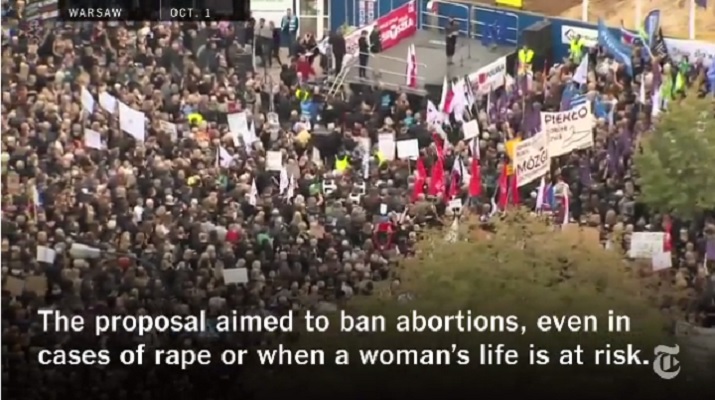
The New York Times spotlightsabortion-rights activism against a proposed abortion ban in Poland.

Video Round Up

KUTV/KEYE's Adele Uchida covers a Texas proposal that will require fetal tissue to be buried or cremated.

Video Round Up

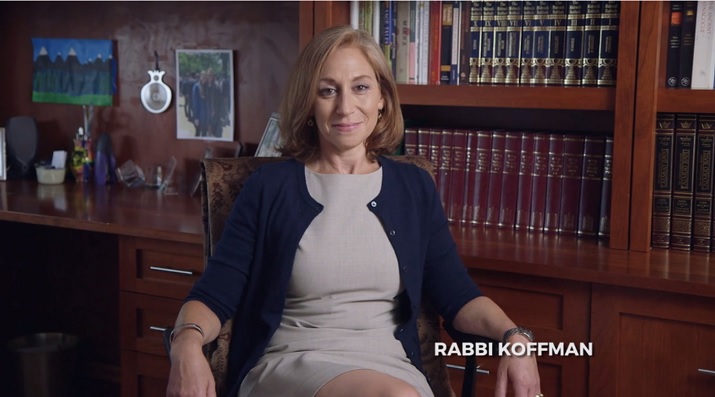
In this clip, Rabbi Lori Koffman discusses the intersection of her faith and her advocacy work for abortion rights, stating, "I'm a woman, I'm a mother, I'm a rabbi, I'm a Jew, I'm an American. And all those pieces of me call me to do this work."

Video Round Up

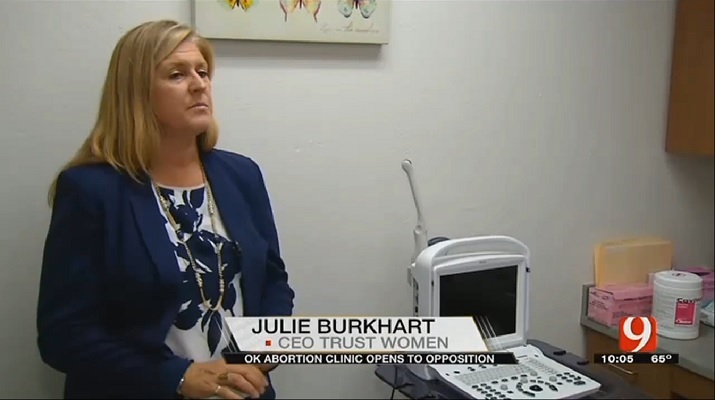
KWTV's Grant Hermes covers the opening of a new reproductive health center in Oklahoma City, which previously had been the largest metropolitan area without an abortion clinic.

Video Round Up

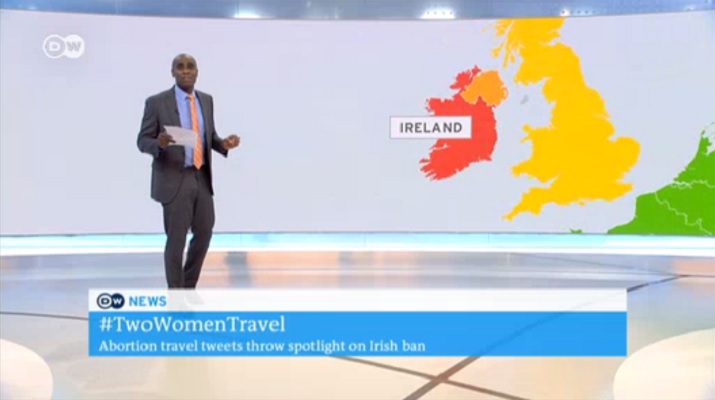
Deutsche Welle's Carl Nasman spotlights @TwoWomenTravel, a Twitter account documenting the experience of two Irish women who traveled to Great Britain to access abortion care for one of the women.

Video Round Up

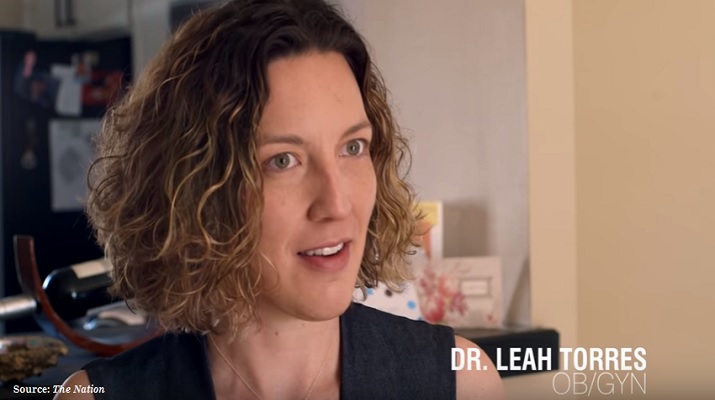
In this clip, The Nation profiles Leah Torres, an OB-GYN who shares her "career changing, life changing" work as an abortion provider in Utah, a state that imposes several restrictions on abortion care.

See All

Datapoints

In this map, the Center for American Progress' "ThinkProgress" highlights the seven states that direct Temporary Assistance for Needy Families (TANF) funds toward crisis pregnancy centers (CPCs), which use misleading tactics to dissuade women from seeking abortion care.

Datapoints

In this map, the Guttmacher Institute spotlights the 18 states that since 2011 have enacted policies that block funding for contraception or other health care services from being allocated to organizations that provide abortion care or are affiliated with abortion providers.

Datapoints

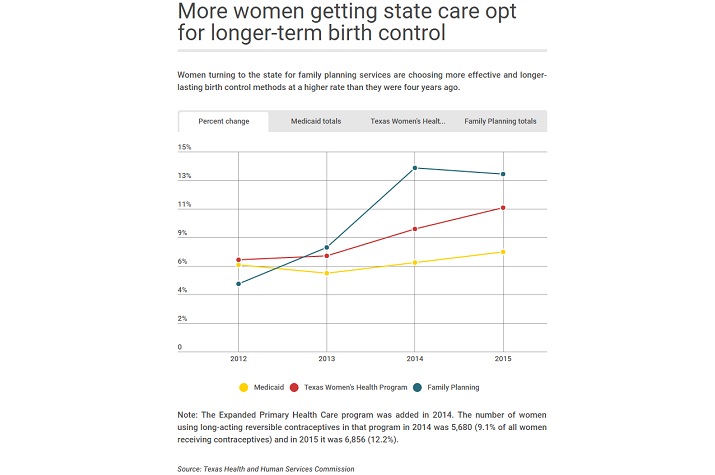
In this infographic, the Texas Health and Human Services Commission (HHSC) outlines data showing that the percentage of Texas women opting for long-acting reversible contraception (LARC) through three state-operated health programs increased between 2012 and 2013.

Datapoints

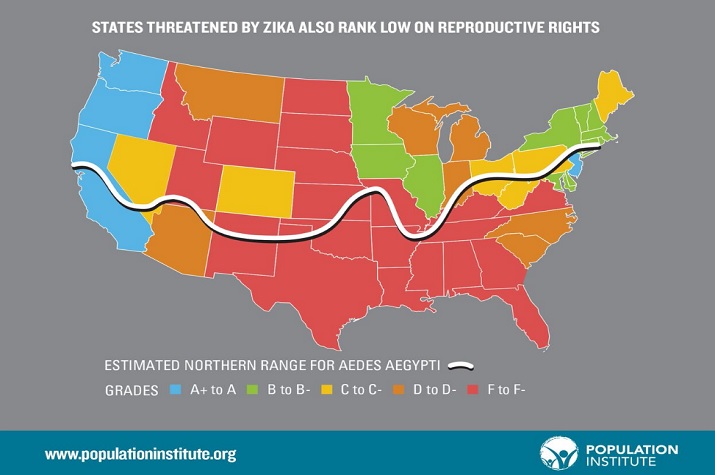
In this map, the Population Institute illustrates how many of the states at risk of the Zika virus scored poorly on measures of reproductive rights and health.

Datapoints

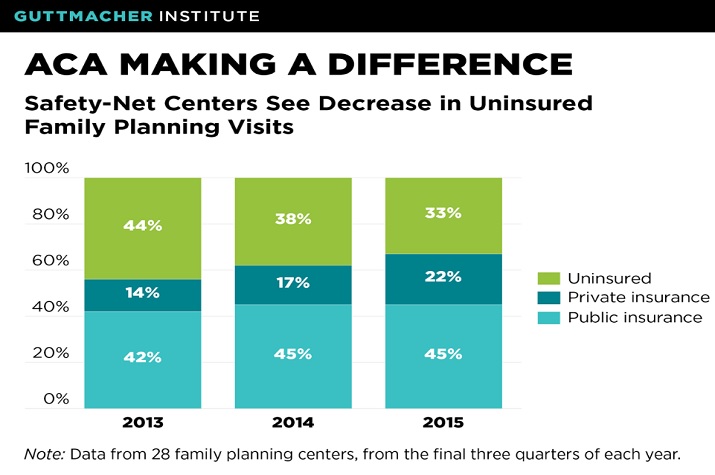
In this infographic, the Guttmacher Institute spotlights the increased proportion of insured visits at 28 Title-X supported family planning centers following the implementation of the Affordable Care Act (ACA) (PL 111-148).

Datapoints

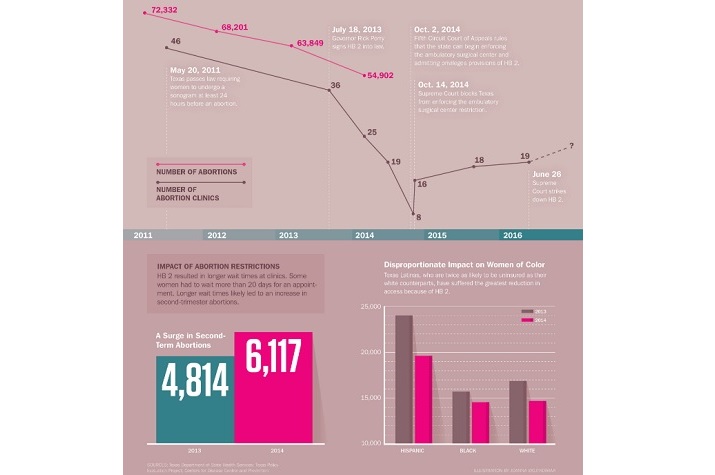
In this infographic, the Texas Observer compiled information from the Texas Department of State Health Services, the Texas Policy Evaluation Project and the Centers for Disease Control and Prevention to provide a snapshot of abortion access in Texas.

Datapoints

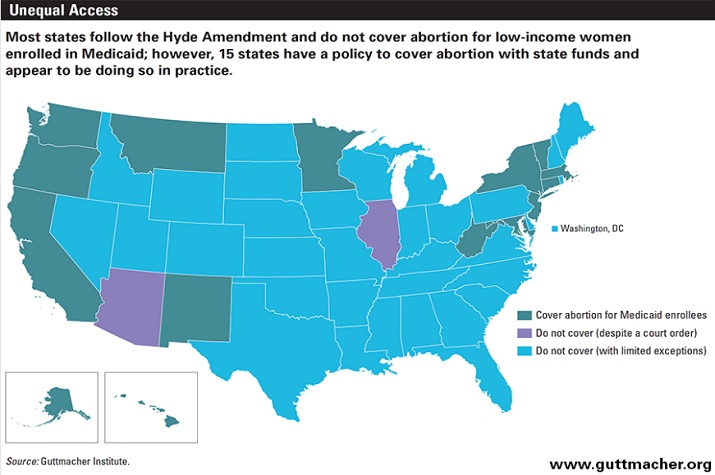
In this map, the Guttmacher Institute highlights the effects of the Hyde Amendment, an appropriations rider that bars federal Medicaid funding from covering abortion care except in the limited cases of rape, incest and life endangerment.

Datapoints

In this infographic, the Guttmacher Institute tracks recent trends in state abortion laws.

Datapoints

In this map, the Kaiser Family Foundation spotlights five states and Washington, D.C., which have each enacted policies designed to facilitate access to contraception.

Datapoints

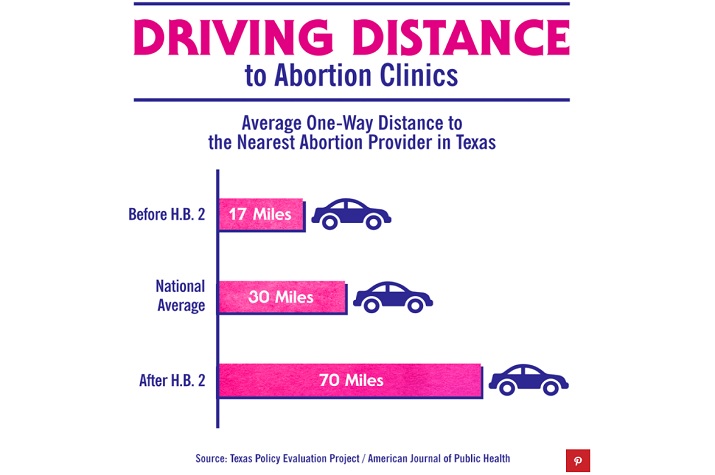
In this gif, Cosmopolitan shares research from the Texas Policy Evaluation Project showing that the average distance a woman in Texas must drive to access the nearest abortion clinic in the state has increased following the implementation of the state's omnibus antiabortion-rights law (HB 2).

See All

At a Glance

"A woman's ability to end her pregnancy too often depends on where she lives, her age and how much money is in her pocket."

— Marcela Howell of In Our Own Voice: National Black Women's Reproductive Justice Agenda, discussing ongoing disparities in women's access to abortion care on the 43rd anniversary of Roe v. Wade.

At a Glance

"If women are not free to make decisions about their own lives and health, they are not free. And if women are not free, none of us are."

— Abortion provider Warren Hern, in a STAT News opinion piece on why he continues to offer abortion care despite receiving harassment and death threats throughout his 42-year career.

At a Glance

"Not since before Roe v. Wade has a law or court decision had the potential to devastate access to reproductive health care on such a sweeping scale."

— Nancy Northup, president and CEO of the Center for Reproductive Rights, on a ruling from the 5th U.S. Circuit Court of Appeals that upheld major portions of a Texas antiabortion-rights law.