
National Partnership for Women & Families

In the News

Woman convicted under Ind. feticide law released following resentencing

Indiana officials on Sept. 1 released from prison a woman whose conviction under Indiana's feticide law was overturned in July, Rewire reports (Mason Pieklo, Rewire, 9/1).

Background on fetal homicide law

Indiana's fetal homicide law prohibits "knowingly or intentionally" terminating a pregnancy with an aim other than delivering an infant alive or removing a nonviable fetus. The law, enacted in 1979, has an exception for abortion care provided in compliance with the state's laws on abortion.

At least 38 states have feticide laws. Abortion-rights supporters argue that such laws were designed to prosecute illegal abortion providers, not pregnant women. Jill Adams, executive director of the Center on Reproductive Rights and Justice at the University of California-Berkeley School of Law, said the Indiana lawsuit marked the first instance of a state feticide law being used against a woman explicitly because of an "alleged self-induced abortion."

Case background

The woman, Purvi Patel, was arrested in July 2013 after she presented at a hospital to seek treatment for profuse bleeding resulting from the termination of a pregnancy. According to court records, Patel had ingested abortion-inducing drugs that she had obtained online. After ingesting the drugs, Patel discarded the remains of her pregnancy. Court documents show that when Patel presented at the hospital, she told doctors that she had delivered a stillborn infant.

The state alleged that Patel was 25 weeks into her pregnancy when she tried to self-induce an abortion and contended that she delivered a viable infant requiring immediate medical care.

Last year, Patel was convicted of neglect of a dependent resulting in death, as well as a charge under the feticide law for terminating her pregnancy. Although neither conviction carries a mandatory prison sentence, Judge Elizabeth Hurley sentenced Patel to six years on the feticide charge and to 30 years on the neglect charge, with 10 years of the latter charge suspended. Patel was serving the sentences concurrently.

In July, the Indiana Court of Appeals overturned the feticide conviction, ruling that that the feticide statute was not meant to be used against a pregnant woman who terminates her own pregnancy. While the appeals court acknowledged Patel's argument that the neglect conviction conflicted with the feticide conviction, it dismissed Patel's argument that the neglect conviction should be overturned (Women's Health Policy Report, 7/25). The state's Attorney General Office opted not to appeal the decision.

Latest developments

In a ruling on Wednesday, Hurley called for Patel's immediate release from prison after she resentenced Patel to a time shorter than Patel has already served.

According to the AP/Sacramento Bee, Hurley gave Patel a sentence of 18 months under the neglect charge and said she would not have to be on parole following her release (AP/Sacramento Bee, 8/31).

Video Round Up

CBS Austin's Adela Uchida covers a rally protesting a Texas proposal that would require burial or cremation of fetal remains.

Video Round Up

NBC2 News' Heather Turco covers arguments before the Florida Supreme Court regarding an injunction against a 24-hour mandatory delay law (HB 633).

Video Round Up

In this clip, NY 1's Natalie Duddridge covers Planned Parenthood's centennial celebration at New York City Hall.

Video Round Up

USA Today covers a new report from the Centers for Disease Control and Prevention (CDC) that found the "most commonly reported sexually transmitted [infections] [STIs] reached an all-time high in 2015."

Video Round Up

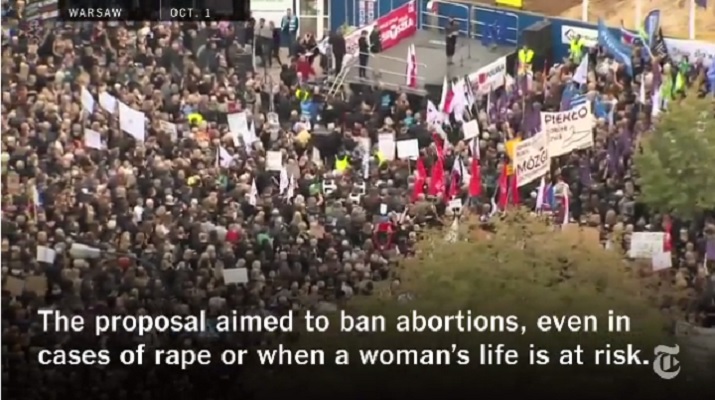
The New York Times spotlightsabortion-rights activism against a proposed abortion ban in Poland.

Video Round Up

KUTV/KEYE's Adele Uchida covers a Texas proposal that will require fetal tissue to be buried or cremated.

Video Round Up

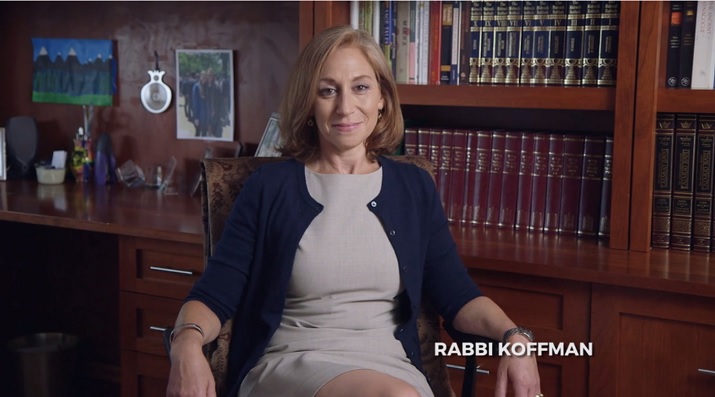
In this clip, Rabbi Lori Koffman discusses the intersection of her faith and her advocacy work for abortion rights, stating, "I'm a woman, I'm a mother, I'm a rabbi, I'm a Jew, I'm an American. And all those pieces of me call me to do this work."

Video Round Up

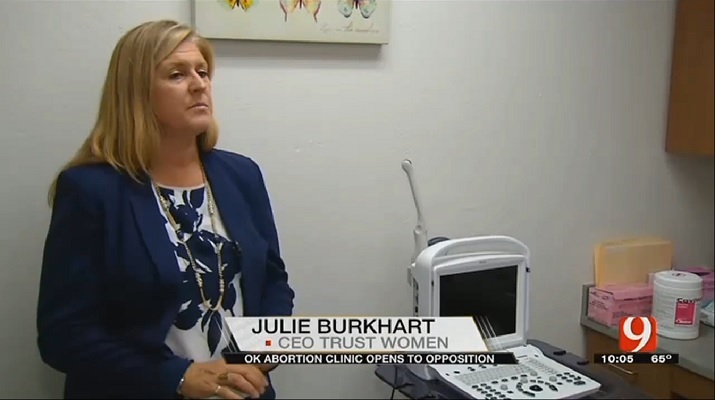
KWTV's Grant Hermes covers the opening of a new reproductive health center in Oklahoma City, which previously had been the largest metropolitan area without an abortion clinic.

Video Round Up

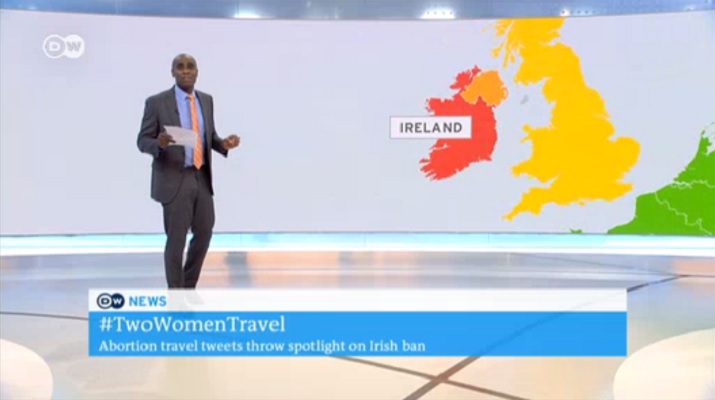
Deutsche Welle's Carl Nasman spotlights @TwoWomenTravel, a Twitter account documenting the experience of two Irish women who traveled to Great Britain to access abortion care for one of the women.

Video Round Up

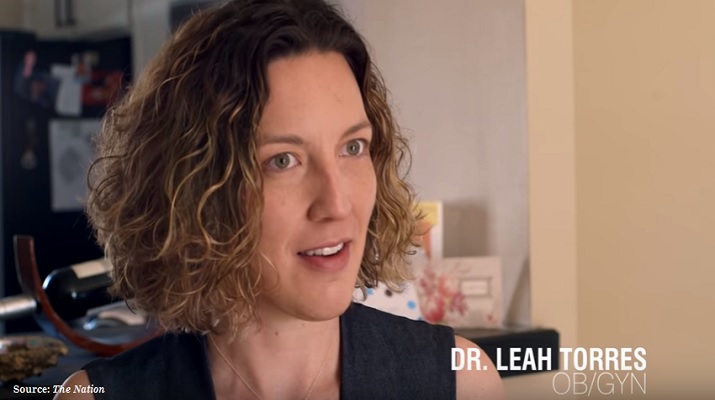
In this clip, The Nation profiles Leah Torres, an OB-GYN who shares her "career changing, life changing" work as an abortion provider in Utah, a state that imposes several restrictions on abortion care.

See All

Datapoints

In this map, the Center for American Progress' "ThinkProgress" highlights the seven states that direct Temporary Assistance for Needy Families (TANF) funds toward crisis pregnancy centers (CPCs), which use misleading tactics to dissuade women from seeking abortion care.

Datapoints

In this map, the Guttmacher Institute spotlights the 18 states that since 2011 have enacted policies that block funding for contraception or other health care services from being allocated to organizations that provide abortion care or are affiliated with abortion providers.

Datapoints

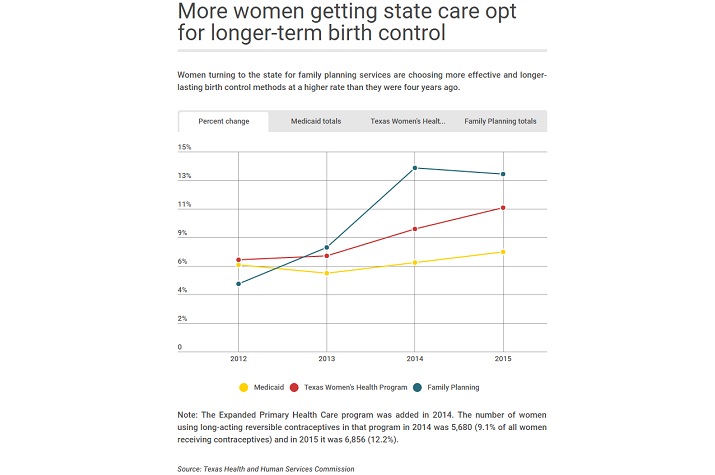
In this infographic, the Texas Health and Human Services Commission (HHSC) outlines data showing that the percentage of Texas women opting for long-acting reversible contraception (LARC) through three state-operated health programs increased between 2012 and 2013.

Datapoints

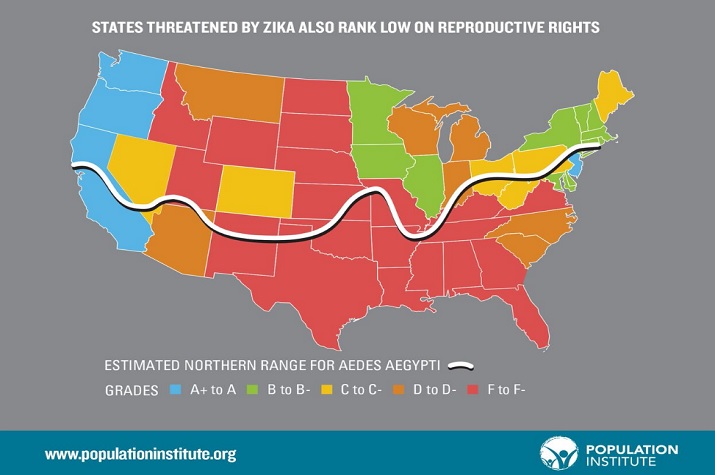
In this map, the Population Institute illustrates how many of the states at risk of the Zika virus scored poorly on measures of reproductive rights and health.

Datapoints

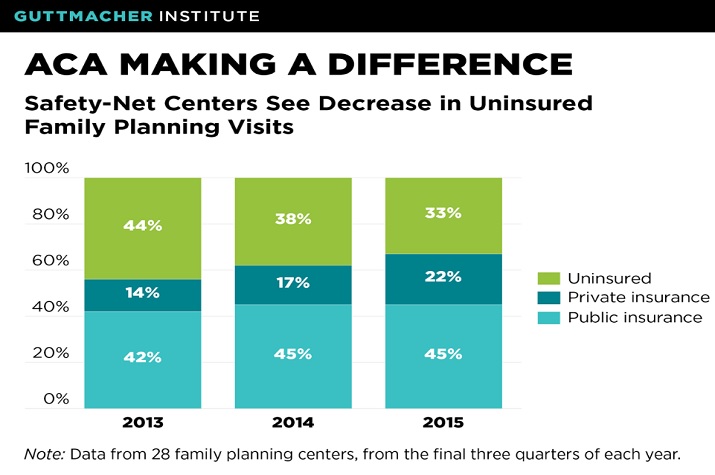
In this infographic, the Guttmacher Institute spotlights the increased proportion of insured visits at 28 Title-X supported family planning centers following the implementation of the Affordable Care Act (ACA) (PL 111-148).

Datapoints

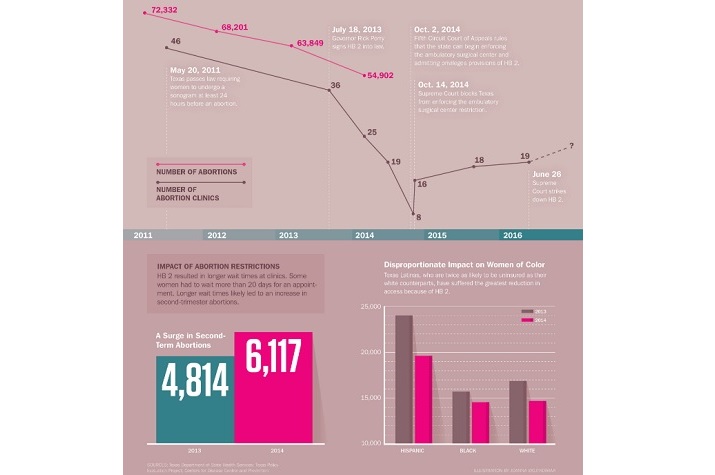
In this infographic, the Texas Observer compiled information from the Texas Department of State Health Services, the Texas Policy Evaluation Project and the Centers for Disease Control and Prevention to provide a snapshot of abortion access in Texas.

Datapoints

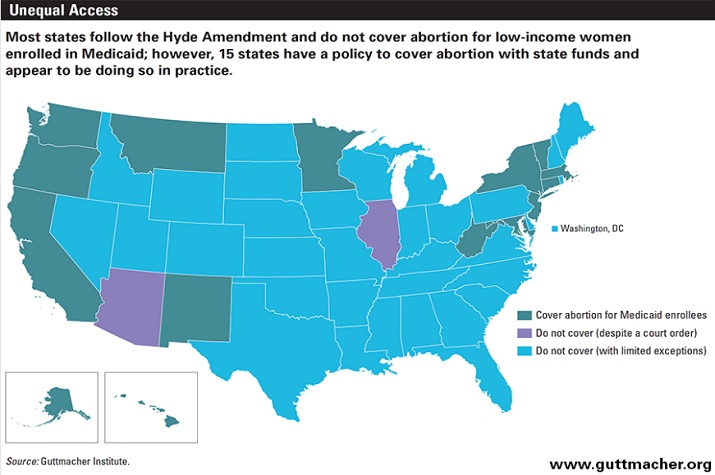
In this map, the Guttmacher Institute highlights the effects of the Hyde Amendment, an appropriations rider that bars federal Medicaid funding from covering abortion care except in the limited cases of rape, incest and life endangerment.

Datapoints

In this infographic, the Guttmacher Institute tracks recent trends in state abortion laws.

Datapoints

In this map, the Kaiser Family Foundation spotlights five states and Washington, D.C., which have each enacted policies designed to facilitate access to contraception.

Datapoints

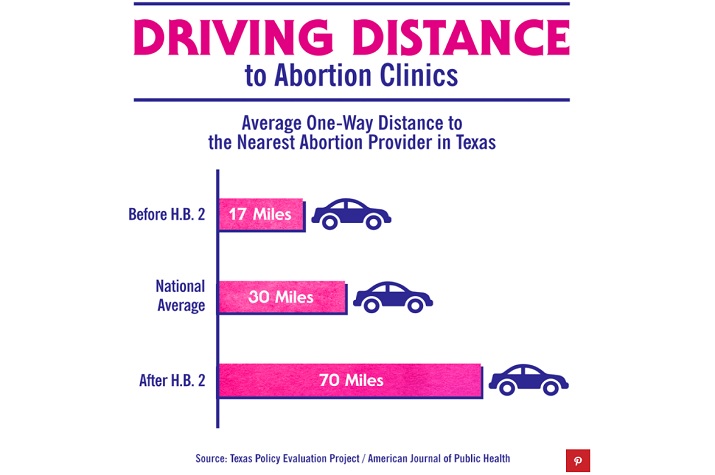
In this gif, Cosmopolitan shares research from the Texas Policy Evaluation Project showing that the average distance a woman in Texas must drive to access the nearest abortion clinic in the state has increased following the implementation of the state's omnibus antiabortion-rights law (HB 2).

See All

At a Glance

"A woman's ability to end her pregnancy too often depends on where she lives, her age and how much money is in her pocket."

— Marcela Howell of In Our Own Voice: National Black Women's Reproductive Justice Agenda, discussing ongoing disparities in women's access to abortion care on the 43rd anniversary of Roe v. Wade.

At a Glance

"If women are not free to make decisions about their own lives and health, they are not free. And if women are not free, none of us are."

— Abortion provider Warren Hern, in a STAT News opinion piece on why he continues to offer abortion care despite receiving harassment and death threats throughout his 42-year career.

At a Glance

"Not since before Roe v. Wade has a law or court decision had the potential to devastate access to reproductive health care on such a sweeping scale."

— Nancy Northup, president and CEO of the Center for Reproductive Rights, on a ruling from the 5th U.S. Circuit Court of Appeals that upheld major portions of a Texas antiabortion-rights law.