

Read the week's best commentary from bloggers at Salon and The Atlantic.
ACCESS TO CARE:
"It's a sin: Women's lives at risk thanks to holier-than-thou Catholic hospitals," Amanda Marcotte, Salon: Marcotte discusses a forthcoming study examining the effect of the Ethical and Religious Directives for Catholic Health Care Services "on the ability of physicians [at Catholic hospitals] to act according to their conscience and medical judgement." She writes that according to the study, "the researchers found that these directives frequently infringed on a doctor's conscience, forcing them to offer less than the best standard of medical care." The study found that while it was "uncommon" for providers to be denied the right to refer a patient, having to provide referrals "still caused unnecessary stress and medical risk for the patients," such as by delaying care. Marcotte writes that "what is striking is how these Catholic directives force doctors to violate their own consciences," noting, "Making women jump through hoops or even go through extra surgeries to get basic care is, to a responsible physician, unconscionable behavior." She continues, "It's ironic, because the [antiabortion-rights] movement has seized on the idea of 'conscience' as a weapon to use in their war on reproductive health care." Citing legislation (S 304) passed by the House that would grant "a whole range of people ... ownership over a woman's health care decisions," including her employer, Marcotte writes that conservative lawmakers believe the "church, far-away bishops, [and] the CEO of your company ... know better than you or your doctor what's best for you" (Marcotte, Salon, 8/5).
Zika:
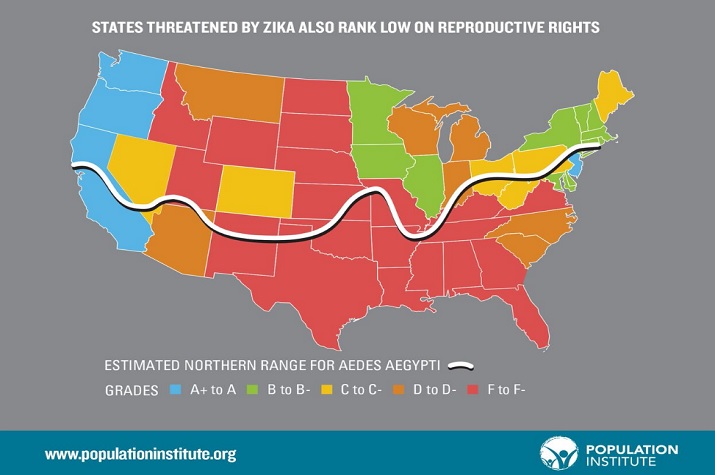
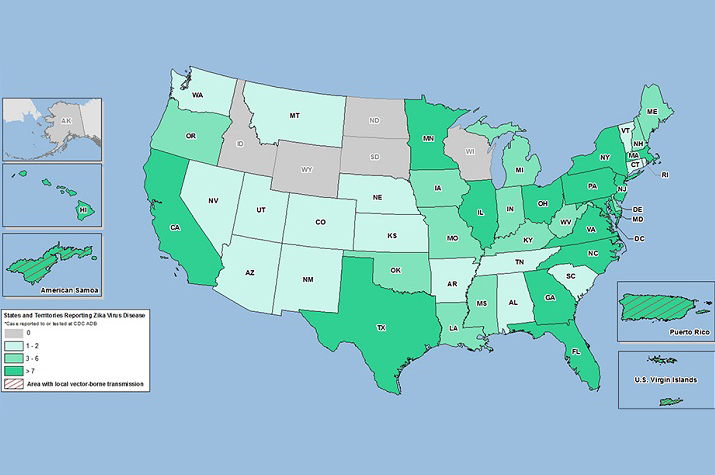
"Pregnant in Miami with Zika on the loose," Liz Tracy, The Atlantic: Tracy, a pregnant woman who lives near a Miami neighborhood where the country's first local Zika transmissions were reported, discusses how the fear of contracting Zika for her and other pregnant women in the area is amplified by insufficient response efforts. For example, she cites several barriers to obtaining a diagnostic test and notes that if a pregnant women whose fetus has been affected by Zika wished to obtain an abortion, Florida's "restrictive laws would pose an overwhelming emotional, practical, and financial challenge." Tracy lambasts conservative lawmakers in Congress who tried to pass Zika response legislation (HR 2577) that "would limit women's access to birth control, keep money from public programs like Planned Parenthood, and weaken environmental protections related to pesticides," noting that such "provisions would primarily hurt lower-income women." Tracy concludes, "Official guidance on Zika comes in slowly, after the news breaks, and it feels like adequate precautions weren't taken in time to protect South Floridians. Right now, it seems like all pregnant women in Miami can do is hide, and hope" (Tracy, The Atlantic, 8/5).