
National Partnership for Women & Families

In the News

Obama urges Congress to approve Zika funding; liberal senators call for lawmakers to reconvene

President Obama on Thursday renewed calls for Congress to authorize funding for a response to the Zika virus before existing funding runs out, Reuters reports (Morgan et al., Reuters, 8/4).

Background

The Zika virus is not easily diagnosed, and it does not have a cure or vaccine. It is linked to the birth defect microcephaly, a condition in which an infant is born with an abnormally small head and brain. The condition is fatal for some infants, while others experience permanent disabilities.

The White House in February called for $1.9 billion to combat the virus. However, Congress failed to send a funding measure to the president before leaving last month for a seven-week recess (Women's Health Policy Report, 8/4). In the time since Congress left for recess, Florida officials have reported 15 cases of Zika virus that were likely acquired locally (Ehley, Politico, 8/4). As of Aug. 3, CDC reports there have been 1,825 cases of Zika in the United States, of which 1,818 are travel-related (CDC, "Case Counts in the US," accessed 8/5).

Earlier this week, the Obama administration said $201 million of the $374 million reallocated in April for Zika has been spent (Women's Health Policy Report, 8/4).

Dwindling funds could hinder vaccine development

In a pair of letters to Congress earlier this week, HHS Secretary Sylvia Mathews Burwell noted that NIH's Zika funding is expected to run out by the end of August. Burwell explained that if NIH does not receive additional funding, it cannot launch the second stage of clinical trials in early 2017 on a possible vaccine. The agency launched the first clinical trial for the vaccine on Wednesday.

"A delay in this stage of development will delay when a safe and effective Zika vaccine is available to the American public," Burwell wrote, adding that insufficient funding also could impede work on other vaccines, diagnostics and therapeutics, as well as mosquito control efforts.

In addition, Zika funding for the Biomedical Advanced Research and Development Authority (BARDA), another federal agency involved in vaccine development, is expected to be depleted by the end of August. According to The Hill, BARDA originally received $85 million in Zika response funding (Ferris [1], The Hill, 8/4).

Obama highlights need for funding

At a news conference on Thursday, Obama cited the Florida cases and criticized Congress for failing to pass Zika response funding. Calling the Florida cases "predicted and predictable," Obama said, "We proposed an urgent request for funding back in February. Not only did [conservative lawmakers] not pass our request, but they worked to cut it" (Ehley, Politico, 8/4).

Obama added, "Our experts at the CDC, the folks on the front lines have been doing their best in making due by moving funds from other areas, but now the money we need to fight Zika is rapidly running out" (Reuters, 8/5). He urged U.S. residents to contact their congressional representatives and "tell them to do their job."

While Obama reiterated health officials' predictions that there would not be a widespread outbreak of Zika in the United States, he cautioned that "there will be more cases" and warned that without appropriate funding, "the possibility of a vaccine could be delayed" (Ehley, Politico, 8/4).

Liberal lawmakers call for action

In related news, a group of more than 40 liberal senators on Thursday sent a letter to conservative congressional leaders, urging them to "immediately" end the recess so that lawmakers can approve new Zika funding, The Hill reports. Lawmakers addressed the letter to Senate Majority Leader Mitch McConnell (R-Ky.) and House Speaker Paul Ryan (R-Wis.) (Ferris [2], The Hill, 8/4).

The liberal senators wrote, "The problems the American people confront do not disappear simply because Congress does. In the case of the rapidly expanding Zika crisis, the problem has grown significantly worse since the [conservative]-led Congress went on recess." They continued, "We urge you to immediately cancel the remainder of the congressional recess and get back to work to help the American public, especially women and families, amidst this crisis" (Kim, Politico, 8/4).

In their letter, the liberal senators encouraged fellow lawmakers to resume negotiations on a $1.1 billion Zika response measure (SA 3900) that passed in the Senate earlier this year with support from liberal and conservative lawmakers. After the Senate approved SA 3900, some conservative lawmakers instead urged support for a separate measure (HR 2577) that, among other provisions, would not allow Zika funding to go to Planned Parenthood. Public health experts have noted that the potential for sexual transmission of Zika exacerbates the need for funding for contraception (The Hill [2], 8/4).

The liberal senators continued, "It is simply unacceptable that efforts to counter the spread of Zika and develop a vaccine are being held hostage by [conservative] partisanship." They wrote, "Americans expect Congress to do its job" (Kim, Politico, 8/4).

Video Round Up

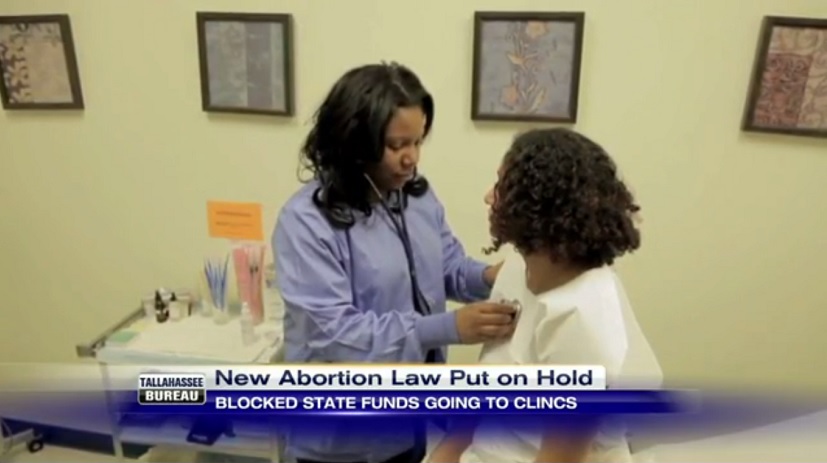
In this clip, WJHG's Matt Galka discusses Florida's decision not to appeal a federal court order currently blocking parts of a state omnibus antiabortion-rights law (HB 1411) from taking effect.

Video Round Up

Marissa Silver, a reporter with Coastal Television's "Your Alaska Link," shares the Alaska Supreme Court's decision to strike down a state law that required a minor's parent to be notified of her decision to seek abortion care.

Video Round Up

Fox 13's Matt McDonald reports on a ruling by a panel of the 10th U.S. Circuit Court of Appeals that blocks Utah Gov. Gary Herbert (R) from cutting funding to Planned Parenthood.

Video Round Up

Richard Besser, ABC News' chief health and medical editor, discusses a case in which a woman in New York City transmitted the Zika virus to her male partner, the first such occurrence reported in the United States.

Video Round Up

Ryan Braschler of WEHT's "Eyewitness News" covers Indiana University's (IU) lawsuit against fetal tissue restrictions included in an Indiana antiabortion-rights law (HEA 1337).

Video Round Up

WHNT 19 News' Kristen Conner explains what the Supreme Court's ruling striking down two provisions of a Texas omnibus antiabortion-rights law (HB 2) could mean for two antiabortion-rights measures in Alabama.

Video Round Up

KIRO 7's Essex Porter discusses the Supreme Court's decision not to review a 9th U.S. Circuit Court of Appeals ruling that upheld a Washington state regulation requiring pharmacies to dispense emergency contraception (EC).

Video Round Up

In this clip, MSNBC's Rachel Maddow speaks with Nancy Northup, the president and CEO of the Center for Reproductive Rights, about the ramifications of the Supreme Court's ruling in Whole Woman's Health v. Hellerstedt to strike down two contested provisions in Texas' omnibus antiabortion-rights law (HB 2).

Video Round Up

RTV6's Katie Heinz reports on arguments held Tuesday in federal court over an Indiana antiabortion-rights law (HEA 1337) that Planned Parenthood of Indiana and Kentucky has challenged.

Video Round Up

In this short documentary, filmmaker Dawn Porter profiles Yashica Robinson, one of the few physicians in Alabama who provides abortion care.

See All

Datapoints

In this infographic, the Guttmacher Institute tracks recent trends in state abortion laws.

Datapoints

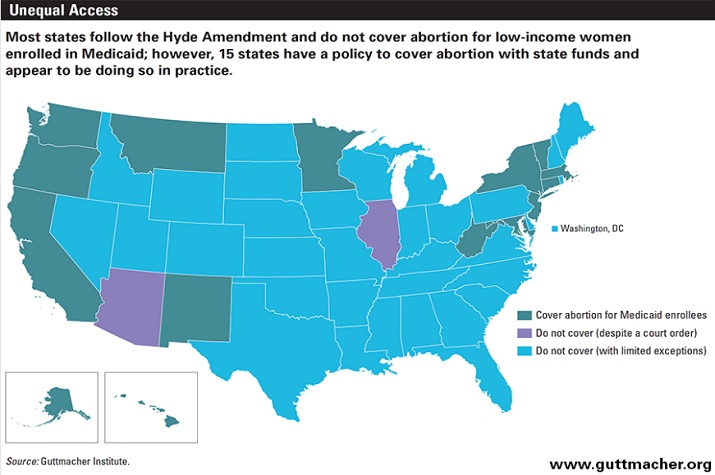
In this map, the Guttmacher Institute highlights the effects of the Hyde Amendment, an appropriations rider that bars federal Medicaid funding from covering abortion care except in the limited cases of rape, incest and life endangerment.

Datapoints

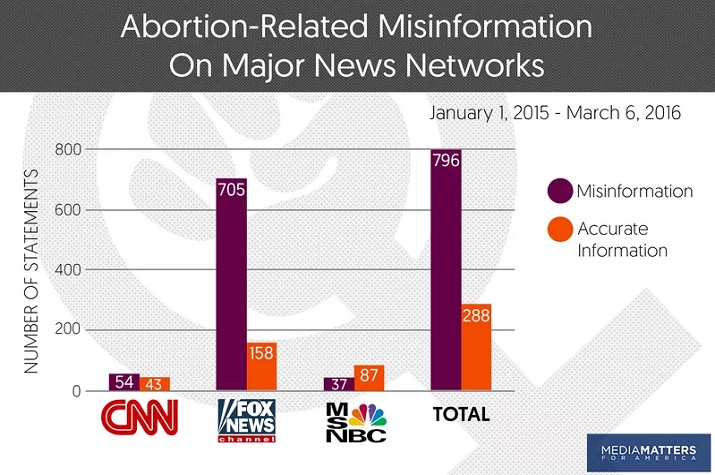
In this chart, Media Matters highlights the findings of a study showing how evening and primetime news programs airing on cable news conveyed more inaccurate than accurate statements about abortion.

Datapoints

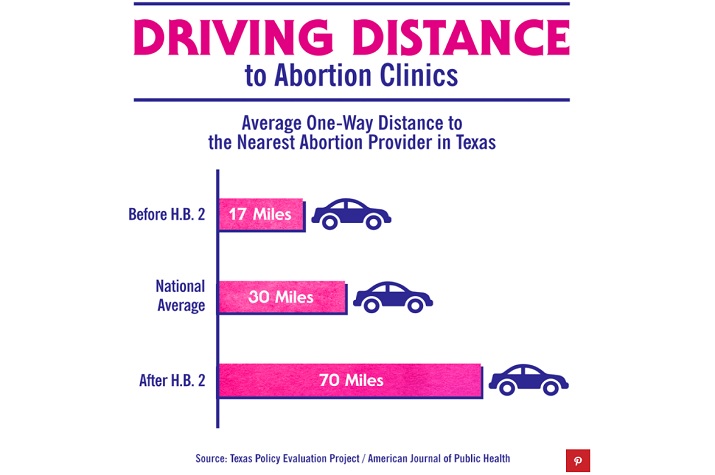
In this gif, Cosmopolitan shares research from the Texas Policy Evaluation Project showing that the average distance a woman in Texas must drive to access the nearest abortion clinic in the state has increased following the implementation of the state's omnibus antiabortion-rights law (HB 2).

Datapoints

In this map, the Kaiser Family Foundation spotlights five states and Washington, D.C., which have each enacted policies designed to facilitate access to contraception.

Datapoints

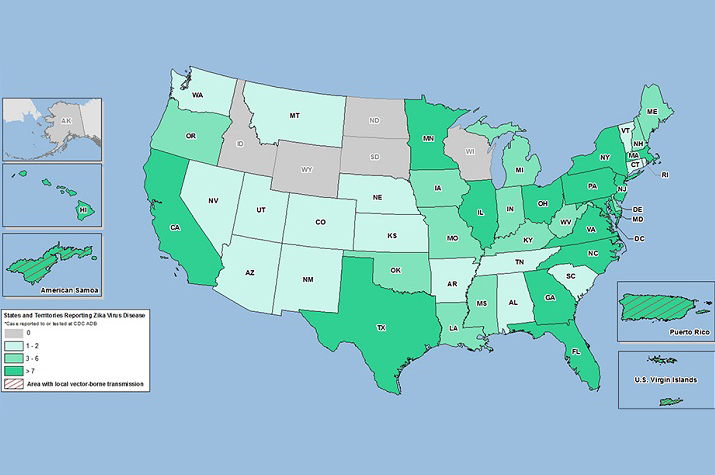
In this map, CDC documents the laboratory-confirmed cases of the Zika virus reported in the United States and U.S. territories.

Datapoints

In this infographic, the Guttmacher Institute highlights research showing how an increasing proportion of women who obtain abortion care in the United States are lower-income.

Datapoints

In this map, the New York Times highlights the regions in the United States where mosquitos carrying the Zika virus -- which has been linked to a fetal brain defect -- are most likely to spread during the upcoming spring and summer seasons.

Datapoints

This map, from the Center for Reproductive Rights (CRR), spotlights abortion laws around the world.

Datapoints

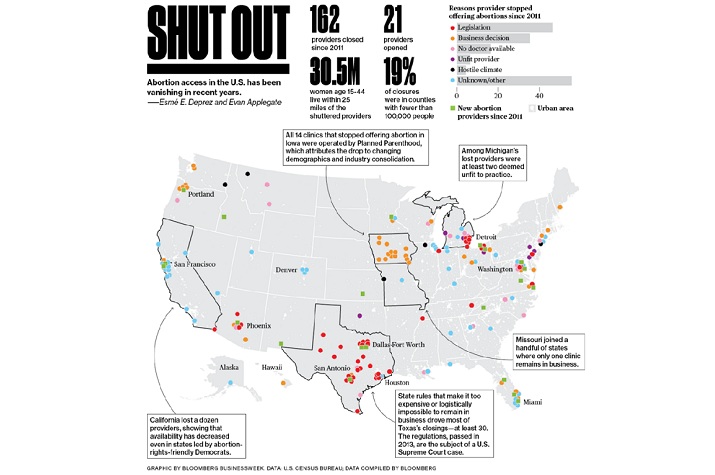
This map, from Bloomberg Business, highlights the rapid decline in abortion access in the United States since 2011.

See All

At a Glance

"A woman's ability to end her pregnancy too often depends on where she lives, her age and how much money is in her pocket."

— Marcela Howell of In Our Own Voice: National Black Women's Reproductive Justice Agenda, discussing ongoing disparities in women's access to abortion care on the 43rd anniversary of Roe v. Wade.

At a Glance

"If women are not free to make decisions about their own lives and health, they are not free. And if women are not free, none of us are."

— Abortion provider Warren Hern, in a STAT News opinion piece on why he continues to offer abortion care despite receiving harassment and death threats throughout his 42-year career.

At a Glance

"Not since before Roe v. Wade has a law or court decision had the potential to devastate access to reproductive health care on such a sweeping scale."

— Nancy Northup, president and CEO of the Center for Reproductive Rights, on a ruling from the 5th U.S. Circuit Court of Appeals that upheld major portions of a Texas antiabortion-rights law.