
National Partnership for Women & Families

In the News

Texas women increasingly sought out-of-state abortion care after HB 2, analysis finds

The number of Texas women traveling out of state to obtain abortion care has increased significantly since the passage of the state's omnibus antiabortion-rights law (HB 2), according to a recent analysis, Rewire reports (Wilson, Rewire, 6/22). One provision of HB 2 required abortion clinics in the state to meet the same building standards as ambulatory surgical centers, and the other required abortion providers to have admitting privileges at local hospitals.

The Supreme Court today issued a ruling in a case,Whole Woman's Health v. Hellerstedt, challenging these two provisions (Women's Health Policy Report, 6/24). In the ruling, the high court struck down the provisions as unconstitutional (Women's Health Policy Report, 6/27).

Analysis details

The Rewire analysis was based on data from neighboring states. Texas health officials have not released data on the number of abortions provided in the state since HB 2 was implemented (Rewire, 6/22).

Earlier this month, the American Civil Liberties Union (ACLU) of Texas sent a letter to Texas Department of State Health Services (DSHS), calling on the agency to "stop concealing" 2014 data on abortion provision in the state.

While state officials in March released preliminary data showing a 14.2 percent decline in the number of abortions provided in the state in 2014, a DSHS insider said the full 2014 abortion data have been "in limbo" since they were submitted to DSHS' legal office for final approval (Women's Health Policy Report, 6/24).

Findings

While the preliminary DSHS data show that the number of abortions in Texas has fallen, data from neighboring states show a "dramatic increase" in the number of Texas women seeking abortion care. Neighboring states include Arkansas, Kansas, Louisiana, New Mexico and Oklahoma.

Specifically, the DSHS data show that abortions in the state declined by nearly 22 percent between 2008 and 2013. The DSHS data also show that the number of women who sought abortion care out of state fell by almost 57 percent between 2008 and 2012, before HB 2 was signed into law. However, according to Rewire, that number increased in 2013, after Gov. Rick Perry (R) signed HB 2 into law.

Overall, the number of Texas women who sought out-of-state abortion care increased from 97 in 2012 to 681 in 2013, and increased again in 2014 by at least 400 women, Rewire reports. According to Rewire, data from Arkansas, Kansas, Louisiana and Oklahoma health departments show that at least 1,086 Texas women traveled to those states to access abortion care after HB 2's implementation. Of those states, Rewire reported that Louisiana saw the highest number of Texas women seeking abortion care.

Texas women also increasingly are seeking abortion care in New Mexico, where out-of-state women accounted for about 20 percent of abortion care patients in 2014. Brittany Defeo, program manager at the New Mexico Religious Coalition for Reproductive Choice, estimated that about one-third of those out-of-state women were from Texas.

Comments

Natalie St. Clair -- who works with Fund Texas Choice, a not-for-profit that helps women seeking abortion care -- said in an interview with the Texas Observer that every month, she helps about 10 women travel to New Mexico for the procedure.

Noting that many women seeking care are surprised by the obstacles they face, St. Clair said, "I hear a lot of 'I had no idea that the laws were this way. I have to go out of state?' There's a lot of shame and guilt because people think it's their fault, or they weren't prepared enough." She added, "I explain that (Texas laws) are set up this way on purpose … (They're) making abortion inaccessible on purpose."

Trisha Trigilio, staff attorney at the ACLU of Texas, said that "it's clear that this law doesn't make women safer, it forces them to travel across the Texas border to get the care they need -- and for women who can't afford to leave the state, Texas law may prevent them from seeing a doctor at all." She added, "When a woman makes the deeply personal decision to have an abortion, she needs access to safe medical care and respect for the decision she has made. HB 2 impedes that" (Rewire, 6/22).

Video Round Up

USA Today covers a new report from the Centers for Disease Control and Prevention (CDC) that found the "most commonly reported sexually transmitted [infections] [STIs] reached an all-time high in 2015."

Video Round Up

In this clip, NY 1's Natalie Duddridge covers Planned Parenthood's centennial celebration at New York City Hall.

Video Round Up

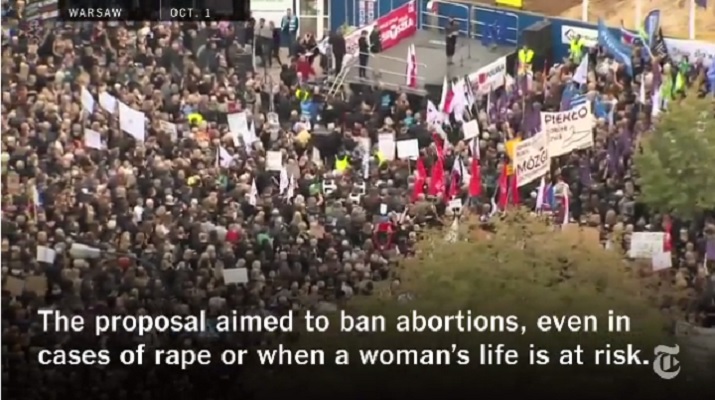
The New York Times spotlightsabortion-rights activism against a proposed abortion ban in Poland.

Video Round Up

KUTV/KEYE's Adele Uchida covers a Texas proposal that will require fetal tissue to be buried or cremated.

Video Round Up

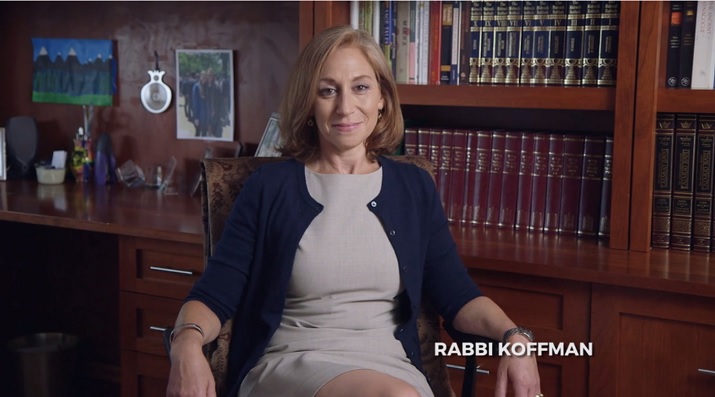
In this clip, Rabbi Lori Koffman discusses the intersection of her faith and her advocacy work for abortion rights, stating, "I'm a woman, I'm a mother, I'm a rabbi, I'm a Jew, I'm an American. And all those pieces of me call me to do this work."

Video Round Up

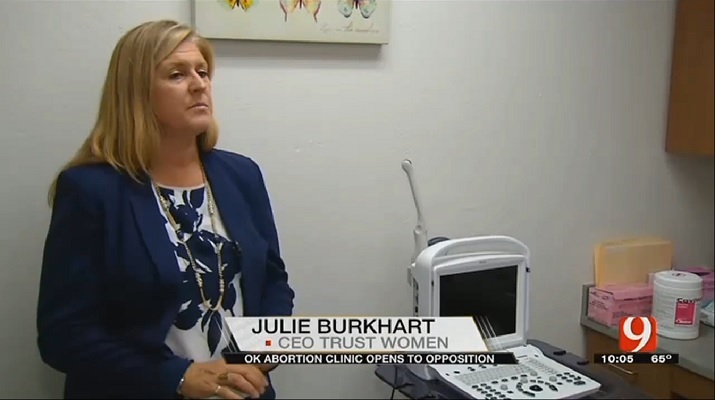
KWTV's Grant Hermes covers the opening of a new reproductive health center in Oklahoma City, which previously had been the largest metropolitan area without an abortion clinic.

Video Round Up

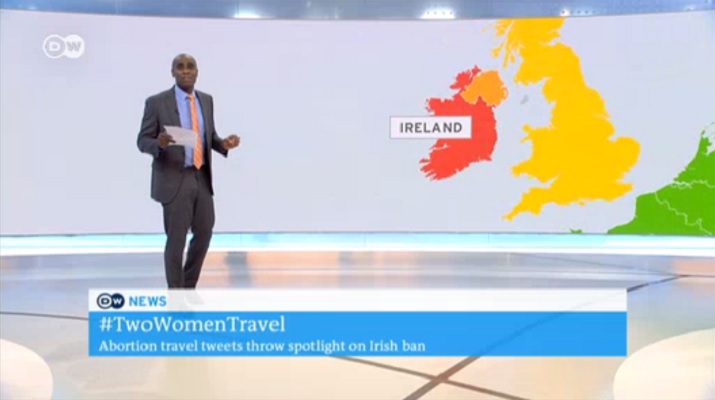
Deutsche Welle's Carl Nasman spotlights @TwoWomenTravel, a Twitter account documenting the experience of two Irish women who traveled to Great Britain to access abortion care for one of the women.

Video Round Up

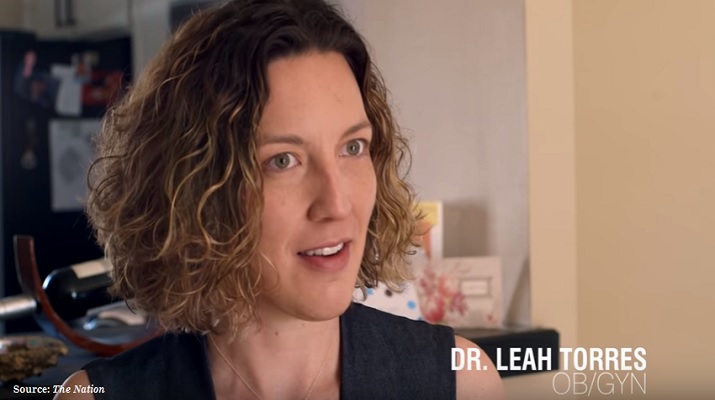
In this clip, The Nation profiles Leah Torres, an OB-GYN who shares her "career changing, life changing" work as an abortion provider in Utah, a state that imposes several restrictions on abortion care.

Video Round Up

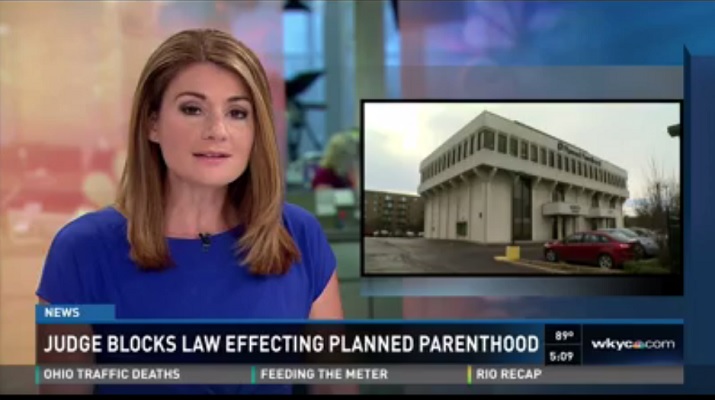
In this clip, WKYC's Maureen Kyle covers a recent decision by a federal judge to grant a permanent injunction against an Ohio law (HB 294) that would cut $1.3 million from abortion providers.

Video Round Up

In an interview with AOL Build's Emma Gray, Tracy Droz Tragos discusses her new documentary, "Abortion: Stories Women Tell," which shares women's perspectives on abortion care and abortion rights.

See All

Datapoints

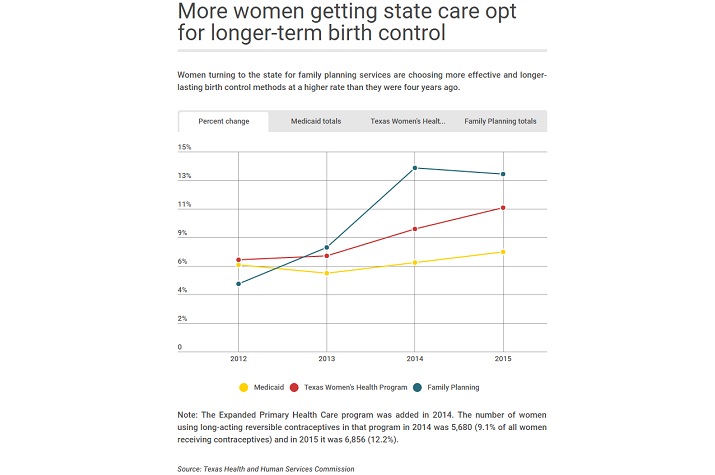
In this infographic, the Texas Health and Human Services Commission (HHSC) outlines data showing that the percentage of Texas women opting for long-acting reversible contraception (LARC) through three state-operated health programs increased between 2012 and 2013.

Datapoints

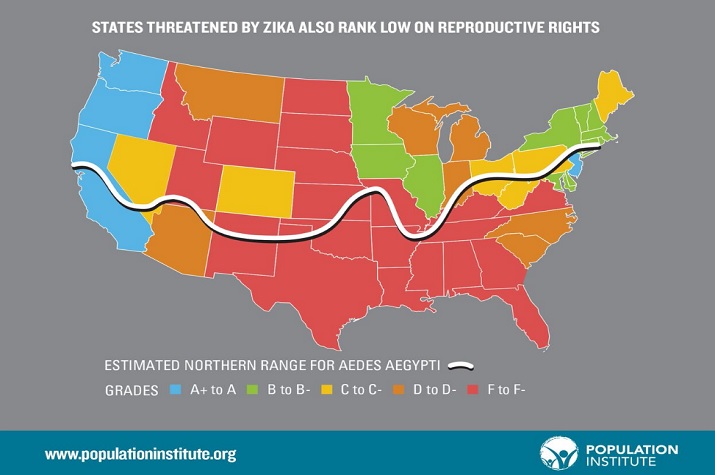
In this map, the Population Institute illustrates how many of the states at risk of the Zika virus scored poorly on measures of reproductive rights and health.

Datapoints

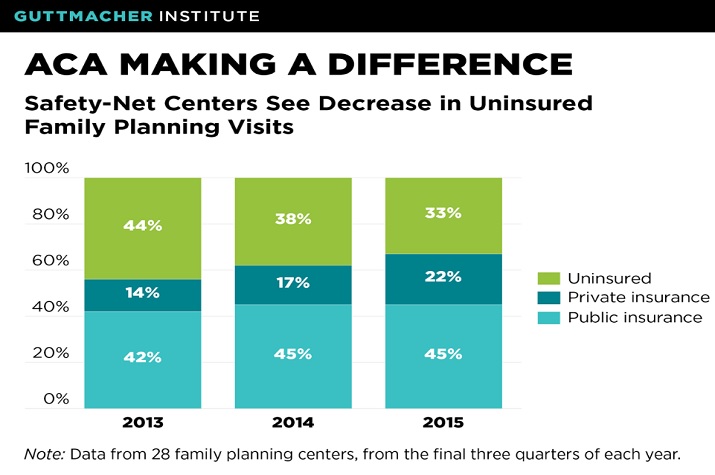
In this infographic, the Guttmacher Institute spotlights the increased proportion of insured visits at 28 Title-X supported family planning centers following the implementation of the Affordable Care Act (ACA) (PL 111-148).

Datapoints

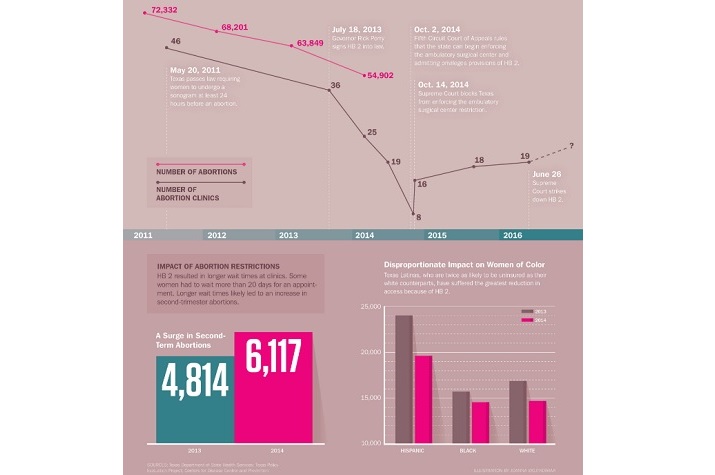
In this infographic, the Texas Observer compiled information from the Texas Department of State Health Services, the Texas Policy Evaluation Project and the Centers for Disease Control and Prevention to provide a snapshot of abortion access in Texas.

Datapoints

In this infographic, the Guttmacher Institute tracks recent trends in state abortion laws.

Datapoints

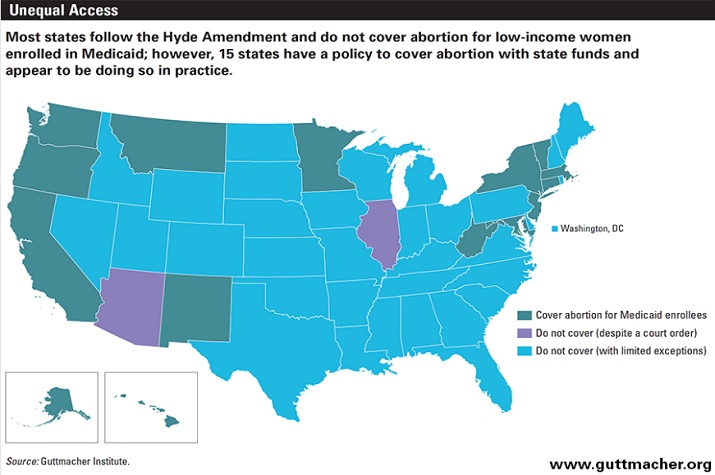
In this map, the Guttmacher Institute highlights the effects of the Hyde Amendment, an appropriations rider that bars federal Medicaid funding from covering abortion care except in the limited cases of rape, incest and life endangerment.

Datapoints

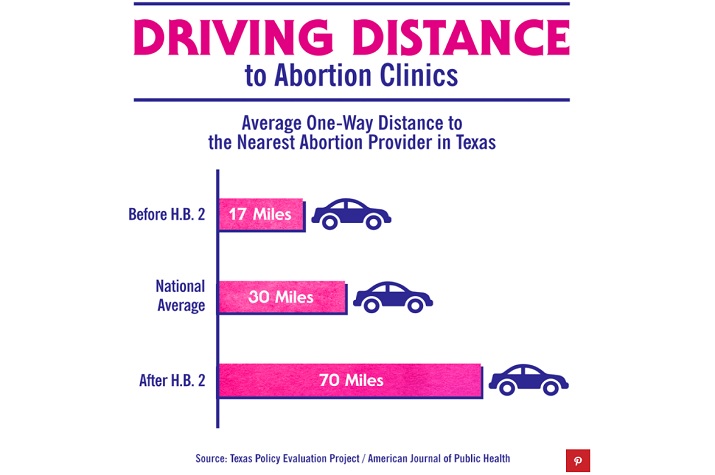
In this gif, Cosmopolitan shares research from the Texas Policy Evaluation Project showing that the average distance a woman in Texas must drive to access the nearest abortion clinic in the state has increased following the implementation of the state's omnibus antiabortion-rights law (HB 2).

Datapoints

In this map, the Kaiser Family Foundation spotlights five states and Washington, D.C., which have each enacted policies designed to facilitate access to contraception.

Datapoints

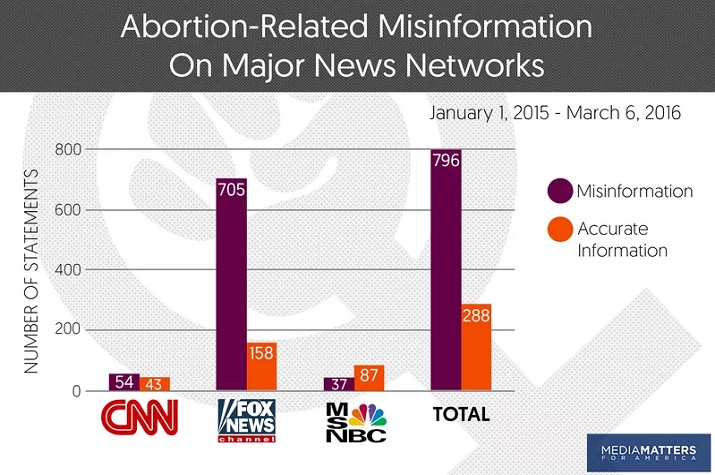
In this chart, Media Matters highlights the findings of a study showing how evening and primetime news programs airing on cable news conveyed more inaccurate than accurate statements about abortion.

Datapoints

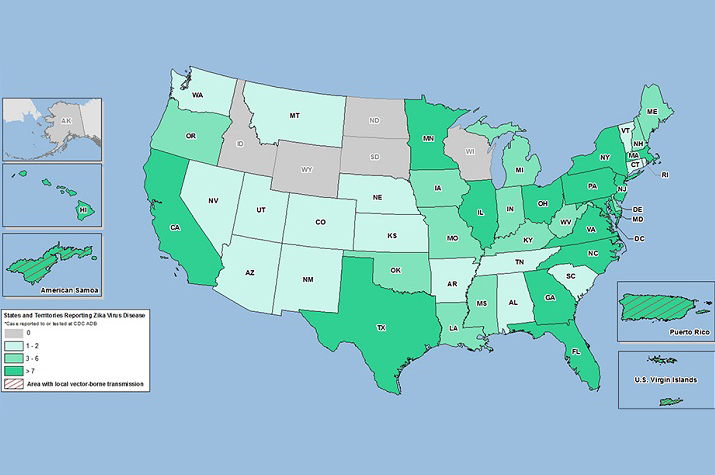
In this map, CDC documents the laboratory-confirmed cases of the Zika virus reported in the United States and U.S. territories.

See All

At a Glance

"A woman's ability to end her pregnancy too often depends on where she lives, her age and how much money is in her pocket."

— Marcela Howell of In Our Own Voice: National Black Women's Reproductive Justice Agenda, discussing ongoing disparities in women's access to abortion care on the 43rd anniversary of Roe v. Wade.

At a Glance

"If women are not free to make decisions about their own lives and health, they are not free. And if women are not free, none of us are."

— Abortion provider Warren Hern, in a STAT News opinion piece on why he continues to offer abortion care despite receiving harassment and death threats throughout his 42-year career.

At a Glance

"Not since before Roe v. Wade has a law or court decision had the potential to devastate access to reproductive health care on such a sweeping scale."

— Nancy Northup, president and CEO of the Center for Reproductive Rights, on a ruling from the 5th U.S. Circuit Court of Appeals that upheld major portions of a Texas antiabortion-rights law.