

The Obama administration and not-for-profits that hold themselves out as religious and oppose contraception on Tuesday responded to the Supreme Court's request for supplemental briefs in a lawsuit challenging an accommodation to the federal contraceptive coverage rules, the Washington Post reports.
Each side must submit a response to the other side's brief by April 20 (Barnes, Washington Post, 4/12).
Accommodation details
The contraceptive coverage rules, which are being implemented under the Affordable Care Act (PL 111-148), require most employers to offer contraceptive coverage to their workers. Houses of worship are exempt from the requirement. Not-for-profits that hold themselves out as religious, as well as certain closely held corporations, are eligible for an accommodation that ensures they do not have to pay for or directly provide the coverage for their employees. Instead, employees will be able to receive coverage directly from their insurers.
To claim the accommodation, the not-for-profits may either complete a form to send to their third-party plan administrators or send a letter to HHS stating that they object to offering contraceptive coverage in their health plans.
Legal background
Some not-for-profits that hold themselves out as religious and oppose contraception have challenged the rules in federal courts throughout the United States. Most appeals courts have dismissed the challenges, finding that the federal rules do not impose a "substantial burden" on the religious beliefs of the not-for-profits.
In March, the Supreme Court heard a consolidated appeal challenging the accommodation. In considering the appeal, the high court will determine whether the rules, with the accommodation, violate the federal Religious Freedom Restoration Act (RFRA) (PL 103-141), which requires the government to provide a "compelling reason" for measures that "substantially burden" religious beliefs. Further, under RFRA, the government must demonstrate that the measure in question is the least burdensome method of reaching the underlying goal.
During oral arguments, Solicitor General Donald Verrilli, representing HHS, said the accommodation affords "a sensible balance, respecting both the employer's religious views and the interests of their employees." Verrilli argued that the plaintiffs mischaracterize the accommodation. He explained that after an eligible not-for-profit submits its notice of objection, the government independently requires the insurer or plan administrator to provide contraceptive coverage. The coverage is delivered through a third party, not an entity the employer owns or controls, Verrilli said.
Attorneys Paul Clement and Noel Francisco represented the plaintiffs. Clement claimed that the accommodation does not allow the groups to be "conscientious objector[s]." The groups are seeking the exemption afforded to houses of worship.
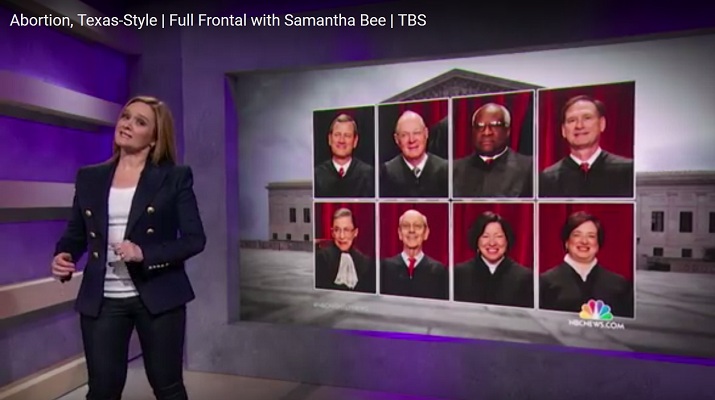
Following Justice Antonin Scalia's passing in February, eight justices heard the case. If the court votes 4-4 on the case, the lower court rulings would stand, which means the accommodation would stand in certain parts of the country and not in others. In the event of a tie, the high court could also have the case reargued once a ninth member has been appointed.
Request for supplemental briefs
After hearing oral arguments, the Supreme Court asked both sides to submit supplemental briefs "address[ing] whether and how contraceptive coverage may be obtained by petitioners' employees through petitioners' insurance companies, but in a way that does not require any involvement of petitioners beyond their own decision to provide health insurance without contraceptive coverage to their employees."
In addition, the high out outlined one possible alternative and asked the parties to weigh in on whether it would be an acceptable compromise. Under the suggested alternative, eligible not-for-profits would purchase an insurance plan for employees that does not cover contraception. Employers would not be required to take action thereafter. Instead, the insurance company would have to inform the employees of the employer's objection and "provide cost-free contraceptive coverage" that "is not paid for by petitioners and is not provided through petitioners' health plan" (Women's Health Policy Report, 3/30).
Challengers' brief
Lawyers representing the plaintiffs did not directly address whether they would accept the court's proposed alternative in their brief, Bloomberg News/Sacramento Bee reports (Stohr, Bloomberg News/Sacramento Bee, 4/12). However, the challengers repeated their earlier suggestion of stand-alone contraceptive coverage plans for employees of not-for-profits that hold themselves out as religious and oppose contraception (Radnofsky/Kendall, Wall Street Journal, 4/12).
The plaintiffs wrote that if contraceptive coverage is provided, it would only be acceptable to them if it was completely separate from their own insurance policy. According to the brief, this would require a "separate enrollment processes, insurance cards, payment sources and communication streams" (Bloomberg News/Sacramento Bee, 4/12).
HHS brief
In the Obama administration's brief, Verrilli wrote that the government's accommodation did not need modification and that the Supreme Court's proposal, while possible to implement, would "impose real costs" (Bloomberg News/Sacramento Bee, 4/12).
Further, Verrilli wrote that the existing accommodation and the high court's proposition were similar, differing primarily in that the alternative would not require written notice of not-for-profits' objection to contraceptive coverage (Washington Post, 4/12). Verrilli expressed support for requiring written notice, explaining that having the objection in writing "provides clarity and certainty for all parties whose rights and duties are affected by the accommodation" (Bloomberg News/Sacramento Bee, 4/12). Moreover, he noted that "a requirement that an employer state in writing its religious objection and eligibility for an exemption is a minimally intrusive process." (Washington Post, 4/12).
Verrilli added that if the high court chooses to modify the accommodation, it should do so in a way that definitively resolves the RFRA questions presented in the case and bars further litigation from objecting not-for-profits (Washington Post, 4/12). He wrote, "A decision that held the present accommodation inadequate in some respect without fully resolving the RFRA challenges petitioners have presented would thus inevitably lead to uncertainty and continued litigation in the lower courts" (HHS brief, accessed 4/13). He added that in the case of continued legislation, "tens of thousands of women would likely continue to be denied the coverage to which they are legally entitled" (Washington Post, 4/12).
Verrilli's brief also rejected a scheme similar to the one proposed by the objecting not-for-profits for stand-alone contraceptive coverage plans, noting that it "would impose logistical obstacles on women seeking contraceptive coverage" and was "inconsistent with federal and state insurance law."
Comment
Brigitte Amiri, senior staff attorney at the American Civil Liberties Union, noted that the challengers purported to accept the high court's proposed alternative "only by rewriting it to include so many caveats and limitations that the inevitable real-world consequence will be to leave tens of thousands of employees and students without contraception coverage" (Wall Street Journal, 4/12).