

The Supreme Court on Tuesday issued an order that calls for both plaintiffs and defendants to file supplemental briefs in a lawsuit challenging the federal contraceptive coverage rules, the New York Times reports (Liptak, New York Times, 3/29).
The parties are required to submit their initial briefs by April 12 and the response briefs by April 20 (Williams, NBC News, 3/29).
Accommodation details
The contraceptive coverage rules, which are being implemented under the Affordable Care Act (ACA) (PL 111-148), require most employers to offer contraceptive coverage to their workers. Houses of worship are exempt from the requirement, and not-for-profits that hold themselves out as religious, as well as certain closely held corporations, are eligible for an accommodation that ensures they do not have to pay for or directly provide the coverage for their employees. Instead, employees will be able to receive coverage directly from their insurers.
To claim the accommodation, the not-for-profits may either complete a form to send to their third-party plan administrators or send a letter to HHS stating that they object to offering contraceptive coverage in their health plans.
Legal background
Some not-for-profits that hold themselves out as religious and oppose contraception have challenged the rules in federal courts throughout the United States. Most appeals courts have dismissed the challenges, finding that the federal rules do not impose a "substantial burden" on the religious beliefs of the not-for-profits.
However, the 8th U.S. Circuit Court of Appeals in September 2015 upheld a lower court's preliminary injunction against the contraceptive coverage rules, as well as the lower court's decision that the federal government cannot require not-for-profits that hold themselves out as religious to comply with the rules' accommodation for such organizations. The 8th Circuit's decision countered all other rulings issued by circuit courts on the contraceptive coverage rules.
The Supreme Court granted seven cases challenging the rules an appeal, though the high court consolidated the lawsuits into a single case, Zubik v. Burwell. The seven cases granted an appeal include: Geneva College v. Burwell, Little Sisters of the Poor v. Burwell, Priests for Life v. Department of HHS, Roman Catholic Archbishop v. Burwell, Southern Nazarene University v. Burwell, East Texas Baptist University v. Burwell and Zubik.
Oral arguments
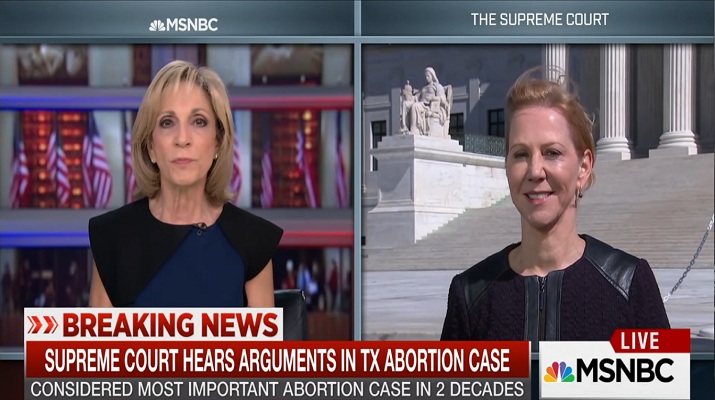
The Supreme Court heard oral arguments in the case last week. In considering the appeal, the high court will determine whether the rules, with the accommodation, violate the federal Religious Freedom Restoration Act (RFRA) (PL 103-141), which requires the government to provide a "compelling reason" for measures that "substantially burden" religious beliefs. Further, under RFRA, the government must demonstrate that the measure in question is the least burdensome method of reaching the underlying goal.
During oral arguments, Solicitor General Donald Verrilli, representing HHS, said the accommodation affords "a sensible balance, respecting both the employer's religious views and the interests of their employees." Verrilli argued that the plaintiffs mischaracterize the accommodation. He explained that after an eligible not-for-profit submits its notice of objection, the government independently requires the insurer or plan administrator to provide contraceptive coverage. The coverage is delivered through a third party, not an entity the employer owns or controls, Verrilli said.
Attorneys Paul Clement and Noel Francisco represented the plaintiffs. Clement claimed that the accommodation does not allow the groups to be "conscientious objector[s]." The groups are seeking the exemption afforded to houses of worship.
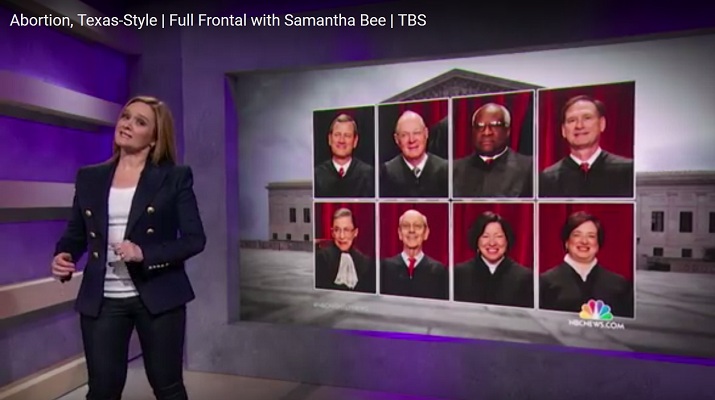
Following Justice Antonin Scalia's passing last month, eight justices heard the case. If the court votes 4-4 on the case, the lower court rulings would stand, which means the accommodation would stand in certain parts of the country and not in others. In the event of a tie, the high court could also have the case reargued once a ninth member has been appointed (Women's Health Policy Report, 3/24).
Latest developments
In Tuesday's order, which was not signed, the Supreme Court asked both sides to submit supplemental briefs "address[ing] whether and how contraceptive coverage may be obtained by petitioners' employees through petitioners' insurance companies, but in a way that does not require any involvement of petitioners beyond their own decision to provide health insurance without contraceptive coverage to their employees."
According to the Times, the high court outlined one possible alternative and asked the parties to weigh in on whether it would be an acceptable compromise. Under the suggested alternative, eligible not-for-profits would purchase an insurance plan for employees that does not cover contraception. Employers would not be required to take action thereafter. Instead, the high court said, the "petitioners' insurance company -- aware that petitioners are not providing certain contraceptive coverage on religious grounds -- would separately notify petitioners' employees that the insurance company will provide cost-free contraceptive coverage, and that such coverage is not paid for by petitioners and is not provided through petitioners' health plan."
According to the order, the petitioners under such a proposal "would have no legal obligation to provide such contraceptive coverage, would not pay for such coverage and would not be required to submit any separate notice to their insurer, to the federal government or to their employees" (New York Times, 3/29).
Comments
Gretchen Borchelt, vice president for reproductive rights and health at the National Women's Law Center, said, "I do think [the order is] an encouraging sign because clearly the justices recognize the importance of women getting birth control coverage." She added, "It puts the onus back on the employers to come up with a system."
Louise Melling, deputy legal director at the American Civil Liberties Union, said the order indicates that justices find the challengers' proposed alternatives to the accommodation unsatisfactory. As alternatives, the challengers have proposed having the government contract with private insurers to offer contraceptive coverage and the sale of standalone contraceptive coverage on the ACA's marketplaces.
Melling said, "The focus of the question suggests to me that the court has moved away from the scenarios discussed at oral argument -- that women could just go buy a plan for contraception on the exchange or the mythic insurance company that could magically offer contraceptive-only plans on the market" (Haberkorn, Politico, 3/29).