

The Supreme Court on Wednesday heard oral arguments in a case challenging an accommodation to the federal contraceptive coverage rules for not-for-profits that hold themselves out as religious and oppose contraception, the New York Times reports (Liptak, New York Times, 3/23).
A ruling is expected in June.
Accommodation details
The contraceptive coverage rules, which are being implemented under the Affordable Care Act (ACA) (PL 111-148), require most employers to offer contraceptive coverage to their workers. Houses of worship are exempt from the requirement, and not-for-profits that hold themselves out as religious, as well as certain closely held corporations, are eligible for an accommodation that ensures they do not have to pay for or directly provide the coverage for their employees. Instead, employees will be able to receive coverage directly from their insurers.
To claim the accommodation, the not-for-profits may either complete a form to send to their third-party plan administrators or send a letter to HHS stating that they object to offering contraceptive coverage in their health plans.
Legal background
Some not-for-profits that hold themselves out as religious and oppose contraception have challenged the rules in federal courts throughout the United States. Most appeals courts have dismissed the challenges, finding that the federal rules do not impose a "substantial burden" on the religious beliefs of the not-for-profits.
However, the 8th U.S. Circuit Court of Appeals in September upheld a lower court's preliminary injunction against the contraceptive coverage rules, as well as the lower court's decision that the federal government cannot require not-for-profits that hold themselves out as religious to comply with the rules' accommodation for such organizations. The 8th Circuit's decision countered all other rulings issued by circuit courts on the contraceptive coverage rules.
Case details
The Supreme Court granted seven cases challenging the rules an appeal, though the high court consolidated the lawsuits into a single case, Zubik v. Burwell. The seven cases granted an appeal include: Geneva College v. Burwell, Little Sisters of the Poor v. Burwell, Priests for Life v. Department of HHS, Roman Catholic Archbishop v. Burwell, Southern Nazarene University v. Burwell, East Texas Baptist University v. Burwell and Zubik.
In considering the appeal, the high court will determine whether the rules, with the accommodation, violate the federal Religious Freedom Restoration Act (RFRA) (PL 103-141), which requires the government to provide a "compelling reason" for measures that "substantially burden" religious beliefs. Further, under RFRA, the government must demonstrate that the measure in question is the least burdensome method of reaching the underlying goal (Women's Health Policy Report, 11/9/15).
HHS' argument
During oral arguments on Wednesday, Solicitor General Donald Verrilli said the accommodation affords "a sensible balance, respecting both the employer's religious views and the interests of their employees."
Verrilli argued that the plaintiffs mischaracterize the accommodation. He explained that after an eligible not-for-profit submits its notice of objection, the government independently requires the insurer or plan administrator to provide contraceptive coverage. The coverage is delivered through a third party, not an entity the employer owns or controls, Verrilli said.
Further, Verrilli said the plaintiffs go beyond seeking exemption from the requirement and want the government to be barred from fulfilling the unmet obligation through third parties. He said the free exercise of religion does not encompass a right to prevent others from seeking health care services. "Contraceptives are an essential component of women's health care," he stated. Verrilli explained that if the plaintiffs succeed in their challenge, women would face additional obstacles to accessing contraception. Such a result would undermine the ACA's goal "to ensure that women receive equal health coverage and to remove barriers to the use of preventative services," he said (Williams, MSNBC, 3/23).
Verrilli also disputed comments from Chief Justice John Roberts and Justice Samuel Alito that women could be directed to find other sources of insurance for contraceptive coverage, such as purchasing a second plan for contraceptive coverage off of the ACA's insurance marketplaces. Verrilli explained that no such plans exist and that the ACA prohibits such limited coverage (Barnes, Washington Post, 3/23). Further, he said "forcing [women] to purchase a second insurance policy" imposes another burden on contraceptive access, adding, "The whole point of this provision ... was to ensure that people who got health insurance would get the preventive services as part of their regular care from their regular doctor with no barriers" (Bravin/Radnofsky, Wall Street Journal, 3/23).
Similarly, Justice Sonia Sotomayor pointed out the benefits of minimizing any obstacles to contraceptive care, stating, "When contraceptives are provided to women in a seamless way ... the number of unintended pregnancies dramatically falls, as does the number of abortions."
Justice Stephen Breyer echoed concerns that requiring women to have two insurers could deter them from accessing contraception. Moreover, he disputed Roberts' claim that the accommodation allowed the government to "hijac[k]" the not-for-profits' insurance coverage, stating, "[T]his is not hijacking because there is a federal regulation that says the infrastructure of the insurers' contraceptive-related plan belongs to the insurer, not to the person who buys the insurance."
According to the Times, Verrilli agreed with Breyer, noting that the proposed alternatives would "result in significantly less use of medically necessary services" (New York Times, 3/23).
Justice Ruth Bader Ginsburg agreed with Verrilli's argument that the government had implemented an accommodation process that facilitated women's contraceptive access while respecting religious objections. "As in all things, it can't be all my way," she said, adding, "There has to be an accommodation, and that's what the government tried to do" (Washington Post, 3/23).
Challengers' argument
Attorneys Paul Clement and Noel Francisco represented the plaintiffs (New York Times, 3/23). Clement claimed that the accommodation does not allow the group to be "conscientious objector[s]," the Post reports. The groups are seeking the exemption afforded to houses of worship.
During oral arguments, Sotomayer cited an example in which pacifists went to jail over their objections to compulsory military service, casting doubt on the argument that submitting the accommodation form posed a greater burden on the Zubik plaintiffs than being sentenced to jail did for pacifists. She asked, "Why is going to jail less burdensome" than submitting the accommodation form or paying fines? (Wall Street Journal, 3/23).
Similarly, Breyer stated, "Sometimes when a religious person who's not a hermit or a monk is a member of society, he does have to accept all kinds of things" they do not believe in. He added, "Think of the Quakers who object to Vietnam. Think of the people who object to laws protecting blasphemy" (New York Times, 3/23).
Justice Elena Kagan disputed Francisco's claim that the government failed to show contraceptive coverage was a compelling need because of the law's exemptions for houses of worship, stating, "There's not a law in town that doesn't have exceptions." She added, "If you're saying that every time Congress gives an exemption to churches and synagogues and mosques that they have to open that up to all religious people, then the effect of that is that Congress just decides not to give an exemption at all" (Washington Post, 3/23).
Justice Anthony Kennedy echoed those concerns. "It's going to be very difficult for this court to write an opinion which says that once you have a church organization, you have to treat a religious university the same. I just find that very difficult to write," he said (Wall Street Journal, 3/23).
Possible outcomes
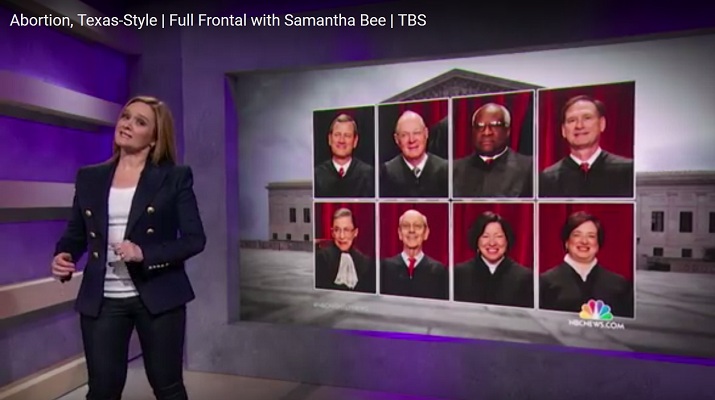
Following Justice Antonin Scalia's passing last month, eight justices heard the case. If the court votes 4-4 on the case, the lower court rulings would stand, which means the accommodation would stand in certain parts of the country and not in others (MSNBC, 3/23). In the event of a tie, the high court could also have the case reargued once a ninth member has been appointed (Washington Post, 3/23).
According to the Times, the high court's four traditionally more liberal members appeared to approve of the accommodation, while the three more conservative justices appeared to be in favor of the challengers (New York Times, 3/23). According to the Post, both Kennedy and Alito spoke favorably of the accommodation process in their opinions ruling in favor of the contraceptive coverage rules in Hobby Lobby (Washington Post, 3/23).
Comments
Debra Ness, president of the National Partnership for Women & Families, urged the Supreme Court to uphold the accommodation. She said, "Women's ability to access birth control is critical to their health, equality and economic security. That is why it is so important that every woman has coverage for birth control, no matter where she works or goes to school ... An adverse ruling [in Zubik] would allow some employers to use religion to discriminate against female employees by denying them coverage for contraception."
Noting that eight of the nine appellate courts ruled in favor of the accommodation, Ness added, "We are confident that the Supreme Court will see the challenges under Zubik v. Burwell as the dangerous attacks on women's health that they are and rule in favor of the administration. Women and families will be stronger, healthier and more secure if it does" (National Partnership release, 3/23).
Separately, Ilyse Hogue, president of NARAL Pro-Choice America, said, "Today, the Supreme Court faces a choice. Either we will empower women and families by once again standing up for the Affordable Care Act or we will roll back coverage that women are entitled to by law. Women must be empowered to make our own decisions about our bodies -- it is not only a fundamental right but also vital to our economic success. No one should have to ask their boss for permission to get the health care they need" (NARAL Pro-Choice release, 3/23).
Nancy Northup, president and CEO of the Center for Reproductive Rights (CRR), also called on the high court to uphold the accommodation. Noting that contraceptive access "is essential to women's equality and economic security," she said, "We are confident that the nation's highest court will protect a contraception coverage benefit that empowers millions of women and ensures that no woman's boss can control her personal decisions about health and family" (CRR release, 3/23).