
National Partnership for Women & Families

In the News

Blogs spotlight documentaries on black women and abortion care, 'sexual assault in the age on social media' and more

Read the week's best commentary from bloggers at Mother Jones, Huffington Post blogs and more.

ABORTION-RIGHTS AND CONTRACEPTION:

"The untold story about black women and abortions," P.R. Lockhart, Mother Jones: Lockhart writes about a new, two-part documentary from filmmaker Dawn Porter that "dives into the racial politics of abortion and dissects how race, class, gender, and religion converge and often determine the reproductive health care decisions of black women." Citing research from the Guttmacher Institute, Lockhart explains that "black women are almost five times more likely than white women to undergo abortions, a difference that has been attributed to black women's higher rates of unintended pregnancy when compared with white women, mostly because of limited access to reproductive health care services." Noting that low-income women face particular difficulties accessing abortion care, Lockhart notes that the documentary's most affecting moments involve young black women with children who opt for abortion, often for financial reasons. According to Lockhart, the stories of such women "often go unheard in political debates over abortion access." She concludes by citing Porter, who says, "'[O]ur stories, the stories of Black women, are too often lost or overlooked ... I hope this film will give new voice to the hard choices that so many women face'" (Porter, Mother Jones, 10/6).

What others are saying about abortion-rights and contraception:

~ "Why 'pro-life' is a harmful misnomer," Jennifer G. Bird, Huffington Post blogs.

~ "Teens aren't having less sex -- they're just being more responsible," Katy Howell, Ms. Magazine blog.

~ "Most state policies are failing low-income women and families," Melissa Scholke, Ms. Magazine blog.

SEXUAL AND GENDER-BASED VIOLENCE:

"Sexual assault in the age of social media," K. Sujata, Huffington Post blogs: Sujata, CEO of the Chicago Foundation for Women, spotlights a Netflix documentary, Audrie and Daisy, that "detail[s] the heart wrenching stories of sexual assault victims Audrie Pott and Daisy Coleman," who both "sustained horrifying trauma and were forced to relive the attacks day after day as classmates propagated images and videos of their assaults across the web." According to Sujata, "Between the relentless cyberbullying they faced and a lack of institutional support, Audrie committed suicide and Daisy was driven out of her hometown. In both cases, social media helped amplify victim-shaming and entrench the victim in a state of public suffering." The documentary "has rekindle[ed] the public's awareness of sexual assault, but its greater purpose is to inspire action," Sujata continues. To proactively address the situation, Sujata urges support for "advocacy campaigns striving to reform juvenile sex assault statutes"; school bystander intervention programs; the "legitimiz[ation] of evidence on social media as incriminating evidence of truly ghastly crimes," rather than as "a campaign to tarnish the victim's identity." She further emphasizes the need to "strengthen accessibility to sexual assault survivor support programs" and "hold our social media platforms accountable for inconsistently responding to sexual harassment complaints and failing to remove memes that champion violence against women" (Sujata, Huffington Post blogs, 10/6).

What others are saying about sexual and gender-based violence:

~ "WATCH: Vice President Biden goes 'undercover' to raise awareness about campus sexual assault," Lauren Young, Ms. Magazine blog.

~ "Saying sex abuse is a 'nauseating crime,' New York's cardinal announces plan to compensate victims," Sarah Pulliam Bailey, Washington Post's "Acts of Faith."

ELECTIONS & POLITICS:

"Abortion returns to the debate," Emma Green, The Atlantic: A question about faith that spurred discussion about abortion care during the vice presidential debate this week marked "an important moment in the debate, because it highlighted vulnerabilities on this issue within both parties," Green writes. For example, she notes that while the Hillary Clinton/Tim Kaine "ticket is well-designed to appeal to pro-choice supporters," their different stances on the Hyde Amendment "and their religious backgrounds ... sugges[t] they see abortion as clear-cut public-policy issue that's also a challenging moral question." Meanwhile, Republican vice presidential candidate Mike Pence's "tone stood in contrast to the way [Republican presidential nominee Donald] Trump has spoken about abortion in the past" and served as "a reminder of just how different the Republican presidential and vice-presidential candidates are." Green notes that while the exchange "likely won't change the minds of many voters," it "illustrated how much faith, and notions of morality, underpin American politics" and "show[ed] how revealing questions about religion can be in political debates." She concludes, "Treating abortion, along with other policy issues, as 'a fundamental issue of morality' is important to many voters -- and so ... it should be important to moderators, too" (Green, The Atlantic, 10/5).
Video Round Up

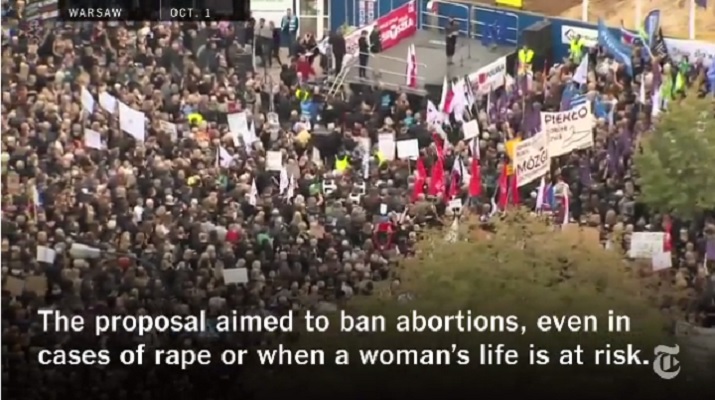
The New York Times spotlightsabortion-rights activism against a proposed abortion ban in Poland.

Video Round Up

KUTV/KEYE's Adele Uchida covers a Texas proposal that will require fetal tissue to be buried or cremated.

Video Round Up

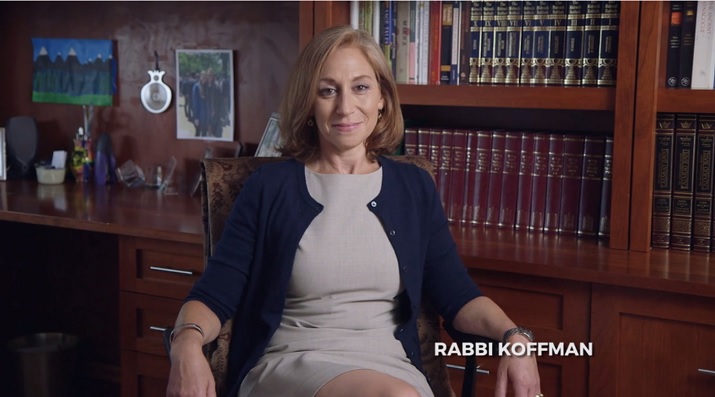
In this clip, Rabbi Lori Koffman discusses the intersection of her faith and her advocacy work for abortion rights, stating, "I'm a woman, I'm a mother, I'm a rabbi, I'm a Jew, I'm an American. And all those pieces of me call me to do this work."

Video Round Up

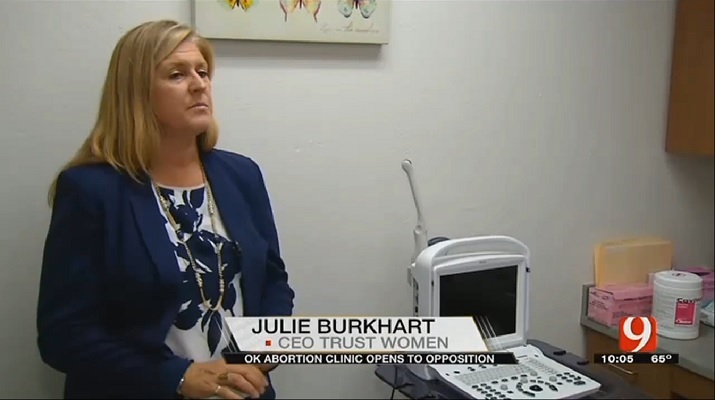
KWTV's Grant Hermes covers the opening of a new reproductive health center in Oklahoma City, which previously had been the largest metropolitan area without an abortion clinic.

Video Round Up

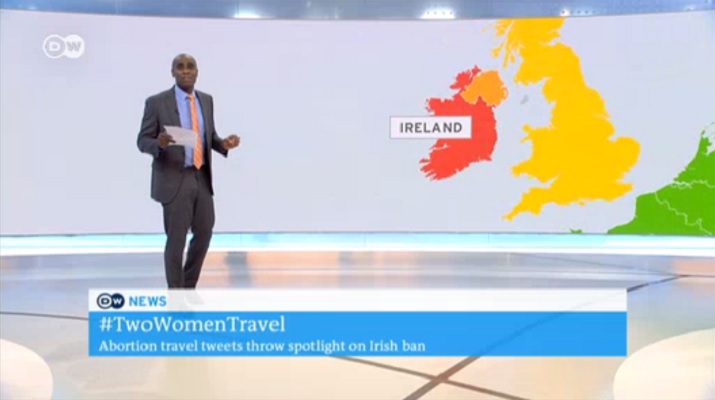
Deutsche Welle's Carl Nasman spotlights @TwoWomenTravel, a Twitter account documenting the experience of two Irish women who traveled to Great Britain to access abortion care for one of the women.

Video Round Up

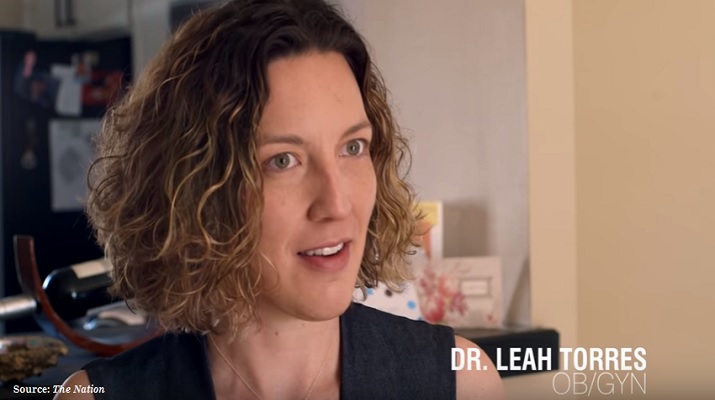
In this clip, The Nation profiles Leah Torres, an OB-GYN who shares her "career changing, life changing" work as an abortion provider in Utah, a state that imposes several restrictions on abortion care.

Video Round Up

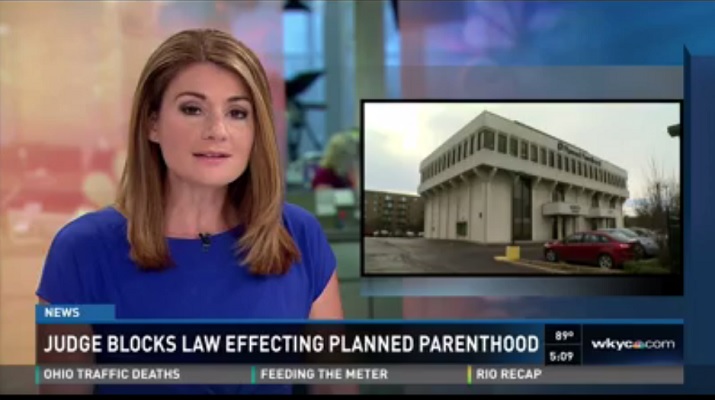
In this clip, WKYC's Maureen Kyle covers a recent decision by a federal judge to grant a permanent injunction against an Ohio law (HB 294) that would cut $1.3 million from abortion providers.

Video Round Up

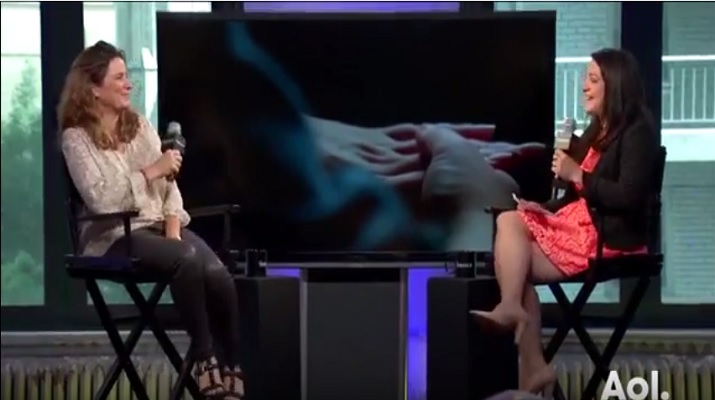
In an interview with AOL Build's Emma Gray, Tracy Droz Tragos discusses her new documentary, "Abortion: Stories Women Tell," which shares women's perspectives on abortion care and abortion rights.

Video Round Up

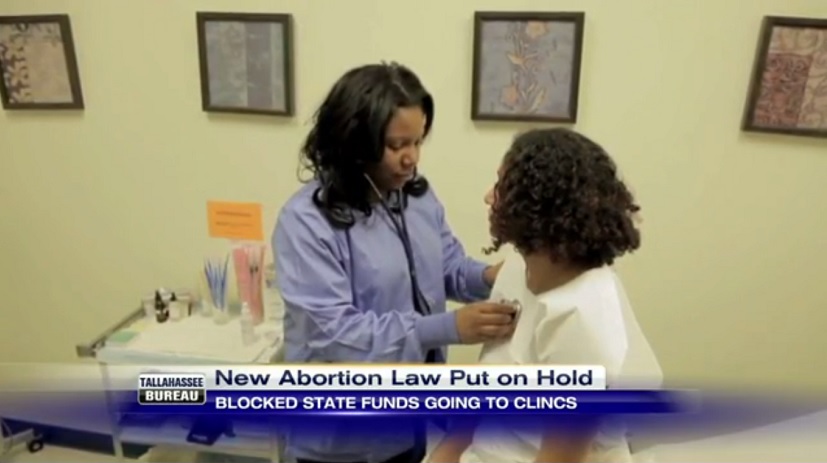
In this clip, WJHG's Matt Galka discusses Florida's decision not to appeal a federal court order currently blocking parts of a state omnibus antiabortion-rights law (HB 1411) from taking effect.

Video Round Up

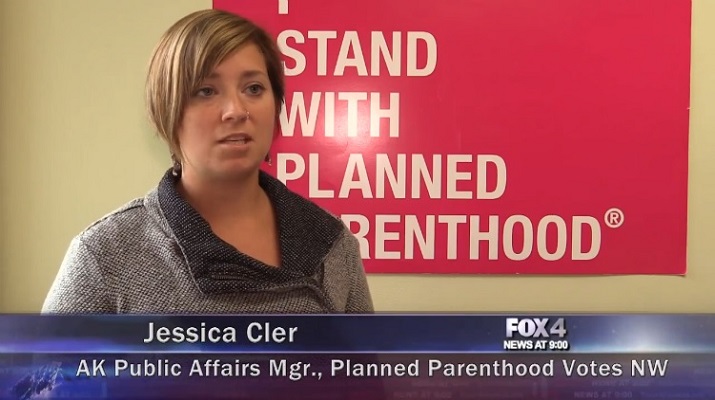
Marissa Silver, a reporter with Coastal Television's "Your Alaska Link," shares the Alaska Supreme Court's decision to strike down a state law that required a minor's parent to be notified of her decision to seek abortion care.

See All

Datapoints

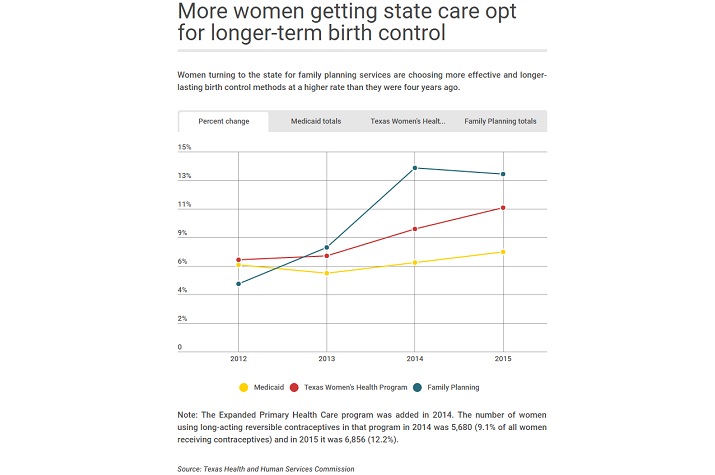
In this infographic, the Texas Health and Human Services Commission (HHSC) outlines data showing that the percentage of Texas women opting for long-acting reversible contraception (LARC) through three state-operated health programs increased between 2012 and 2013.

Datapoints

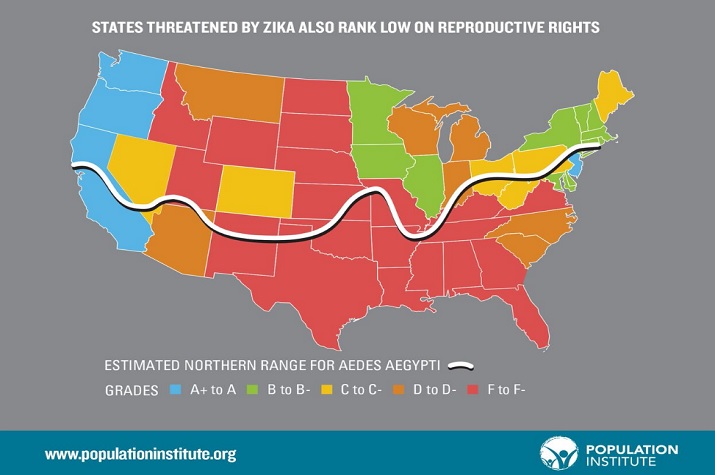
In this map, the Population Institute illustrates how many of the states at risk of the Zika virus scored poorly on measures of reproductive rights and health.

Datapoints

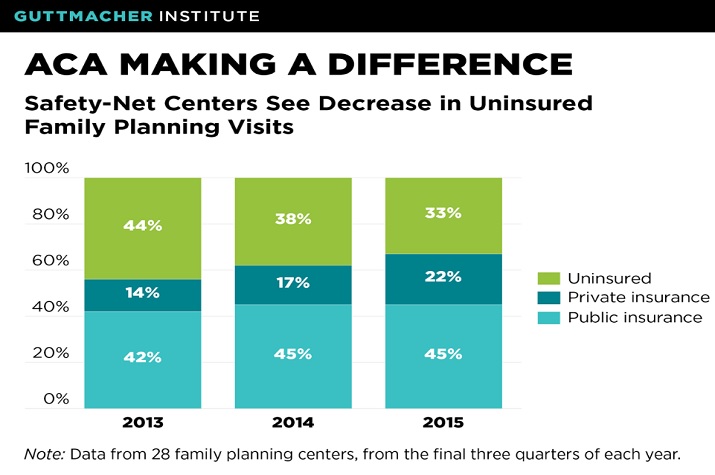
In this infographic, the Guttmacher Institute spotlights the increased proportion of insured visits at 28 Title-X supported family planning centers following the implementation of the Affordable Care Act (ACA) (PL 111-148).

Datapoints

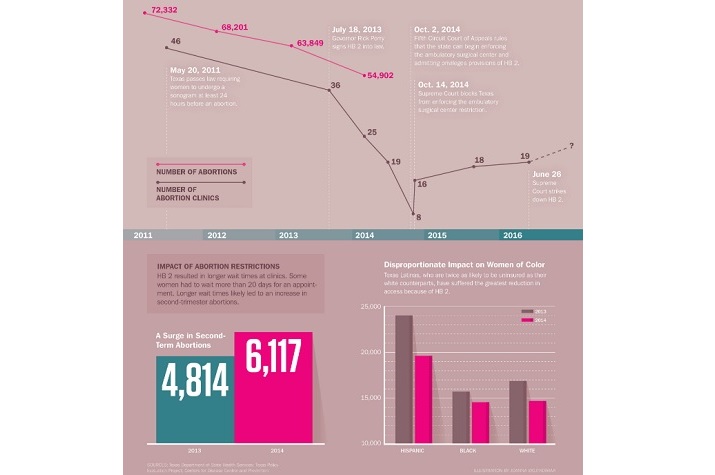
In this infographic, the Texas Observer compiled information from the Texas Department of State Health Services, the Texas Policy Evaluation Project and the Centers for Disease Control and Prevention to provide a snapshot of abortion access in Texas.

Datapoints

In this infographic, the Guttmacher Institute tracks recent trends in state abortion laws.

Datapoints

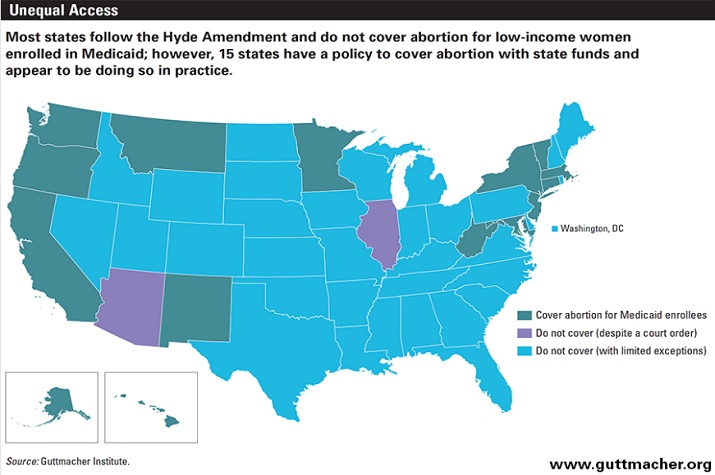
In this map, the Guttmacher Institute highlights the effects of the Hyde Amendment, an appropriations rider that bars federal Medicaid funding from covering abortion care except in the limited cases of rape, incest and life endangerment.

Datapoints

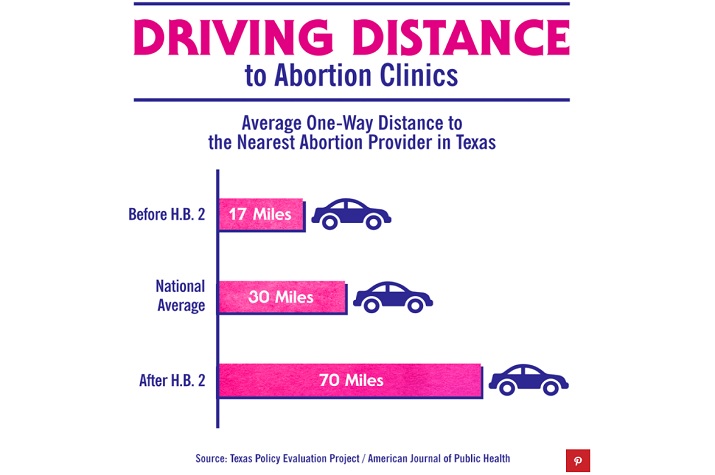
In this gif, Cosmopolitan shares research from the Texas Policy Evaluation Project showing that the average distance a woman in Texas must drive to access the nearest abortion clinic in the state has increased following the implementation of the state's omnibus antiabortion-rights law (HB 2).

Datapoints

In this map, the Kaiser Family Foundation spotlights five states and Washington, D.C., which have each enacted policies designed to facilitate access to contraception.

Datapoints

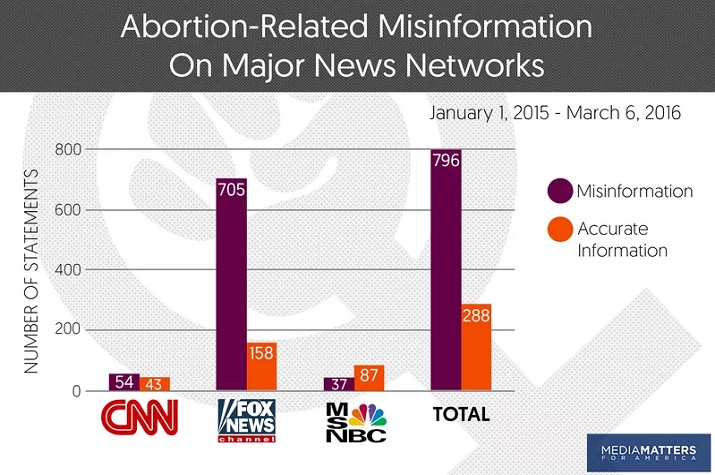
In this chart, Media Matters highlights the findings of a study showing how evening and primetime news programs airing on cable news conveyed more inaccurate than accurate statements about abortion.

Datapoints

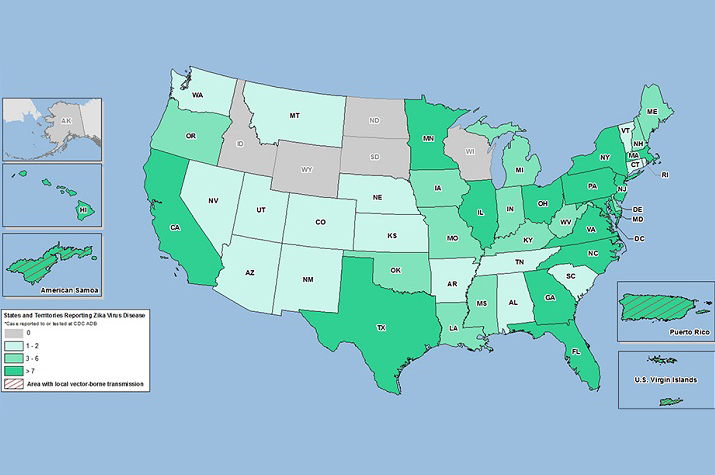
In this map, CDC documents the laboratory-confirmed cases of the Zika virus reported in the United States and U.S. territories.

See All

At a Glance

"A woman's ability to end her pregnancy too often depends on where she lives, her age and how much money is in her pocket."

— Marcela Howell of In Our Own Voice: National Black Women's Reproductive Justice Agenda, discussing ongoing disparities in women's access to abortion care on the 43rd anniversary of Roe v. Wade.

At a Glance

"If women are not free to make decisions about their own lives and health, they are not free. And if women are not free, none of us are."

— Abortion provider Warren Hern, in a STAT News opinion piece on why he continues to offer abortion care despite receiving harassment and death threats throughout his 42-year career.

At a Glance

"Not since before Roe v. Wade has a law or court decision had the potential to devastate access to reproductive health care on such a sweeping scale."

— Nancy Northup, president and CEO of the Center for Reproductive Rights, on a ruling from the 5th U.S. Circuit Court of Appeals that upheld major portions of a Texas antiabortion-rights law.