
National Partnership for Women & Families

In the News

Blogs comment on 'desperate' antiabortion-rights strategies, Texas' 'devastating' maternal mortality rate and more

Read the week's best commentary from Salon, Slate's "XX Factor" and more.

ANTIABORTION-RIGHTS MOVEMENT:

"Anti-choicers get even weirder: After losing in the Supreme Court, abortion foes turn to desperate distortion," Amanda Marcotte, Salon: Following a recent Supreme Court ruling that debunked the strategy of restricting abortion access under the guise of protecting women's health, abortion-rights opponents are focusing on two other strategies: "[F]irst, trying to trick people into thinking embryos are babies and then trying to trick people into thinking abortion is too medically dangerous to be allowed," Marcotte writes. She notes that while both these strategies "have failed ... before," even the "worst ideas can do some damage to abortion access ... before they finally sputter out politically." For example, she points to abortion-rights opponents in Texas who are trying to advance fetal burial or cremation regulations that would apply to pregnancies that end in abortion and miscarriage. Meanwhile, abortion-rights opponents still are "trying to scare people into thinking abortion is dangerous" by calling for additional data collection on abortion care, Marcotte writes, even though "[m]ore data will just prove even more resoundingly that abortion is safe." According to Marcotte, the tactic is "[s]o puzzling ... that there's reason to worry that these efforts are not about tracking the safety data at all, but about finding some back-door method for right-wingers to access women's private medical data for nefarious purposes." Marcotte concludes that "this kind of behavior is deeply worrisome," but it also demonstrates "the depths of desperation of the anti-choice movement" (Marcotte, Salon, 8/17).

ACCESS TO CARE:

"After Texas slashed its family planning budget, maternal deaths almost doubled," Nora Caplan-Bricker, Slate's "XX Factor": A new study has found "[p]regnancy-related deaths nearly doubled in Texas between 2010 and 2012," an increase that according to the study authors, "is difficult to explain 'in the absence of war, natural disaster, or severe economic upheaval,'" Caplan-Bricker writes. According to Caplan-Bricker, the "alarming development coincided with the state's decision to slash its family planning budget by two-thirds in 2011 -- an attempt to shut down abortion providers that ultimately forced 82 clinics ... to close," a move that limited "access not only to prenatal care, but also to ... birth control." Overall, according to the study, the state's maternal death rate increased from 18.6 deaths per 1,000 live births in 2010 to 33 in 2011 and 35.8 in 2014, Caplan-Bricker writes, adding that while "Texas is an outlier, maternal mortality is a growing problem for the U.S. in general." She points to other findings in the study that showed "the rate of deaths per 100,000 live births for 48 states and the District of Columbia -- excluding Texas and California, which the researchers considered separately -- 'increased by 26.6 percent, from 18.8 in 2000 to 23.8 in 2014.'" The United States "is one of the only countries in the world where the problem of maternal mortality is getting worse, not better," Caplan-Bricker writes, noting that "the average maternal mortality rate in developed countries at 12 deaths per 100,000 live births." Noting that a Texas task force created to study pregnancy-related deaths is "due to make its first set of recommendations in September," Caplan-Bricker concludes, "common sense suggests that replenishing the millions of dollars in funding the state has drained from women's health clinics might be a good start" (Caplan-Bricker, "XX Factor," Slate, 8/18).

ZIKA VIRUS:

"Zika is spreading, but it won't go far," Marc Siegel, Slate's "Medical Examiner": While the "news about Zika seems particularly bad as of late," the United States is actually well equipped to contain the virus because the country has "fought the battle against its host, the Aedes aegypti mosquito" before, in successfully combatting yellow fever and Dengue fever, Siegel writes. Siegel explains that in combatting Dengue fever, U.S. officials "figured out how to control Aedes aegypti" with "Naled, an insecticide that is almost 100 percent fatal for the Aedes aegypti mosquito," and "the removal of standing water, since that's where mosquitos breed." Siegel points to the current small outbreak in Wynwood, Florida, which he says "looks very similar to what a small Dengue outbreak would look like, with comparable numbers." He writes that while the United States likely will continue to experience "small outbreaks ... as long as Zika is spreading out of control in Puerto Rico and other places where U.S. travelers frequent," U.S. health officials are successfully using Naled and larvicide in the Wynwood area. Moreover, "there are other measures in the works to fight Zika," Siegel writes, citing the successful use of genetically modified mosquitoes in other countries and ongoing research into a Zika vaccine (Siegel, "Medical Examiner," Slate, 8/18).

Video Round Up

USA Today covers a new report from the Centers for Disease Control and Prevention (CDC) that found the "most commonly reported sexually transmitted [infections] [STIs] reached an all-time high in 2015."

Video Round Up

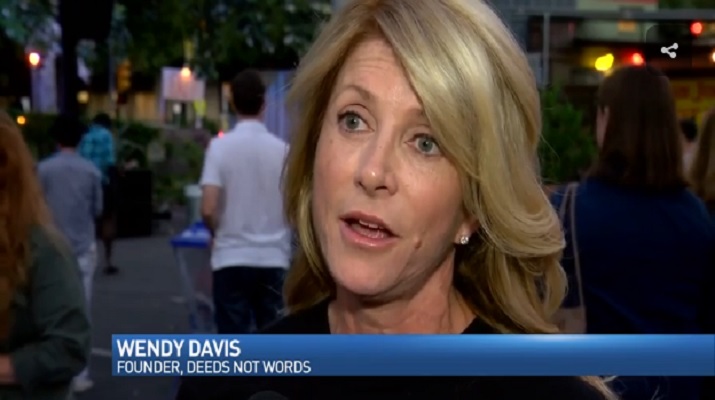
In this clip, NY 1's Natalie Duddridge covers Planned Parenthood's centennial celebration at New York City Hall.

Video Round Up

The New York Times spotlightsabortion-rights activism against a proposed abortion ban in Poland.

Video Round Up

KUTV/KEYE's Adele Uchida covers a Texas proposal that will require fetal tissue to be buried or cremated.

Video Round Up

In this clip, Rabbi Lori Koffman discusses the intersection of her faith and her advocacy work for abortion rights, stating, "I'm a woman, I'm a mother, I'm a rabbi, I'm a Jew, I'm an American. And all those pieces of me call me to do this work."

Video Round Up

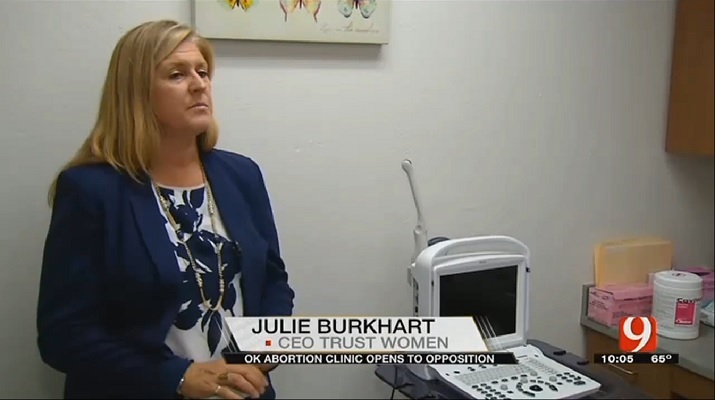
KWTV's Grant Hermes covers the opening of a new reproductive health center in Oklahoma City, which previously had been the largest metropolitan area without an abortion clinic.

Video Round Up

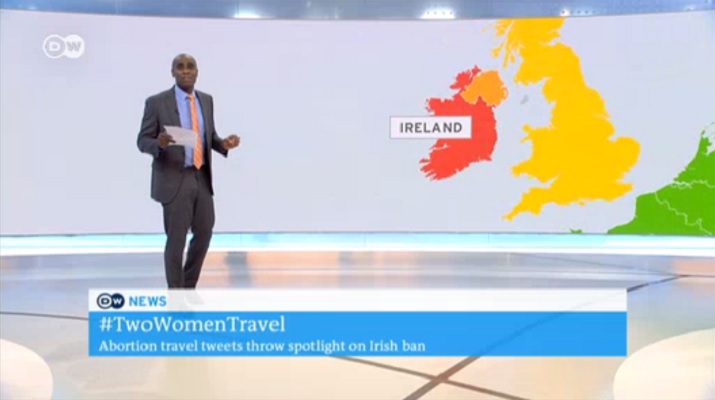
Deutsche Welle's Carl Nasman spotlights @TwoWomenTravel, a Twitter account documenting the experience of two Irish women who traveled to Great Britain to access abortion care for one of the women.

Video Round Up

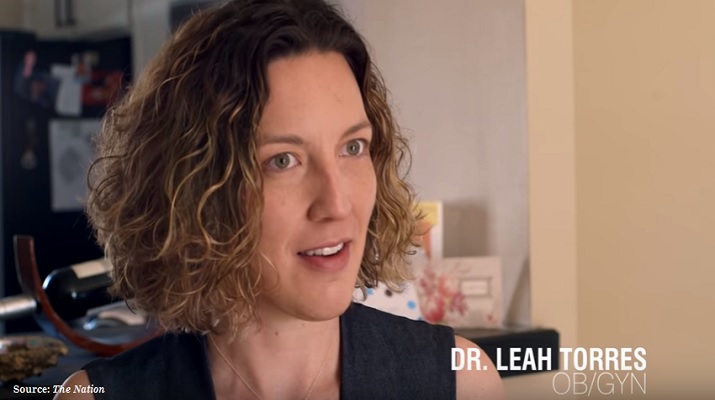
In this clip, The Nation profiles Leah Torres, an OB-GYN who shares her "career changing, life changing" work as an abortion provider in Utah, a state that imposes several restrictions on abortion care.

Video Round Up

In this clip, WKYC's Maureen Kyle covers a recent decision by a federal judge to grant a permanent injunction against an Ohio law (HB 294) that would cut $1.3 million from abortion providers.

Video Round Up

In an interview with AOL Build's Emma Gray, Tracy Droz Tragos discusses her new documentary, "Abortion: Stories Women Tell," which shares women's perspectives on abortion care and abortion rights.

See All

Datapoints

In this map, the Center for American Progress' "ThinkProgress" highlights the seven states that direct Temporary Assistance for Needy Families (TANF) funds toward crisis pregnancy centers (CPCs), which use misleading tactics to dissuade women from seeking abortion care.

Datapoints

In this map, the Guttmacher Institute spotlights the 18 states that since 2011 have enacted policies that block funding for contraception or other health care services from being allocated to organizations that provide abortion care or are affiliated with abortion providers.

Datapoints

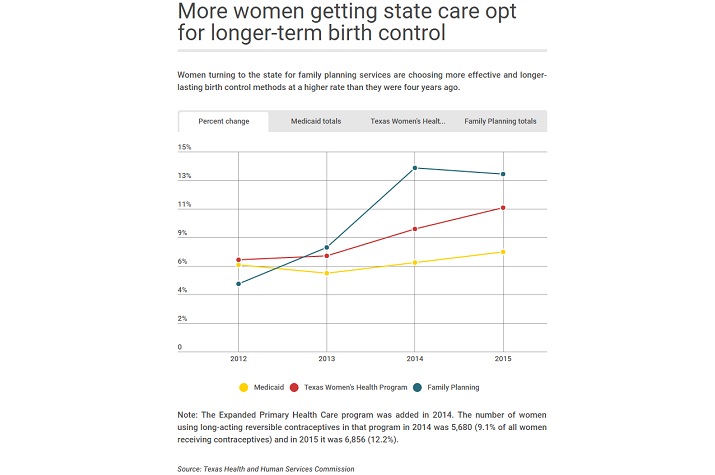
In this infographic, the Texas Health and Human Services Commission (HHSC) outlines data showing that the percentage of Texas women opting for long-acting reversible contraception (LARC) through three state-operated health programs increased between 2012 and 2013.

Datapoints

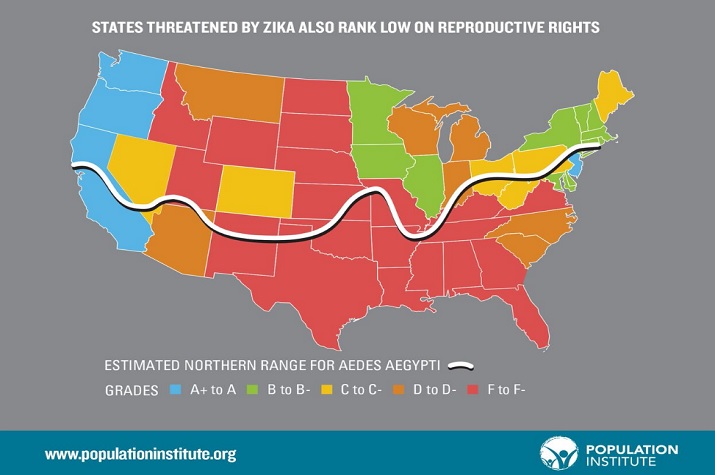
In this map, the Population Institute illustrates how many of the states at risk of the Zika virus scored poorly on measures of reproductive rights and health.

Datapoints

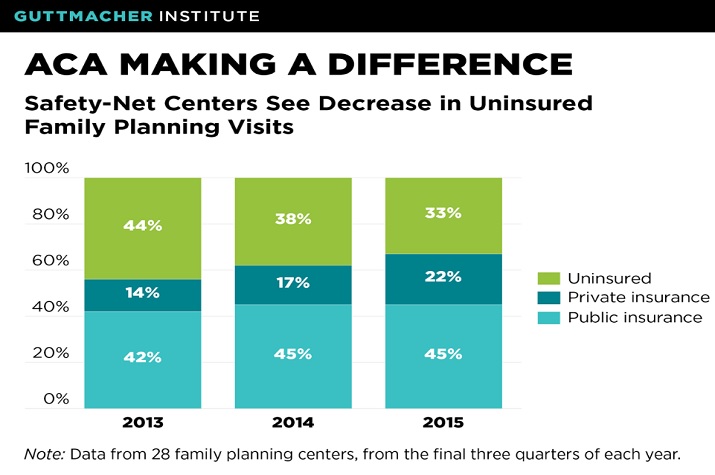
In this infographic, the Guttmacher Institute spotlights the increased proportion of insured visits at 28 Title-X supported family planning centers following the implementation of the Affordable Care Act (ACA) (PL 111-148).

Datapoints

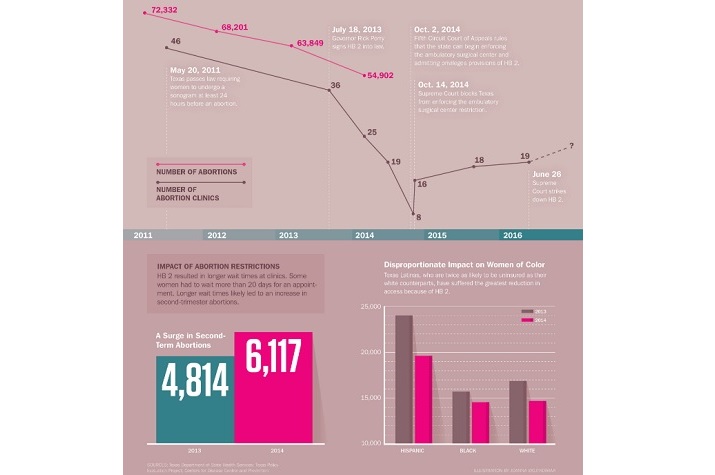
In this infographic, the Texas Observer compiled information from the Texas Department of State Health Services, the Texas Policy Evaluation Project and the Centers for Disease Control and Prevention to provide a snapshot of abortion access in Texas.

Datapoints

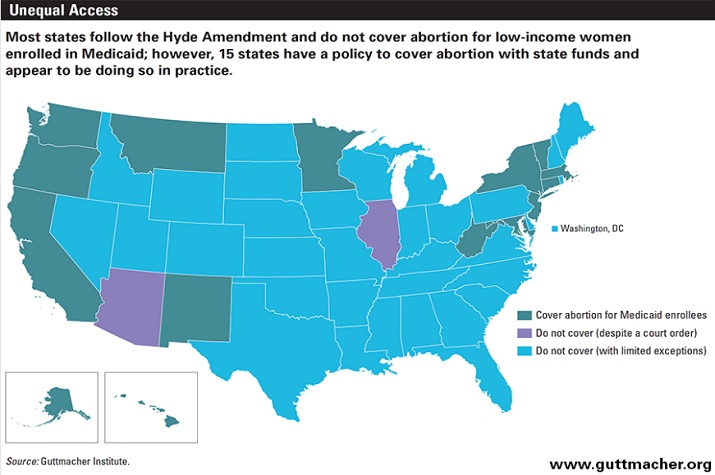
In this map, the Guttmacher Institute highlights the effects of the Hyde Amendment, an appropriations rider that bars federal Medicaid funding from covering abortion care except in the limited cases of rape, incest and life endangerment.

Datapoints

In this infographic, the Guttmacher Institute tracks recent trends in state abortion laws.

Datapoints

In this map, the Kaiser Family Foundation spotlights five states and Washington, D.C., which have each enacted policies designed to facilitate access to contraception.

Datapoints

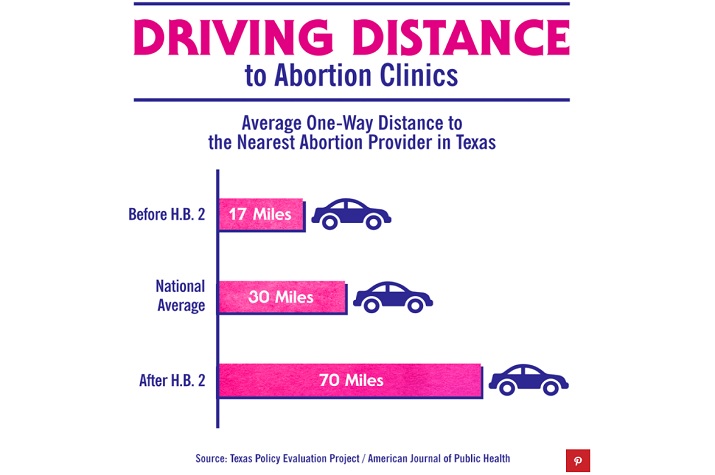
In this gif, Cosmopolitan shares research from the Texas Policy Evaluation Project showing that the average distance a woman in Texas must drive to access the nearest abortion clinic in the state has increased following the implementation of the state's omnibus antiabortion-rights law (HB 2).

See All

At a Glance

"A woman's ability to end her pregnancy too often depends on where she lives, her age and how much money is in her pocket."

— Marcela Howell of In Our Own Voice: National Black Women's Reproductive Justice Agenda, discussing ongoing disparities in women's access to abortion care on the 43rd anniversary of Roe v. Wade.

At a Glance

"If women are not free to make decisions about their own lives and health, they are not free. And if women are not free, none of us are."

— Abortion provider Warren Hern, in a STAT News opinion piece on why he continues to offer abortion care despite receiving harassment and death threats throughout his 42-year career.

At a Glance

"Not since before Roe v. Wade has a law or court decision had the potential to devastate access to reproductive health care on such a sweeping scale."

— Nancy Northup, president and CEO of the Center for Reproductive Rights, on a ruling from the 5th U.S. Circuit Court of Appeals that upheld major portions of a Texas antiabortion-rights law.