
National Partnership for Women & Families

In the News

Blogs comment on Fla.'s blocked 'attempt to defund abortion clinics,' combatting Zika with genetically modified mosquitoes and more

Read the week's best commentary from bloggers at Slate's "XX Factor," Mother Jones and more.

ABORTION RESTRICTIONS:

"Judge permanently blocks Florida's attempt to defund abortion clinics," Mark Joseph Stern, Slate's "XX Factor": "On Thursday, U.S. District Judge Robert Hinkle permanently blocked a Florida law [HB 1411] that would have prevented the distribution of state or local funds to any organization that provides abortions" and imposed burdensome record inspection requirements on clinics, Stern writes. According to Stern, "As part of the order, Florida ... Gov. Rick Scott [R] agreed to forego further litigation, meaning both measures are effectively dead in the water." Stern explains that not only does Hinkle's ruling align with a number of decisions "that proscribe states from cutting funding to women's health organizations because they support abortion," but it also represents "a considerable victory for medical privacy: The records inspection provision of the law that Hinkle enjoined would have allowed the state to access thousands of patient records at facilities that provide abortions, easily uncovering details about their HIV status, abortion history, and mental health treatments." He writes, "Thursday's ruling, then, is a substantial victory for free association, privacy rights, and personal autonomy." Moreover, it "suggests that ultraconservative governors like Scott are finally realizing that their doomed efforts to restrict abortion aren't worth the cost or effort," Stern writes (Stern, "XX Factor," Slate, 8/19).

ZIKA VIRUS:

"This Florida community may unleash genetically modified mosquitoes to fight Zika and Dengue," Erica Langston, Mother Jones: "Earlier this month, the Food and Drug Administration approved the first proposed US field trial of genetically modified mosquitoes," Langston writes. According to Langston, "The trial is planned to launch in Key Haven, Florida, 161 miles south of the Miami-Dade neighborhood where the nation's first locally transmitted Zika cases have been detected -- and five miles from the ... heart of Florida's 2009-10 outbreak of dengue, a potentially deadly virus that can be spread by the same mosquito." She writes, "A majority of mosquito control commissioners for the [Florida] Keys, who have final say in the matter, have vowed to side with the locals" on whether to let the trial proceed pending "a nonbinding local referendum this November." Langston talks with Matthew DeGennaro, a mosquito neurogeneticist at Florida International University, who says that the mosquitoes would be unlikely to bite a human, that a bite in such a rare event "will be no different than with an ordinary [mosquito]" and that the mosquitoes would not only be unlikely to inflict any harm on "other animals that feed on mosquitoes," but in fact would likely be less harmful than insecticides such as Naled (Langston, Mother Jones, 8/22).

GLOBAL ISSUES:

"Two women live-tweeted their abortion journey from Ireland to the U.K.," Jenavieve Hatch, Huffington Post: "In a public act of defiance, two Irish women live tweeted their abortion pilgrimage last weekend from Ireland to Manchester, England through the Twitter account @TwoWomenTravel," Hatch writes. She explains that the Republic of Ireland in 1983 amended the country's constitution to formally ban abortion care. Since then, about 150,000 Irish women have traveled from Ireland to other countries for abortion care, including England, where abortion care is generally legal until 24 weeks of pregnancy. According to Hatch, the two women started tweeting on Friday, "document[ing] the entirety of the experience" and calling on Irish Prime Minister Enda Kenney to repeal the ban (Hatch, Huffington Post, 8/22).

What others are saying about global issues:

~ "Argentina's unstoppable feminists," Shena Cavallo, International Women's Health Coalition's blog.

Video Round Up

USA Today covers a new report from the Centers for Disease Control and Prevention (CDC) that found the "most commonly reported sexually transmitted [infections] [STIs] reached an all-time high in 2015."

Video Round Up

In this clip, NY 1's Natalie Duddridge covers Planned Parenthood's centennial celebration at New York City Hall.

Video Round Up

The New York Times spotlightsabortion-rights activism against a proposed abortion ban in Poland.

Video Round Up

KUTV/KEYE's Adele Uchida covers a Texas proposal that will require fetal tissue to be buried or cremated.

Video Round Up

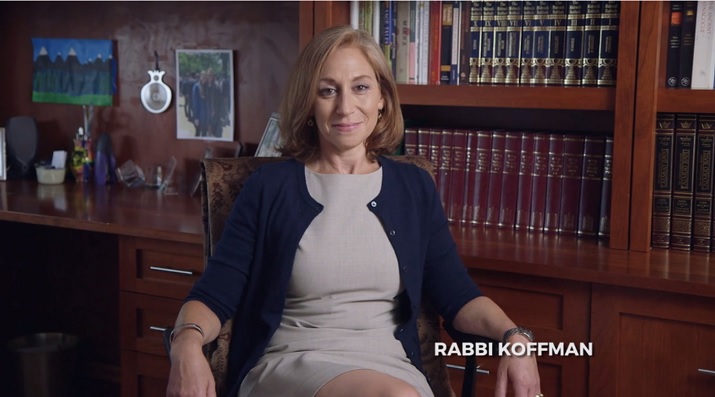
In this clip, Rabbi Lori Koffman discusses the intersection of her faith and her advocacy work for abortion rights, stating, "I'm a woman, I'm a mother, I'm a rabbi, I'm a Jew, I'm an American. And all those pieces of me call me to do this work."

Video Round Up

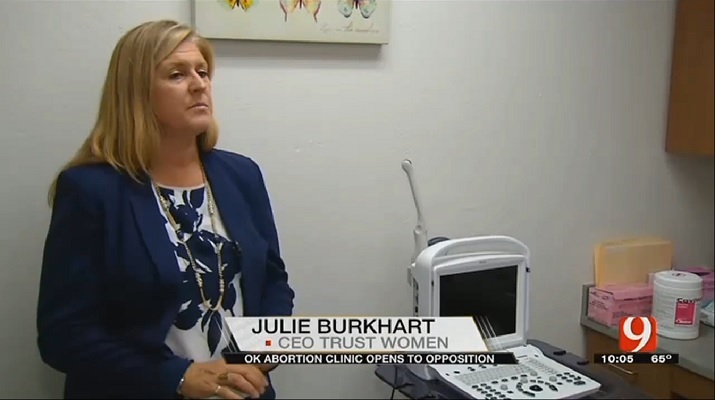
KWTV's Grant Hermes covers the opening of a new reproductive health center in Oklahoma City, which previously had been the largest metropolitan area without an abortion clinic.

Video Round Up

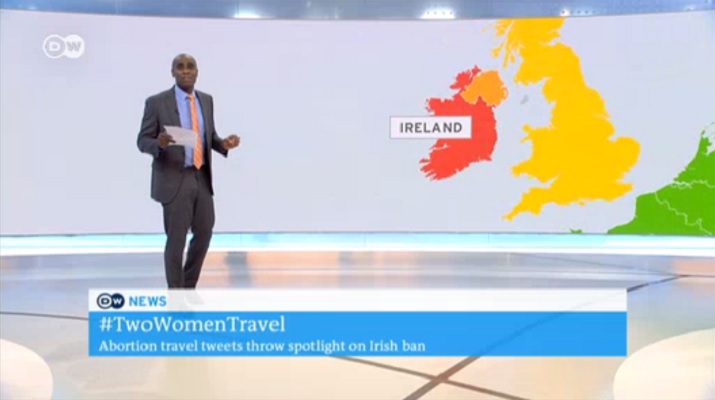
Deutsche Welle's Carl Nasman spotlights @TwoWomenTravel, a Twitter account documenting the experience of two Irish women who traveled to Great Britain to access abortion care for one of the women.

Video Round Up

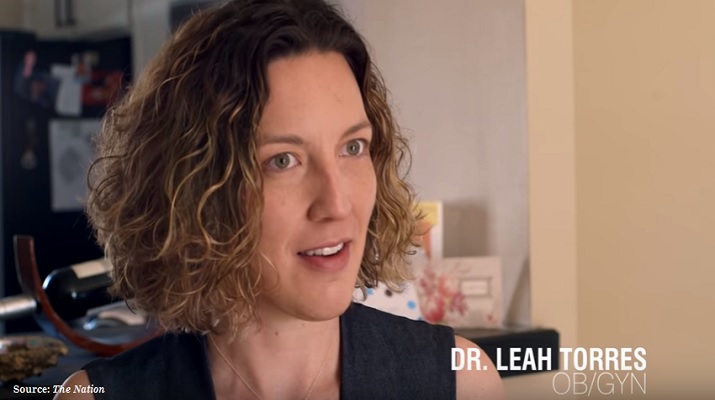
In this clip, The Nation profiles Leah Torres, an OB-GYN who shares her "career changing, life changing" work as an abortion provider in Utah, a state that imposes several restrictions on abortion care.

Video Round Up

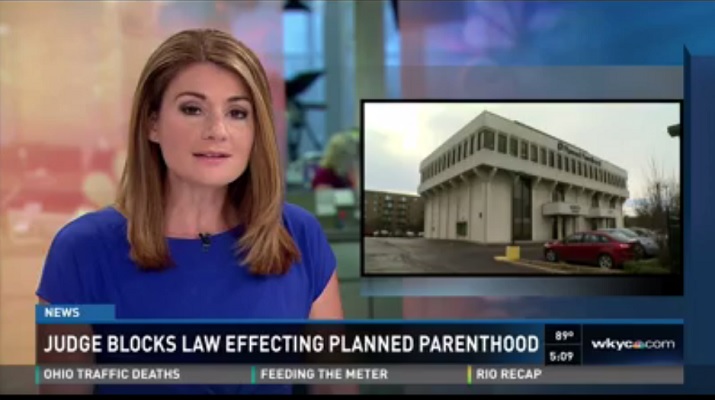
In this clip, WKYC's Maureen Kyle covers a recent decision by a federal judge to grant a permanent injunction against an Ohio law (HB 294) that would cut $1.3 million from abortion providers.

Video Round Up

In an interview with AOL Build's Emma Gray, Tracy Droz Tragos discusses her new documentary, "Abortion: Stories Women Tell," which shares women's perspectives on abortion care and abortion rights.

See All

Datapoints

In this map, the Center for American Progress' "ThinkProgress" highlights the seven states that direct Temporary Assistance for Needy Families (TANF) funds toward crisis pregnancy centers (CPCs), which use misleading tactics to dissuade women from seeking abortion care.

Datapoints

In this map, the Guttmacher Institute spotlights the 18 states that since 2011 have enacted policies that block funding for contraception or other health care services from being allocated to organizations that provide abortion care or are affiliated with abortion providers.

Datapoints

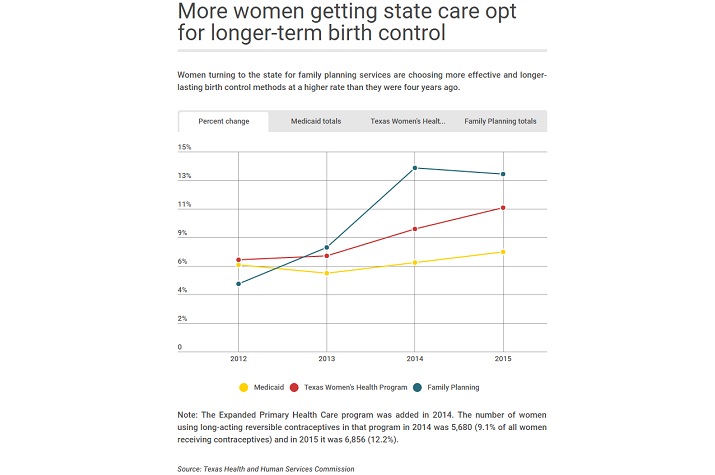
In this infographic, the Texas Health and Human Services Commission (HHSC) outlines data showing that the percentage of Texas women opting for long-acting reversible contraception (LARC) through three state-operated health programs increased between 2012 and 2013.

Datapoints

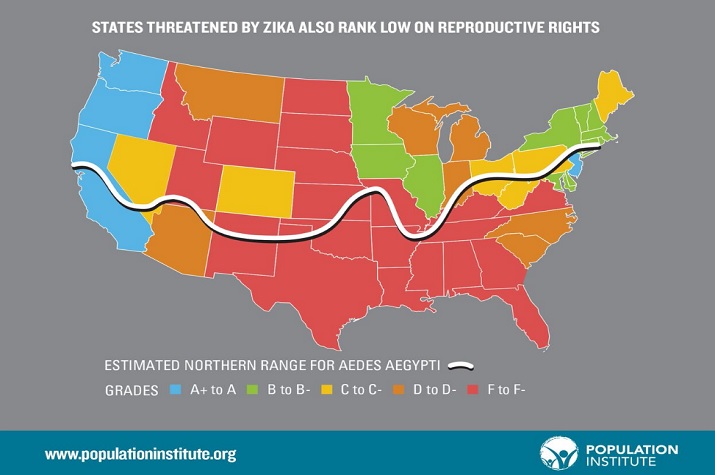
In this map, the Population Institute illustrates how many of the states at risk of the Zika virus scored poorly on measures of reproductive rights and health.

Datapoints

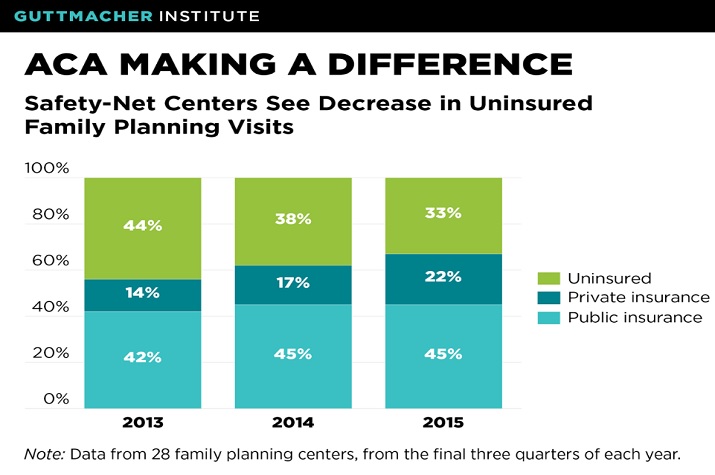
In this infographic, the Guttmacher Institute spotlights the increased proportion of insured visits at 28 Title-X supported family planning centers following the implementation of the Affordable Care Act (ACA) (PL 111-148).

Datapoints

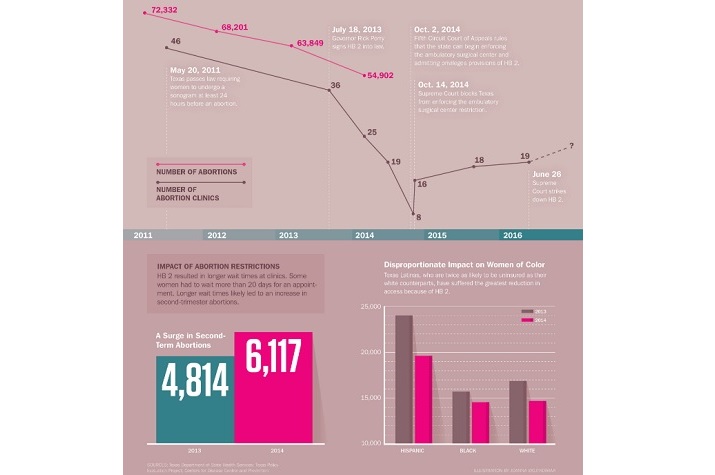
In this infographic, the Texas Observer compiled information from the Texas Department of State Health Services, the Texas Policy Evaluation Project and the Centers for Disease Control and Prevention to provide a snapshot of abortion access in Texas.

Datapoints

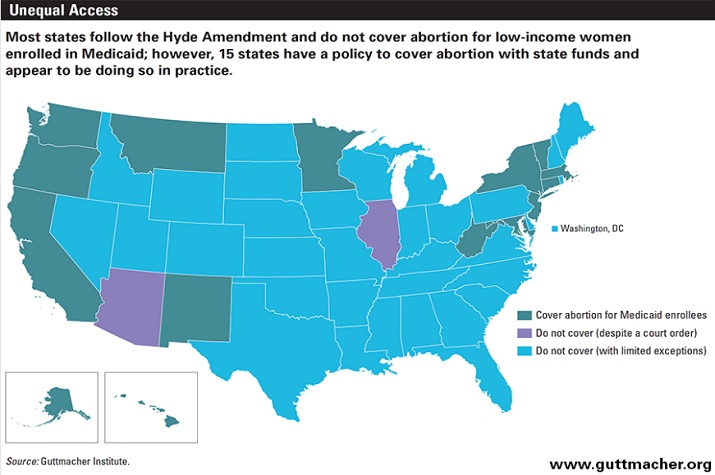
In this map, the Guttmacher Institute highlights the effects of the Hyde Amendment, an appropriations rider that bars federal Medicaid funding from covering abortion care except in the limited cases of rape, incest and life endangerment.

Datapoints

In this infographic, the Guttmacher Institute tracks recent trends in state abortion laws.

Datapoints

In this map, the Kaiser Family Foundation spotlights five states and Washington, D.C., which have each enacted policies designed to facilitate access to contraception.

Datapoints

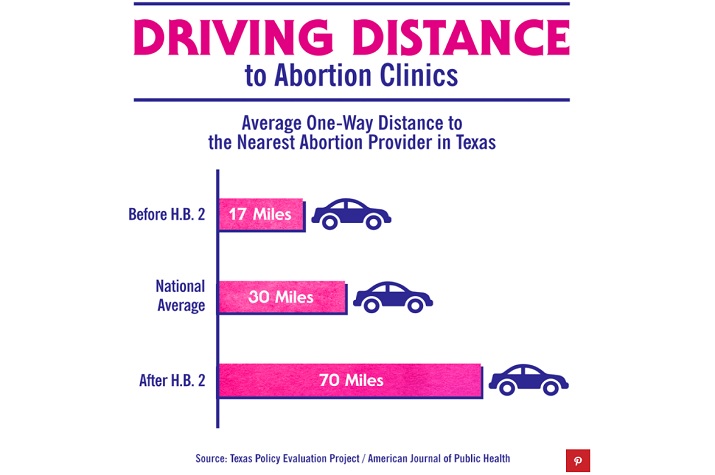
In this gif, Cosmopolitan shares research from the Texas Policy Evaluation Project showing that the average distance a woman in Texas must drive to access the nearest abortion clinic in the state has increased following the implementation of the state's omnibus antiabortion-rights law (HB 2).

See All

At a Glance

"A woman's ability to end her pregnancy too often depends on where she lives, her age and how much money is in her pocket."

— Marcela Howell of In Our Own Voice: National Black Women's Reproductive Justice Agenda, discussing ongoing disparities in women's access to abortion care on the 43rd anniversary of Roe v. Wade.

At a Glance

"If women are not free to make decisions about their own lives and health, they are not free. And if women are not free, none of us are."

— Abortion provider Warren Hern, in a STAT News opinion piece on why he continues to offer abortion care despite receiving harassment and death threats throughout his 42-year career.

At a Glance

"Not since before Roe v. Wade has a law or court decision had the potential to devastate access to reproductive health care on such a sweeping scale."

— Nancy Northup, president and CEO of the Center for Reproductive Rights, on a ruling from the 5th U.S. Circuit Court of Appeals that upheld major portions of a Texas antiabortion-rights law.