
National Partnership for Women & Families

In the News

In op-ed, abortion provider discusses 'political act' of providing care in Texas

In an opinion piece for Time, abortion provider Timothy Spurrell shares why he flies "more than 1,700 miles, each way, every other week, to provide abortion services in Texas, one of the most hostile political environments for abortion care that [he has] ever seen." Spurrell provides care at Whole Woman's Health.

Spurrell notes that while he initially planned for a career providing mental health care, his decision to provide abortion care "was a natural extension" of his desire to "help patients: to be there for people who were going through difficult times, to empower them in their own lives and to help them understand their options as they navigat[e] challenges."

According to Spurrell, "What distinguishes my work from that of other medical professionals is the way that abortion specifically, and women's health more generally, have become politicized." Medical professionals "shouldn't have to be 'political' to provide health care," he writes, but "[i]n the face of stigma and an onslaught of laws designed to punish our patients and shut us down, providing abortion care has become a political act."

Spurrell writes that he began providing abortion care in Texas after the state passed an omnibus antiabortion-rights law (HB 2), resulting in the closure of multiple state clinics. "As a result, the waiting room in the clinic was packed and chaotic," Spurrell writes, noting that he treated women who had driven several hundred miles to access care or "sold nearly everything they had to put together the money to pay for the procedure." Among his patients, Spurrell notes, he "saw exhaustion from the struggles they'd gone through to get to us, ... determination to get the care they knew they needed, and ... hope -- hope for all of the possible futures that ending a pregnancy might allow for them."

Spurrell highlights an HB 2 provision that mandates providers have hospital admitting privileges at a nearby hospital. "[T]his regulation is designed to end abortion in the state," he writes, explaining, "Getting admitting privileges at a local hospital is an arduous process, and unfortunately, because of abortion stigma and extreme anti-choice rules at religious hospitals, most refuse to grant them."

Spurrell notes that while he eventually obtained privileges, he was unable to admit the required number of patients to the hospital because "abortion in the vast majority of cases is a simple and safe procedure." As a result, "because the vast majority of my patients never needed follow-up care, I lost my privileges," Spurrell writes. According to Spurrell, "This regulation is designed to force doctors like me to hop from one hospital to another, begging for privileges that we won't be able to keep, precisely because we're providing quality service and because abortion is so safe."

Spurrell writes, "In 2000, when I became an abortion provider, I just wanted to provide quality care. Over the last 16 years, it's gotten harder." He notes that clinics have closed, providers have been threatened and harassed and some have stopped providing abortion care because of safety concerns for themselves or their families. He adds, "I can no longer remain silent as my patients, many of whom are afraid themselves to speak out or feel shamed for their decision, are targeted by political attacks."

Spurrell states, "I'm speaking out now because this has to stop. The clinic shutdown laws, the absurd hoops doctors and patients are forced to jump through, the rhetoric of blame and shame -- it has to stop." He writes, "A woman who has decided to end her pregnancy deserves compassion, respect and dignity," concluding, "I may not have planned to become an abortion provider, but I am now, and I will continue to be as long as patients need these services. It's what I do" (Spurrell, Time, 6/21).

Video Round Up

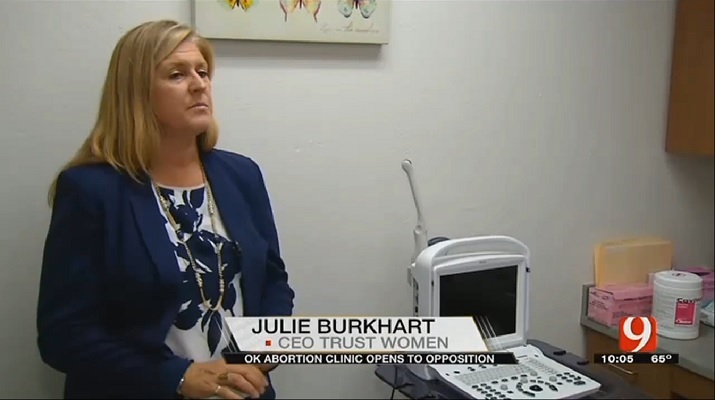
KWTV's Grant Hermes covers the opening of a new reproductive health center in Oklahoma City, which previously had been the largest metropolitan area without an abortion clinic.

Video Round Up

In this clip, Rabbi Lori Koffman discusses the intersection of her faith and her advocacy work for abortion rights, stating, "I'm a woman, I'm a mother, I'm a rabbi, I'm a Jew, I'm an American. And all those pieces of me call me to do this work."

Video Round Up

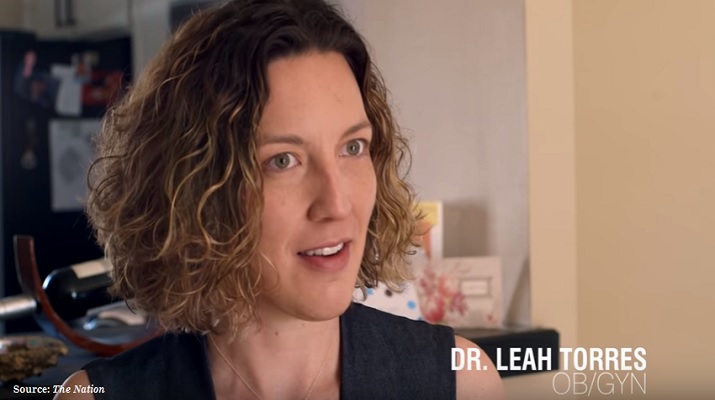
In this clip, The Nation profiles Leah Torres, an OB-GYN who shares her "career changing, life changing" work as an abortion provider in Utah, a state that imposes several restrictions on abortion care.

Video Round Up

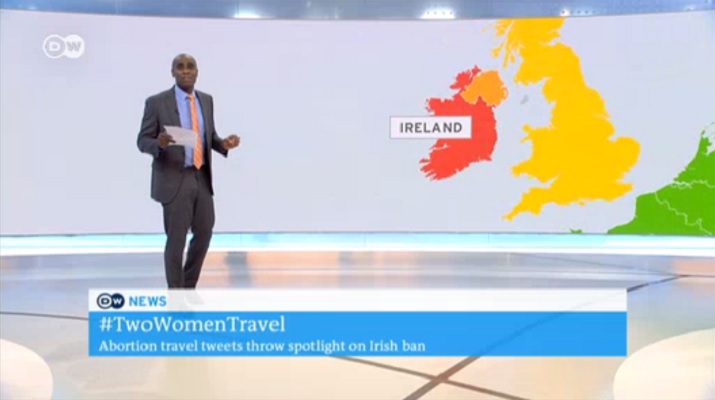
Deutsche Welle's Carl Nasman spotlights @TwoWomenTravel, a Twitter account documenting the experience of two Irish women who traveled to Great Britain to access abortion care for one of the women.

Video Round Up

In this clip, WKYC's Maureen Kyle covers a recent decision by a federal judge to grant a permanent injunction against an Ohio law (HB 294) that would cut $1.3 million from abortion providers.

Video Round Up

In an interview with AOL Build's Emma Gray, Tracy Droz Tragos discusses her new documentary, "Abortion: Stories Women Tell," which shares women's perspectives on abortion care and abortion rights.

Video Round Up

In this clip, WJHG's Matt Galka discusses Florida's decision not to appeal a federal court order currently blocking parts of a state omnibus antiabortion-rights law (HB 1411) from taking effect.

Video Round Up

Marissa Silver, a reporter with Coastal Television's "Your Alaska Link," shares the Alaska Supreme Court's decision to strike down a state law that required a minor's parent to be notified of her decision to seek abortion care.

Video Round Up

Richard Besser, ABC News' chief health and medical editor, discusses a case in which a woman in New York City transmitted the Zika virus to her male partner, the first such occurrence reported in the United States.

Video Round Up

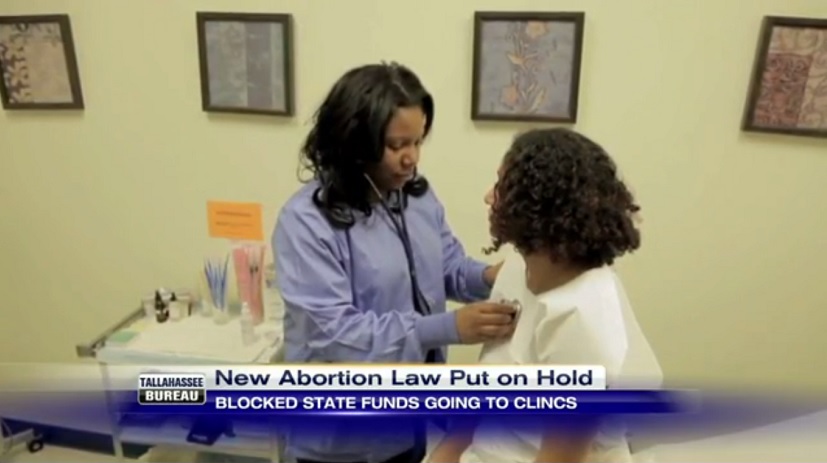
Fox 13's Matt McDonald reports on a ruling by a panel of the 10th U.S. Circuit Court of Appeals that blocks Utah Gov. Gary Herbert (R) from cutting funding to Planned Parenthood.

See All

Datapoints

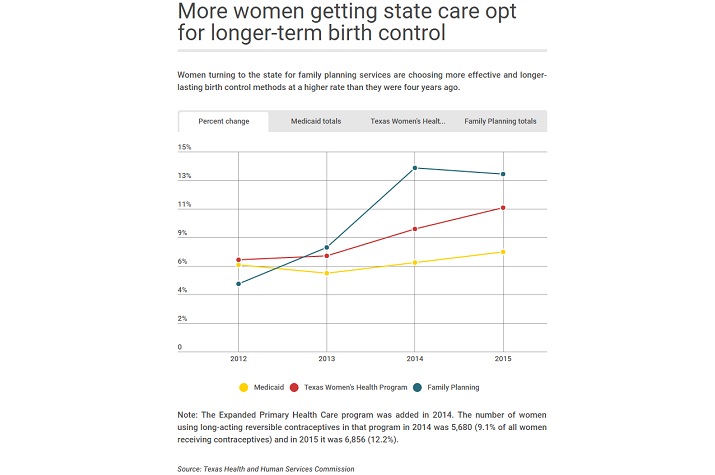
In this infographic, the Texas Health and Human Services Commission (HHSC) outlines data showing that the percentage of Texas women opting for long-acting reversible contraception (LARC) through three state-operated health programs increased between 2012 and 2013.

Datapoints

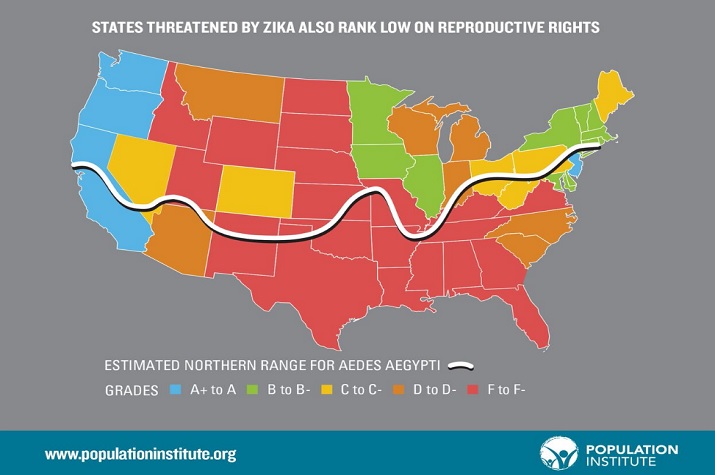
In this map, the Population Institute illustrates how many of the states at risk of the Zika virus scored poorly on measures of reproductive rights and health.

Datapoints

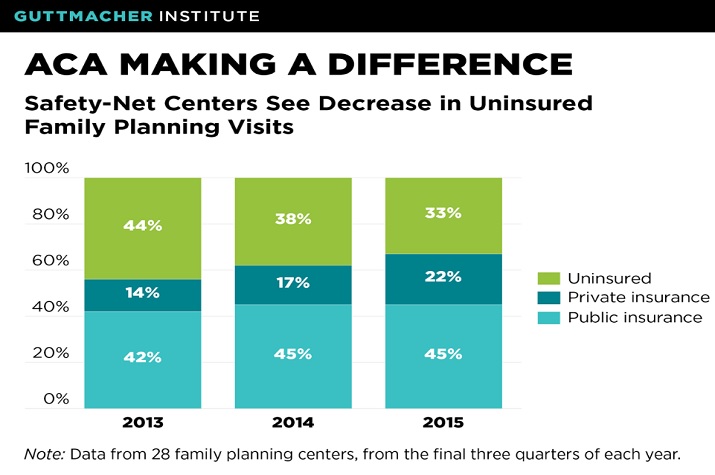
In this infographic, the Guttmacher Institute spotlights the increased proportion of insured visits at 28 Title-X supported family planning centers following the implementation of the Affordable Care Act (ACA) (PL 111-148).

Datapoints

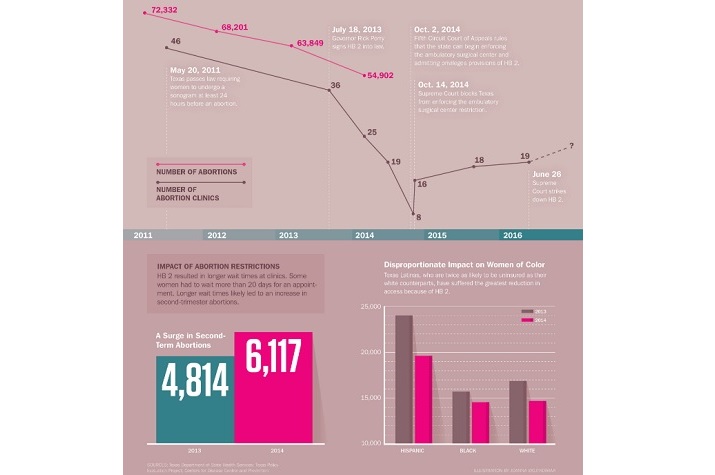
In this infographic, the Texas Observer compiled information from the Texas Department of State Health Services, the Texas Policy Evaluation Project and the Centers for Disease Control and Prevention to provide a snapshot of abortion access in Texas.

Datapoints

In this infographic, the Guttmacher Institute tracks recent trends in state abortion laws.

Datapoints

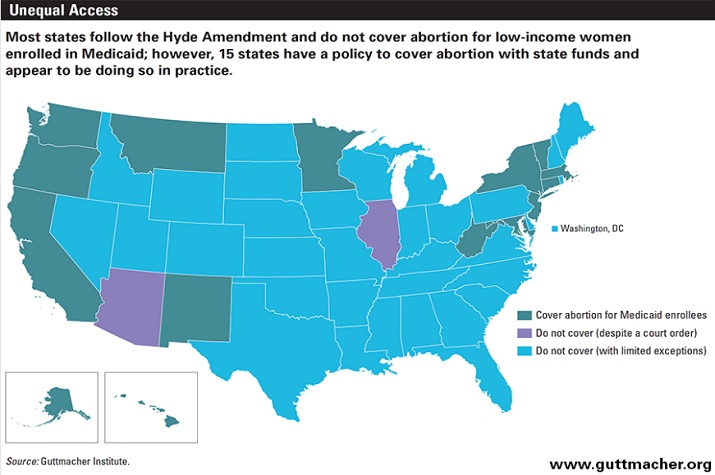
In this map, the Guttmacher Institute highlights the effects of the Hyde Amendment, an appropriations rider that bars federal Medicaid funding from covering abortion care except in the limited cases of rape, incest and life endangerment.

Datapoints

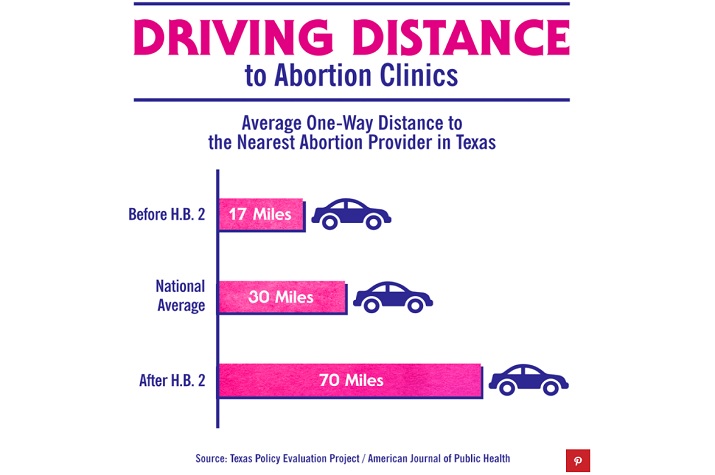
In this gif, Cosmopolitan shares research from the Texas Policy Evaluation Project showing that the average distance a woman in Texas must drive to access the nearest abortion clinic in the state has increased following the implementation of the state's omnibus antiabortion-rights law (HB 2).

Datapoints

In this map, the Kaiser Family Foundation spotlights five states and Washington, D.C., which have each enacted policies designed to facilitate access to contraception.

Datapoints

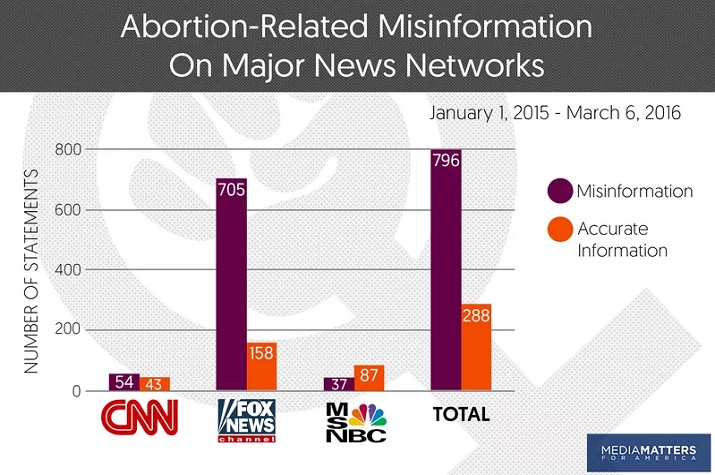
In this chart, Media Matters highlights the findings of a study showing how evening and primetime news programs airing on cable news conveyed more inaccurate than accurate statements about abortion.

Datapoints

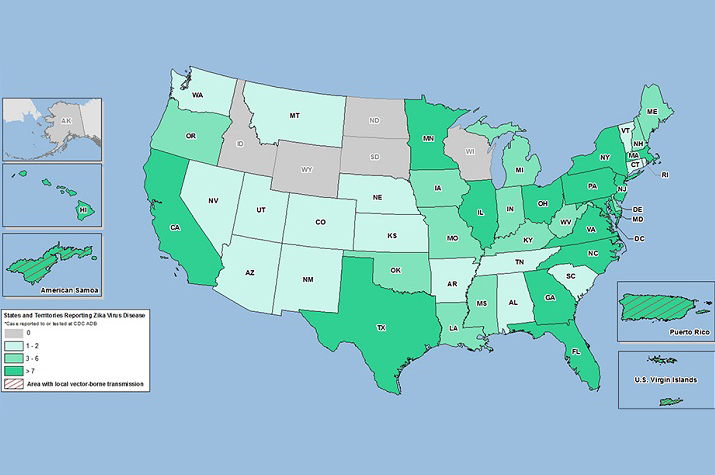
In this map, CDC documents the laboratory-confirmed cases of the Zika virus reported in the United States and U.S. territories.

See All

At a Glance

"A woman's ability to end her pregnancy too often depends on where she lives, her age and how much money is in her pocket."

— Marcela Howell of In Our Own Voice: National Black Women's Reproductive Justice Agenda, discussing ongoing disparities in women's access to abortion care on the 43rd anniversary of Roe v. Wade.

At a Glance

"If women are not free to make decisions about their own lives and health, they are not free. And if women are not free, none of us are."

— Abortion provider Warren Hern, in a STAT News opinion piece on why he continues to offer abortion care despite receiving harassment and death threats throughout his 42-year career.

At a Glance

"Not since before Roe v. Wade has a law or court decision had the potential to devastate access to reproductive health care on such a sweeping scale."

— Nancy Northup, president and CEO of the Center for Reproductive Rights, on a ruling from the 5th U.S. Circuit Court of Appeals that upheld major portions of a Texas antiabortion-rights law.