

In a letter released this week, CMS clarified current law on family planning services offered through Medicaid and urged state Medicaid programs to adopt policies that aim to increase access to a full range of contraceptive methods, including long-acting reversible contraception (LARC), among beneficiaries, Kaiser Health News/Washington Post reports.
The push comes amid concern over the unintended pregnancy rate in the United States, which is among the highest in developed countries.
Unintended pregnancies in the United States
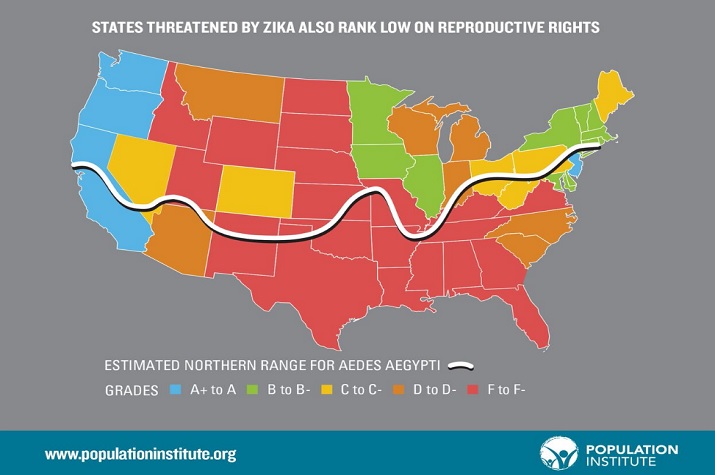
According to KHN/Post, unintended pregnancies carry significant costs for individual women, as well as federal and state governments. In 2010, for example, the federal government spent $14.6 billion on unintended pregnancies, while state governments spent $6.4 billion. KHN/Post reports that Southern states have particularly high unintended pregnancy rates.
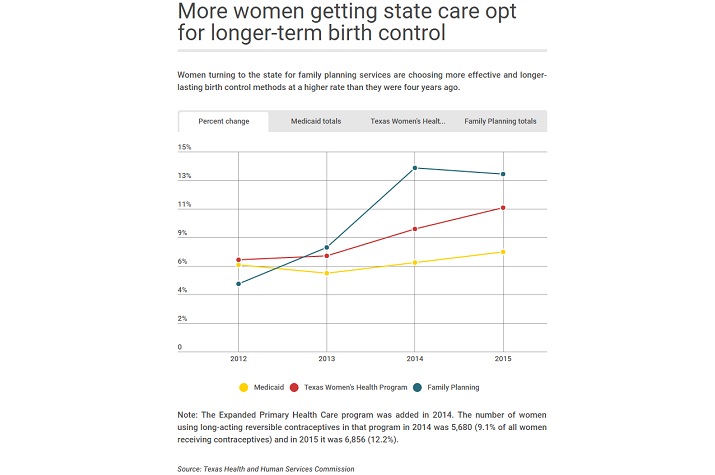
LARCs, including intrauterine devices (IUD) and hormonal implants, are seen as ways to reduce the country's rate of unintended pregnancies and associated costs, KHN/Post reports. LARCs are more effective than other forms of birth control and can last between three and 10 years after insertion. In contrast, oral contraception has to be taken daily.
Medicaid LARC coverage
According to KHN/Post, state Medicaid programs are required to cover family planning services at no out-of-pocket cost.
Adam Sonfield, a senior public policy associate at the Guttmacher Institute, said while states have flexibility in determining which services to cover, they typically have included most contraceptive methods. However, state Medicaid programs have been slow to adopt LARC, with just 11 percent of beneficiaries using LARC in 2012 (Andrews, Kaiser Health News/Washington Post, 6/14).
CMS highlights importance of LARCs
In the letter, CMS Deputy Administrator Vikki Wachino said the agency aims to "clarify previous guidance on the delivery of family planning services and supplies to all Medicaid beneficiaries, as well as to highlight approaches states may take to ensure timely access to this benefit."
According to CMS, the "letter provides guidance on family planning services provided under both fee-for-service and managed care delivery systems; clarifies the purpose of the family planning visit; offers strategies to reduce barriers to receiving family planning services and supplies; and suggests ways to increase access to contraceptive methods." The letter also stated that "federal funds are available for sterilization as a family planning service," noting that "when provided with the informed consent of the patient, postpartum sterilization is an effective form of contraception that provides convenience for the woman, reduces costs, and reduces [unintended] pregnancies."
CMS noted that the guidance takes effect "immediately."
Regarding strategies to facilitate LARC access, the letter cited a bulletin released by the agency in April that outlines various payment methods multiple state Medicaid programs have used to increase access to and use of LARC. The letter encourages states to follow models within the bulletin in order to "overcome administrative and logistical barriers to the provision of LARCs." According to the letter, Medicaid reimbursement for LARC should include the cost of the device, as well as the placement and eventual removal of the device (CMS letter, 6/14).
Bulletin highlights Medicaid payment policies for LARC
In the bulletin, Wachino wrote that LARCs "possess a number of advantages," stating, "[LARCs] are cost-effective, have high efficacy and continuation rates, require minimal maintenance, and are rated highest in patient satisfaction." She emphasized that "more can be done to increase [access to] this form of contraception."
The CMS bulletin said access to LARC in Medicaid programs could be hindered by policies that regulate how they are provided and paid for. For example, Medicaid providers are often reimbursed for labor and delivery costs via bundled payments that do not cover the cost of IUD insertion, which means a woman must make a separate appointment postpartum for an IUD instead of having it placed immediately after delivery.
CMS also noted that a woman can be deterred from LARC use by high upfront costs. According to the bulletin, state Medicaid programs can overcome this obstacle to access by incentivizing physicians to purchase and stock LARC (Kaiser Health News/Washington Post, 6/14). CMS' June letter noted that such a strategy could facilitate same-day access (CMS letter, 6/14).
CMS in the bulletin also outlined how LARC access can be undercut by state programs that require beneficiaries to try other contraceptives before LARC, called step therapy, and programs that require prior authorization before LARC use.
CMS highlighted efforts in 12 states that have established policies to reimburse providers separately, rather than through bundled payments, for inserting an IUD or hormonal implant immediately after a woman gives birth. Those states include Alabama, Colorado, Georgia, Illinois, Iowa, Louisiana, Maryland, Massachusetts, Montana, New Mexico, New York and South Carolina.
In particular, CMS spotlighted LARC efforts in South Carolina, which was the first state to change its reimbursement policy to facilitate immediate post-delivery LARC insertion. In addition, the state encourages LARC access by allowing physicians to order LARC and bill directly to Medicaid. South Carolina also removed its prior authorization and step therapy requirements (Kaiser Health News/Washington Post, 6/14).
In the June letter, CMS also highlighted a strategy implemented by several states in which the LARC manufacturer stocks providers with the devices at no up-front cost. The manufacturers only charge for the devices "[a]t a reasonable time post-implantation or administration," at which point the provider has been reimbursed by the state Medicaid program or other third-party payers.
Moreover, CMS in the letter suggested states consider taking advantage of 90 percent federal matching, which is available for states' family planning administrative costs, "to maintain an inventory of LARCs for providers who furnish covered medical assistance for eligible individuals" (CMS letter, 6/14).
Advocates call for greater LARC access
According to KHN/Post, the CMS bulletin came amid calls for increased LARC access from reproductive health advocates.
For example, the Center for American Progress released a study last week that urged Medicaid programs to facilitate LARC access for women both immediately after delivery and after abortion care.
According to KHN/Post, a new rule for managed care organizations that operate Medicaid programs also called for increased LARC access. As Mara Gandal-Powers, counsel for health and reproductive rights at the National Women's Law Center, explained, the rule requires states to offer beneficiaries their preferred birth control method and cannot mandate step therapy or prior authorization to obtain LARC.
Gandal-Powers noted, "The [rule's] language reinforces women's access to the birth-control method of their choice" (Kaiser Health News/Washington Post, 6/14).