
National Partnership for Women & Families

In the News

ACLU of Georgia revives lawsuit challenging Ga. 20-week abortion ban

A Georgia judge on Wednesday agreed to vacate and reissue a decision that allowed the state's 20-week abortion ban (HB 954) to take effect, so that lawyers for three OB-GYNs challenging the law could appeal the ruling, the AP/Sacramento Bee reports (Brumback, AP/Sacramento Bee, 5/25).

Legal background

The ban was scheduled to take effect on Jan. 1, 2013. In 2012, the American Civil Liberties Union (ACLU) of Georgia filed a lawsuit on behalf of three OB-GYNs against the law. The lawsuit stated that the ban violates women's rights to due process, equal protection and privacy under the Georgia Constitution (Women's Health Policy Report, 12/3/12).

The suit also argued that the law's exceptions are too narrow. According to the lawsuit, a physician could still risk being sentenced to prison if he or she provides medical care "in accordance to the best medical judgment" (AP/Sacramento Bee, 5/25). In addition, the suit argued that the medical emergency provision would force a woman with a high-risk pregnancy to wait until she is in immediate danger to qualify for an abortion (Women's Health Policy Report, 12/3/12).

In December 2012, Fulton County Superior Court Judge Doris Downs issued a preliminary injunction against the law (Women's Health Policy Report, 1/3/13). However, according to the Atlanta Journal-Constitution, a different Fulton County Superior Court judge in October 2015 dismissed Downs' injunction and the overall legal challenge (Rankin, Atlanta Journal-Constitution, 5/25).

That judge, Kimberly Esmond Adams, ruled that the plaintiffs' lawsuit is prohibited under sovereign immunity, which bars the state and the state's agencies from being sued when acting in their official role. Sovereign immunity stands unless the Georgia General Assembly specifically waives that right.

Adams in her ruling urged an appeal of her decision, writing that she "did not arrive at this conclusion with haste or ease." She said an appeal, which had to be filed within 30 days of her ruling, could "address any existing inadequacies in our existing law" (AP/Sacramento Bee, 5/25). She added, "As evidenced by the continued debate throughout this nation, issues related to reproductive and abortion rights often involve competing interests, concerns and ideologies ... (T)he court is mindful of the grave issues raised by the above-styled case and troubled by the realities of this matter" (Atlanta Journal-Constitution, 5/25).

The law has been in effect for about six months since Adams' ruling.

ACLU never notified about ruling

According to the AP/Bee, ACLU said it was never notified about Adams' ruling and therefore was not able to appeal her decision before the 30-day deadline. On March 10, ACLU lawyers learned from another lawyer uninvolved in the lawsuit that Adams had dismissed the case. ACLU then contacted Adams' staff to obtain copies of the decision. A week later, ACLU submitted a request for Adams to vacate her original ruling and reissue the decision so that ACLU attorneys could file an appeal within the deadline (AP/Sacramento Bee, 5/25). The state did not oppose the request (Atlanta Journal-Constitution, 5/25).

Louise Melling, deputy legal director of ACLU, also said the OB-GYNs in the lawsuit were never notified that the law had taken effect. In a court filing, ACLU wrote that the Georgia Department of Public Health (DPH) in a February 2014 letter to abortion providers in the state noted that the law was still blocked by the 2012 injunction, meaning that providers did not need to report their compliance with the law. In December 2015, DPH issued another letter stating that the injunction was still in place and the lawsuit ongoing.

Nancy Nydam, a spokesperson for DPH, said the letter issued in 2015 "was based on the best information available at that time." According to Nydam, DPH has not released any further notifications to providers since Adams' decision in October 2015.

Latest developments

Adams held a hearing on the matter on Wednesday and agreed to the request. According to Adams and an ACLU lawyer, the parties may not have been informed of the ruling because of a new electronic filing system installed the same month that Adams issued her decision.

Jennifer Dalven, director of ACLU's Reproductive Freedom Project, said ACLU intends to appeal Adams' ruling immediately and request that the law be blocked while the lawsuit continues. According to the AP/Sacramento Bee, if the state Supreme Court agrees to consider the case, it will examine the issue of sovereign immunity. If the Georgia Supreme Court determines that that principle does not apply in the case, the high court will send it back to Adams so she can weigh the merits of the case (AP/Sacramento Bee, 5/25).

Video Round Up

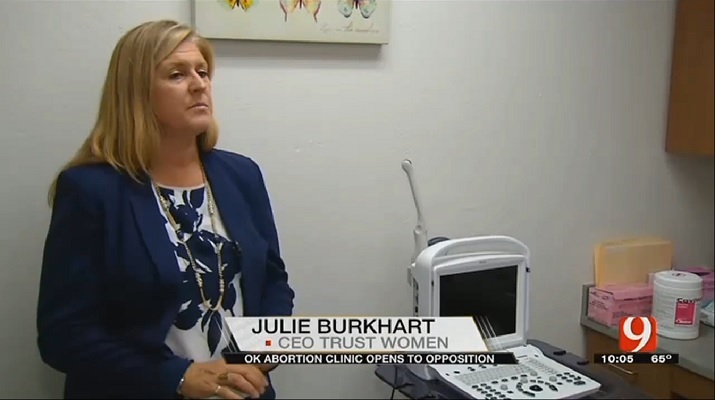
KWTV's Grant Hermes covers the opening of a new reproductive health center in Oklahoma City, which previously had been the largest metropolitan area without an abortion clinic.

Video Round Up

In this clip, Rabbi Lori Koffman discusses the intersection of her faith and her advocacy work for abortion rights, stating, "I'm a woman, I'm a mother, I'm a rabbi, I'm a Jew, I'm an American. And all those pieces of me call me to do this work."

Video Round Up

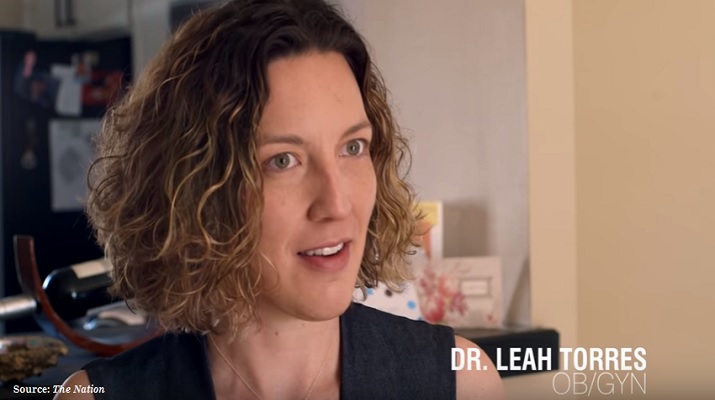
In this clip, The Nation profiles Leah Torres, an OB-GYN who shares her "career changing, life changing" work as an abortion provider in Utah, a state that imposes several restrictions on abortion care.

Video Round Up

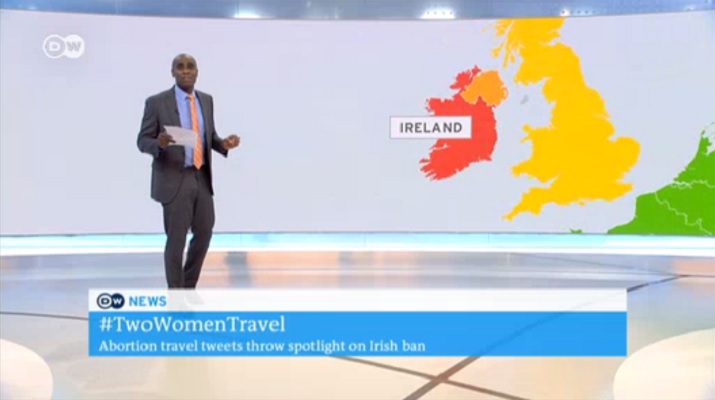
Deutsche Welle's Carl Nasman spotlights @TwoWomenTravel, a Twitter account documenting the experience of two Irish women who traveled to Great Britain to access abortion care for one of the women.

Video Round Up

In this clip, WKYC's Maureen Kyle covers a recent decision by a federal judge to grant a permanent injunction against an Ohio law (HB 294) that would cut $1.3 million from abortion providers.

Video Round Up

In an interview with AOL Build's Emma Gray, Tracy Droz Tragos discusses her new documentary, "Abortion: Stories Women Tell," which shares women's perspectives on abortion care and abortion rights.

Video Round Up

In this clip, WJHG's Matt Galka discusses Florida's decision not to appeal a federal court order currently blocking parts of a state omnibus antiabortion-rights law (HB 1411) from taking effect.

Video Round Up

Marissa Silver, a reporter with Coastal Television's "Your Alaska Link," shares the Alaska Supreme Court's decision to strike down a state law that required a minor's parent to be notified of her decision to seek abortion care.

Video Round Up

Richard Besser, ABC News' chief health and medical editor, discusses a case in which a woman in New York City transmitted the Zika virus to her male partner, the first such occurrence reported in the United States.

Video Round Up

Fox 13's Matt McDonald reports on a ruling by a panel of the 10th U.S. Circuit Court of Appeals that blocks Utah Gov. Gary Herbert (R) from cutting funding to Planned Parenthood.

See All

Datapoints

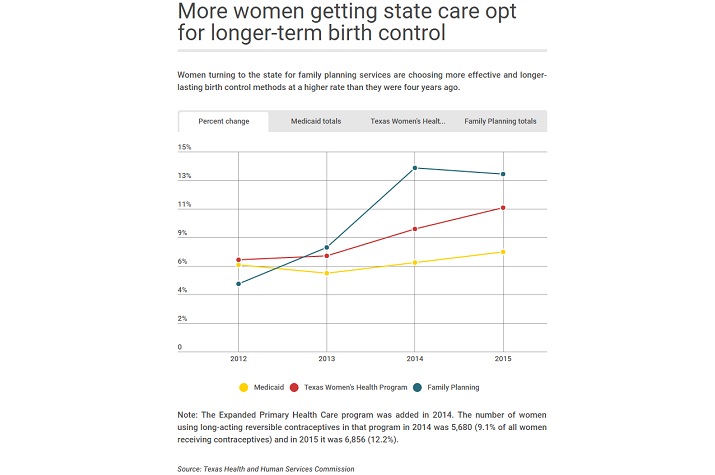
In this infographic, the Texas Health and Human Services Commission (HHSC) outlines data showing that the percentage of Texas women opting for long-acting reversible contraception (LARC) through three state-operated health programs increased between 2012 and 2013.

Datapoints

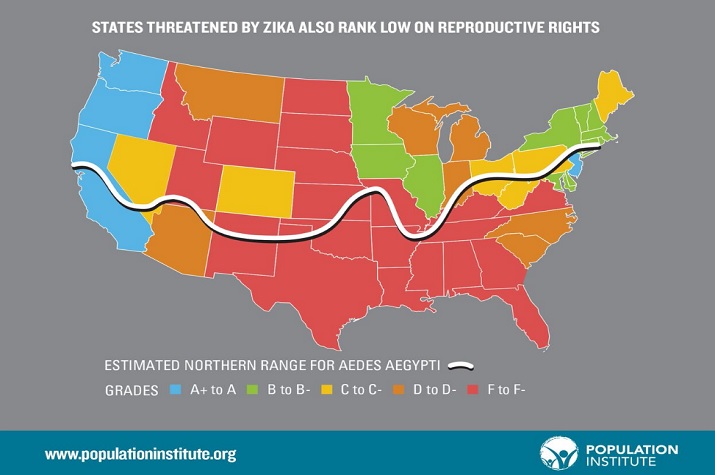
In this map, the Population Institute illustrates how many of the states at risk of the Zika virus scored poorly on measures of reproductive rights and health.

Datapoints

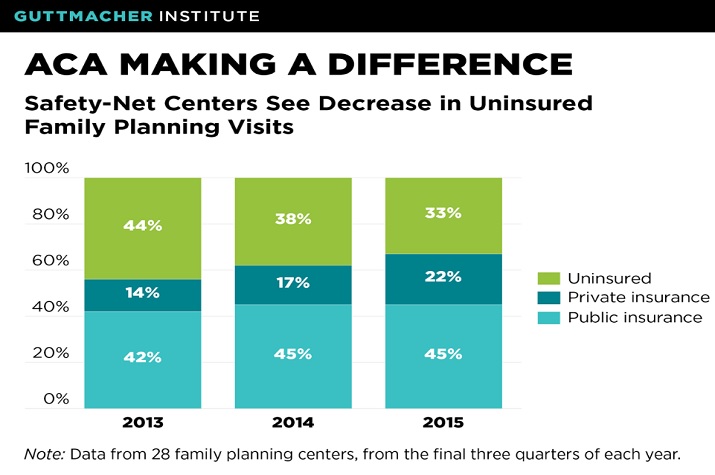
In this infographic, the Guttmacher Institute spotlights the increased proportion of insured visits at 28 Title-X supported family planning centers following the implementation of the Affordable Care Act (ACA) (PL 111-148).

Datapoints

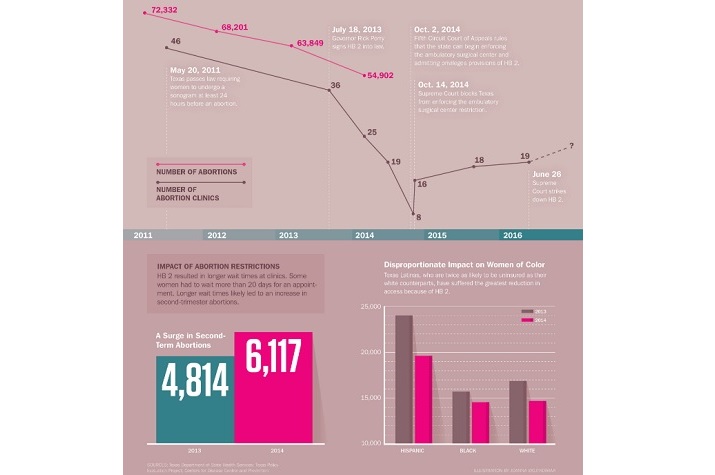
In this infographic, the Texas Observer compiled information from the Texas Department of State Health Services, the Texas Policy Evaluation Project and the Centers for Disease Control and Prevention to provide a snapshot of abortion access in Texas.

Datapoints

In this infographic, the Guttmacher Institute tracks recent trends in state abortion laws.

Datapoints

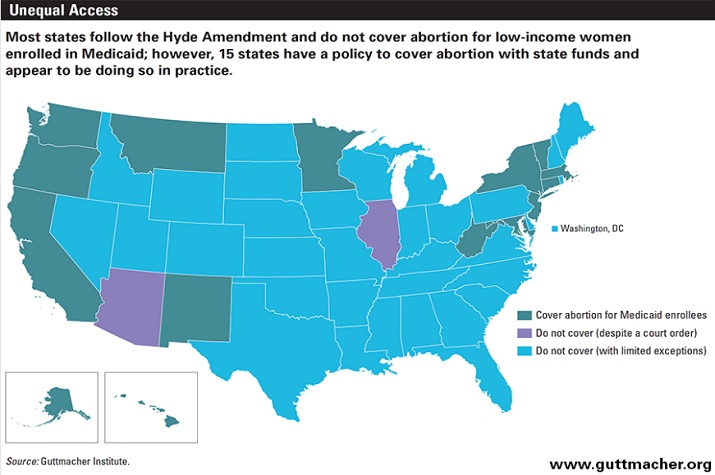
In this map, the Guttmacher Institute highlights the effects of the Hyde Amendment, an appropriations rider that bars federal Medicaid funding from covering abortion care except in the limited cases of rape, incest and life endangerment.

Datapoints

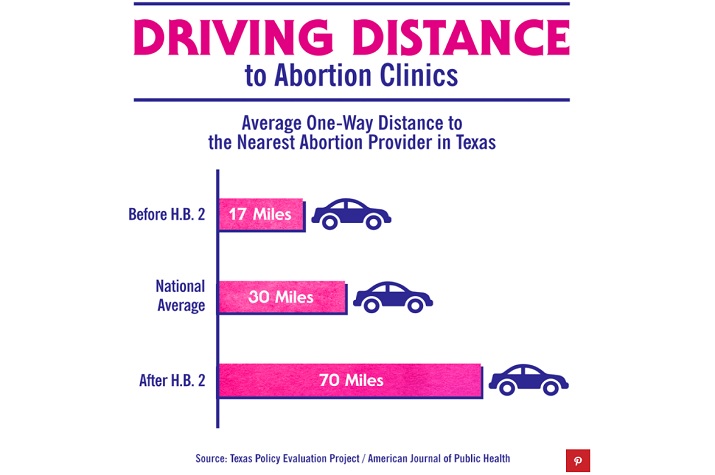
In this gif, Cosmopolitan shares research from the Texas Policy Evaluation Project showing that the average distance a woman in Texas must drive to access the nearest abortion clinic in the state has increased following the implementation of the state's omnibus antiabortion-rights law (HB 2).

Datapoints

In this map, the Kaiser Family Foundation spotlights five states and Washington, D.C., which have each enacted policies designed to facilitate access to contraception.

Datapoints

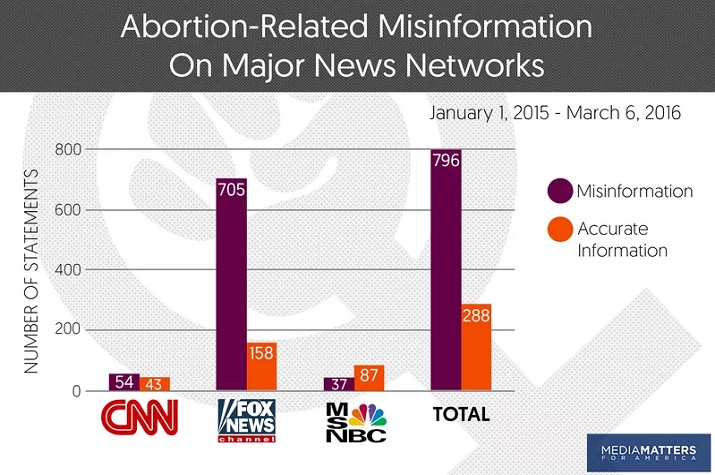
In this chart, Media Matters highlights the findings of a study showing how evening and primetime news programs airing on cable news conveyed more inaccurate than accurate statements about abortion.

Datapoints

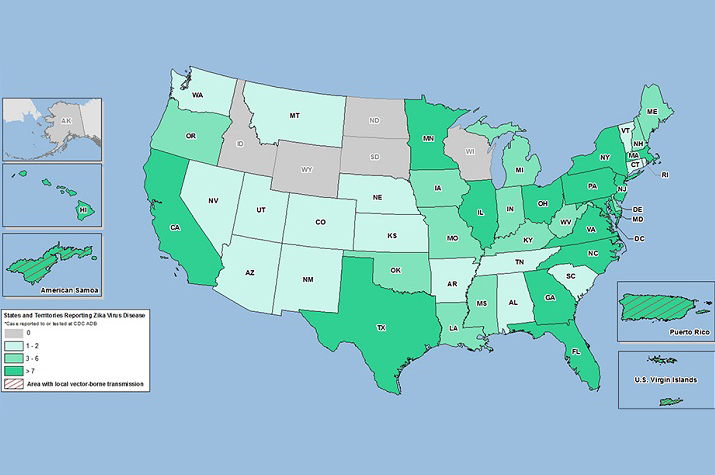
In this map, CDC documents the laboratory-confirmed cases of the Zika virus reported in the United States and U.S. territories.

See All

At a Glance

"A woman's ability to end her pregnancy too often depends on where she lives, her age and how much money is in her pocket."

— Marcela Howell of In Our Own Voice: National Black Women's Reproductive Justice Agenda, discussing ongoing disparities in women's access to abortion care on the 43rd anniversary of Roe v. Wade.

At a Glance

"If women are not free to make decisions about their own lives and health, they are not free. And if women are not free, none of us are."

— Abortion provider Warren Hern, in a STAT News opinion piece on why he continues to offer abortion care despite receiving harassment and death threats throughout his 42-year career.

At a Glance

"Not since before Roe v. Wade has a law or court decision had the potential to devastate access to reproductive health care on such a sweeping scale."

— Nancy Northup, president and CEO of the Center for Reproductive Rights, on a ruling from the 5th U.S. Circuit Court of Appeals that upheld major portions of a Texas antiabortion-rights law.