

"In case you missed it, an Iowa state senator argued on the Senate floor [last] week for a measure to make abortion a 'hate crime' under the Iowa [hate crime] statute," columnist Rekha Basu writes in an opinion piece for the Des Moines Register.
According to Basu, state Sen. Jake Chapman (R) proposed the measure as an amendment to a bill (SF 2284) that "would add gender identity and gender expression to the list of protected classes covered by the state's hate crimes law." She explains that the original measure, which "applies to groups recognized for protection under Iowa's civil rights law," would impose "enhanced penalties for crimes committed out of hatred on the basis of a victim's immutable characteristics, such as race, religion and sexual orientation."
Basu writes that the original bill "is backed by a long list of church, civic and law enforcement groups," and its significance is underscored by the recent murder of a transgender teenager in the state. However, "Chapman instead used the debate to make a case against abortion, by trying to apply hate crimes law to [fetuses]," she writes.
While the proposed amendment "was eventually ruled not germane," Chapman "divert[ed] attention away from legitimate debate on a serious bill to protect a vulnerable group of people from physical attack," Basu writes. She continues, "It's hard to tell if he was mocking or minimizing the severity of assaults on transgender people, or both. And how dare he suggest that exercising a constitutional right to end a pregnancy is based on hatred, and should make someone criminally culpable?"
Basu cites several recent antiabortion-rights efforts in the United States, including "attempts to pass 'personhood' amendments declaring a fetus a person from the moment of conception; to require women to view sonograms before they can get an abortion; to have rapes be determined 'legitimate' before someone seeking Medicaid reimbursement for [providing abortion care] can get paid." Further, in Iowa, she writes that the state medical board has tried "to single out telemedicine abortions from all other telemedicine procedures," and Gov. Terry Branstad (R) only recently relinquished his power to "personally sign off on every Medicaid-funded abortion claim."
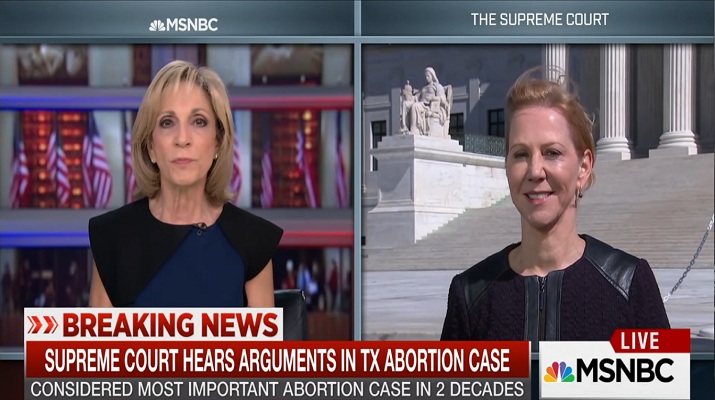
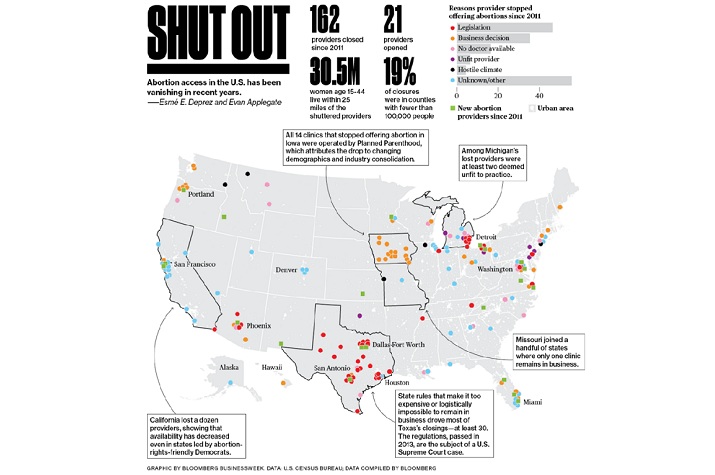
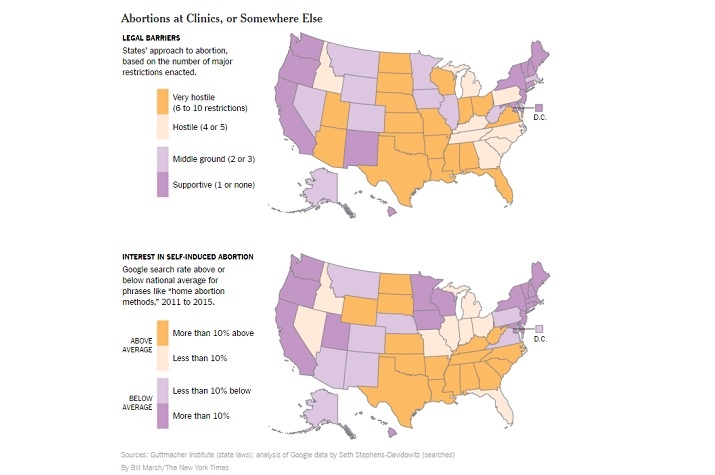
Basu also points to two ongoing lawsuits challenging medically unnecessary, targeted regulation of abortion providers (TRAP laws), one involving a Louisiana law (Act 620) and the other a Texas law (HB 2). According to Basu, the Supreme Court has temporarily halted the Louisiana admitting privileges requirement, and recently heard oral arguments regarding TRAP provisions in Texas' omnibus antiabortion-rights law. She notes that as abortion care is a constitutional right, "any limits" on the procedure "need to have a medical basis."
Basu concludes, "Measures like Chapman's amount to unproductive gimmickry and obstructionism that hurts private people trying to live their lives in accordance with the law, and free from coercion by elected officials. Let's hope this is the end of it" (Basu, Des Moines Register, 3/10).