

FDA on Wednesday approved a new label for a drug used in medication abortion, the New York Times reports (Tavernise et al., New York Times, 3/30).
According to the Washington Post, the label change takes effect immediately (Somashekhar/McGinley, Washington Post, 3/30). The change was met with praise from medical groups and abortion-rights advocates, who said it will ease access to medication abortion (New York Times, 3/30).
Background
FDA first approved the drug, Danco Laboratories' Mifeprex, for medication abortion in 2000 (Clarke/Mincer, Reuters, 3/30). Prior to Wednesday's change, many physicians said the original label for Mifeprex, based on clinical evidence from the 1990s, was outdated, running counter to accepted medical practice and complicating women's access to abortion care.
According to the Times, providers in many states already have been prescribing medication abortion using an evidence-based regimen based on updated evidence showing the drug was effective at lower doses and for a longer time after conception (New York Times, 3/30). The Guttmacher Institute reports that 83 percent of U.S. physicians have already discontinued prescribing according to the outdated guidelines.
Updated label
The updated labeling is now more aligned with scientifically proven, evidence-based medicine. For instance, the new label approves Mifeprex for medication abortion up to 70 days after a woman's last menstrual period. The old label had approved the drug for use up to 49 days after a woman's last menstrual period (Reuters, 3/30).
In addition, the new label reduces the dosage of Mifeprex from 600 mg to 200 mg. According to the Times, most medical societies had considered the previous dosage too high (New York Times, 3/30).
The new label also changes when and how much misoprostol a woman takes for medication abortion. Previously, a woman took 400 mcg three days after taking Mifeprex. Now, a woman is directed to take 800 mcg of misoprostol 24 to 48 hours after taking Mifeprex (Reuters, 3/30).
According to the Times, the new label specifies that a woman can receive the second drug -- to take later at home -- at the same time she receives Mifeprex. While the updated label still requires that a woman "follow-up with [her] health care provider," abortion-rights advocates said the phrasing could be interpreted so as to avoid requiring a woman to make another visit to a physician. For example, a woman using the drug could follow up with a lab test to confirm the pregnancy was terminated (New York Times, 3/30).
The label also allows medical professionals other than physicians, such as nurse practitioners, to administer the drugs (Washington Post, 3/30). According to Vicki Saporta, president and CEO of the National Abortion Federation, the change "has the potential of opening medica[tion] abortion care in more rural areas because it does not have to be given by a surgical abortion provider" (Reuters, 3/30).
Implications
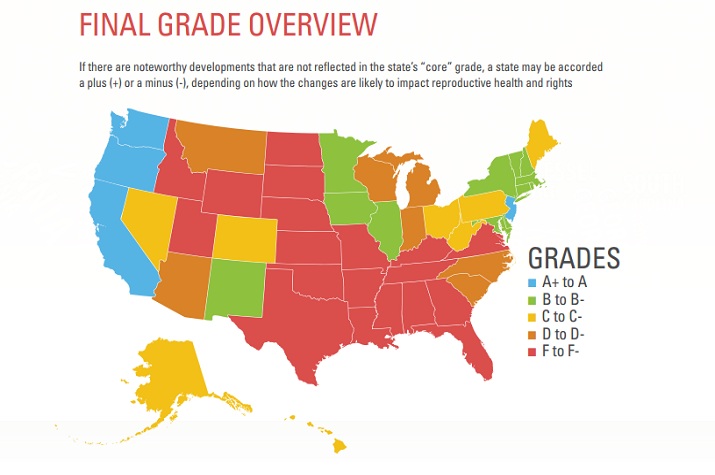
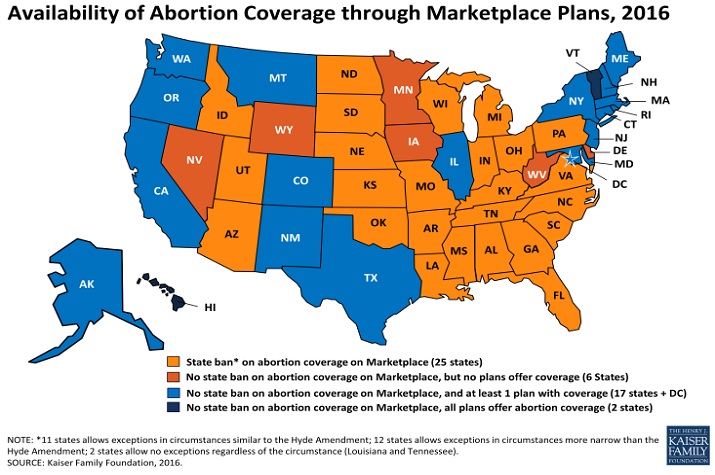
Abortion-rights supporters said the label update would immediately affect the provision of abortion care in states that have laws requiring doctors to comply with the outdated label. According to advocates, providers in those states -- including Ohio, North Dakota and Texas -- likely will begin offering care in accordance with the updated label over the next few days.
According to AP/Modern Healthcare, Arkansas, Arizona and Oklahoma enacted similar restrictions, although the laws in those states have been blocked by the courts (AP/Modern Healthcare, 3/30). The Times reports that some states also require that a physician administer a medication abortion, rather than a physician's assistant or nurse practitioner, and several states also mandate that a physician be physically present when prescribing the drugs, rather than doing so via telemedicine.
Amy Hagstrom Miller -- president of Whole Woman's Health, the lead plaintiff in a Supreme Court case challenging provisions in Texas' omnibus antiabortion-rights law (HB 2) -- said, "This will allow us to do two things immediately: Expand medical abortions up to 10 weeks of pregnancy, and cut out the unnecessary additional visit for the second dose of medication." According to Hagstrom Miller, the percentage of patients opting for medication abortion declined from 40 percent prior to HB 2's implementation to about 5 percent after the law took partial effect (New York Times, 3/30).
Similarly, Chrisse France, executive director of the Ohio-based abortion clinic Preterm, said the clinic would start providing medication abortion in compliance with the updated protocol immediately (AP/Modern Healthcare, 3/30). "The label change for medication abortion will mean that it will once again be a real option for Preterm's patients and women across the state," France said, adding, "We will no longer be forced to practice medicine mandated by politicians whose ultimate goal is to shut us down."
According to the Washington Post, Ohio's law targeting medication abortion took effect in 2011. The law requires physicians to comply with the outdated protocol, which made the procedure more expensive and required a woman to visit a clinic four times. France noted that after the law was passed, the percentage of patients who obtained a medication abortion decreased from 13 percent to fewer than 2 percent.
Comments
FDA did not authorize anyone involved in the labeling decision to comment on the update, citing concerns about antiabortion-rights harassment or violence.
Mark DeFrancesco, president of the American Congress of Obstetricians and Gynecologists, said the organization was "pleased that the updated FDA-approved regimen for mifepristone reflects the current available scientific evidence and best practices" (Washington Post, 3/30).
Separately, Raegan McDonald-Mosley, CMO of Planned Parenthood Federation of America, called the update "another affirmation from the FDA that medication abortion is a safe and effective option to end an early pregnancy." Noting that the prior label was based on clinical evidence from the 1990s, McDonald-Mosely added, "Numerous subsequent studies have demonstrated the safety and effectiveness of a regimen using a lower dosage of mifepristone that can also be used two weeks later in pregnancy, up to 70 days since a woman's last menstrual period. This new regimen has been recognized by the American Medical Association and the American College of Obstetricians and Gynecologists as 'superior' to the regimen on the previous FDA-approved label" (Frieden, MedPage Today, 3/30).
Nancy Northup, president and CEO of the Center for Reproductive Rights, also praised the update, stating, "The FDA's approval of a label reflecting a more updated, evidence-based protocol for medication abortion has the potential to expand women's options for safely ending a pregnancy in the earliest weeks." She added, "This label change underscores just how medically unnecessary and politically motivated restrictions on medication abortion in states like Texas and Oklahoma truly are, and demonstrates the lengths politicians will go to single out reproductive healthcare to restrict women's rights" (AP/Modern Healthcare, 3/30).