
National Partnership for Women & Families

In the News

Op-ed calls on Ariz. House lawmakers to oppose bill to restrict medication abortion

Arizona lawmakers who oppose abortion rights are again trying to require "physicians to prescribe medication [abortion drugs] with an outdated FDA protocol," Ilana Addis, chair of the American Congress of Obstetricians and Gynecologists' (ACOG) Arizona section, and Julie Kwatra, legislative chair of ACOG's Arizona section, write in an Arizona Capitol Times opinion piece.

They note that the Arizona Legislature in 2012 passed a similar law "that forced doctors to practice against the standard of care" under the guise of "protecting women's health." According to the authors, "That law was extensively litigated in both state and federal court, at the taxpayer's expense" and eventually was "found in violation of the Arizona constitution and overturned."

"This 'new' legislation [SB 1324] is almost exactly the same, with some wording changes to reverse the outcome of the lawsuit," Addis and Kwatra write. They explain that the bill "dictates how a physician can prescribe medication to a woman seeking a [medication abortion]" and requires a physician "to prescribe in accordance with the original medication labeling, which was printed fifteen years ago."

According to Addis and Kwatra, a more recent protocol "uses lower medication doses, is more effective, safer, and more convenient for the patient." Citing endorsements from ACOG and several other health organizations, they note that the updated protocol "has been widely used for years and is the current standard of care." The authors explain that "[m]edication labels and FDA protocols are often frozen in time while science moves forward," given that the updating process is "time consuming and costly." They add, "Off-label use is common and safe; in fact, the FDA itself endorses off-label prescribing if it is evidence-based."

Addis and Kwatra write, "The goal of [SB 1324] is easy to decipher: It is meant to limit women's access to safe, legal, and evidence-based abortion services. ... by making pregnancy termination more costly and more inconvenient (requiring up to three doctor visits instead of one)."

"[T]his bill does not protect or promote women's health," they continue, noting, "Abortion (either medication-induced or surgical) is extremely safe with a low complication rate."

Addis and Kwatra write that they "uniformly oppose government intrusion into the practice of medicine, especially when that intrusion runs counter to the standard of care and evidence-based practice." Noting that they "cannot think of another specialty where the Legislature is so invasive," the authors note that the measure also would "intrud[e] upon the doctor-patient relationship ..., interfering with a physician's ability to use his or her own professional judgment for each patient's unique circumstances."

"If this [bill] passes," Addis and Kwatra write, "it will again be mired down in litigation, at the taxpayer's expense." They conclude, "We encourage our legislators in the House to oppose this bill" (Addis/Kwatra, Arizona Capitol Times, 3/21).

Video Round Up

In part of a longer clip covering multiple topics, Reuters TV reports on an omnibus antiabortion-rights measure (HB 1411) recently signed into law by Florida Gov. Rick Scott (R) that bars local health departments from distributing funds for non-abortion-related care to organizations affiliated with abortion providers, among several other provisions.

Video Round Up

In this clip, Fox 17 News' Michele DeSelms covers legislation (HB 4787, HB 4830) passed last week in the Michigan House that would penalize individuals who coerce a woman into receiving an abortion.

Video Round Up

13 News WOWK reporter Alyssa Meisner interviews several women in West Virginia about Nurx, a smartphone application that helps women access birth control.

Video Round Up

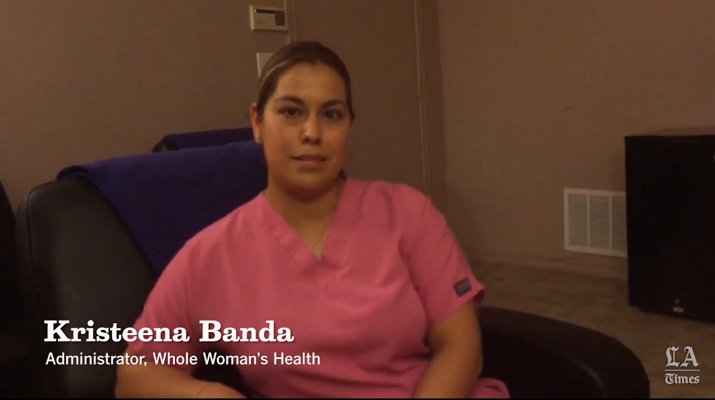
In this clip, Los Angeles Times reporter Molly Hennessy-Fiske hears from Kristeena Banda -- a clinic administrator at Whole Woman's Health, an abortion clinic in McAllen, Texas -- about what is at stake in a legal challenge to parts of Texas' omnibus antiabortion-rights law (HB 2).

Video Round Up

WTVF's Chris Conte reports on the outcome of a Tennessee House subcommittee hearing, which advanced one antiabortion-rights bill while deferring or withdrawing several others.

Video Round Up

John Oliver on HBO's "Last Week Tonight with John Oliver" discusses the proliferation of attacks on abortion rights in the United States and comments on how such restrictions affect a woman's access to abortion care.

Video Round Up

In a segment on HB 2, comedian Samantha Bee interviews Ilyse Hogue, president of NARAL Pro-Choice America, and Texas Rep. Dan Flynn (R), one of the bill's authors, for TBS' "Full Frontal with Samantha Bee," Vox reports.

Video Round Up

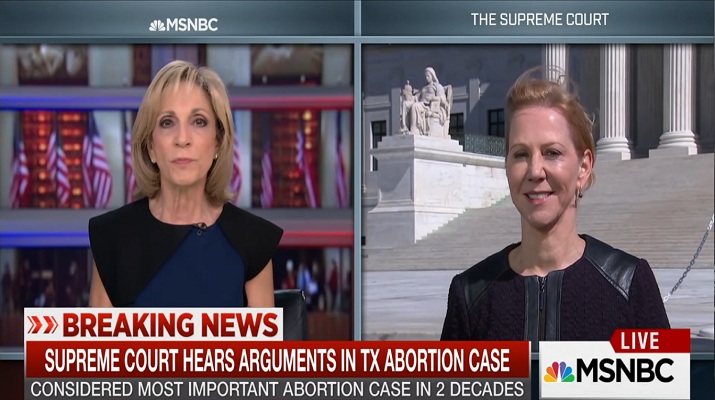
MSNBC's Andrea Mitchell hears from Nancy Northup, president of the Center for Reproductive Rights, about oral arguments before the Supreme Court in a case challenging provisions of Texas' omnibus antiabortion-rights law (HB 2).

Video Round Up

In this clip from Reuters/AOL.com, Vicki Cowart, CEO of Planned Parenthood of the Rocky Mountains, speaks about the reopening of a Planned Parenthood clinic in Colorado that was the site of a deadly shooting last November.

Video Round Up

MSNBC's Melissa Harris-Perry hears from guests about the implications of the Zika virus outbreak for women in countries that have limited access to reproductive health care.

See All

Datapoints

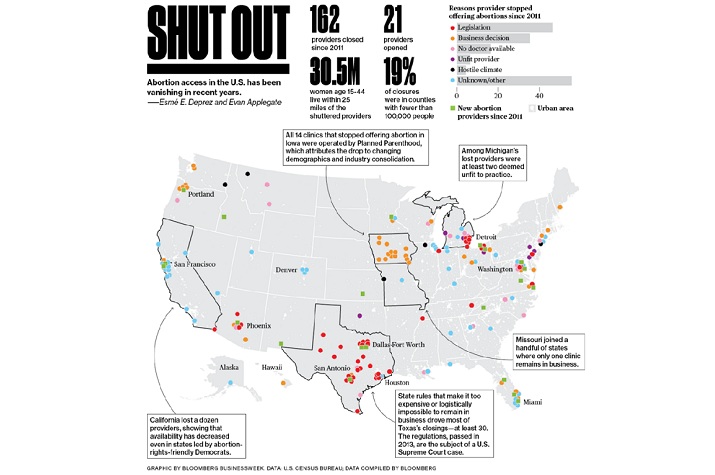
This map, from Bloomberg Business, highlights the rapid decline in abortion access in the United States since 2011.

Datapoints

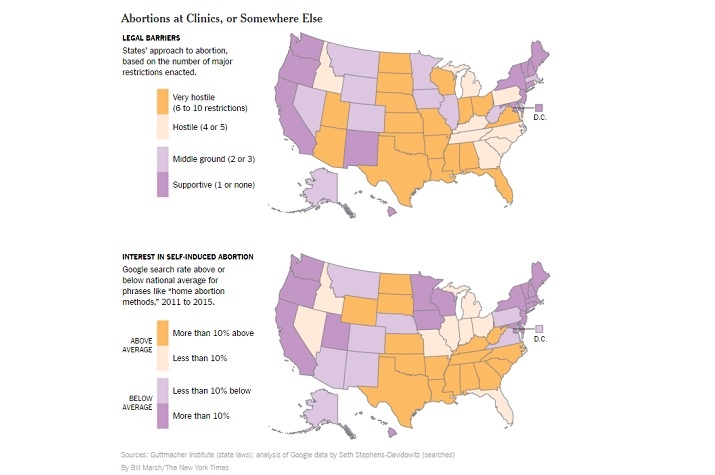
These maps, compiled using data from the New York Times and the Guttmacher Institute, underscore findings from a recent Times investigation, including that there were more than 700,000 searches for how to self-induce an abortion in 2015.

Datapoints

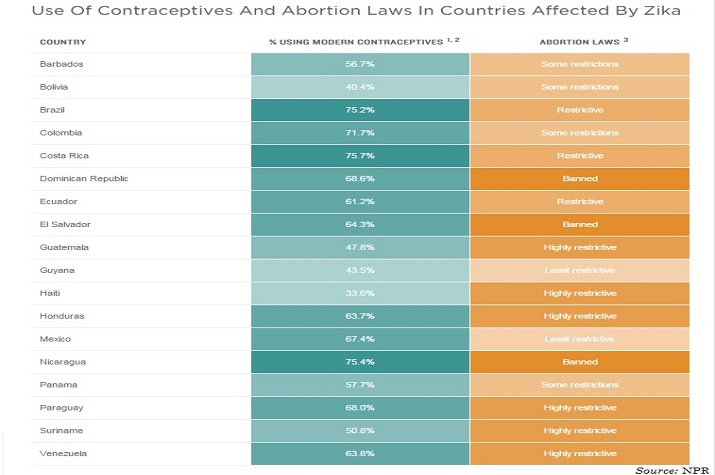
This chart, compiled by NPR, shows how the majority of countries affected by the Zika virus, which might be linked to a severe birth defect, curb access to contraception and abortion care.

Datapoints

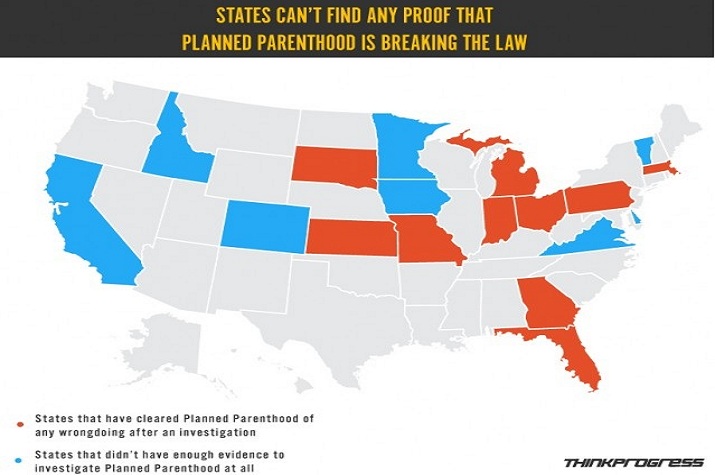
In this map, Center for American Progress' "ThinkProgress" spotlights the 12 states that have cleared Planned Parenthood of any wrongdoing after launching investigations into the organization.

Datapoints

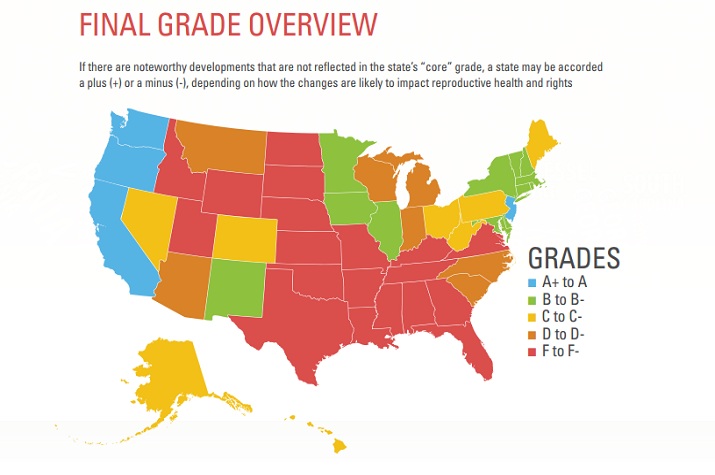
In its latest report card, the Population Institute provides a snapshot of the condition of reproductive rights and health in each state in 2015.

Datapoints

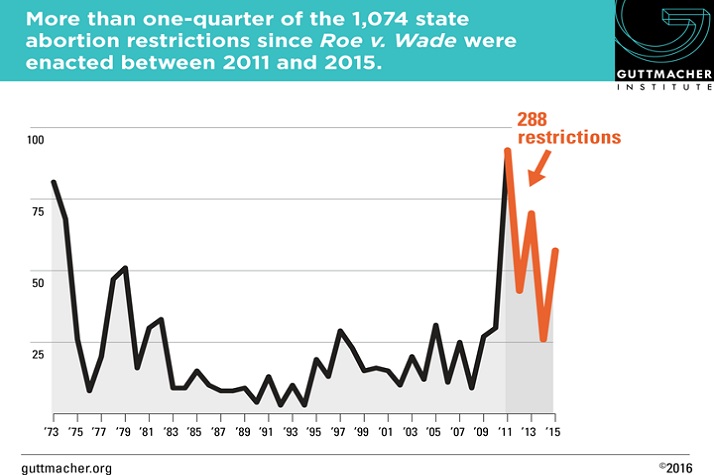
The Guttmacher Institute in this graph shows the rapid increase in the number of state abortion restrictions over the past few years.

Datapoints

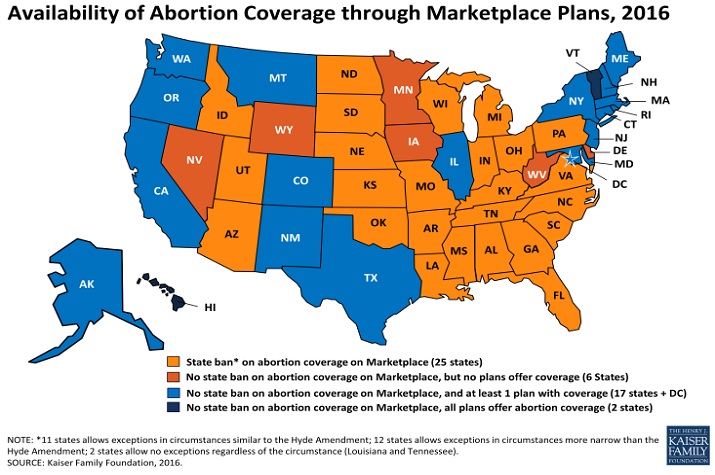
In this map, the Kaiser Family Foundation shows how widely abortion coverage varies from state to state in insurance plans sold through the Affordable Care Act's (PL 111-148) insurance marketplaces.

Datapoints

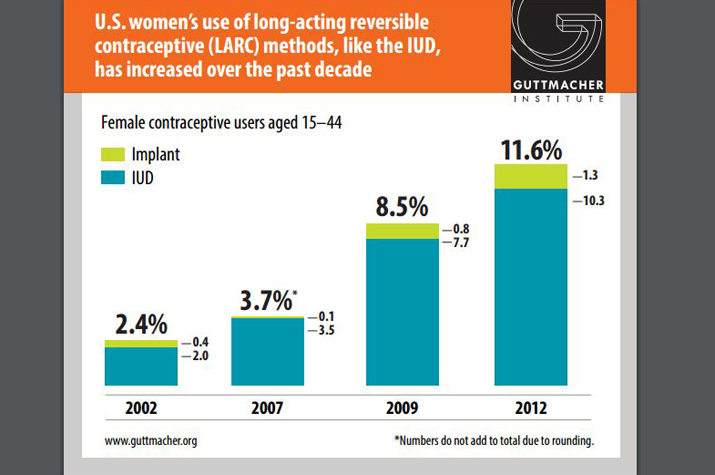
This infographic, released with a new Guttmacher Institute study, shows the increase in use of long-acting reversible contraception among U.S. women between 2002 and 2012.

Datapoints

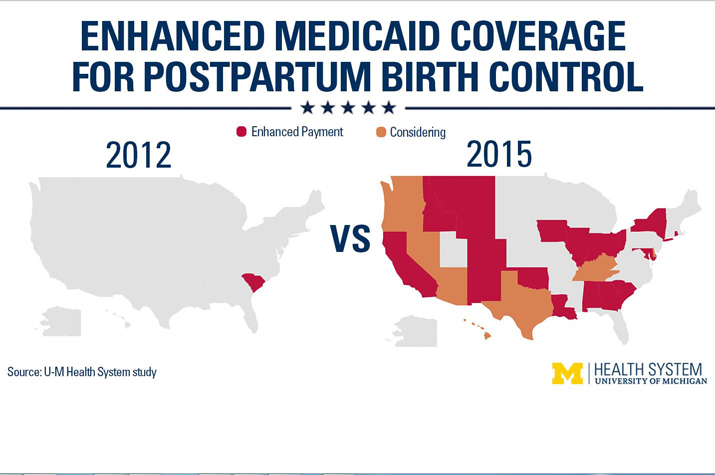
This map, released with a study from the University of Michigan Health System, shows how an increasing number of state Medicaid programs over the last three years are providing reimbursement for immediate postpartum LARC provision.

Datapoints

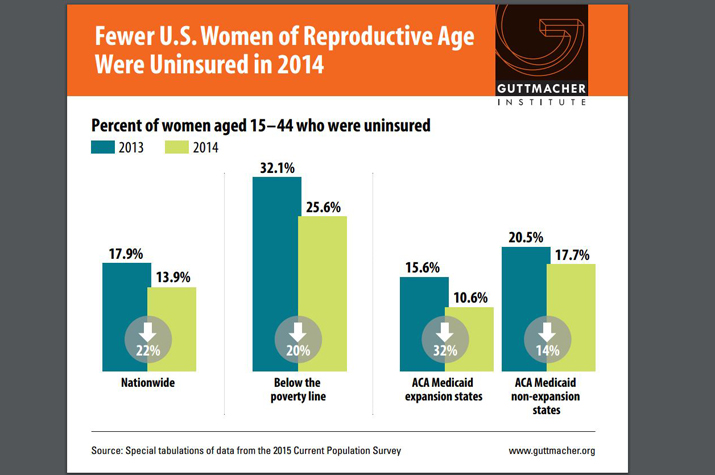
In this infographic, the Guttmacher Institute shows how the proportion of uninsured reproductive-age women in the U.S. declined from 17.9% in 2013 to 13.9% in 2014, the first year in which the Affordable Care Act was implemented fully.

See All

At a Glance

"A woman's ability to end her pregnancy too often depends on where she lives, her age and how much money is in her pocket."

— Marcela Howell of In Our Own Voice: National Black Women's Reproductive Justice Agenda, discussing ongoing disparities in women's access to abortion care on the 43rd anniversary of Roe v. Wade.

At a Glance

"If women are not free to make decisions about their own lives and health, they are not free. And if women are not free, none of us are."

— Abortion provider Warren Hern, in a STAT News opinion piece on why he continues to offer abortion care despite receiving harassment and death threats throughout his 42-year career.

At a Glance

"Not since before Roe v. Wade has a law or court decision had the potential to devastate access to reproductive health care on such a sweeping scale."

— Nancy Northup, president and CEO of the Center for Reproductive Rights, on a ruling from the 5th U.S. Circuit Court of Appeals that upheld major portions of a Texas antiabortion-rights law.