

FDA's recent update to the label of a drug used in medication abortion has improved medication abortion access for women in Texas, according to an official with Planned Parenthood of Greater Texas (PPGT), KUOW reports (KUOW, 4/19).
Updated label
FDA issued the updated label for Mifeprex, one of the two drugs used in a medication abortion, in March. Prior to the update, many physicians said the original label, based on clinical evidence from the 1990s, was outdated, running counter to accepted medical practice and complicating women's access to abortion care. The updated labeling is now more aligned with scientifically proven, evidence-based medicine.
Specifically, the new label approves Mifeprex for medication abortion up to 70 days after a woman's last menstrual period. The old label had approved the drug for use up to 49 days after a woman's last menstrual period. In addition, the new label reduces the dosage of Mifeprex from 600 mg to 200 mg. Most medical societies had considered the previous dosage too high.
The new label also changes when and how much misoprostol a woman takes for medication abortion. Previously, a woman took 400 mcg three days after taking Mifeprex. Now, a woman is directed to take 800 mcg of misoprostol 24 to 48 hours after taking Mifeprex.
The new label specifies that a woman can obtain the second drug -- to take later at home -- at the same time she receives Mifeprex. While the updated label still requires that a woman "follow-up with [her] health care provider," abortion-rights advocates said the phrasing could be interpreted so as to avoid requiring a woman to make another visit to a physician. For example, a woman using the drug could follow up with a lab test to confirm the pregnancy was terminated.
The label also allows medical professionals other than physicians, such as nurse practitioners, to administer the drugs (Women's Health Policy Report, 3/31).
Medication abortion access prior to label update
Sarah Wheat, chief external affairs officer at PPGT, said that Texas' omnibus antiabortion-rights law (HB 2) has presented barriers to medication abortion for Texas women. The Supreme Court currently is considering two provisions in the law.
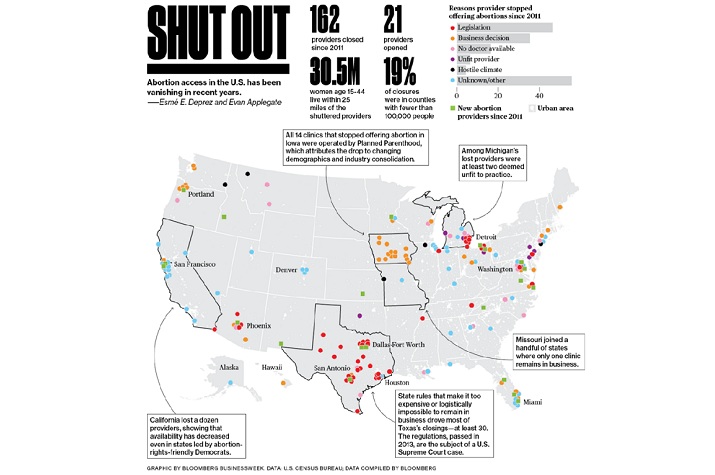
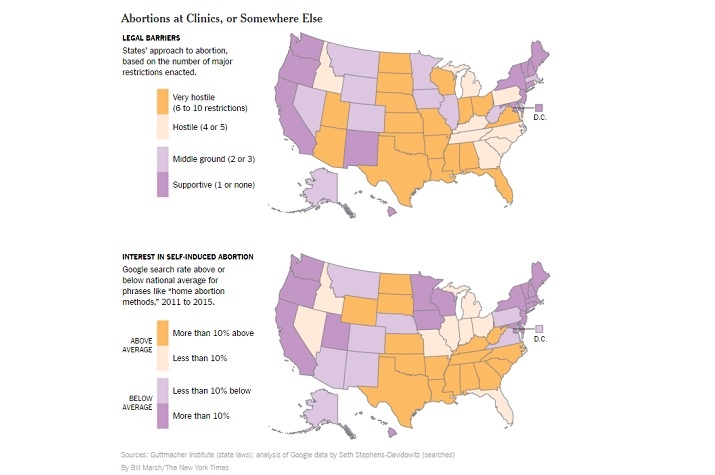
Among other provisions, HB 2 stipulates that medication abortion may only be provided in accordance with the FDA label. As a result, until the update in March, providers in the state were obligated to comply with the outdated label. Further, women in Texas were required to visit a provider four times to complete the medication abortion process, a requirement that became more difficult to meet as clinics shut down under other provisions in HB 2.
An analysis by the Texas Policy Evaluation Project (TxPEP) found that medication abortion decreased 70 percent since HB 2 took effect. The study also found that, among women whose nearest clinic closed under HB 2, 37 percent who preferred medication abortion to surgical abortion were unable to receive medication abortion, according to Liza Fuentes, a co-investigator on the study.
Fuentes noted that the findings were not "so surprising since we know that medication abortion access was highly restricted."
Separately, Wheat said, "We had only about one percent of our patients (who) were actually able to choose medication abortion and that was in large part due to the requirement that they had to make four separate visits to the health center."
More women can receive medication abortion
In the three weeks since the label update, PPGT has seen the number of women who have medication abortion nearly quadruple, according to Wheat. She attributes the trend to the label change.
Wheat noted, "We know that many women want this option and choose this option, and we expect that about 40 percent of our patients will once again choose medication abortion" (KUOW, 4/19).