


Recent Headlines
Video Round Up

In a segment on HB 2, comedian Samantha Bee interviews Ilyse Hogue, president of NARAL Pro-Choice America, and Texas Rep. Dan Flynn (R), one of the bill's authors, for TBS' "Full Frontal with Samantha Bee," Vox reports.
Video Round Up
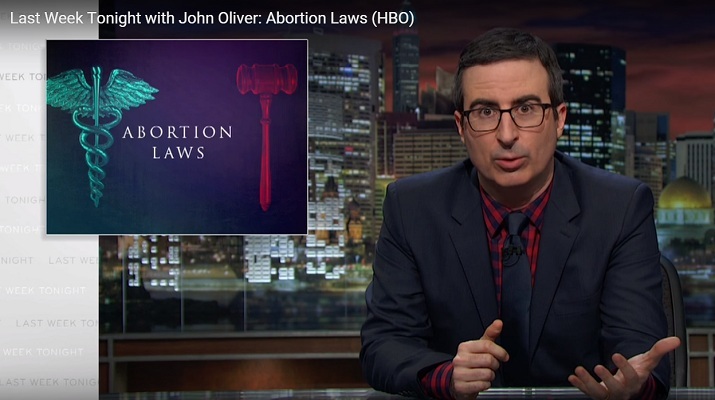
John Oliver on HBO's "Last Week Tonight with John Oliver" discusses the proliferation of attacks on abortion rights in the United States and comments on how such restrictions affect a woman's access to abortion care.
Video Round Up
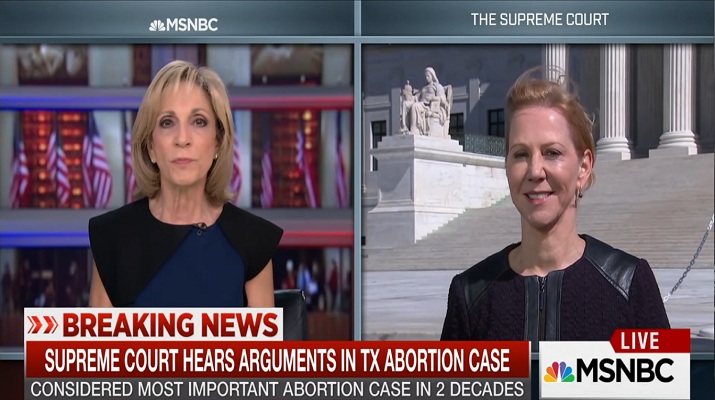
MSNBC's Andrea Mitchell hears from Nancy Northup, president of the Center for Reproductive Rights, about oral arguments before the Supreme Court in a case challenging provisions of Texas' omnibus antiabortion-rights law (HB 2).
Video Round Up
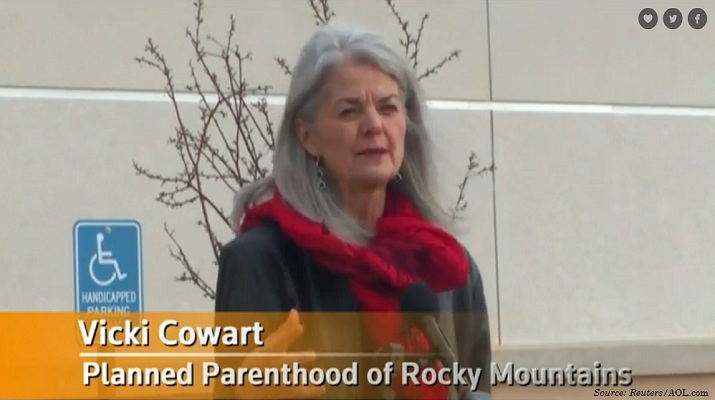
In this clip from Reuters/AOL.com, Vicki Cowart, CEO of Planned Parenthood of the Rocky Mountains, speaks about the reopening of a Planned Parenthood clinic in Colorado that was the site of a deadly shooting last November.
Video Round Up
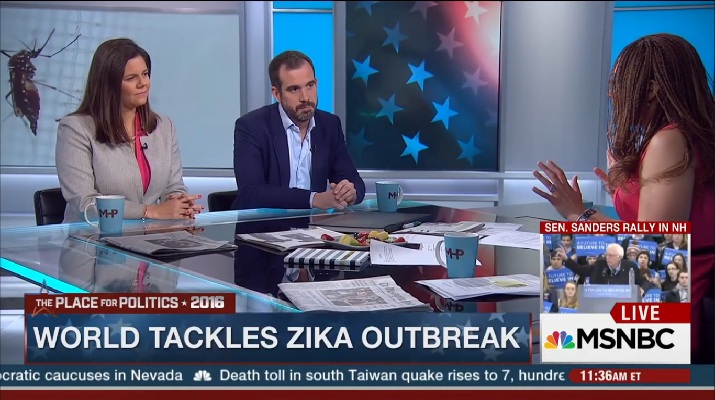
MSNBC's Melissa Harris-Perry hears from guests about the implications of the Zika virus outbreak for women in countries that have limited access to reproductive health care.
Video Round Up
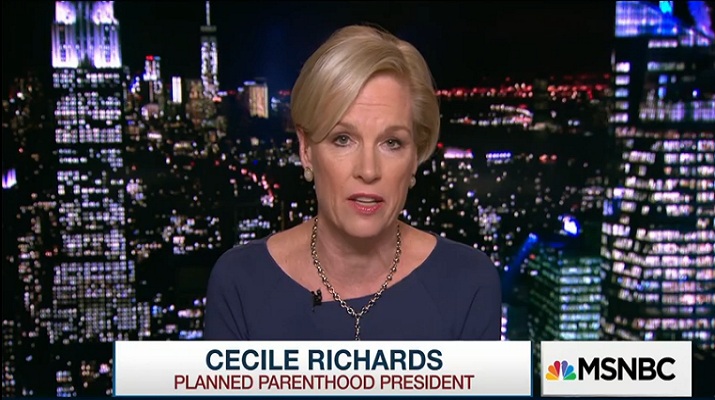
In this clip, Cecile Richards, president of Planned Parenthood Federation of America and Planned Parenthood Action Fund, speaks with MSNBC's Chris Matthews about a Texas grand jury investigation into Planned Parenthood that cleared the organization of wrongdoing and instead resulted in indictments for two abortion-rights opponents involved in filming misleading videos targeting Planned Parenthood.
Video Round Up

In a short film presented by Refinery29 in partnership with Planned Parenthood, several women share personal abortion stories.
Video Round Up
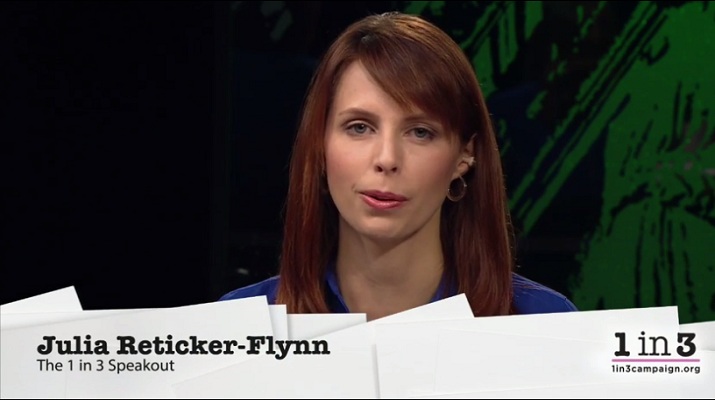
In this video, Julia Reticker-Flynn, campaign director of Advocates for Youth's 1 in 3 Campaign, hosts the project's second annual abortion speakout, which features participants' personal abortion stories and experiences to combat abortion stigma.
Video Round Up
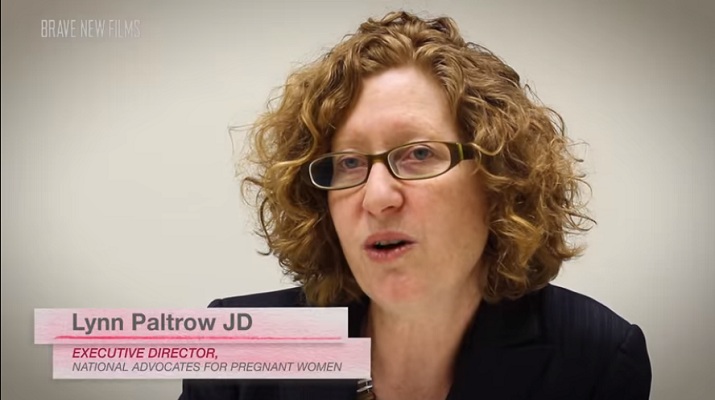
"To Prison for Pregnancy," a documentary presented by Brave New Films, discusses how U.S. feticide laws are being used to penalize pregnant women, particularly minority and low-income women.
Video Round Up
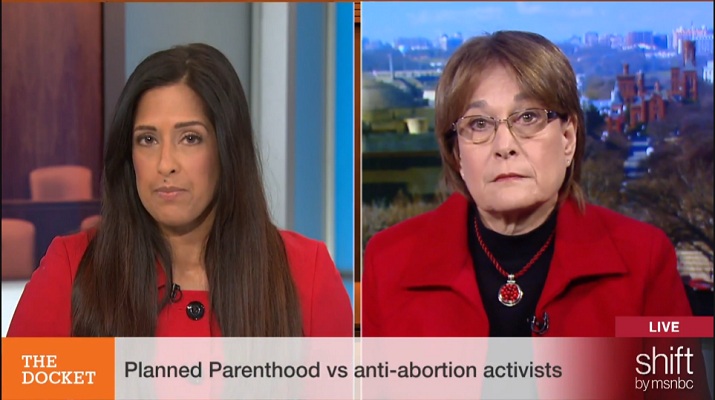
Seema Iyer, host of MSNBC's "The Docket," hears from Vicki Saporta, president of the National Abortion Federation, about legal challenges facing the Center for Medical Progress, an antiabortion-rights group that released a series of misleading videos targeting Planned Parenthood.
Datapoints
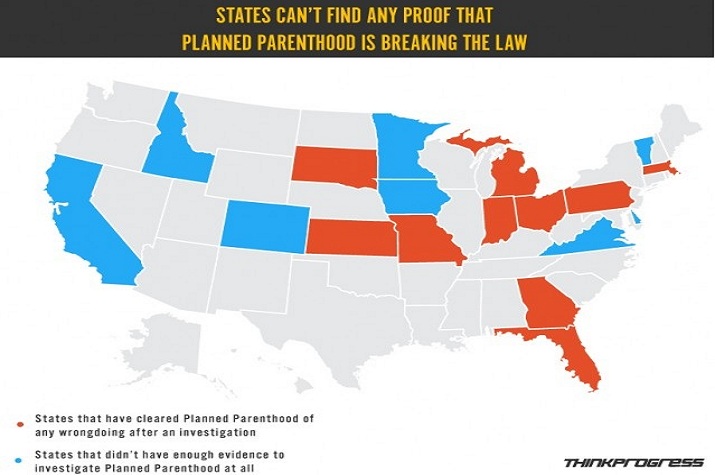
In this map, Center for American Progress' "ThinkProgress" spotlights the 12 states that have cleared Planned Parenthood of any wrongdoing after launching investigations into the organization following the release of misleading videos targeting Planned Parenthood's fetal tissue donation program.
Datapoints
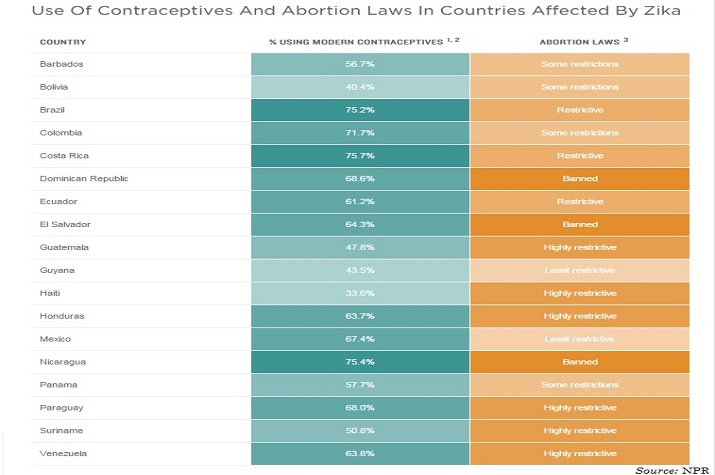
This chart, compiled by NPR, shows how the majority of countries affected by the Zika virus, which might be linked to a severe birth defect, curb access to contraception and abortion care.
Datapoints
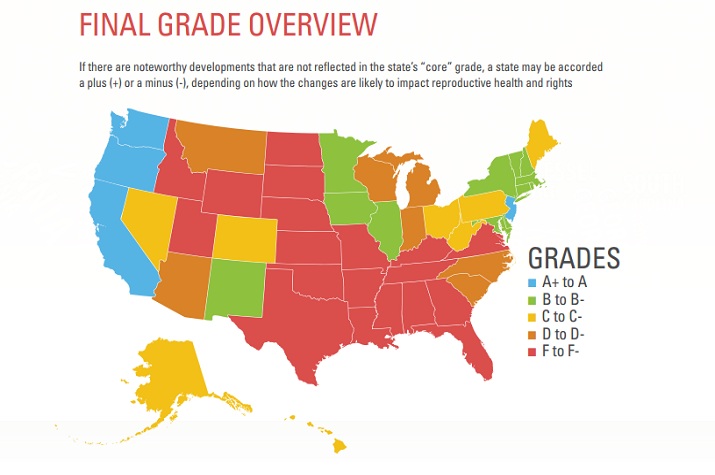
In its latest report card, the Population Institute provides a snapshot of the condition of reproductive rights and health in each state in 2015.
Datapoints
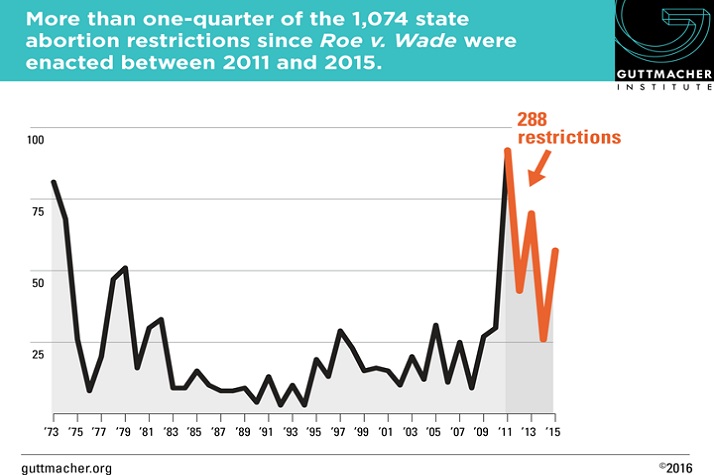
The Guttmacher Institute in this graph shows the rapid increase in the number of state abortion restrictions over the past few years.
Datapoints
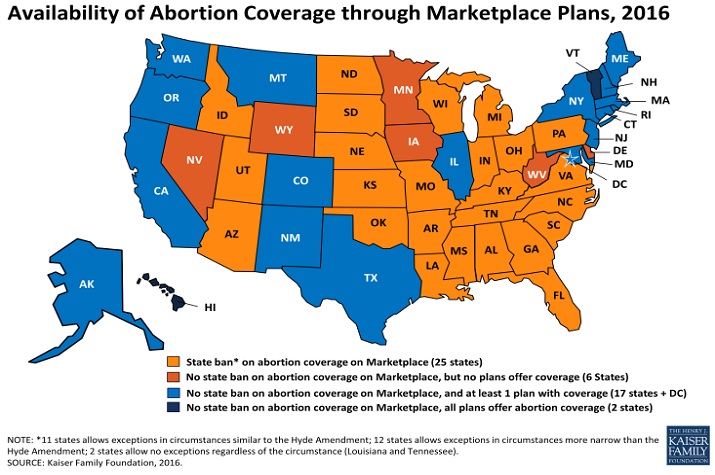
In this map, the Kaiser Family Foundation shows how widely abortion coverage varies from state to state in insurance plans sold through the Affordable Care Act's (PL 111-148) insurance marketplaces.
Datapoints
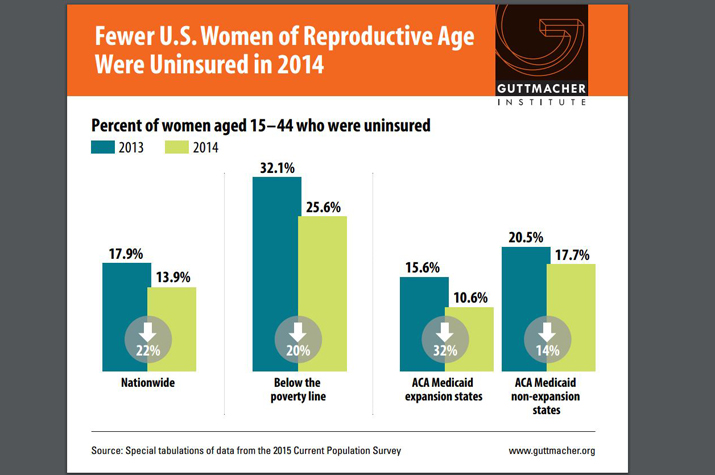
In this infographic, the Guttmacher Institute shows how the proportion of uninsured reproductive-age women in the U.S. declined from 17.9% in 2013 to 13.9% in 2014, the first year in which the Affordable Care Act was implemented fully.
Datapoints
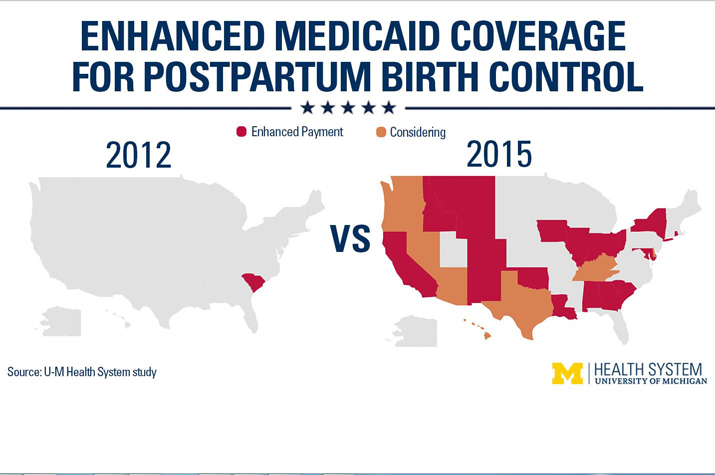
This map, released with a study from the University of Michigan Health System, shows how an increasing number of state Medicaid programs over the last three years are providing reimbursement for immediate postpartum LARC provision.
Datapoints
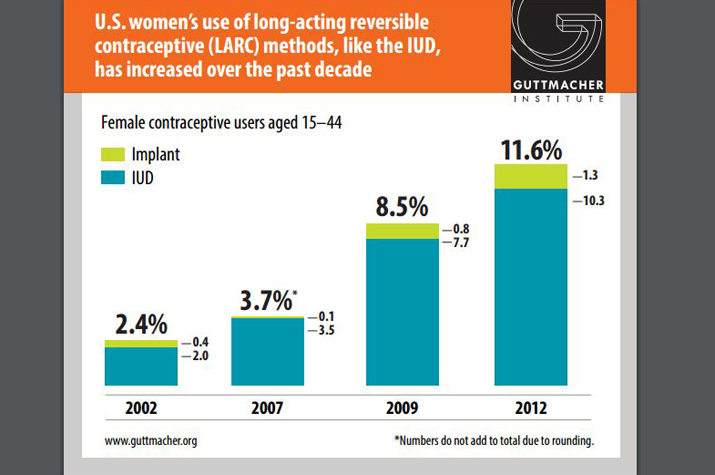
This infographic, released with a new Guttmacher Institute study, shows the increase in use of long-acting reversible contraception among U.S. women between 2002 and 2012.
Datapoints
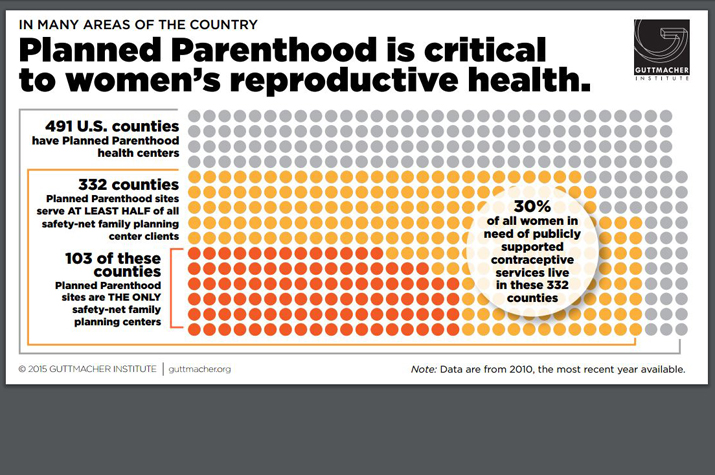
The Guttmacher Institute in this infographic counters antiabortion-rights claims that alternative providers could cover any gaps in health care services if Planned Parenthood is defunded.
Datapoints
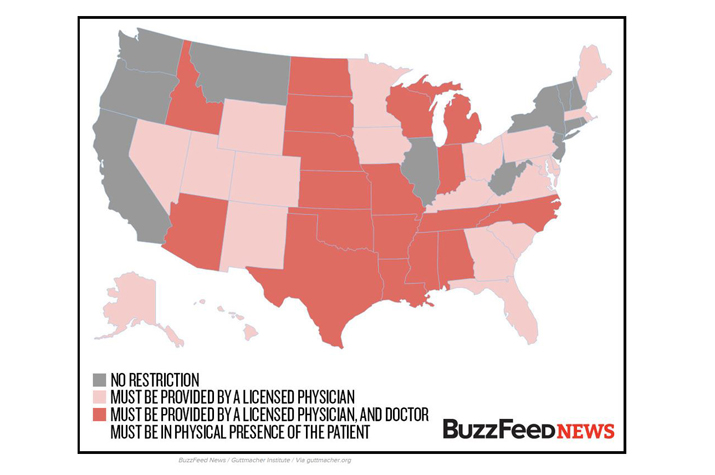
This map marks the 15th anniversary of medication abortion's FDA approval by detailing certain restrictions on the drugs across the country. According toBuzzfeed News, lawmakers in 38 states have passed these medication abortion restrictions.
At a Glance
"A woman's ability to end her pregnancy too often depends on where she lives, her age and how much money is in her pocket."
— Marcela Howell of In Our Own Voice: National Black Women's Reproductive Justice Agenda, discussing ongoing disparities in women's access to abortion care on the 43rd anniversary of Roe v. Wade.

The Editors
Debra Ness, publisher & president, National Partnership
Sarah Lipton-Lubet, associate editor & director of reproductive health programs, National Partnership
Jessi Leigh Swenson, associate editor & senior policy counsel, National Partnership
Freya Riedlin, associate editor & reproductive health law fellow, National Partnership
Dipona Bandy, assistant editor & reproductive health program assistant, National Partnership
Lauren Sogor, assistant editor & health communications manager, National Partnership
Cindy Romero, assistant editor & communications associate, National Partnership
Marcelle Maginnis, associate editor
Amanda Wolfe, senior director
Joe Infantino, Rachel Schulze, staff writers
Tucker Ball, chief digital officer, National Partnership
