
National Partnership for Women & Families

In the News

Op-Ed Says Tenn. Woman's Self-Induced Abortion Attempt Signals Return to Pre-Roe Environment

In an opinion piece for The Guardian, columnist Jessica Valenti writes about how the recent indictment of a Tennessee woman who attempted to self-induce an abortion by using a coat hanger signals a return to "the desperation and horror of a time" before Roe v. Wade, "when, lacking all other options, women took matters into their own hands."

Valenti explains that the woman, Anna Yocca, allegedly attempted to self-induce an abortion using a coat hanger at 24 weeks of pregnancy. After experiencing excessive blood loss, Yucca was taken to a hospital. Valenti writes, "In a just world, this news would provoke empathetic outrage -- Yocca's desperation and inability to obtain a safe abortion prove that we are shamefully failing women." However, "[w]e live in a world, in a country, where women who want to end their pregnancies are considered contemptible," Valenti continues, explaining that Yocca "was arrested for first-degree attempted murder."

Valenti cites a recent study that found "that over 100,000 women" in Texas, which has onerous abortion restrictions, "have attempted to self-abort." She notes that abortion "restrictions are harsh in Tennessee as well -- in addition to mandates like [mandatory delays], 96% of counties have no abortion provider and there are no providers in the state [who] perform abortions past 16 weeks of pregnancy."

Quoting Lynn Paltrow, executive director of National Advocates for Pregnant Women, Valenti writes that "this case and others sho[w] that anti-choice rhetoric claiming women will not be punished if Roe is overturned is simply false." Paltrow said, "Enforcement of anti-abortion laws don't just affect doctors, but women themselves." Paltrow pointed to the improvement in maternal and infant health after Roe v. Wade, noting, "We know whether abortion is legal or illegal, accessible or not, women will take the steps they believe are necessary for their lives and health."

Valenti adds, "Before Roe v. Wade legalized abortion, thousands of women died attempting to end their pregnancies -- most of whom were poor or women of color." She continues, "So we know where this road leads, and we know that when we arrest women like Yocca, it won't make others less likely to self-abort -- it will just make them less likely to seek help when they need it."

According to Valenti, "It's unclear what will happen in Yocca's case." She cites similar lawsuits in other states, noting that "[c]harges against a woman in Georgia who self-aborted were dropped because the state didn't allow for the prosecution of women who try to end their pregnancies, and in 2012 the [9th U.S. Circuit Court] found that an Idaho law that allowed for the arrest of a woman who self-aborted was unconstitutional." However, she also notes that a woman in Indiana, Purvi Patel, "was sentenced to 20 years for what the state says was her illegal abortion."

Valenti writes, "No matter what happens, though, let's not forget that we have been here before. We know what restricting abortion does. We know how scared and desperate a woman needs to be to resort to sticking a household object up her vagina and into her uterus." She concludes, "I would like to write that we can't afford to go back to a time where this was commonplace, but it seems as if we are already there" (Valenti, The Guardian, 12/15).
Video Round Up

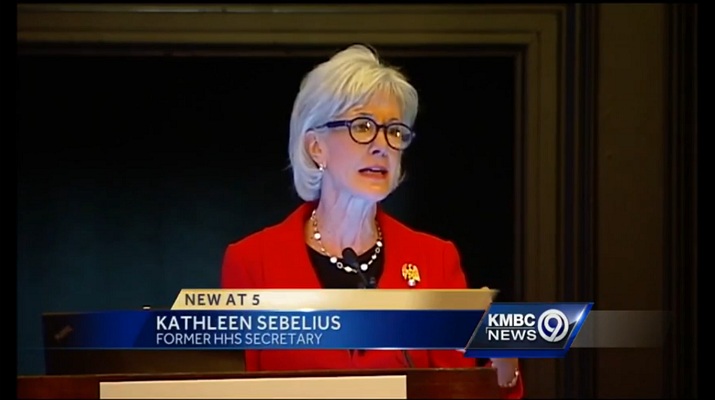
In this clip, KMBC's Micheal Mahoney discusses comments made by former HHS Secretary Kathleen Sebelius at a Planned Parenthood conference in Kansas City, Mo.

Video Round Up

For CNN's "Anderson Cooper 360," CNN National Correspondent Gary Tuchman profiles the security measures in place at an abortion clinic, Cherry Hill Women's Center, in New Jersey.

Video Round Up

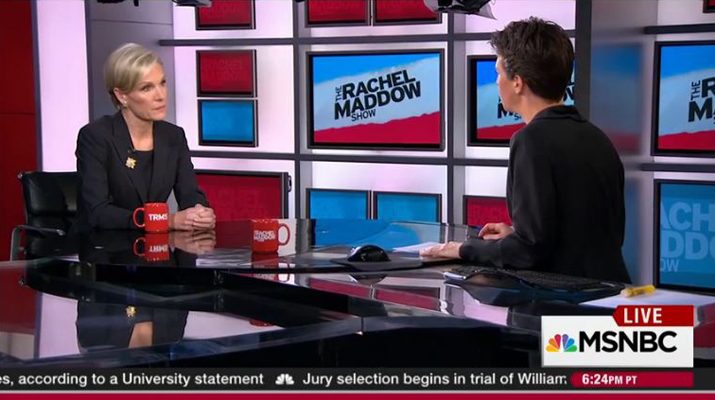
MSNBC's Rachel Maddow hears from Cecile Richards, president of Planned Parenthood Federation of America, in the wake of a deadly shooting at a Planned Parenthood clinic in Colorado.

Video Round Up

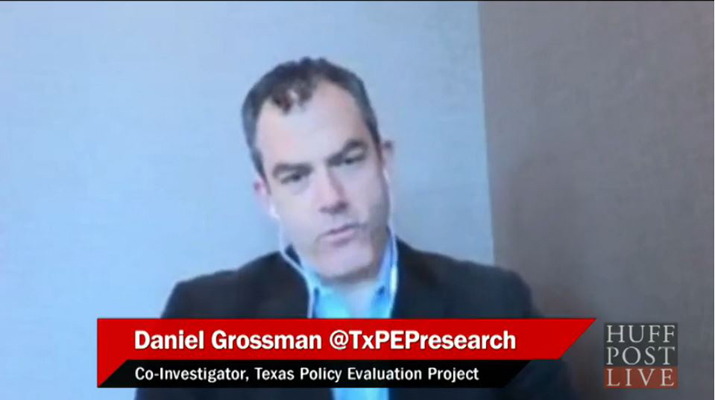
HuffPost Live! talks with Daniel Grossman, a professor of obstetrics and gynecology at the University of California-San Francisco, about a report that finds at least 100,000 Texas women have attempted to terminate a pregnancy without medical assistance.

Video Round Up

Yahoo! News' Katie Couric talks with activist Gloria Steinem on her decision to dedicate her latest book to the physician who helped her access abortion care in the 1950s

Video Round Up

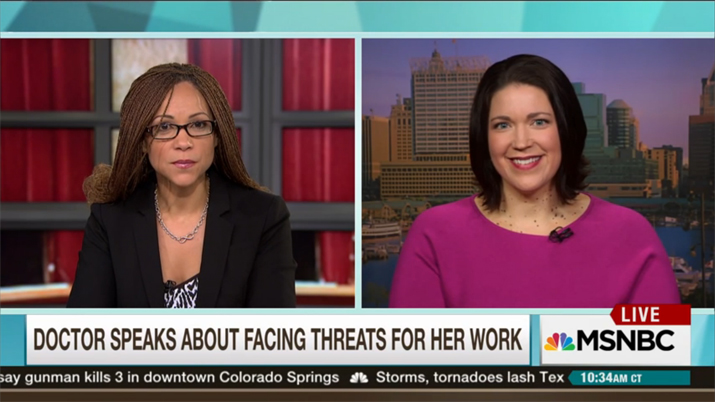
An abortion provider talks with MSNBC's Melissa Harris-Perry about her experience with antiabortion-rights harassment. 

Video Round Up

In this clip, NBC justice correspondent Pete Williams talks about the Supreme Court's decision to hear a challenge to parts of an omnibus Texas antiabortion-rights law (HB 2) in "the most notable abortion case in what could be two decades."

Video Round Up

NBC News Medical Contributor Natalie Azar, a physician, discusses the increase in long-acting reversible contraception use among U.S. women.

Video Round Up

Kaite Couric tours a new Planned Parenthood facility in Queens, N.Y., with Latasha McGriff, a center director for Planned Parenthood of New York City.

Datapoints

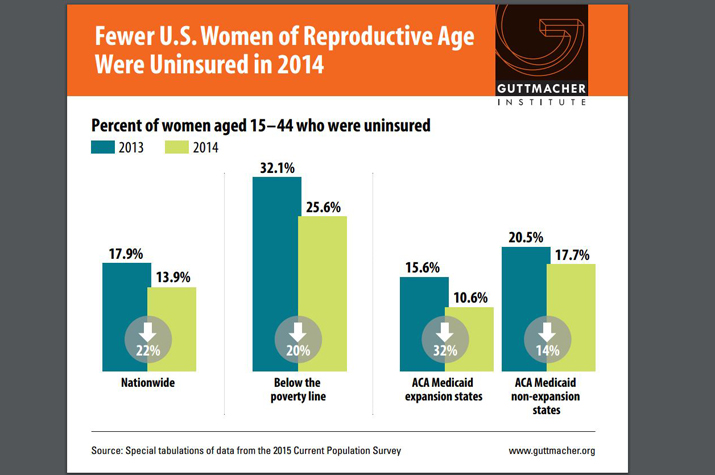
In this infographic, the Guttmacher Institute shows how the proportion of uninsured reproductive-age women in the U.S. declined from 17.9% in 2013 to 13.9% in 2014, the first year in which the Affordable Care Act was implemented fully.

Datapoints

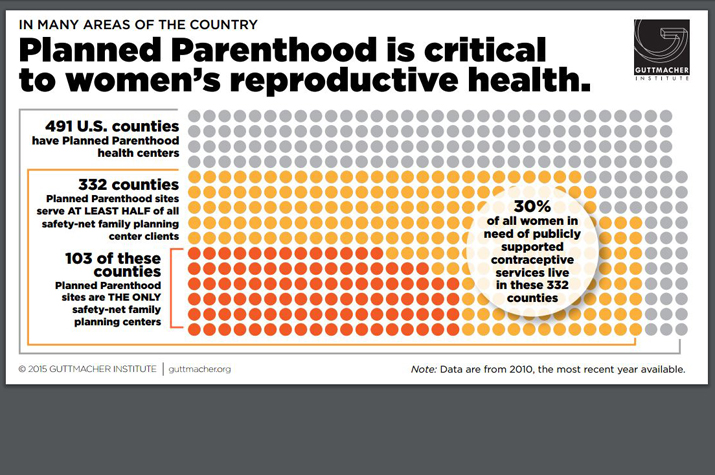
The Guttmacher Institute in this infographic counters antiabortion-rights claims that alternative providers could cover any gaps in health care services if Planned Parenthood is defunded.

Datapoints

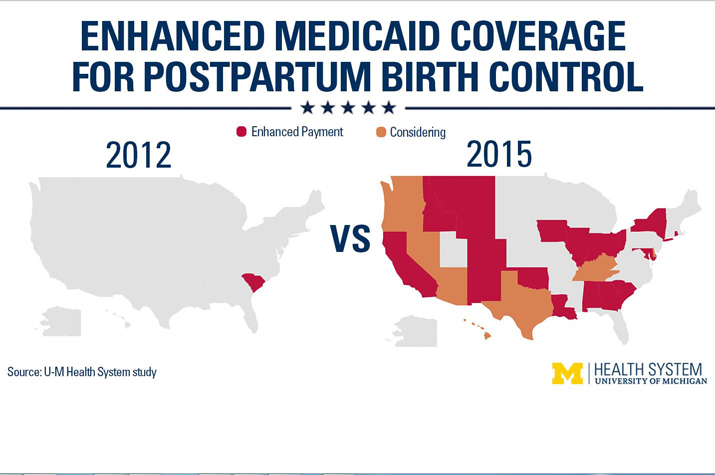
This map, released with a study from the University of Michigan Health System, shows how an increasing number of state Medicaid programs over the last three years are providing reimbursement for immediate postpartum LARC provision.

Datapoints

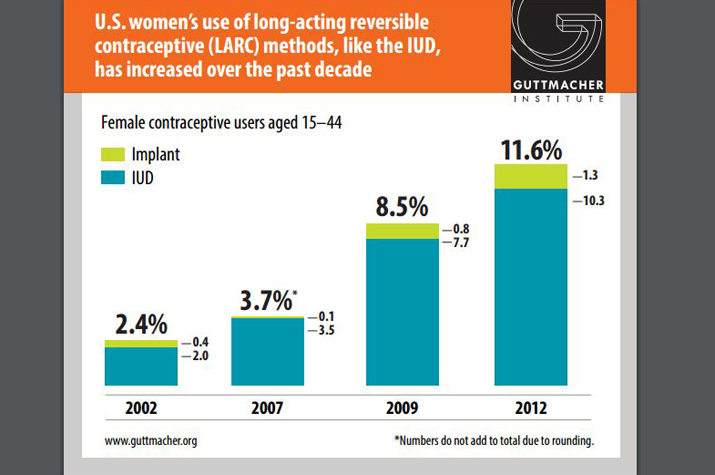
This infographic, released with a new Guttmacher Institute study, shows the increase in use of long-acting reversible contraception among U.S. women between 2002 and 2012.

Datapoints

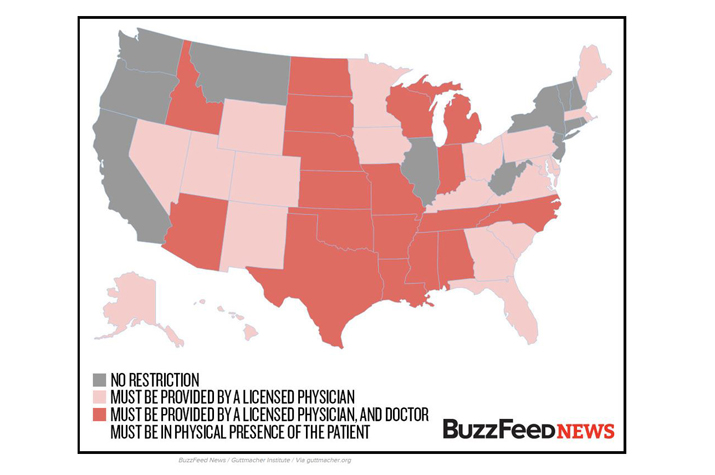
This map marks the 15th anniversary of medication abortion's FDA approval by detailing certain restrictions on the drugs across the country. According toBuzzfeed News, lawmakers in 38 states have passed these medication abortion restrictions.

At a Glance

"If women are not free to make decisions about their own lives and health, they are not free. And if women are not free, none of us are."

— Abortion provider Warren Hern, in a STAT News opinion piece on why he continues to offer abortion care despite receiving harassment and death threats throughout his 42-year career.