
National Partnership for Women & Families

In the News

Women Indicted for Attempted Murder After Attempting To Self-Induce Abortion

A Tennessee woman, who allegedly tried to self-induce an abortion at 24 weeks of pregnancy, has been indicted on a charge of first-degree attempted murder, the Murfreesboro Post reports.

The woman, Anna Yocca, was arrested on Wednesday after the grand jury for Rutherford County, Tenn., issued the indictment. She is being held on a $200,000 bond (Stockard, Murfreesboro Post, 12/11). Her next court appearance is scheduled for Dec. 21.

Tennessee's Antiabortion-Rights Laws

According to the Washington Post, Tennessee is one of 38 states that enacted a "fetal homicide" law. The state in 2012 approved a law that expands the definition of "another person" to include fetuses at any point in gestation. Twenty-two other states have similarly broad definitions.

Under the Tennessee law, individuals can be charged for harm committed against an embryo or fetus. The law includes an exemption for pregnant women who obtain legal abortion care.

Abortion-rights advocates have noted that onerous regulations on abortion can make it more difficult for women to access legal abortion care and more likely to try to self-induce abortions. According to the Washington Post, Tennessee has several abortion restrictions in place, including a 48-hour mandatory delay (SB 1222) before the procedure. The Washington Post discusses the potential impact of state restrictions on abortion, referencing the results of a study from the Texas Policy Evaluation Project after Texas' introduction of strict legislation that resulted in approximately 20 clinic closures. The study authors found that "at least 100,000 Texas women have attempted a self-induced abortion." An author of the study concluded, "We suspect that abortion self-induction will increase as clinic-based care becomes more difficult to access" (Kaplan, Washington Post, 12/14).

Case Details

According to the Murfreesboro Post, a report from law enforcement states that Yocca in September attempted to self-induce an abortion by using a coat hanger. Yocca's boyfriend took her to the emergency department at St. Thomas Rutherford Hospital after she experienced significant blood loss as a result of the attempted abortion. She later was transferred to St. Thomas Mid-Town in Nashville, Tenn., where the infant was delivered (Murfreesboro Post, 12/11).

Comments

Farah Diaz-Tello, senior staff attorney at the National Advocates for Pregnant Women, explained that "Tennessee's homicide law explicitly doesn't apply to [Yocca] ... but this arrest tells women that if they try to seek emergency medical assistance, they may end up behind bars. That won’t stop women from having abortions, but it will stop them from getting help."

SisterReach Founder and CEO Cherisse Scott noted, "These acts of desperation will happen more frequently unless the Tennessee Legislature reconsiders its posture about both current and potential anti-abortion legislation and the fetal assault law which allows a penalty of up to 15 years in prison for fetal harm" (D'Almeida, RH Reality Check, 12/14 ).
Video Round Up

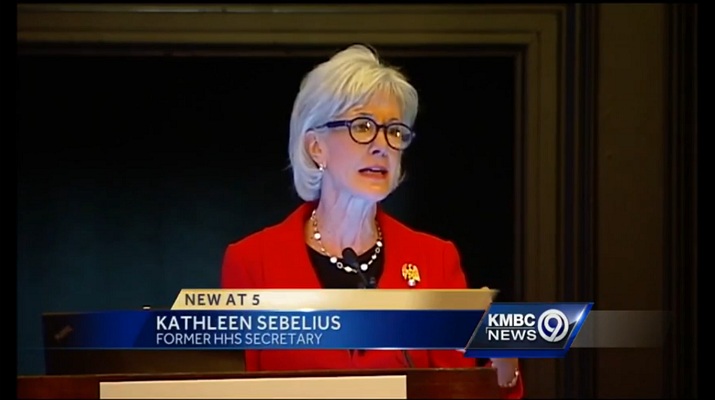
In this clip, KMBC's Micheal Mahoney discusses comments made by former HHS Secretary Kathleen Sebelius at a Planned Parenthood conference in Kansas City, Mo.

Video Round Up

For CNN's "Anderson Cooper 360," CNN National Correspondent Gary Tuchman profiles the security measures in place at an abortion clinic, Cherry Hill Women's Center, in New Jersey.

Video Round Up

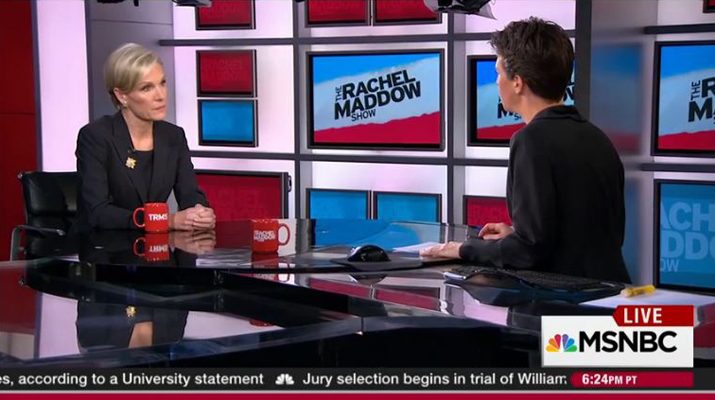
MSNBC's Rachel Maddow hears from Cecile Richards, president of Planned Parenthood Federation of America, in the wake of a deadly shooting at a Planned Parenthood clinic in Colorado.

Video Round Up

HuffPost Live! talks with Daniel Grossman, a professor of obstetrics and gynecology at the University of California-San Francisco, about a report that finds at least 100,000 Texas women have attempted to terminate a pregnancy without medical assistance.

Video Round Up

Yahoo! News' Katie Couric talks with activist Gloria Steinem on her decision to dedicate her latest book to the physician who helped her access abortion care in the 1950s

Video Round Up

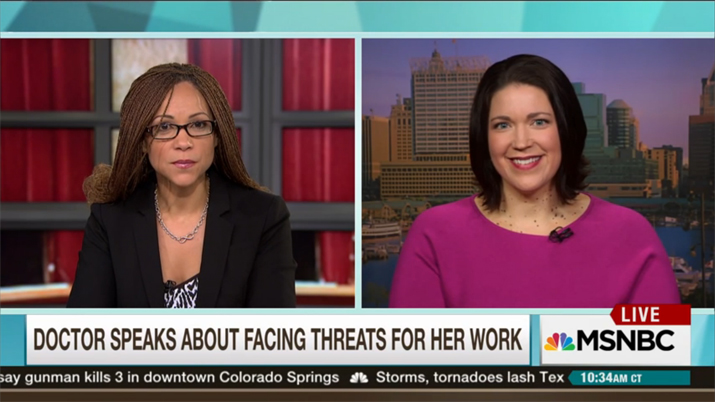
An abortion provider talks with MSNBC's Melissa Harris-Perry about her experience with antiabortion-rights harassment. 

Video Round Up

In this clip, NBC justice correspondent Pete Williams talks about the Supreme Court's decision to hear a challenge to parts of an omnibus Texas antiabortion-rights law (HB 2) in "the most notable abortion case in what could be two decades."

Video Round Up

NBC News Medical Contributor Natalie Azar, a physician, discusses the increase in long-acting reversible contraception use among U.S. women.

Video Round Up

Kaite Couric tours a new Planned Parenthood facility in Queens, N.Y., with Latasha McGriff, a center director for Planned Parenthood of New York City.

Datapoints

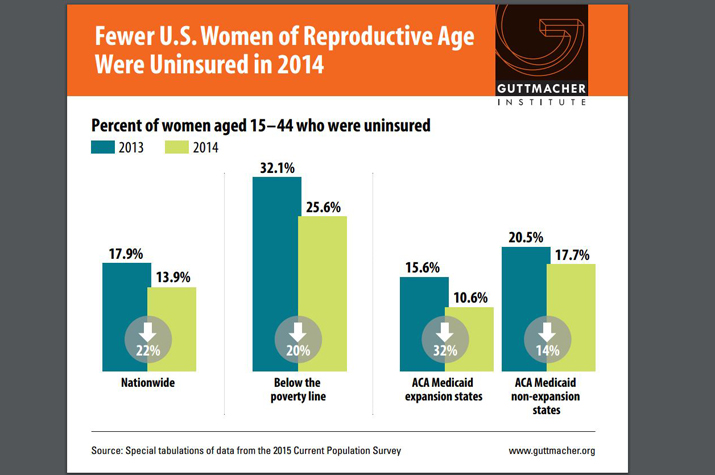
In this infographic, the Guttmacher Institute shows how the proportion of uninsured reproductive-age women in the U.S. declined from 17.9% in 2013 to 13.9% in 2014, the first year in which the Affordable Care Act was implemented fully.

Datapoints

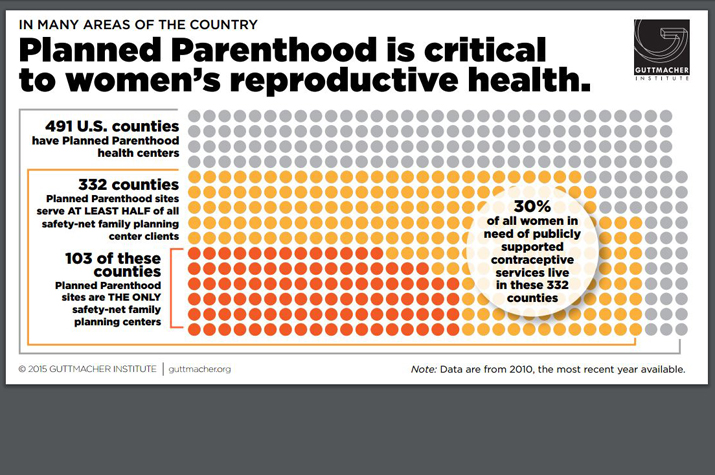
The Guttmacher Institute in this infographic counters antiabortion-rights claims that alternative providers could cover any gaps in health care services if Planned Parenthood is defunded.

Datapoints

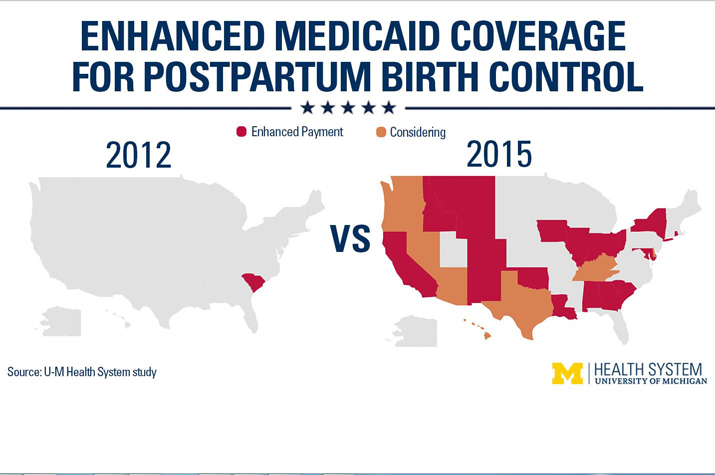
This map, released with a study from the University of Michigan Health System, shows how an increasing number of state Medicaid programs over the last three years are providing reimbursement for immediate postpartum LARC provision.

Datapoints

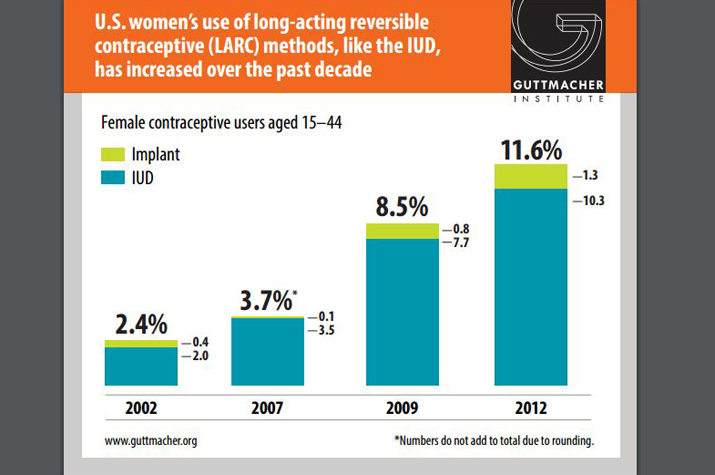
This infographic, released with a new Guttmacher Institute study, shows the increase in use of long-acting reversible contraception among U.S. women between 2002 and 2012.

Datapoints

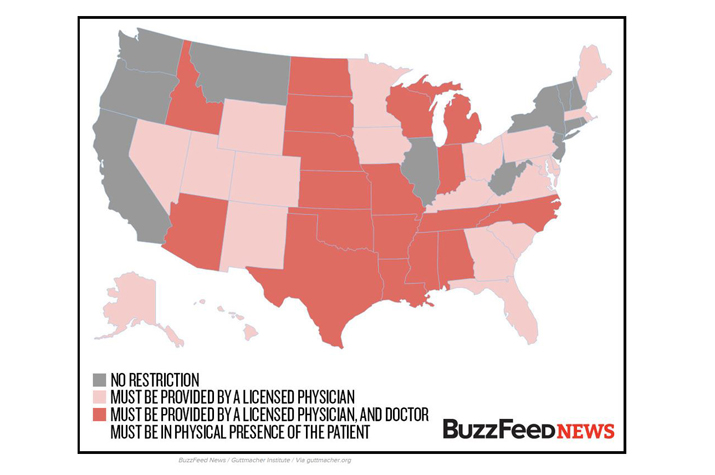
This map marks the 15th anniversary of medication abortion's FDA approval by detailing certain restrictions on the drugs across the country. According toBuzzfeed News, lawmakers in 38 states have passed these medication abortion restrictions.

At a Glance

"If women are not free to make decisions about their own lives and health, they are not free. And if women are not free, none of us are."

— Abortion provider Warren Hern, in a STAT News opinion piece on why he continues to offer abortion care despite receiving harassment and death threats throughout his 42-year career.