

Clinic closures in Texas under the state's omnibus antiabortion-rights law (HB 2) has made it more difficult for women to access abortion care, leading some to delay abortion care or deliver their unintended pregnancies, according to a new study, Houston Public Media reports (Feibel, Houston Public Media, 1/20).
Background
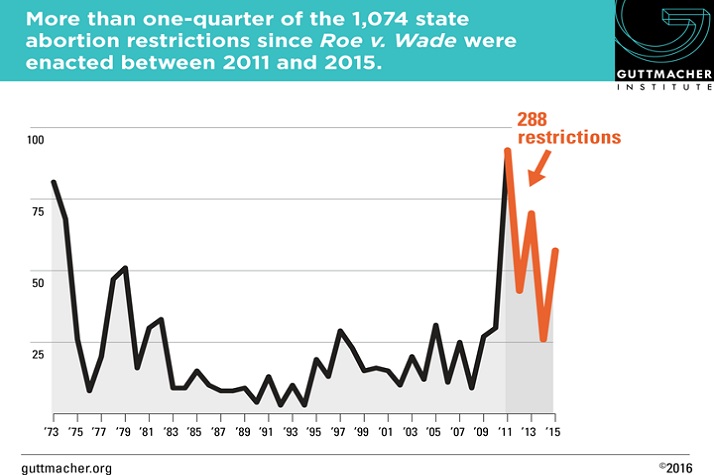
The Texas law, which was passed in 2013, prohibits abortion after 20 weeks' gestation, restricts the use of medication abortion, requires abortion clinics to meet the building standards of ambulatory surgical centers and mandates that abortion providers have admitting privileges at nearby hospitals. Last year, the Supreme Court announced it would hear a challenge to the law's admitting privileges requirement and building code regulations.
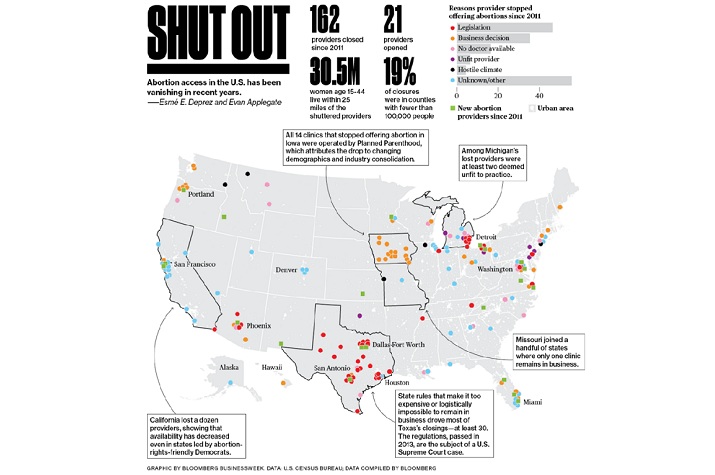
According to Planned Parenthood of Greater Texas and Whole Woman's Health, the number of abortion care facilities in Texas has dropped from 42 to 19 since HB 2 was enacted. Research from the Texas Policy Evaluation Project found that the wait time for an abortion care appointment in some Texas metropolitan areas increased to about 20 days following HB 2's passage. In addition, another TxPEP study found that at least 100,000 Texas women have attempted to terminate a pregnancy without medical assistance (Women's Health Policy Report, 11/18/15).
Study Findings
The latest study included researchers at Bixby Center for Global Reproductive Health at the University of California-San Francisco, Ibis Reproductive Health and TxPEP (Houston Public Media, 1/20).
Between November 2013 and November 2014, the researchers interviewed 23 women who tried to access abortion care at clinics affected by the law to learn about their pregnancy outcomes. According to the study, some of the women had made appointments at clinics that no longer provided abortion care following the law's enactment, while others had made appointments with clinics that were forced to close under the law. Some of the study participants also sought care at an abortion clinic in Albuquerque, N.M. (Fuentes et al., Contraception, 1/6).
The researchers found that women were confused about where they could access abortion care. In addition, many women said they traveled hundreds of miles to access care and had to pay several hundred dollars to cover the cost of boarding and transportation (Houston Public Media, 1/20). According to the researchers, women also said their privacy was endangered by having to travel longer distances to access care.
The researchers found that eight women had to delay receiving abortion care for more than one week, two women were delayed until after 12 weeks of pregnancy and two women were unable to access abortion care. Further, five women said they thought about trying to self-induce an abortion, although none of them did so (Contraception, 1/6).
Comments
Lead researcher Liz Fuentes said, "Women really experienced a lot of confusion about what clinics were open ... [a]nd many women struggled to find a clinic that was open, that they could afford and that they could get to."
Separately, abortion clinic staff members in Texas have reported instances of women trying to self-induce abortion. Ginny Braun -- former CEO of the Routh Street Women's Clinic in Dallas, which closed last June -- said, "We did have patients come in that had obtained what they thought was [the medication abortion drug] Cytotec at various flea markets or on the black market." She said, "We have no idea what it really was," adding, "Some patients had taken 10 or 12 of those, which could be devastating" (Houston Public Media, 1/20).
Ahead of SCOTUS Ruling on HB 2, Op-Ed Draws Parallels Between 1973, Today
Near the 43rd anniversary of the Supreme Court's ruling in Roe v. Wade and ahead of "what may be another pivotal Supreme Court decision on abortion this year, it's valuable to reflect on the history of the injustices regarding women's status, the legal and policy developments that led to this critical ruling, and the parallels between 1973 and the efforts to safeguard women's reproductive justice today," Amy Hagstrom Miller, founder and CEO of Whole Woman's Health, and Rickie Solinger, a historian and author of "Reproductive Politics," write in a Time opinion piece.
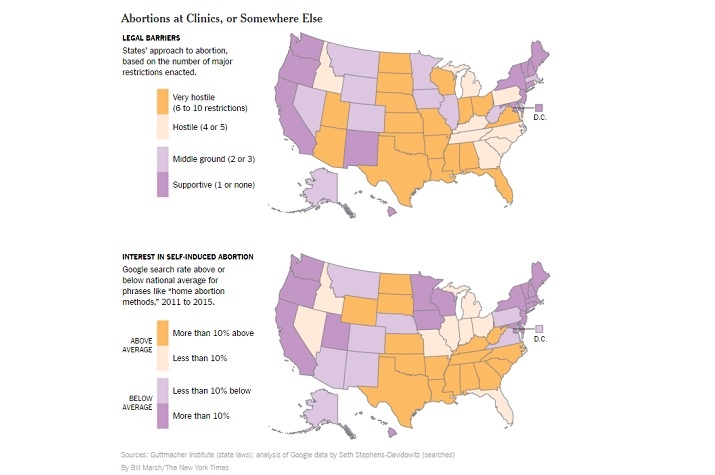
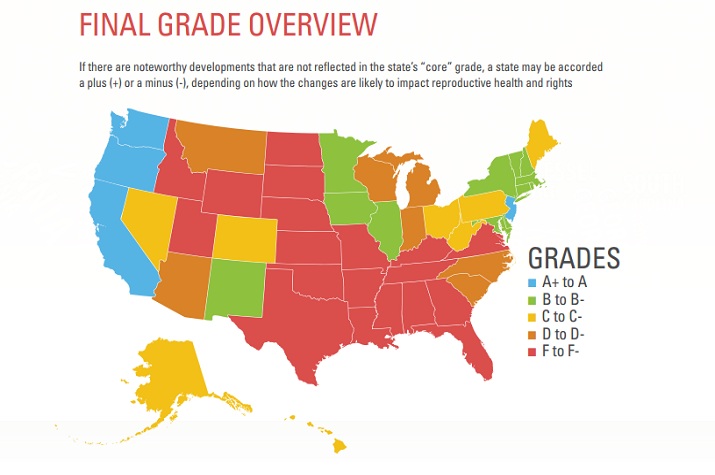
According to Hagstrom Miller and Solinger, the legalization of abortion under Roe "marked a critical turning point for women's equality and self-determination," but "the decision did not address the multiple issues and demands pregnant women face." They write, "Today, where a woman lives determines her access to abortion services, and states mandate whether she is required to have (and look at) an ultrasound beforehand, whether she must obtain parental consent, whether has the right to have a medical abortion, among other conditions."
Hagstrom Miller and Solinger note, "Today, to a surprising extent, women in the U.S. still have sexual, reproductive and parenthood rights that depend on their age, race and income, as well as on what state they live in." They outline how many state laws in the 19th and early 20th century "permitted the sterilization of immigrants and women of color without informed consent"; how women receiving welfare benefits were penalized for having additional children in the late 20th century; and how the Supreme Court in 1980 upheld the Hyde Amendment, which "establish[ed] abortion as a right only for women who can afford one" by prohibiting the use of Medicaid funding for most abortion care.
"As we revisit Roe's legacy today, we recognize it was the start, but not the end, of women's reproductive freedom," Hagstrom Miller and Solinger write. They explain that while the Roe ruling "appeared to promise the end of second-class status for women tied to their reproductive capacity ... there are still millions of women -- those excluded from Medicaid coverage, constrained by state laws, living in poverty, unable to mother with dignity, and otherwise harmed by their lack of resources -- who are unable to make critical decisions about their lives."
Pointing to the Supreme Court's upcoming ruling in Whole Woman's Health v. Cole, Hagstrom Miller and Solinger write, "As in 1973, this year the Supreme Court must make a decision about whether or not to place significant obstacles in the way of women -- obstacles that would leave many without the ability to have safe, dignified care." According to the authors, a ruling in favor of the state would "se[t] a precedent that could lead anti-abortion lawmakers in states across the country to pass laws that force clinics to close and push abortion out of reach."
Noting that "[l]ow-income women, women of color and rural women bear the brunt" of such abortion restrictions, the authors write, "A woman's ability to get safe medical care should not depend on whether she has the resources necessary to navigate a horrific and complex obstacle course." They conclude, "If the Supreme Court does not intervene, lawmakers with little regard to women's lives across the country will be able to do what they have wanted all along: close more clinics and cut more women off from the healthcare care they need" (Hagstrom Miller/Solinger, Time, 1/20).