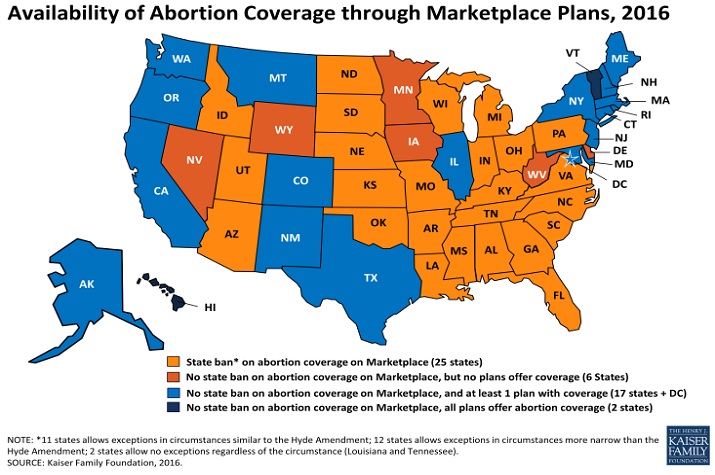


For some women "struggling to make ends meet, an unintended pregnancy can lead to serious financial repercussions," and "[w]ith bans on abortion coverage, many people cannot afford the out-of-pocket cost of an abortion," Kierra Johnson, executive director of Unite for Reproductive & Gender Equity, writes in an Inside Sources opinion piece.
Johnson notes that the "stakes are high" in such cases: "Someone who seeks an abortion but can't access one is three times more likely to fall into poverty than someone who is able to get an abortion."
While Jacobson notes that the "historic decision in the Supreme Court case Roe v. Wade guarantees the right to have an abortion," she questions "what good is that right if the nearest abortion clinic is too far away, or if someone cannot afford to pay for the procedure and their insurance refuses to cover it?" She states, "The right to abortion is nothing without the means to access affordable abortion services."
Advocates too infrequently discuss "the links between access to abortion and economic security," Johnson writes. However, she notes, "That could change. On April 28, we will join members of Congress and leaders from organizations around the nation -- including labor, economic justice, women's rights and reproductive rights groups -- for the first conversation on Capitol Hill about the connection between financial autonomy, economic security and the right to choose."
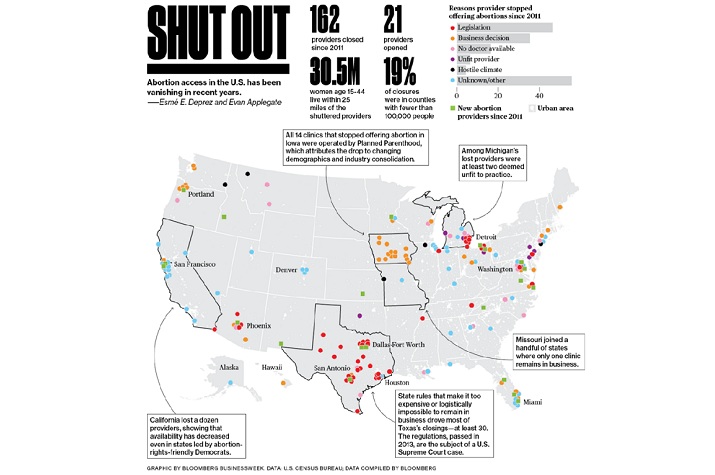
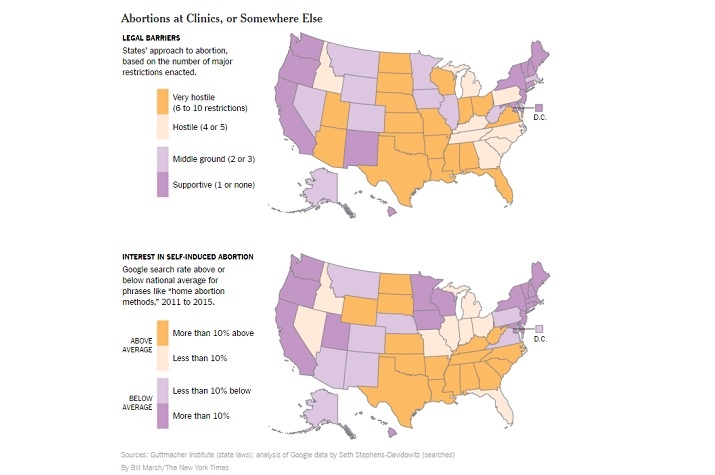
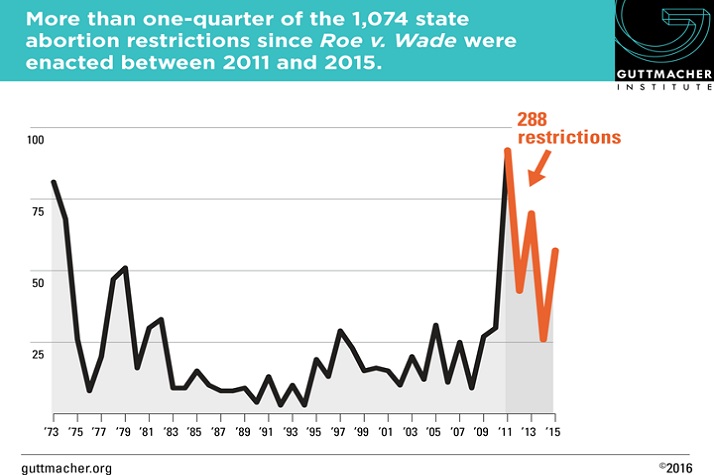
"It's time for us to get serious about barriers to access," Johnson continues, explaining that individuals across the United States "are finding it harder and harder to access reproductive services because some politicians are seeking every possible method to shut down clinics and reduce the number of people who qualify for services." Citing legislation imposing medically unnecessary regulations on abortion clinics and forcing women to delay abortion care, Johnson notes that "politicians are trying to ensure that we only have the right to choose in theory, not in practice."
Johnson cites legislation -- the Equal Access to Abortion Coverage in Health Insurance (EACH Woman) Act (HR 2972) -- introduced last year by Reps. Barbara Lee (D-Calif.), Diana DeGette (D-Colo.), Louise Slaughter (D-N.Y.) and Jan Schakowsky (D-Ill.) that "ensures abortion coverage for everyone, regardless of income, insurance carrier status or ZIP code." To facilitate passage of similar bills "that address economic barriers to abortion access," Johnson writes that "we must shift the conversation on the Hill about what it means to have not just the political but the financial and practical means to have an abortion."
Johnson writes, "For young people, low-income women, women of color, people with disabilities, people in an unstable home -- for all these people and more, we need to expand our understanding of abortion as more than a political football." She concludes, "It is our responsibility as politicians and advocates to stand up for all people, regardless of their socioeconomic status, because all of us have the right to decide what's best for our families, our bodies and our lives" (Johnson, Inside Sources, 4/17).