

A senior Obama administration official on Wednesday said the administration will transfer some funds intended for efforts to combat the Ebola virus to Zika response efforts, the New York Times reports.
The announcement comes amid disagreement over Zika funding between conservative lawmakers and other federal officials (McNeil, New York Times, 4/6).
Background
The Zika virus is a mosquito-borne disease that has spread across Latin America over the past year. Researchers recently learned that Zika can also be transmitted through sexual activity. The virus is not easily diagnosed, and it does not have a cure or vaccine. It also might be linked to the birth defect microcephaly, a condition in which an infant is born with an abnormally small head and brain. The condition is fatal for some infants, while others experience permanent disabilities.
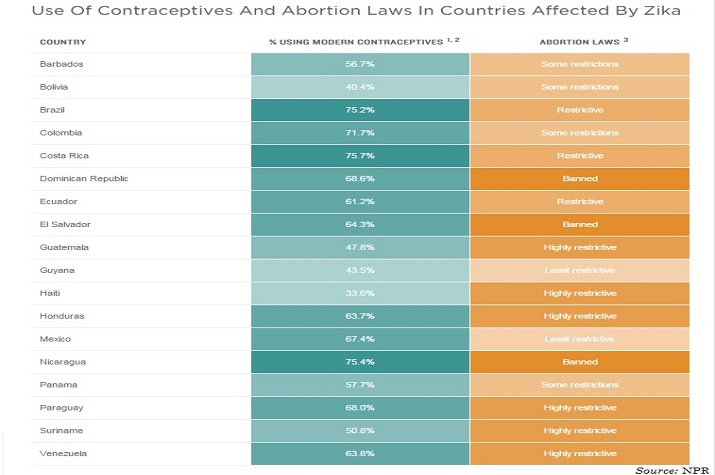
Officials in Brazil and Honduras have issued guidance recommending that women avoid pregnancy. El Salvador's recommendation is that women not get pregnant until 2018. However, many countries in Latin America restrict access to contraception and often ban abortion. In addition, women have been advised to protect themselves against mosquitos, but insect repellant can be unaffordable for low-income women.
The World Health Organization has declared the outbreak and its suspected link to a congenital condition in infants a public health emergency of international concern. Separately, the United Nations High Commissioner for Human Rights issued a statement directing nations affected by the Zika virus to remove bans on access to reproductive health care services (Woman's Health Policy Report, 2/18).
Call for funding
In February, the Obama administration requested more than $1.8 billion to combat the Zika virus globally and in the United States. The administration said the funding would be used to accelerate Zika vaccine research and diagnostic test development, bolster programs for mosquito control, inform pregnant women and their partners about the virus, educate providers about the virus and expand current response efforts.
About $1.48 billion of the requested funds would be allocated to HHS to establish mosquito control programs, facilitate state responses to the virus, establish monitoring systems and bolster U.S. registries of birth defects. In addition, $250 million would go directly to CMS to fund a one-year increase in health service assistance to Puerto Rico; $210 million to launch an urgent emerging threat fund to address Zika and other disease outbreaks; and $200 million would go toward vaccine development and diagnostic testing for the Zika and chikungunya viruses. The State Department and the U.S. Agency for International Development would also receive funding (Women's Health Policy Report, 2/9).
According to The Hill, conservative lawmakers in Congress pushed back on the funding request. Rep. Hal Rogers (R-Ky.), chair of the House Appropriations Committee, and a contingent of conservative lawmakers said they would not approve the request while the administration still had more than $1 billion in Ebola funding that had not yet been spent (Ferris, The Hill, 4/6). Administration officials had said they could not use the Ebola funds, as the money had either been used or allocated for ongoing surveillance and response efforts in Africa.
Administration transfers some Ebola funding to Zika, calls on Congress for action
The administration on Wednesday announced it will move $510 million in Ebola response funds to Zika response efforts. In addition, HHS Secretary Sylvia Mathews Burwell said the administration will pull another $79 million from multiple other sources, including funding originally allocated to vaccine stockpiling efforts and emergency response efforts for epidemics (New York Times, 4/6).
According to AP/U.S. News & World Report, most of the transferred funds will be directed to CDC (Taylor, AP/U.S. News & World Report, 4/5). The funding will allow CDC to begin "immediate, time-critical" initiatives to try to prevent Zika from spreading (The Hill, 4/6).
However, administration officials said they are still calling on Congress to approve the original $1.9 billion funding request. Shaun Donovan, director of the White House Office of Management and Budget, said the "repurposed funds are not enough to support a comprehensive Zika response and can only temporarily address what is needed" (New York Times, 4/6).
He continued, "We should not play with fire here. We should not risk [Zika] spreading and getting out of control before Congress acts. They need to move immediately." Donovan added that if additional funding is not approved, federal health agencies would have to scale back their Zika response efforts "within months." He noted, "There are real consequences and risks in waiting."
Separately, voicing concern over congressional stonewalling on the initial funding request, White House spokesperson Josh Earnest said, "Everybody now is predicting months in advance we are going to see more cases of Zika in the United States ... We have an opportunity to do something about it in advance. But Congress has completely abdicated their responsibility." He added, "Now it's time for Congress to do its job for a change."
Burwell noted that the virus is forecast to spread through the southern United States in the "spring and summer months" (The Hill, 4/6). According to the Times, 672 people in the United States and its territories have been infected with the virus, including 64 pregnant women (New York Times, 4/6).