
Monthly Women's Health Research Review
Study Assesses Mental Health Diagnoses Three Years After Seeking Abortion Care
For this study, researchers examined rates of depression and anxiety among women in the three years following their decision to seek abortion care. According to the researchers, the findings affirm prior research showing that "abortion is not associated with adverse mental health outcomes" and "cal[l] into question the appropriateness of policies that mandate counseling of all women who obtain an abortion on the psychological effects that can accompany them."
Women Value Doula Care During Abortion Procedure, Study Finds
In this study, researchers examine why women appreciate doula care during an abortion despite no evidence of decreased discomfort or improved satisfaction with the experience. They find that women appreciated doulas' companionship and care during the abortion procedure. According to the researchers, "this study underscores the importance of providing women support during their abortion experience."
Commentary: Defunding Federal Family Planning Initiatives Would Have 'Catastrophic' Effects
In this commentary, the authors note that while "the nation seems to be on a path to universal coverage, with its strong protections for women's health," "complementary interventions" are needed to ensure that low-income women in medically underserved communities have access to care. The authors identify community health centers and Title X-funded family planning centers as integral women's health programs, and they detail how federal lawmakers' efforts to defund Planned Parenthood and Title X will harm women.
Study: Boosting Awareness of ACA's Expanded Contraceptive Coverage Is 'Essential' To Improve 'Use of Effective Contraception'
In this study, researchers assess privately insured women's awareness of the Affordable Care Act's contraceptive coverage benefits, which went into effect in 2012. They find that many women were unaware they could obtain long-acting reversible contraception at no cost under the ACA, and that nearly 1 in 5 would switch to a different method of birth control if cost was not an issue. The researchers concluded, "For the ACA contraceptive coverage mandate to affect the use of effective contraception, raising women's awareness of the expanded benefit is an essential first step."
IUDs, Contraceptive Implant Effectively Prevents Repeat Pregnancy Among Young Women, Study Finds
In this study, researchers examine the rates of discontinuation and repeat pregnancy among young women using postplacental intrauterine devices and postpartum contraceptive implants. The researchers find that young women tended to continue use of their chosen method, but they note that clinicians should emphasize the importance of follow-up care to IUD users because early postplacental IUD expulsion is relatively common and might not be recognized.
Study Examines Predictors of Contraceptive Discontinuation Rate Among Teens
In this study, researchers look at what factors predicted contraceptive discontinuation among teens at high risk for pregnancy in Bronx County, N.Y. They find that teens were more likely to discontinue contraceptive use if they used a method other than a long-acting reversible contraceptive, left school prior to high school graduation or had previously used hormonal contraception. They advise increased provider training for IUD insertion, as well as "improved education" to inform providers that medical societies recommend LARC as first-line contraceptives for teens.
Study: Boosting Awareness of ACA's Expanded Contraceptive Coverage Is 'Essential' To Improve 'Use of Effective Contraception'
In this study, researchers assess privately insured women's awareness of the Affordable Care Act's contraceptive coverage benefits, which went into effect in 2012. They find that many women were unaware they could obtain long-acting reversible contraception at no cost under the ACA, and that nearly 1 in 5 would switch to a different method of birth control if cost was not an issue. The researchers concluded, "For the ACA contraceptive coverage mandate to affect the use of effective contraception, raising women's awareness of the expanded benefit is an essential first step."
IUDs, Contraceptive Implant Effectively Prevents Repeat Pregnancy Among Young Women, Study Finds
In this study, researchers examine the rates of discontinuation and repeat pregnancy among young women using postplacental intrauterine devices and postpartum contraceptive implants. The researchers find that young women tended to continue use of their chosen method, but they note that clinicians should emphasize the importance of follow-up care to IUD users because early postplacental IUD expulsion is relatively common and might not be recognized.
Commentary: Defunding Federal Family Planning Initiatives Would Have 'Catastrophic' Effects
In this commentary, the authors note that while "the nation seems to be on a path to universal coverage, with its strong protections for women's health," "complementary interventions" are needed to ensure that low-income women in medically underserved communities have access to care. The authors identify community health centers and Title X-funded family planning centers as integral women's health programs, and they detail how federal lawmakers' efforts to defund Planned Parenthood and Title X will harm women.
Study Assesses Mental Health Diagnoses Three Years After Seeking Abortion Care
For this study, researchers examined rates of depression and anxiety among women in the three years following their decision to seek abortion care. According to the researchers, the findings affirm prior research showing that "abortion is not associated with adverse mental health outcomes" and "cal[l] into question the appropriateness of policies that mandate counseling of all women who obtain an abortion on the psychological effects that can accompany them."
Video Round Up
Broadly shares a behind-the-scenes clip from "Across the Line," a virtual reality documentary that uses video and audio recordings from antiabortion-rights protests at U.S. clinics to show viewers what many women experience when trying to access abortion care.
Video Round Up
In this clip, RTV6's Katie Heinz discusses a new social medial campaign launched in reaction to a harmful Indiana law (HB 1337) that bans abortion care based on the sex of the fetus or a fetal disability diagnosis, among other restrictions.
Video Round Up
In this clip, Fox 17 News' Michele DeSelms covers legislation (HB 4787, HB 4830) passed last week in the Michigan House that would penalize individuals who coerce a woman into receiving an abortion.
Video Round Up
In part of a longer clip covering multiple topics, Reuters TV reports on an omnibus antiabortion-rights measure (HB 1411) recently signed into law by Florida Gov. Rick Scott (R) that bars local health departments from distributing funds for non-abortion-related care to organizations affiliated with abortion providers, among several other provisions.
Video Round Up
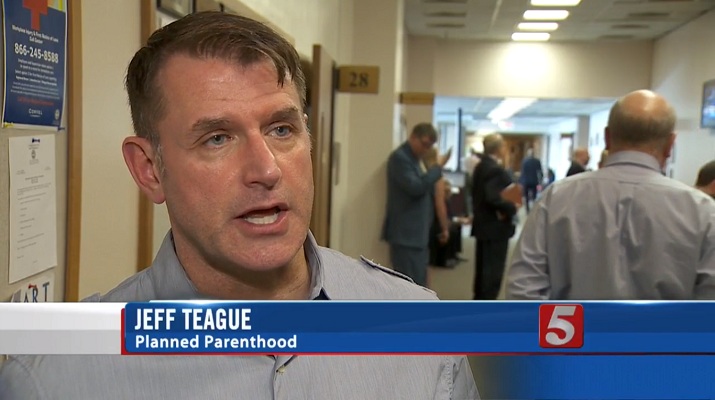
WTVF's Chris Conte reports on the outcome of a Tennessee House subcommittee hearing, which advanced one antiabortion-rights bill while deferring or withdrawing several others.
Video Round Up
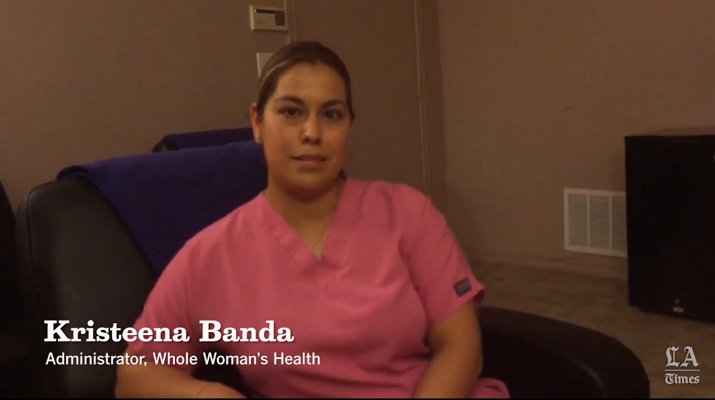
In this clip, Los Angeles Times reporter Molly Hennessy-Fiske hears from Kristeena Banda -- a clinic administrator at Whole Woman's Health, an abortion clinic in McAllen, Texas -- about what is at stake in a legal challenge to parts of Texas' omnibus antiabortion-rights law (HB 2).
Video Round Up
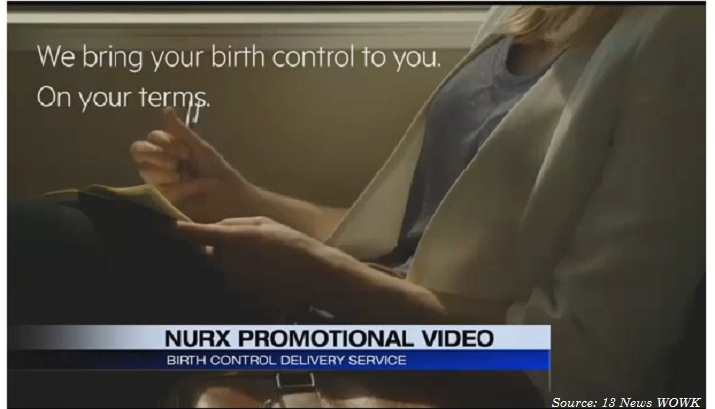
13 News WOWK reporter Alyssa Meisner interviews several women in West Virginia about Nurx, a smartphone application that helps women access birth control.
Video Round Up

In a segment on HB 2, comedian Samantha Bee interviews Ilyse Hogue, president of NARAL Pro-Choice America, and Texas Rep. Dan Flynn (R), one of the bill's authors, for TBS' "Full Frontal with Samantha Bee," Vox reports.
Video Round Up

John Oliver on HBO's "Last Week Tonight with John Oliver" discusses the proliferation of attacks on abortion rights in the United States and comments on how such restrictions affect a woman's access to abortion care.
Datapoints
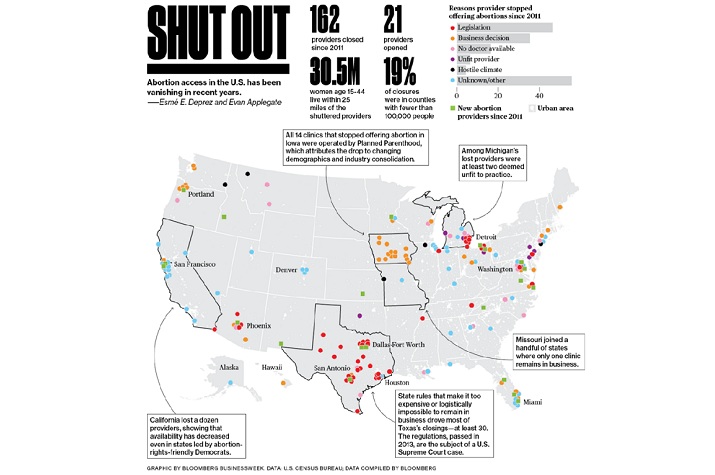
This map, from Bloomberg Business, highlights the rapid decline in abortion access in the United States since 2011.
Datapoints
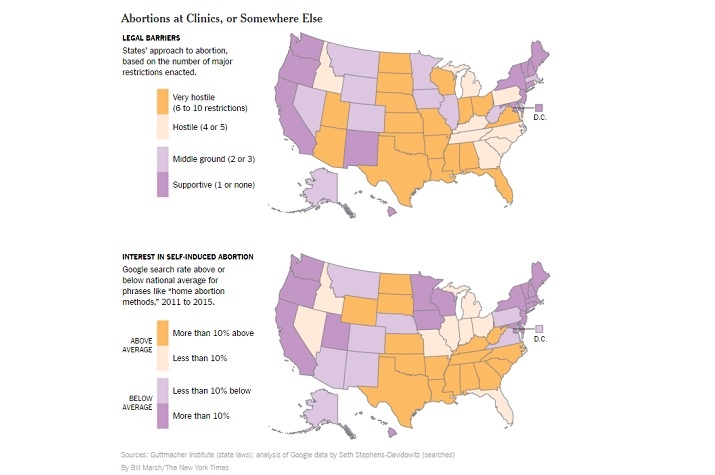
These maps, compiled using data from the New York Times and the Guttmacher Institute, underscore findings from a recent Times investigation, including that there were more than 700,000 searches for how to self-induce an abortion in 2015.
Datapoints
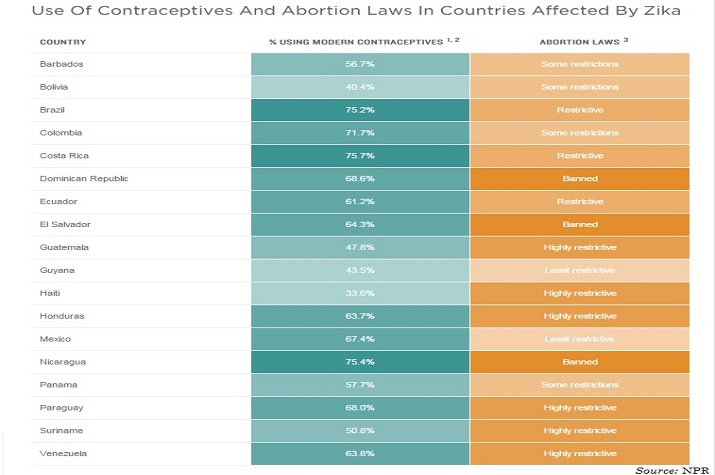
This chart, compiled by NPR, shows how the majority of countries affected by the Zika virus, which might be linked to a severe birth defect, curb access to contraception and abortion care.
Datapoints
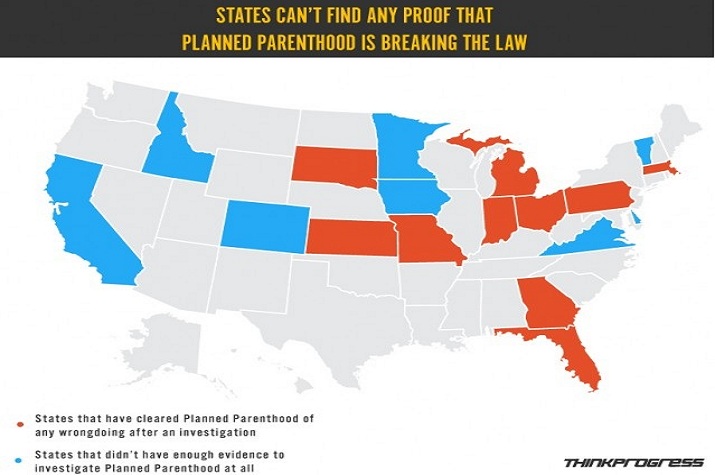
In this map, Center for American Progress' "ThinkProgress" spotlights the 12 states that have cleared Planned Parenthood of any wrongdoing after launching investigations into the organization.
Datapoints
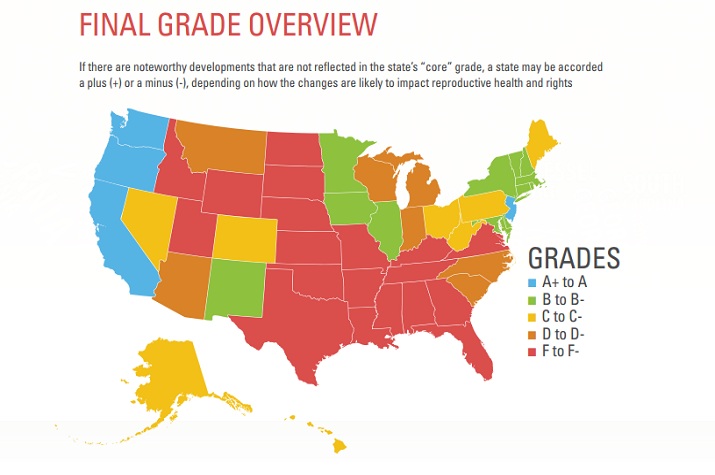
In its latest report card, the Population Institute provides a snapshot of the condition of reproductive rights and health in each state in 2015.
Datapoints
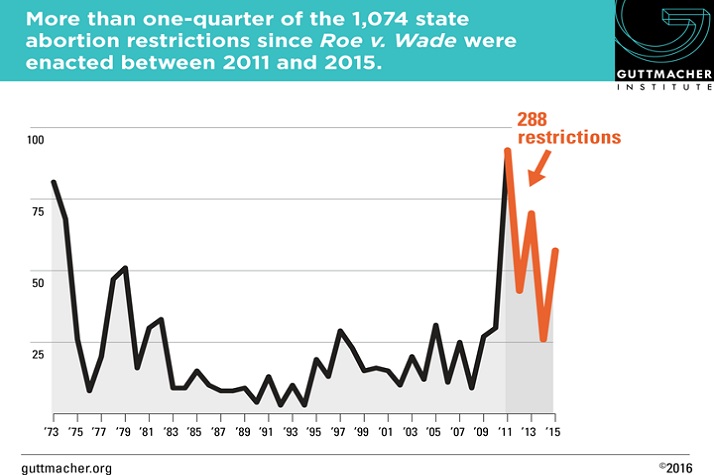
The Guttmacher Institute in this graph shows the rapid increase in the number of state abortion restrictions over the past few years.
Datapoints
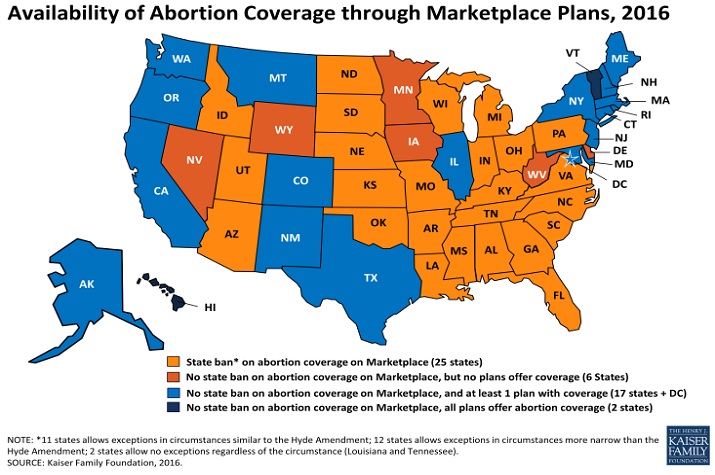
In this map, the Kaiser Family Foundation shows how widely abortion coverage varies from state to state in insurance plans sold through the Affordable Care Act's (PL 111-148) insurance marketplaces.
Datapoints
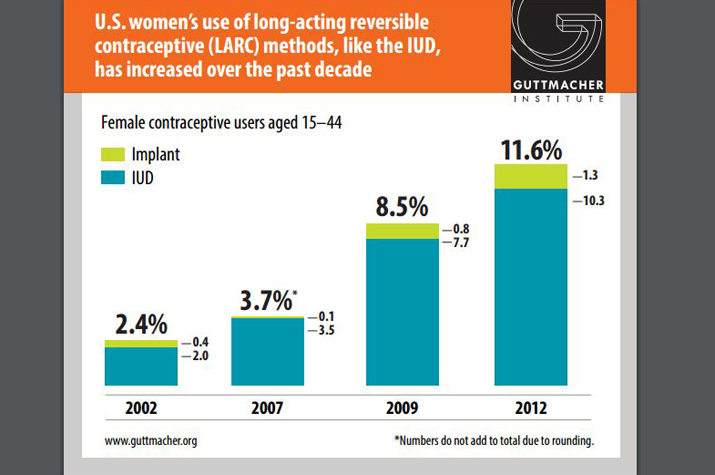
This infographic, released with a new Guttmacher Institute study, shows the increase in use of long-acting reversible contraception among U.S. women between 2002 and 2012.
Datapoints
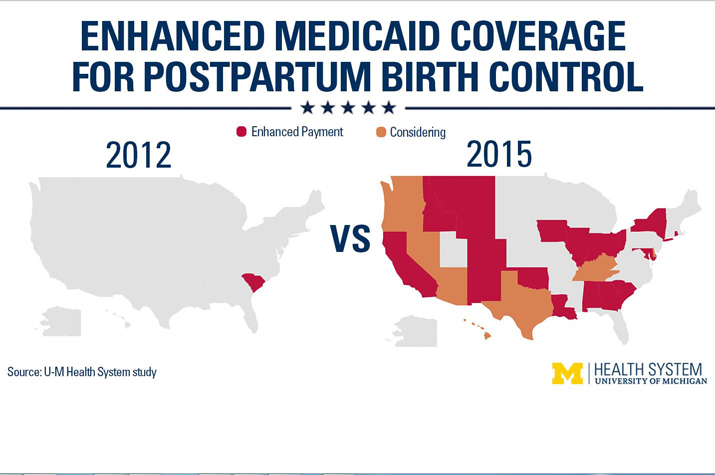
This map, released with a study from the University of Michigan Health System, shows how an increasing number of state Medicaid programs over the last three years are providing reimbursement for immediate postpartum LARC provision.
At a Glance
"A woman's ability to end her pregnancy too often depends on where she lives, her age and how much money is in her pocket."
— Marcela Howell of In Our Own Voice: National Black Women's Reproductive Justice Agenda, discussing ongoing disparities in women's access to abortion care on the 43rd anniversary of Roe v. Wade.
At a Glance
"If women are not free to make decisions about their own lives and health, they are not free. And if women are not free, none of us are."
— Abortion provider Warren Hern, in a STAT News opinion piece on why he continues to offer abortion care despite receiving harassment and death threats throughout his 42-year career.
At a Glance
"Not since before Roe v. Wade has a law or court decision had the potential to devastate access to reproductive health care on such a sweeping scale."
— Nancy Northup, president and CEO of the Center for Reproductive Rights, on a ruling from the 5th U.S. Circuit Court of Appeals that upheld major portions of a Texas antiabortion-rights law.