

A grand jury in Harris County, Texas, on Monday indicted two members of the antiabortion-rights group Center for Medical Progress who helped secretly record videos targeting Planned Parenthood, the New York Times reports (Fernandez/Eckholm, New York Times, 1/25).
Background
CMP over the summer began releasing a series of misleading videos of Planned Parenthood officials discussing fetal tissue donation. CMP secretly filmed the videos by meeting with Planned Parenthood staff while posing as buyers of fetal tissue.
Planned Parenthood has stated that the videos were heavily edited and that the filmed officials did not conduct any illegal activities. Further, a report by a research and corporate intelligence firm, Fusion GPS, found that the videos were manipulated (Women's Health Policy Report, 8/27/15).
Following the release of the videos, Texas Lt. Gov. Dan Patrick (R) called for the Harris County district attorney to launch a criminal investigation into Planned Parenthood Gulf Coast (New York Times, 1/25).
Grand Jury Proceedings
The Harris County grand jury tasked with investigating Planned Parenthood cleared the organization of any wrongdoing and instead indicted CMP Director David Daleiden and CMP employee Sandra Merritt (Paquette, "Post Nation," Washington Post, 1/25).
Both Daleiden and Merritt have been indicted on a felony charge of tampering with a government record. In addition, Daleiden has been indicted on a misdemeanor charge related to buying human organs (AP/Modern Healthcare, 1/25). Warrants have been issued for Daleiden and Merritt, each with a $10,000 bond.
According to the record tampering charges, Daleiden and Merritt created false California drivers licenses and used them with an intent to defraud when they met with PPGC officials in April 2015, the Times reports. Josh Schaffer, a lawyer representing PPGC, said, "We know that they used fake IDs that had their real photographs but fake names and fake addresses purported to be issued by the State of California." He added, "They never denied that they presented a fake ID" (New York Times, 1/25).
The charge of tampering with a governmental record carries a maximum penalty of 20 years in prison (Ura, Texas Tribune, 1/25).
According to Schaffer, the misdemeanor charge likely is related to emails Daleiden sent to Planned Parenthood in June 2015, in which he offered to pay $1,600 per fetal tissue sample. Schaffer said Planned Parenthood did not reply to the offer. However, Schaffer noted that the written charges had not been publicly released at the time of his comments and he was "working on [his] knowledge of the investigation" (New York Times, 1/25).
The charge carries a maximum punishment of one year in jail (Texas Tribune, 1/25).
Other Investigations Continue
Texas Gov. Greg Abbott (R) said the indictment did not affect the state's other, ongoing investigations into Planned Parenthood. Those investigations are being conducted by the state Department of Health and Human Services Commission and state Attorney General Ken Paxton (R).
According to the Times, multiple state and congressional investigations into the organization have not found that Planned Parenthood committed any of the actions alleged in the videos (New York Times, 1/25).
Comments
In response to the indictment, Daleiden compared CMP's tactics to those of investigative reporters and claimed the group follows the law (AP/Modern Healthcare, 1/25).
Anderson said, "As I stated at the outset of this investigation, we must go where the evidence leads us." She called the investigation "lengthy and thorough" and noted, "All the evidence uncovered in the course of this investigation was presented to the grand jury."
Eric Ferrero, a spokesperson for Planned Parenthood Federation of America, praised the indictment. "These people broke the law to spread malicious lies about Planned Parenthood in order to advance their extreme anti-abortion political agenda," he said, adding, "As the dust settles and the truth comes out, it's become totally clear that the only people who engaged in wrongdoing are the criminals behind this fraud, and we're glad they're being held accountable" (New York Times, 1/25).
PPGC spokesperson Rochelle Tafolla said, "This is absolutely great news because it is a demonstration of what Planned Parenthood has said from the very beginning: We follow every law and regulation and these anti-abortion activists broke multiple laws to try and spread lies" (AP/Modern Healthcare, 1/25).
Separately, Vicki Saporta, president of the National Abortion Federation, also lauded the findings. "As we've known all along, David Daleiden is the one who broke the law, not abortion providers," she said, adding, "In order to launch his smear campaign, Daleiden engaged in a long-running illegal conspiracy and he should be held accountable for his actions, which have put abortion providers at risk" ("Post Nation," Washington Post, 1/25).
CMP Petitions Judge To Allow Inclusion of Recordings in Brief Supporting Texas' HB 2
In related news, CMP on Friday asked a federal judge for permission to submit secretly recorded audio of a NAF conference barred from public release to the Supreme Court in an amicus brief supporting Texas' omnibus antiabortion-rights law (HB 2), Buzzfeed reports (Vergano, Buzzfeed, 1/22).
Background on CMP Footage
Last year, Judge William Orrick of the Northern District of California issued a temporary restraining order against CMP after NAF filed a lawsuit against the organization. The order blocked CMP from releasing any of its secretly recorded video footage of NAF's annual meetings in 2014 and 2015, as well as from releasing dates of NAF's future meetings and the names and addresses of NAF members (Women's Health Policy Report, 11/25/15).
Background on Challenge to Texas' HB 2
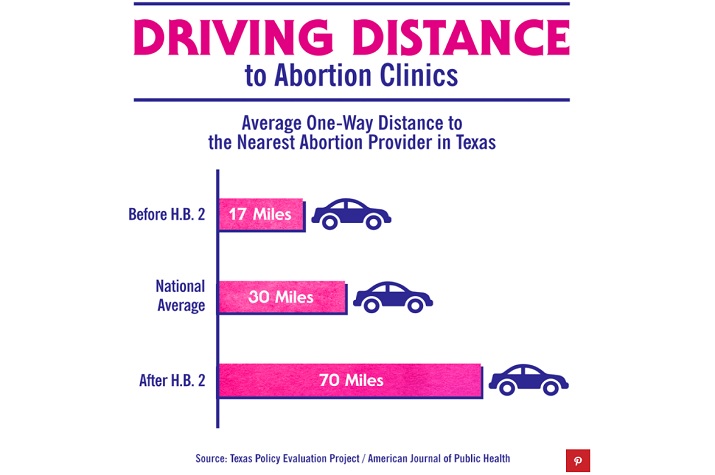
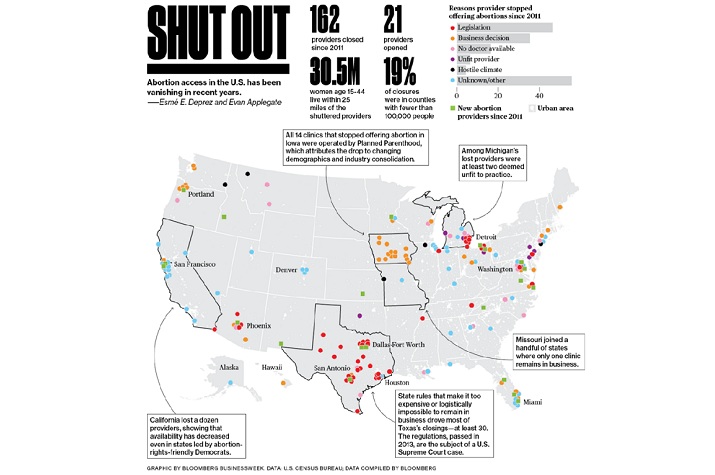
The Supreme Court is slated on March 2 to hear a challenge to Texas' HB 2. The case, Whole Woman's Health v. Hellerstedt, centers on two provisions. One requires abortion clinics in the state to meet the same building standards as ambulatory surgical centers, and the other requires abortion providers to have admitting privileges at local hospitals.
If the court rules for the state, the number of clinics will fall to about 10, compared with about 40 before the law took effect.
The Supreme Court in June 2015 issued an order that temporarily blocks HB 2's ambulatory surgical center requirement. There was debate about whether the high court's order also blocked the law's admitting privileges requirement (Women's Health Policy Report, 1/6).
CMP Request
Thomas Ciesielka, a spokesperson for the law firm representing CMP, said Daleiden would be held in contempt of court if he files an amicus brief that includes the blocked audio tapes unless he obtains Orrick's permission. According to Buzzfeed, including such information in a Supreme Court brief would release it into the public domain.
Separately, Derek Foran, an attorney for NAF, said, "This is just another attempt by this group to undermine the TRO (temporary restraining order) which they've tried before many times." He added, "Even though there's nothing on these tapes, they try to put them out there and make ridiculous allegations that threaten the safety of abortion clinic providers" (Buzzfeed, 1/22).