

A special House subcommittee investigating abortion providers in the United States on Wednesday issued subpoenas to eight medical organizations, drawing criticism from liberal lawmakers and medical groups, the New York Times reports (Harris, New York Times, 3/30).
Background
The subcommittee is the fourth House committee to investigate Planned Parenthood following the release of a series of misleading videos targeting the organization. This specially created investigative panel is tasked with investigating an even broader target: providers of abortion care.
The subcommittee is allowed to probe, among other topics, federal funding for health care providers who also provide abortion services and providers' practices for abortions later in pregnancy. The resolution (H Res 461) that created the subcommittee gave it the ability to investigate "medical procedures and business practices used by entities involved in fetal tissue procurement" and "any other relevant matters with respect to fetal tissue procurement."
According to subcommittee Chair Marsha Blackburn (R-Tenn.), the panel has subpoena powers that it will use in consultation with the House speaker, who also oversees the panel's budget and schedule. The panel will be dissolved 30 days after it submits a report based on the investigation's findings. The subcommittee could recommend changes to laws and regulations based on its findings.
Earlier this month, the subcommittee said it was issuing subpoenas to 17 undisclosed organizations requesting the names of fetal tissue researchers. The subcommittee previously had subpoenaed Southwestern Women's Options, which provides abortion care in Albuquerque, New Mexico; Stem Express, a California-based biomedical research company; and the University of New Mexico (Women's Health Policy Report, 3/25).
Many groups responding to the subpoenas have submitted redacted documents to protect individuals' names and other identifying information amid concerns they could be targeted by abortion-rights opponents.
Latest developments
Among other organizations, the latest round of subpoenas targeted Biomed IRB, a California-based independent ethics review board, and Ganogen, a California-based group conducting fetal tissue research, the Times reports.
Fred Fox, executive director of Biomed IRB, said he is mulling how to respond to the order. However, he rejected claims that Biomed IRB was being subpoenaed because it did not comply with the subcommittee's investigation. According to Fox, the subcommittee first contacted him last week, inquiring as to how he would prefer the subpoena to be delivered.
Mike Reynard, a spokesperson for the subcommittee, said more groups could be subpoenaed. According to Reynard, the subcommittee has issued 15 subpoenas so far in the investigation.
Comments
The American Congress of Obstetricians and Gynecologists in a statement criticized the investigation, saying, "Unfortunately, some state and federal politicians are working hard to obstruct -- or even criminalize -- fetal tissue research, limiting the ability of scientists and researchers to develop new vaccines and medicines to prevent and treat disease."
Separately, Rep. Jan Schakowsky (D-Ill.), ranking member of the subcommittee, said, "Once again, Chair Blackburn is using congressional authority to pursue baseless, inflammatory claims generated by anti-abortion extremists." She added, "Not one of the entities contacted by the panel has expressed concern about 'letting all the facts come out.' Their -- and [liberal lawmakers'] -- concern is the safety of their researchers, students, doctors, and clinic personnel. Chair Blackburn has refused to explain why she needs a database of names. It is time for this witch hunt to come to an end" (New York Times, 3/30).
Editorial: Subcommittee targeting abortion providers 'should stop now'
In related news, a Los Angeles Times editorial denounces the House subcommittee, noting that its "mandate is far broader than just looking into Planned Parenthood."
According to the editorial, the subcommittee was given sweeping authority to "investigate the entities that procure fetal tissue and look into federal funding and support for abortion providers." Moreover, the committee is "authorized to scrutinize the providers of second- and third-term abortions," despite the fact that such procedures "are already highly regulated," the editorial notes.
"Toward those ends, the panel has requested documents from more than 30 groups, and last month it issued subpoenas to three institutions it deemed uncooperative with earlier requests," the editorial continues, citing the subpoenas targeting Southwestern Women's Options, Stem Express and the University of New Mexico. According to the editorial, "The sweeping subpoenas requested five years' worth of documentation on fetal tissue acquisitions, bank records, and the names of people involved in the businesses," as well as the "names of personnel involved in abortion procedures."
"Now, the panel is preparing to issue 17 more subpoenas," the editorial states.
The editorial notes that while it is "legitimate for a congressional committee to look into allegations of wrongdoing," the special subcommittee "has raised alarm bells by seeking the names of people involved in legal enterprises, namely, providing abortions and collecting fetal tissue for research."
"If the main goal of the subpoenas is to expose people in these fields to harassment and intimidation, Blackburn should stop now," the editorial states, noting, "Legally donated fetal tissue has played a significant role in cutting-edge research, including Alzheimer's disease, spinal cord injury and kidney failure."
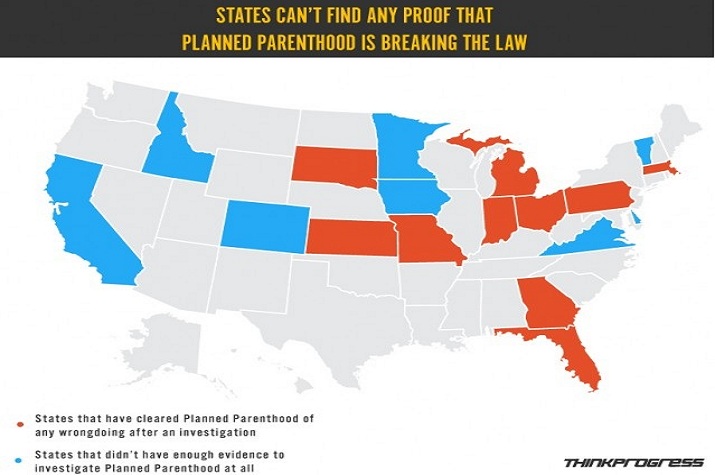
The editorial continues, "The purpose of the panel was not to weigh in on the ethics of abortion but to investigate allegations of illegal practices" and, so far, "all the governmental inquiries that preceded this panel's -- by 12 state agencies, three congressional committees, and a grand jury in Texas -- have found no evidence" of wrongdoing by Planned Parenthood. The editorial concludes, "This panel's work, so far, looks only like grandstanding" (Los Angeles Times, 3/30).