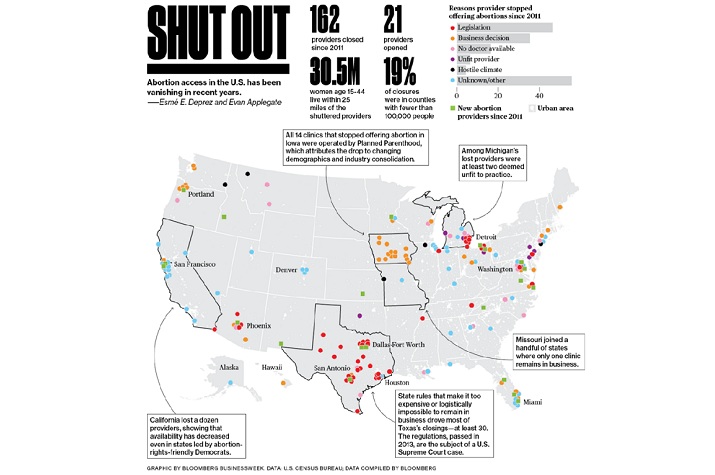


A 20-week abortion ban included in Texas' omnibus antiabortion-rights law (HB 2) forced a woman to deliver a stillborn infant after repeatedly being denied abortion care, the Texas Tribune reports.
According to the Tribune, several physicians said such ramifications of HB 2 are not unique. The law is harming patient-provider relationships and discouraging physicians from providing care based on their medical judgment, providers said (Ura, Texas Tribune, 4/3).
Background
Among other provisions, HB 2 bans abortion after 20 weeks of pregnancy (Women's Health Policy Report, 7/19/13). The law includes an exemption for instances of fetal anomalies or when the woman's life is in danger (Texas Tribune, 4/3).
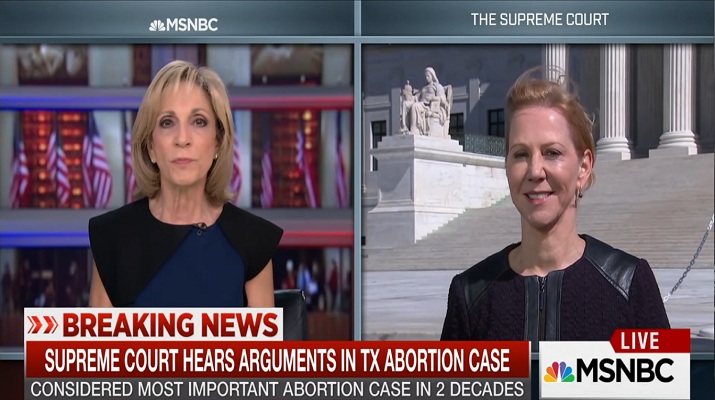
The Supreme Court recently heard oral arguments in a challenge to two other provisions in the law: One requires abortion clinics in the state to meet the same building standards as ambulatory surgical centers, and another requires abortion providers to have admitting privileges at local hospitals. The justices likely will issue a ruling in June (Women's Health Policy Report, 3/3).
Denied care, woman waits three days to miscarry
According to the Tribune, a Texas woman, Taylor Mahaffey, was nearly 20 weeks pregnant when she learned that she had prematurely dilated. Mahaffey, who previously had been diagnosed with a condition called incompetent cervix, sought abortion care at St. David's North Austin Medical Center after several emergency procedures failed to save the pregnancy.
However, the physicians at the hospital said they could not perform the procedure under HB 2 because the fetus and Mahaffey herself were "technically healthy," although the fetus would not be viable outside the womb. While not yet 20 weeks pregnant, Mahaffey and her husband, Daniel Mahaffey, suspected that physicians were hesitant to provide abortion care because of how close she was to that mark. Three days later, Mahaffey had a miscarriage.
Denise Bradley, vice president of communication and community affairs at St. David's, did not disclose details about the case but said the law's 20-week abortion ban "does not apply in this particular situation." The hospital provides abortion care in cases when a woman's life or health is endangered or if the fetus is not viable.
The Tribune reports that medical treatment of pregnant women can vary in conservative regions and at facilities that are publicly funded or religiously affiliated.
Comments
Moss Hampton, an OB-GYN in Texas and chair of the Texas branch of the American Congress of Obstetricians and Gynecologists, said, "I think [HB 2] has got a lot of people scared, and if they feel they can't defend (a procedure) 100 percent then I'm sure there are a lot of folks out there [who] would just back off."
According to the Tribune, several medical professionals said providers across the state have felt similar political interference in the patient-provider relationship. G. Sealy Massingill, an OB-GYN and president-elect of the Texas Association of Obstetricians & Gynecologists, said political interference is the "most serious and far-reaching effect" of HB 2 and other targeted regulation of abortion providers.
Massingill added, "It's somewhat surprising to me that the people who believe that government shouldn't have any interference in our lives think the physician-patient relationship is something politicians should be interfering with" (Texas Tribune, 4/3).