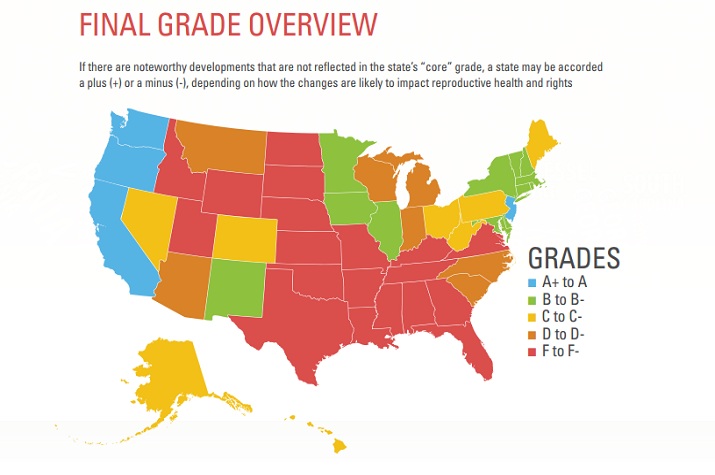


If the Supreme Court upholds contested provisions in Texas' omnibus antiabortion-rights law (HB 2), abortion access in the Rio Grande Valley would be completely eradicated, the Los Angeles Times reports (Hennessy-Fiske, Los Angeles Times, 3/12).
Background
The case, Whole Woman's Health v. Hellerstedt, centers on two provisions of the law. One requires abortion clinics in the state to meet the same building standards as ambulatory surgical centers, and the other requires abortion providers to have admitting privileges at local hospitals.
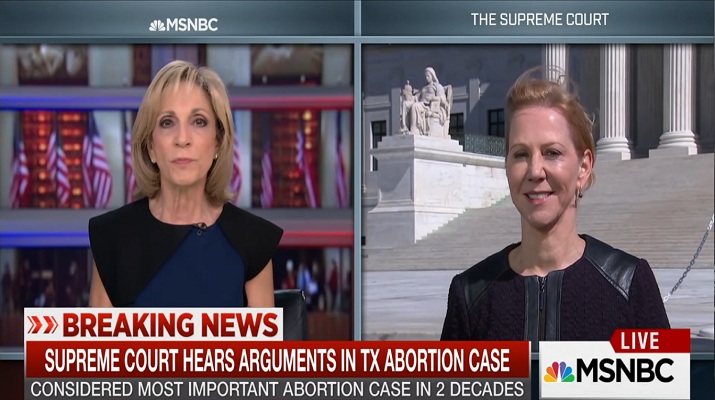
The Supreme Court heard oral arguments in the lawsuit earlier this month. The justices likely will issue a ruling in June. If the high court rules for the state, the number of clinics will fall to about 10, compared with about 40 before the law took effect (Women's Health Policy Report, 3/3).
Spotlight on McAllen
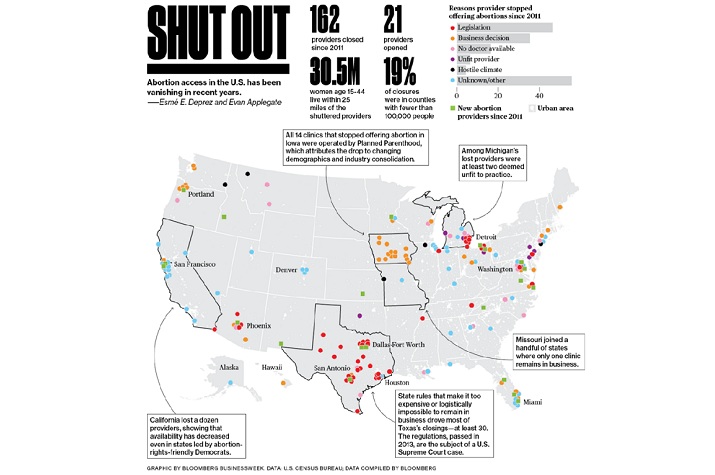
The Whole Woman's Health clinic in McAllen, which does not meet either of HB 2's contested provisions, is the only clinic in the Rio Grande Valley. According to the Times, HB 2 forced the closure of some other clinics in the area and twice shut down the Whole Woman's Health clinic. Other than Whole Woman's Health, the nearest clinic in Texas is in San Antonio, about 230 miles away.
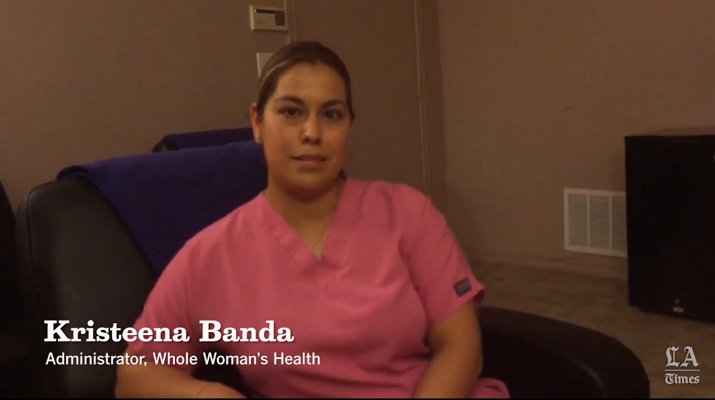
Appointments at the Whole Woman's Health clinic are booked through the end of March, the Times reports. Two physicians travel from Houston and San Antonio, one each week, to join seven staffers at the clinic. According to Kristeena Banda, a clinic administrator at Whole Woman's Health, local physicians do not provide abortion care at the clinic "due to the [antiabortion-rights] backlash."
The provisions of the law that are currently in effect have already curbed the services the clinic can offer. For example, the clinic cannot offer surgical abortion after 15 weeks of pregnancy because it does not meet HB 2's ambulatory surgical center requirement. In addition, the clinic may not offer medication abortion after seven weeks of pregnancy.
According to the Times, the clinic over the last year also has had to install security cameras and hire security guards amid increasingly volatile antiabortion-rights protests.
What closure would mean
Banda said, "If [all of HB 2] does go into effect, you will completely wipe out abortion access in this area."
Many women seeking abortion care from the McAllen clinic already face challenges affording the procedure, according to Banda. She noted that many women who visit the clinic "have to choose between feeding their kids or having the procedure." Were the clinic to close, many would not be able to afford to travel San Antonio, while those who are not documented or are in the United States on visas might not be able to travel to access care.
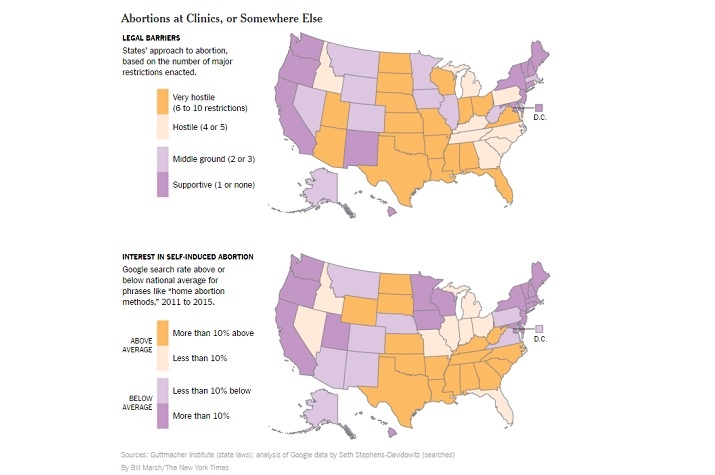
As an alternative, a woman might try to purchase misoprostol, a drug used in medication abortion, from Mexico, where it is available as an over-the-counter treatment for ulcers, the Times reports. Banda said, "We have Mexico a hop and skip away from us, and what happens is women take it into their own hands."
Banda said she already sees two to three women each week who have taken misoprostol without physician oversight. Many had taken the drug incorrectly. According to Banda, the drug is not as effective as the combination regimen used for medication abortion, and some women consumed an entire bottle or two thinking the first pills were not working. She said that women who took too much of the drug risked hemorrhaging, while others who tried to self-induce an abortion with misoprostol were unsuccessful.
She said, "If we give up, who's going to help these women?"
One woman who sought abortion care at the clinic noted, "I just don't understand how other people can choose what's right or what should be done when they're not in that situation." She added, "If maybe they were put in the situation of women, they would think differently" (Los Angeles Times, 3/12).