

Read the week's best commentary from bloggers at Echoing Ida/RH Reality Check, Salon and more.
REPRODUCTIVE JUSTICE:
"Unintended pregnancy reaches 30-year low, but racial and economic disparities persist," Elizabeth Dawes Gay, Echoing Ida/RH Reality Check: A new report from the Guttmacher Institute found that the "[u]nintended pregnancy [rate] in the United States reached a 30-year low in 2011," declining from 51 percent among reproductive-age women in 2008 to 45 percent in 2011, Dawes Gay writes. She notes that the decline correlated with an increase in contraceptive use. However, Dawes Gay explains that despite these improvements, "[l]ong-standing racial and economic disparities remain." She writes that in 2011, low-income women "were five times more likely to experience an unintended pregnancy than higher-income women"; "Black and Hispanic women were roughly 2.5 times more likely than non-Hispanic white women to experience an unintended pregnancy"; and "Black women had higher rates of unintended pregnancy than both white and Hispanic women." Dawes Gay notes that while the Affordable Care Act (ACA) [PL 111-148] likely will continue to lower the unintended pregnancy rate, curbing disparities among low-income women and women of color "will require targeted efforts to expand Medicaid, improve health-care access and quality, and close racial disparities in income and wealth." Specifically, noting that women of color are more likely to be uninsured than white women and less likely to be able to afford contraception, Dawes Gay writes, "Medicaid expansion would dramatically increase access to birth control for low-income women, reaching people with an income level at or below 133 percent of the federal poverty level" and people who fall into the Medicaid coverage gap. Further, citing the medical establishment's historical and ongoing mistreatment of women of color, Dawes Gay notes that "[e]nding racial discrimination in health care ... is key to meeting the needs of women of color and closing gaps in health outcomes like unintended pregnancy," which in turn will help women attain their educational and professional goals. Dawes Gay also points out that "women of color disproportionately struggle under the weight of poverty" and calls for the closure of "racial gaps in income and wealth through more equitable systems and practices." She concludes, "Without efforts above and beyond what has already been done, racial and economic disparities in pregnancy will persist" (Dawes Gay, Echoing Ida/RH Reality Check, 3/14).
ABORTION RESTRICTIONS:
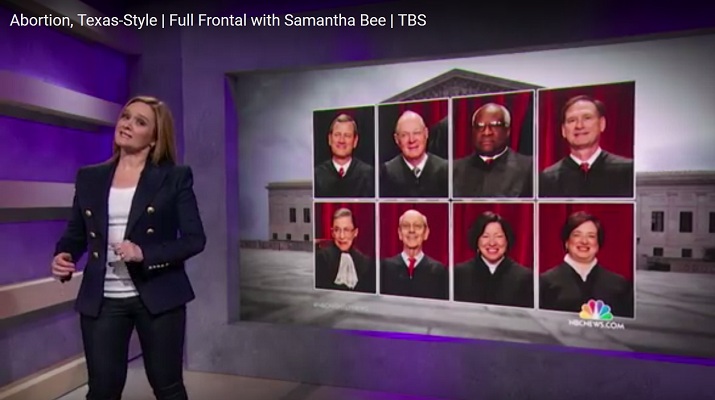
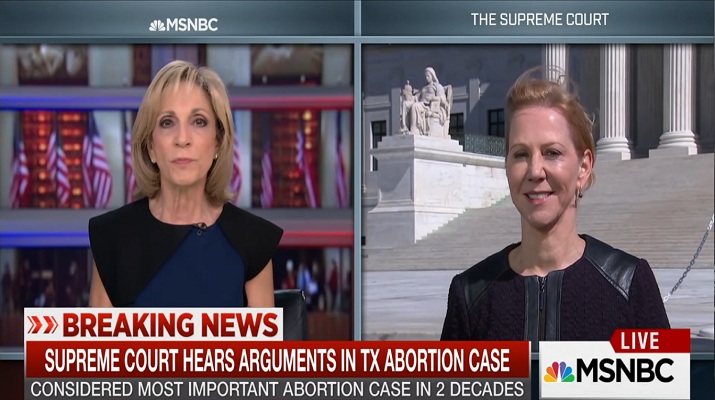
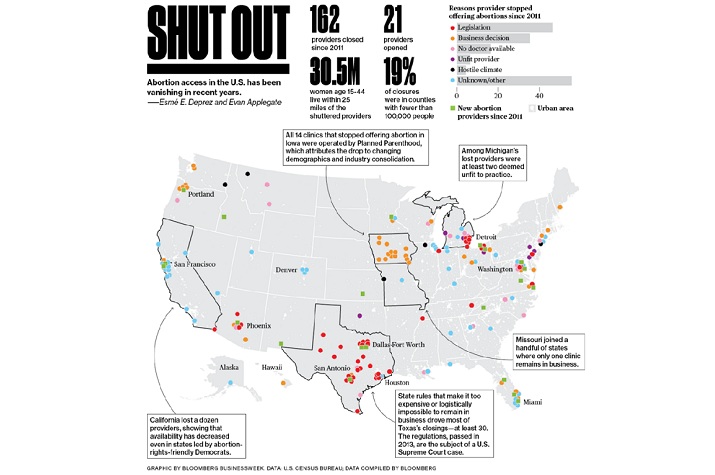
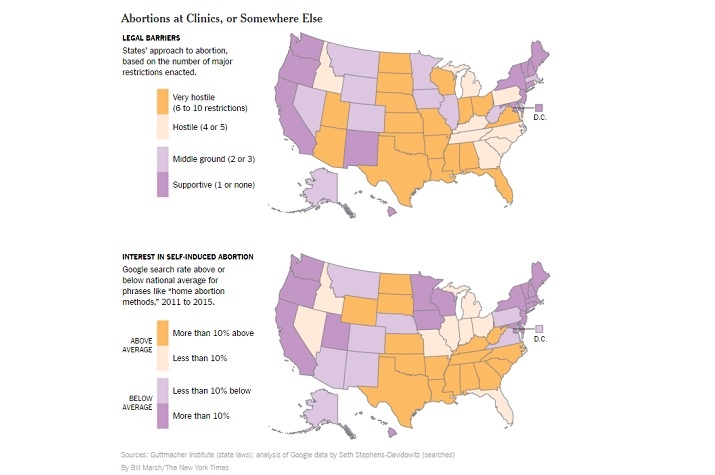
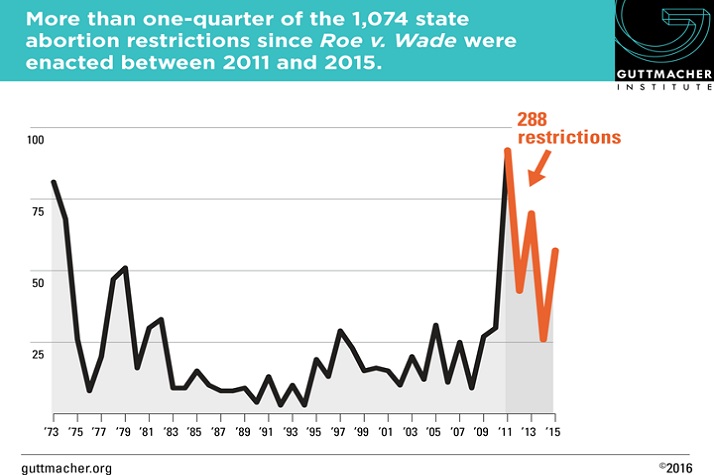
"The end of real choice in Texas: This is what would happen if SCOTUS doesn't intervene," Eesha Pandit, Salon: Noting that states have passed 471 abortion-rights restrictions in the past 15 years, Pandit discusses what is at stake in a legal challenge to provisions of Texas' omnibus antiabortion-rights law (HB 2). Pandit explains that the Supreme Court in the 1992 Planned Parenthood v. Casey ruling "upheld the basic right to abortion" but "also expanded the ability of the states to enact all but the most extreme restrictions on women's access to abortion by asserting that states could indeed pass restrictions on abortion access, provided they don't cause an 'undue burden' to the person seeking an abortion." Pandit points to the hypocrisy behind claims that these restrictions aim to protect a woman's health, citing an exchange between Supreme Court Justice Ruth Bader Ginsberg and Texas Solicitor General Scott Keller during oral arguments over HB 2. During the exchange, Pandit writes, Bader Ginsberg noted the inconsistency in the state's argument that the law did not impose an 'undue burden' on women living in El Paso, where the sole clinic would be shut down if the law took full effect, because women could travel to New Mexico to receive care at a clinic that did not meet Texas' standards. Pandit also cites Liza Fuentes, a researcher at the Texas Policy Evaluation Project, who "paints a grim picture for what abortion access will look like in Texas if HB2 is allowed to stand, with the number of clinics dropping from 40 to 10 -- with farther distances to travel, meaning longer wait times and subsequently more expensive procedures." According to Pandit, "In the face of these insurmountable obstacles, some women in Texas are attempting to self-induce abortions." Pandit states, "This is the heart of the matter -- how much burden is too much burden to be able to exercise a right?" She writes that "the language of rights implies a person's agency, a kind of freedom," which means that "[t]he right to an abortion, implies ... that a person should be free to make the choice to have one." Pandit concludes, "Those who have the money and the means [to access abortion care] then, have the right. And those without, are hardly free to choose. If this isn't an 'undue burden',' then perhaps the words have ceased to mean anything at all" (Pandit, Salon, 3/14).
What others are saying about abortion restrictions:
~ "Trapped is a close look at just how absurd abortion-restriction laws have become," Christina Cauterucci, Slate's "XX Factor."
~ "Group calls out Wisconsin congressman whose 'concern for life ends' when 'the umbilical cord is cut,'" Ally Boguhn, RH Reality Check.
~ "Holding the line on abortion rights," B. Jessie Hill, American Constitution Society blog.
CRIMINALIZING PREGNANCY:
"Tennessee's war on women is sending new mothers to jail," Nina Liss-Schultz, Mother Jones: A 2014 Tennessee law (SB 1391) allowing the state to prosecute pregnant women for drug use was passed "as part of a push to combat an opioid addiction epidemic in the state," but the law has subjected pregnant women to fetal assault charges and arrests "for all illegal behavior" because it "contain[s] a section that allowed women to be prosecuted for harm done to their own fetuses," Liss-Schultz writes. She notes, "As a result of this law, women have avoided prenatal care and many avoid getting treatment for their drug use because they are afraid they'll be arrested." According to Liss-Schultz, "an estimated 100 women have been arrested under the law," while "the number of Tennessee babies affected by drugs who received no prenatal care skyrocketed." Although lawmakers maintain that the law was intended to "encourage drug-addicted women to seek treatment, the law "giv[es] pregnant women and new mothers the option of treating their drug problems or going to jail" -- and moreover, Liss-Schultz writes, pregnant women seeking treatment for drug use have limited options. She cites Allison Glass of Health and Free Tennessee, who explains that only 11 of the state's 39 "licensed residential detox programs in the state ... accept pregnant women," and most of the state's 12 licensed methadone centers "do not accept Medicaid." Liss-Schultz writes, "The result is a 1,000-person waiting list for residential programs at any given time, and lost hope for many women seeking care." Noting that the law "contains a sunset provision," she writes that state lawmakers this week will consider "whether to let the measure expire or pass a bill permanently prohibiting chemical endangerment in Tennessee." According to Liss-Schultz, women who have been affected by the law "will testify against the new bill, arguing that it has done more harm than good by criminalizing pregnancy and forcing drug-addicted [pregnant women] to avoid prenatal care and treatment for fear of prosecution" (Liss-Schultz, Mother Jones, 3/14).
SEXUALITY EDUCATION:
"Obama's new budget cuts funding for abstinence-only sex ed," Josephine Cristobal, Our Bodies Ourselves' "Our Bodies, Our Blog": "Over the past 25 years, the federal government has spent ... nearly $2 million on ineffective sex education programs that promote abstinence as the only way to prevent [unintended] pregnancy and sexually transmitted infections," Cristobal writes. However, "President Obama's proposed 2017 federal budget cuts all funding for abstinence programs and increases funding for comprehensive sex education in schools." Cristobal cites research showing that "students who received abstinence-only education did not delay sex or have fewer sexual partners than their peers," as well as a study that found more than 80 percent of U.S. residents "support a blended curriculum that emphasizes the benefits of abstinence without ignoring the practical lessons of condom and contraceptive use." Further, Cristobal notes, "National data shows that teens who receive comprehensive sex education are less likely to have an [unintended] pregnancy." Cristobal explains that "comprehensive sex education provides students with information on a full range of topics related to their sexual health -- from sexual anatomy, safer sex, and contraception to body image, sexual orientation, and relationships." Noting that Congress has until Oct. 1 to approve Obama's proposal, Cristobal writes, "If approved, the elimination of abstinence-only programs will be a victory for all of us who have fought for sex education that is evidence-based, accurate and empowering" (Cristobal, "Our Bodies, Our Blogs," Our Bodies Ourselves, 3/14).