

The House on Thursday voted to convene a conference committee to merge its Zika response legislation with the Senate's proposal, The Hill reports (Ferris, The Hill, 5/26).
Background on Zika
The Zika virus is a mosquito-borne disease that has spread across Latin America over the past year. Researchers recently learned that Zika can also be transmitted through sexual activity. The virus is not easily diagnosed, and it does not have a cure or vaccine. It is linked to the birth defect microcephaly, a condition in which an infant is born with an abnormally small head and brain. The condition is fatal for some infants, while others experience permanent disabilities.
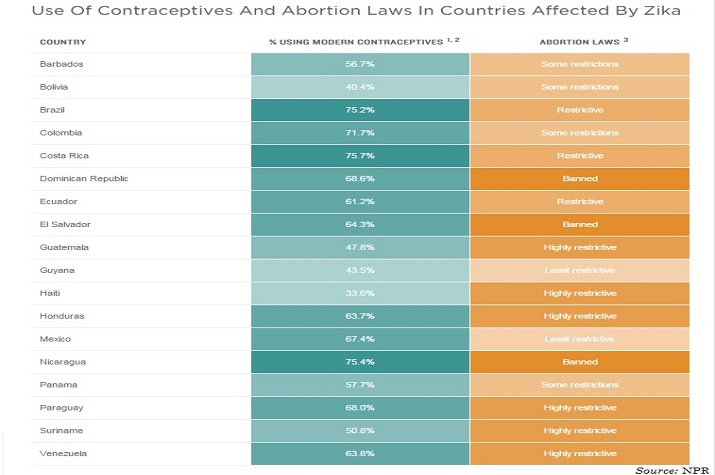
Officials in Brazil and Honduras have issued guidance recommending that women avoid pregnancy. El Salvador's recommendation is that women not get pregnant until 2018. However, many countries in Latin America restrict access to contraception and often ban abortion. In addition, women have been advised to protect themselves against mosquitos, but insect repellant can be unaffordable for low-income women.
The World Health Organization has declared the outbreak and its link to microcephaly a public health emergency of international concern. Separately, the United Nations High Commissioner for Human Rights issued a statement directing nations affected by the Zika virus to remove bans on access to sexual and reproductive health care services.
White House calls for funding
The White House has called for $1.9 billion to combat the virus. Amid congressional delays on the funding request, a senior administration official last month said the administration would transfer more than $500 million in funding allocated to combating the Ebola virus to Zika response efforts. CDC this month announced that it will allocate more than $85 million to U.S. states and territories to combat the Zika virus.
Senate legislation
The Senate last week voted 89-8 to advance a bill (HR 2577) that includes an amendment (SA 3900) with funding for addressing the Zika virus. The White House has threatened to veto the measure for reasons unrelated to the amendment allocating funds for Zika response efforts.
The Senate proposal is relatively similar to the White House's request. However, the Senate proposal does not repay much of the reallocated Ebola money, nor does it provide funding to assist the Medicaid program in Puerto Rico, which is considered a Zika "hot spot."
A provision in the measure would allocate $248 million to address Zika abroad through maternal and child health programs, mosquito control and public information campaigns. The amendment does not require the government to offset the funding allocations with spending cuts elsewhere.
House legislation
Separately, the House last week approved a standalone bill (HR 5243) that would provide $622 million to address the Zika virus. The House bill would fund U.S. response efforts through September. The measure would mandate that the funding be offset by spending cuts in other areas.
Both the House and Senate proposals include language from the Hyde Amendment, which prohibits the use of federal funding for most abortion care. The White House has threatened to veto the House measure, calling it an inadequate response to the Zika virus (Women's Health Policy Report, 5/23).
The House has also approved a bill (HR 897) that would ease pesticide regulations to help efforts to spray for Zika.
Conference committee details
The conference committee will be responsible for merging the Senate package, which includes the Zika amendment, with the two House measures, The Hill reports.
According to The Hill, conservative lawmakers in the House have not decided how much additional funding they will approve and whether the funding will require offsets (The Hill, 5/23).
House Minority Whip Steny Hoyer (D-Md.) last Tuesday said that top liberal lawmakers in the House "still prefer" meeting the funding request in full (Women's Health Policy Report, 5/23).
Report: 2M pregnant women could contract Zika
In related news, more than two million pregnant women in the United States are at risk for contracting Zika, according to an analysis released Thursday by the Center for American Progress, Roll Call reports.
The Center for American Progress based its findings on data from CDC.
The analysis estimated that through November 2016, more than 271,000 pregnant Florida women and more than 491,000 pregnant Texas women "are potentially at risk of exposure to the Zika virus." In addition, the researchers found that at least 100,000 women could be at risk for Zika in each of several states -- including Georgia, New Jersey, North Carolina and Virginia -- as well as in New York City.
Topher Spiro, vice president for health policy at the Center for American Progress, stated, "Many factors will affect the actual prevalence of Zika virus infection, but the only factor within government control is the extent of prevention and response" (Bennett, Roll Call, 5/26).
CDC director discusses Zika response, calls for funding
In other related news, CDC Director Thomas Frieden at a news conference on Thursday outlined federal responses to Zika and called for Congress to approve needed funding, MedPage Today reports.
At the conference, Frieden described the Zika outbreak as "urgent" and "catastrophic," saying that the virus can result in "permanent damage." He cited the virus' link to birth defects and noted that it "almost certainly causes Guillain-Barré Syndrome," a potentially fatal condition that leads to temporary paralysis.
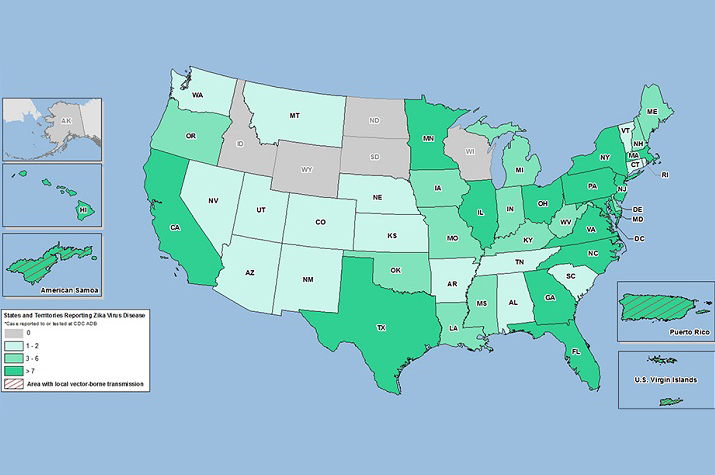
According to Frieden there have been 500 documented Zika cases in the continental United States. He also cited CDC predictions that there will be "hundreds of thousands of infections" in Puerto Rico this year.
Regarding funding, Frieden stated that Obama's Zika funding request meets the criteria for an emergency supplemental appropriation, even though those investments need to be replenished.
Frieden explained that to address Zika, the administration has redirected $589 million in funding from other sources, including the Prevention and Public Health Fund and efforts to fight Ebola. Noting that "[y]ou don't stop fighting terrorism" in one place to address it in another, Frieden said the Ebola funds need to be replenished.
In addition, Frieden discussed federal public health responses to Zika. He noted improvement to the Zika MAC-ELISA, CDC's antibody test, and said NIH has five possible Zika vaccines. However, he added that it will take about two years to validate the vaccines' safety and efficacy. He also noted CDC's progress on strategies for vector control and said the agency is developing a new class of nontoxic, food-grade insecticides.
Frieden compared the impending Zika crisis to the Ebola crisis, noting that his initial request for funding 300 beds in West Africa was denied "and within a few months we needed 3,000 beds." Discussing Zika, he stated, "The fact that we can today potentially prevent the dozens, or hundreds, or even thousands of birth defects makes this an enormously urgent challenge" (Firth, MedPage Today, 5/26).