

The Senate on Thursday voted 89-8 to approve a combined appropriations bill (HR 2577) that includes an amendment (SA 3900) to provide $1.1 billion in funding for U.S. efforts to combat the Zika virus, The Hill's "Floor Action" reports (Carney, "Floor Action," The Hill, 5/19).
Background on Zika
The Zika virus is a mosquito-borne disease that has spread across Latin America over the past year. Researchers recently learned that Zika can also be transmitted through sexual activity. The virus is not easily diagnosed, and it does not have a cure or vaccine. It is linked to the birth defect microcephaly, a condition in which an infant is born with an abnormally small head and brain. The condition is fatal for some infants, while others experience permanent disabilities.
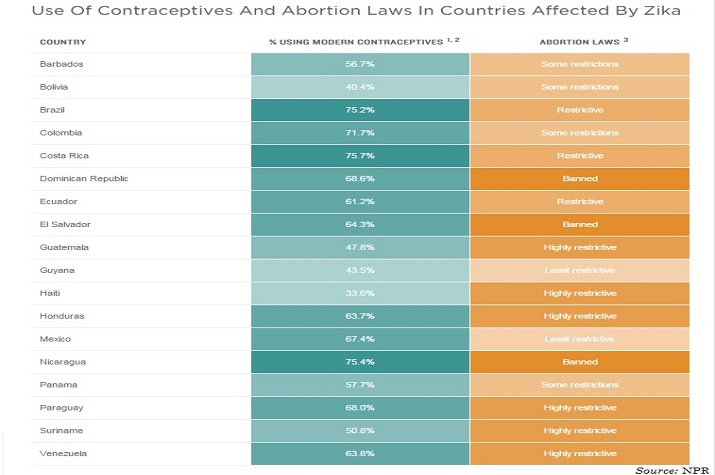
Officials in Brazil and Honduras have issued guidance recommending that women avoid pregnancy. El Salvador's recommendation is that women not get pregnant until 2018. However, many countries in Latin America restrict access to contraception and often ban abortion. In addition, women have been advised to protect themselves against mosquitos, but insect repellant can be unaffordable for low-income women.
The World Health Organization has declared the outbreak and its link to microcephaly a public health emergency of international concern. Separately, the United Nations High Commissioner for Human Rights issued a statement directing nations affected by the Zika virus to remove bans on access to sexual and reproductive health care services.
White House calls for funding
The White House has called for $1.9 billion to combat the virus. Amid congressional delays on the funding request, a senior administration official last month said the administration would transfer more than $500 million in funding allocated to combating the Ebola virus to Zika response efforts. CDC this month announced that it will allocate more than $85 million to U.S. states and territories to combat the Zika virus.
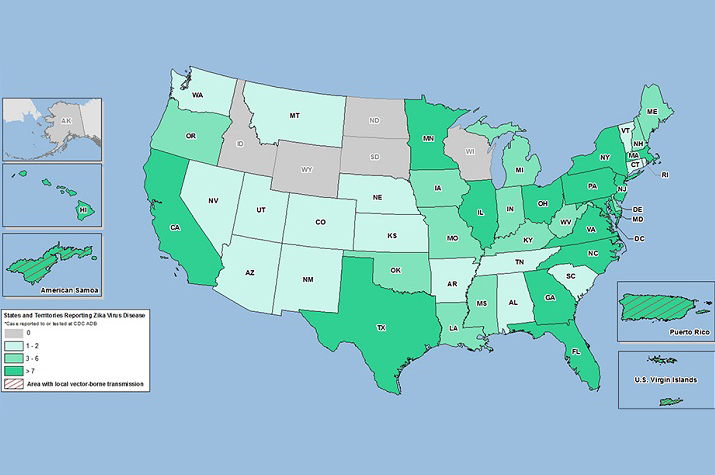
Federal health officials said they are not expecting a widespread outbreak of the virus in the United States. According to CDC, more than 1,200 Zika virus cases were reported in the United States and its territories from January 2015 to May 11, 2016 (Women's Health Policy Report, 5/19).
Senate funding bill
On Thursday, the Senate voted 68-30 to add the amendment to the underlying appropriations bill and then voted 89-8 to advance the bill (Mejdrich, CQ HealthBeat, 5/19 [subscription required]). The White House has threatened to veto the measure for reasons unrelated to the amendment allocating funds for Zika response efforts ("Floor Action," The Hill, 5/19).
The Senate proposal is relatively similar to the White House's request. However, the Senate proposal does not repay much of the reallocated Ebola money, nor does it provide funding to assist the Medicaid program in Puerto Rico, which is considered a Zika "hot spot."
A provision in the measure would allocate $248 million to address Zika abroad through maternal and child health programs, mosquito control and public information campaigns (Women's Health Policy Report, 5/18). The amendment does not require the government to offset the funding allocations with spending cuts elsewhere (Women's Health Policy Report, 5/19).
Sen. Patty Murray (D-Wash.), who helped craft the Senate's Zika funding proposal, said that while she was "disappointed" that conservative lawmakers "refused to work with [liberal lawmakers] to fully fund the president's emergency supplemental proposal," she is "pleased that this will move us to a down payment" ("Floor Action," The Hill, 5/19).
Next steps
The Senate and House now must negotiate compromise legislation to appropriate Zika response funds (Cowan, Reuters, 5/19). The chambers could merge the two bills ("Floor Action," The Hill, 5/19).
The House on Wednesday approved a bill (HR 5243) that would provide $622 million to address the Zika virus. The House bill would fund U.S. response efforts through September. The measure would mandate that the funding be offset by spending cuts in other areas.
Both the House and Senate proposals include language from the Hyde Amendment, which prohibits the use of federal funding for most abortion care.
The White House has threatened to veto the House Measure, calling it an inadequate response to the Zika virus (Women's Health Policy Report, 5/19). House Minority Leader Nancy Pelosi (D-Calif.) has criticized both the House's and Senate's proposals for lacking sufficient funding.
Separately, House Minority Whip Steny Hoyer (D-Md.) on Tuesday said that top liberal lawmakers in the House "still prefer" meeting the funding request in full. On Tuesday, he said lawmakers were still determining their course of action (Ferris, The Hill, 5/19).
CDC: 279 pregnant women show signs of Zika
In related news, Obama on Friday reiterated his call for Congress to send him a bill funding Zika response efforts after CDC on Friday announced that 279 pregnant women in the United States and its territories have tested positive for the Zika virus, USA Today reports.
CDC figures
The figures are current as of May 12. According to USA Today, the figures are not comparable to earlier estimates because CDC changed its method of counting cases of infection. The agency now is counting all pregnant women who have tested positive for the virus, even if they are not displaying symptoms. Previously, CDC counted only those pregnant women who had tested positive for Zika and presented with symptoms of the virus (Korte, USA Today, 5/20).
Of the 279 cases, CDC said 122 were diagnosed among residents in U.S. states and 157 among residents in U.S. territories (Pierson/Rampton, Reuters, 5/20). Few, if any, of the cases reported in U.S. states were transmitted by local mosquitos. Overall, CDC has documented 544 cases of Zika in the United States (USA Today, 5/20).
With mosquito season approaching, CDC has increased its capacity for Zika testing significantly, the agency said (Reuters, 5/20).
Obama renews call for funding
Obama issued his renewed call for a funding bill after meeting with Vice President Joe Biden, HHS Secretary Sylvia Mathews Burwell, CDC Director Thomas Frieden and Anthony Fauci, director of the National Institute of Allergy and Infectious Diseases.
Obama said, "Here's the upshot: This is something that is solvable. This is not something we need to panic about. But this is something we have to take seriously ... Congress needs to get me a bill. They should not be going off on recess before this is done" (USA Today, 5/20).