

"In the US, undocumented women struggle to obtain necessary and sometimes lifesaving reproductive health care -- and things are only getting worse," writes columnist Nandita Raghuram for Broadly.
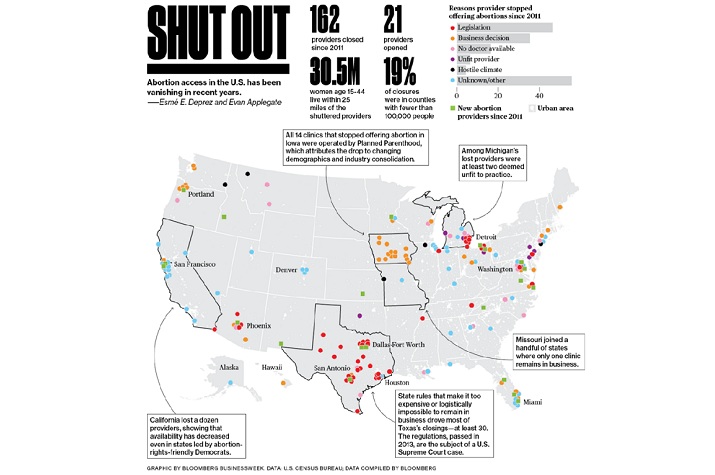
Raghuram points to Texas' Rio Grande Valley (RGV), a low-income area of the state where nine percent of Texas' undocumented immigrants reside. Addressing the particular difficulties women in this area face when trying to access reproductive health care, Raghuram writes, "Nine out of 32 family planning clinics in the area shuttered between 2011 and 2012, while 82 clinics have closed in the state as a whole. That means that women seeking contraception, a routine pap smear, or a mammogram are left without options."
According to Raghuram, "The Rio Grande Valley is far from an anomaly: Finding adequate health and abortion care proves difficult in other parts of the country as well." She explains, "Prohibitive federal and state laws surrounding health insurance, combined with decreased funding to clinics, unsteady income, and a lack of transportation, leave very few options for undocumented immigrants. These factors come together in a pernicious way, leading to dire health consequences and perpetuating cycles of poverty."
One formerly undocumented woman, Gabriela Hernandez, shared with Raghuram some of the obstacles undocumented RGV women face in accessing health care, including cost, language barriers, the time commitment and difficulty reaching the location. "These challenges can prove deadly," Raghuram writes, noting that the rate of cervical cancer for Hispanic women is nearly double that of non-Hispanic women. She quotes Jessica González-Rojas, the executive director at the National Latina Institute for Reproductive Health (NLIRH), who said, "'It's not because they're less healthy or there's something inherently wrong with their bodies ... It's literally because they do not have access to regular, affordable, quality health care.'" Similarly, Eveline Shen, executive director at Forward Together, noted that "'undocumented women are less likely to use prenatal services and have higher rates of low birth weight than documented immigrants.'"
Separately, Katrina Anderson, the interim director for U.S. Human Rights and Foreign Policy at the Center for Reproductive Rights (CRR), noted that some RGV women are aware they have cancer but are not able to access care, resulting in some women dying prematurely from preventable illnesses. Raghuram writes, "According to Anderson, this dangerously restricted access comes from two sources: policy-based barriers and structural barriers."
Obstacles to coverage
Raghuram explains that under federal law, most undocumented immigrants with qualifying incomes are barred from enrolling in Medicaid or the Children's Health Insurance Program, and they also are prohibited from buying private coverage. "That means women are often denied easy access to preventive reproductive health care, such as wellness exams or contraception," Raghuram writes. She notes that while, according to González-Rojas, undocumented immigrants can access care at federally qualified health centers or clinics that receive Title X funding, "understanding which clinics to go to is yet another challenge."
Raghuram quotes Max Hadler, a health advocacy specialist at the New York Immigration Coalition, who "explain[ed] that accessing quality reproductive health care is difficult precisely because 'it's very complex -- even for people who study this all the time -- to understand what the options are.'" According to Raghuram, "Laws differ by state, so deciphering their nuances is even more complicated," with some, but not all, providing coverage for undocumented immigrants and services for pregnant women.
Pointing to Texas as "the poster child for reduced health care access and its effects," Raghuram cites a report from CRR and the NLIRH. The report examined health care in RGV and found that 78 percent of women interviewed were uninsured, including those who could not access coverage because they were undocumented and documented immigrants who did not meet Texas' "'extremely low threshold for Medicaid.'" Moreover, citing Anderson, Raghuram explains that even documented immigrants have to wait several years before they can be eligible for Medicaid.
Transportation and costs
However, "even if one were to qualify for insurance, structural barriers -- such as a lack of transportation, poverty, and border checkpoints that make travel to distant clinics anxiety-ridden and difficult -- cause even more difficulties when accessing the basic care every woman needs," Raghuram writes. According to Shen, undocumented immigrants often reside far away from the federally qualified health centers they rely on.
Raghuram continues, "Making matters worse, the cost for these services is prohibitive." She cites the CRR and NLIRH report, which found that "'nearly every woman interviewed identified cost as the primary barrier to accessing reproductive health services and supplies.'" According to Raghuram, even women who can afford to make a preventive care visit might not be able to cover the cost of follow-up care.
Raghuram writes that, according to Anderson, such women often rely on "clinics that provide free or sliding scale services regardless of insurance or immigration status." However, "as funding decreases and these clinics close, an undocumented woman is likely to encounter even more roadblocks on the road to decent health care," Raghuram writes. Anderson explained that "the first [clinics] to go are the ones in rural areas where undocumented people tend to reside,'" Raghuram continues, noting that such areas also tend to have limited public transportation. The CRR and NLIRH cited other obstacles, such as arranging for a friend to provide transportation or paying for childcare.
Fear of deportation
Raghuram continues, "Almost every person I spoke to cited fear as another hurdle." Citing Hadler, Shen and Planned Parenthood spokesperson Daniela Ramirez, Raghuram notes that undocumented immigrants often worry that they will be reported when trying to access health care services. "These fears are not unfounded," Raghuram writes, noting, "One undocumented woman recently faced deportation after visiting an OB-GYN."
She also points to Grace Klein, a woman who used to work as a patient advocate at Cleveland's Preterm, to highlight how such "roadblocks increase exponentially when a woman tries to access an abortion." Klein related her experience in reassuring one very concerned patient seeking abortion care that she would not be required to produce papers.
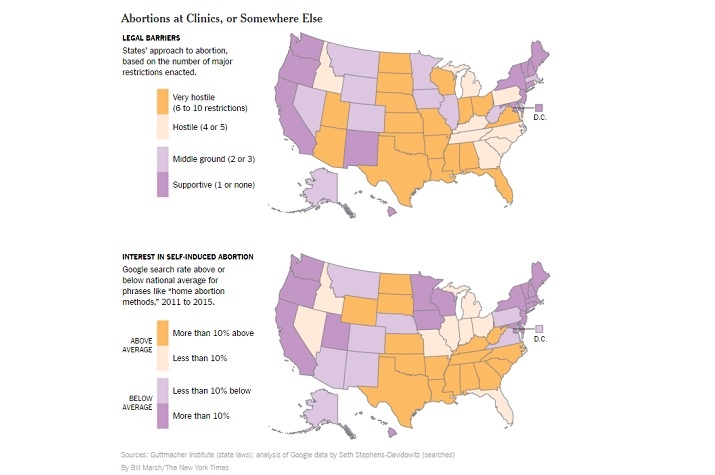
Raghuram also notes that restrictions on the use of Medicaid funds for abortion care further exacerbate undocumented women's difficulties in accessing the procedure, as do abortion restrictions that "clos[e] providers and forc[e] women to travel across long distances in order to receive an abortion," potentially requiring women to cross checkpoints.
Ramifications
Raghuram quotes Ramirez, who explained that because of these obstacles, some undocumented women try to self-induce an abortion. Ramirez said, "Research and experience have shown that where abortion is illegal or highly restricted, women may resort to self-inflicted trauma, consumption of chemicals, self-medication, and even unqualified, untrained and likely unsafe providers." Raghuram also notes research showing that a woman unable to access abortion is "three times as likely to drop below the poverty line in the years following."
Raghuram writes, "Undocumented women are experiencing the struggles that all women in America are experiencing right now: an increasing lack of control over their health and their bodies. The difference is that undocumented immigrants are further caught in 'the intersection of anti-immigration policies and restrictive reproductive health care legislation,' according to Ramirez." Raghuram concludes by quoting González-Rojas, who explained that because of these obstacles, "'Women are dying'" (Raghuram, Broadly, 5/24).