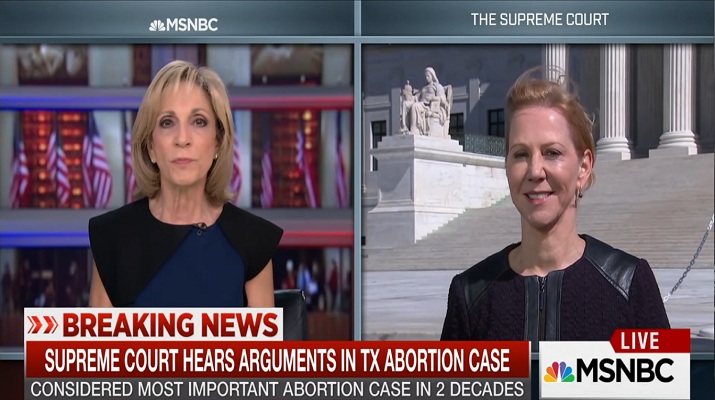


The Supreme Court on Wednesday heard oral arguments in a case challenging parts of Texas' omnibus antiabortion-rights law (HB 2), the Washington Post reports (Barnes/Somashekhar, Washington Post, 3/2).
The justices likely will issue a ruling in June.
Background
The case, Whole Woman's Health v. Hellerstedt, centers on two provisions of the law. One requires abortion clinics in the state to meet the same building standards as ambulatory surgical centers, and the other requires abortion providers to have admitting privileges at local hospitals.
The Center for Reproductive Rights (CRR), which represents the group of abortion providers challenging the law, argues that HB 2 is unconstitutional, creates an undue burden for Texas women who live far away from the nearest clinic, and does not promote the state's interest in improving health. If the court rules for the state, the number of clinics will fall to about 10, compared with about 40 before the law took effect.
In June 2015, the 5th U.S. Circuit Court of Appeals upheld the law's ambulatory surgical centers provision and admitting privileges requirements except in the case of one clinic, Whole Woman's Health in McAllen, Texas. Later that month, CRR asked the 5th Circuit to stay the decision while the clinics appealed to the Supreme Court. The 5th Circuit rejected the request. CRR then filed an emergency request with the Supreme Court to stay the lower court's ruling and allow the clinics to remain open pending appeal. The Supreme Court in late June temporarily blocked HB 2's ambulatory surgical center requirement. There was debate about whether the high court's order also blocked the law's admitting privileges requirement.
The case centers on the meaning of the Supreme Court's ruling in Planned Parenthood v. Casey, which held that states cannot place an "undue burden" on abortion access. Under the Casey precedent, a law is unconstitutional "if its purpose or effect is to place substantial obstacles in the path of a woman seeking an abortion before the fetus attains viability" (Women's Health Policy Report, 2/24).
CRR's oral arguments
During oral arguments Wednesday, CRR attorney Stephanie Toti said the contested provisions violate precedent established in Casey, calling them "unnecessary health regulations that create substantial obstacles to abortion access."
According to the Post, Justice Samuel Alito questioned Toti about the link between the law and the clinic closures, suggesting that the issue had not been fully addressed in the lower court rulings on the contested provisions (Washington Post, 3/2). Justice Anthony Kennedy acknowledged that there could be a "capacity problem" if the state had only 10 clinics under HB 2. Kennedy suggested that the high court could remand the case back to the lower courts to provide more evidence on whether the law was linked to the clinic closures and on whether the remaining clinics would have the capacity to handle patient demand (Wolf, USA Today, 3/3).
However, Justice Elena Kagan pointed out that the temporary enactment of the law's ambulatory surgical center provision resulted in the closure of clinics that reopened after the provision was stayed (Ura, Texas Tribune, 3/2). "It's almost like the perfect controlled experiment as to the effect of the law, isn't it," she said, adding, "It's like you put the law into effect, 12 clinics closed. You take the law out of effect, they reopen" (Washington Post, 3/2).
Separately, U.S. Solicitor General Donald Verrilli, representing the Obama administration, said, "This law closes most abortion facilities in the state, puts extreme stress on the few facilities that remain open, and exponentially increases the obstacles confronting women who seek abortions in the state." He added, "And it does all of that on the basis of a medical justification that cannot withstand any meaningful scrutiny."
According to the Post, Kennedy appeared receptive to Verrilli's points about how the clinics able to remain open under HB 2 would not have sufficient capacity to meet the needs of women seeking abortion care (Washington Post, 3/2).
Texas' oral arguments
Texas Solicitor General Scott Keller during oral arguments claimed the contested provisions were aimed at improving clinic safety and protecting women's health (Farias/Bassett, Huffington Post, 3/2).
Kennedy questioned Keller on the claim. He noted that research shows medication abortion rates are increasing nationally, but Texas' medication abortion rates are decreasing while its surgical abortion rate is increasing (Texas Tribune, 3/2). Citing those trends, he said, "This may not be medically wise" (USA Today, 3/3).
Separately, Justice Ruth Bader Ginsburg challenged Keller on the validity of increasing the standard of care, noting that abortion is one of "the most safe, the least risk[y] procedures." Sotomayor added that increasing the standard of care is "valid only if it's taking care of a real problem" (USA Today, 3/3).
Ginsburg, along with Kagan and Justice Stephen Breyer, asked Keller why the state has chosen to regulate abortion care more strictly than other procedures that are statistically more dangerous. Breyer pointed out that the state does not impose similar restrictions on colonoscopies, despite a colonoscopy being 28 times riskier than abortion care (Huffington Post, 3/2).
Ginsberg also questioned the need for ambulatory surgical centers for medication abortion "when there's no surgical procedure at all involved?" Keller asserted that the ambulatory surgical center requirement could help if there were complications, but Ginsberg pointed out that a woman experiencing compilations likely would go to a hospital near her home rather than one near a clinic, which could be located far away from her. Ginsburg said, "[I]f she's going to go to any hospital, it will be in her local community, not near the surgical center" (Huffington Post, 3/2).
Sotomayor voiced similar concerns regarding ambulatory surgical center requirements, noting, "Your brief seemed to be telling us that there's no role for the court to judge whether there's really a health benefit to what you're doing." Separately, under questioning from Breyer, Keller acknowledged that there was no evidence that a woman seeking help at a hospital after experiencing complications from an abortion had ever been turned away because her provider did not have admitting privileges.
Kagan pressed Keller about access to abortion clinics, noting that 750,000 women in the state would live more than 200 miles away from the nearest abortion clinic if the law were to take effect. Before HB 2, roughly 10,000 women lived more than 200 miles away from an abortion clinic (Washington Post, 3/2).
Similarly, Ginsberg questioned Keller on his assertion that only 25 percent of Texas women would be more than 100 miles from an abortion clinic if the law took effect, noting that the state excluded women in McAllen, where the clinic is exempted from the provisions, and women in El Paso, who can travel to a nearby clinic in New Mexico. Ginsburg said the court must "focus ... on the ones who are burdened" when weighing the constitutionality of an abortion restrictions. "You only look to the women for whom this is a problem," she said.
In addition, Ginsberg asked Keller why the state would rely on access to the New Mexico clinic when New Mexico does not require clinics to meet ambulatory surgical center and admitting privileges requirements. "If that's all right for the women in the El Paso area, why isn't it right for the rest of the women [in] Texas?" she asked (Texas Tribune, 3/2).
Possible outcomes
Following Justice Antonin Scalia's recent passing, eight justices heard the case on Wednesday (Washington Post, 3/2).
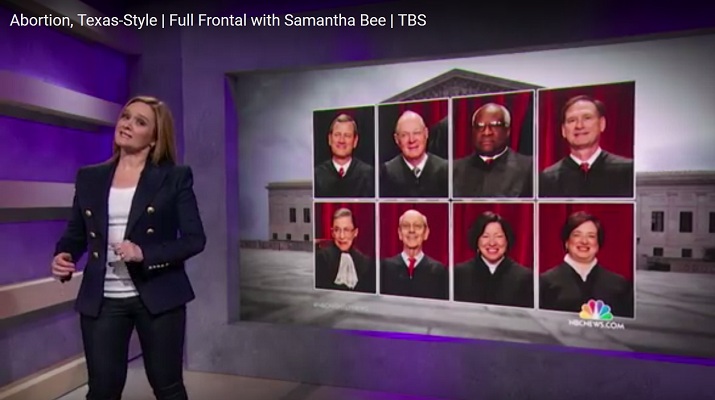
According to the Wall Street Journal, the four liberal justices on the court indicated they would likely rule to strike down the law, while the three conservative justices appeared skeptical of the plaintiffs' arguments (Bravin et al., Wall Street Journal, 3/2). While Kennedy, the deciding vote in the lawsuit, suggested he might vote to remand the case back to the lower courts, he also questioned the state's arguments and indicated he might align with the liberal justices (USA Today, 3/3). Kennedy appeared to reject the state's argument that its intent in passing the law should not be considered (Washington Post, 3/2).
If the court rules 4-4, the 5th Circuit's ruling will remain in effect, allowing the law to stand. However, such a vote would not set a binding precedent. If the court rules 5-3 to strike down the law, the ruling could provide abortion-rights supporters with a defense against antiabortion-rights restrictions (Women's Health Policy Report, 2/24). According to the Journal, the lawsuit could come up again before the Supreme Court if it is remanded to the lower courts, presumably when the high court again has nine justices (Wall Street Journal, 3/2).
Comments
Following oral arguments, Toti said, "I remain optimistic that the [Supreme] Court is going to see these requirements for what they are, a sham designed to limit women's abortion access. These laws are not designed to promote women's health, and they will not promote women's health."
Separately, CRR President and CEO Nancy Northup said, "One thing was clear from the questions the justices asked today: that the facts are on the side of Whole Woman's Health and the women of Texas. There is no justification for this law, even the American Medical Association and other leading medical providers have said that you cannot justify this for women's health."
Amy Hagstrom Miller -- president and CEO of Whole Woman's Health, the lead plaintiff in the lawsuit -- said, "Whole Woman's Health v. Hellerstedt, isn't about one clinic or even one state; it is about every single one of us. We all should expect equality, dignity, and justice in making our own health decisions. At Whole Woman's Health we know we're on the right side of history -- and we're hopeful that the [Supreme] Court will be as well" (Center for Reproductive Rights release, 3/2).
In a statement, Debra Ness, president of the National Partnership for Women & Families, said, "In this case, women are counting on the [Supreme] Court to rebuff this dangerous overreach by extremists determined to deny women's access to abortion care and replace medical standards with their own ideology. If they succeed, women, families and our country will suffer." She added, "The country is counting on our highest Court to strike down Texas' outrageous law and reaffirm women's privacy, dignity and equality. We trust the Court will recognize HB 2 as the unconstitutional, dangerous intrusion into women's health and privacy that it is, and strike it down" (National Partnership for Women & Families release, 3/2).
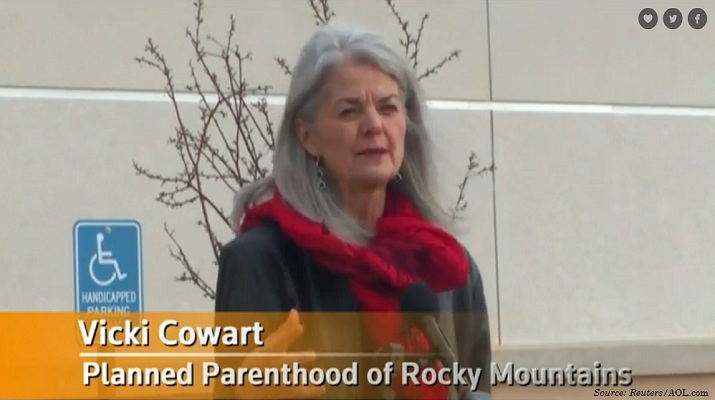
Cecile Richards, president of Planned Parenthood Federation of America, also called on the Supreme Court to strike down the law, stating, "Let me be clear: hundreds of thousands of women will lose access to care if [HB 2 and similar state laws] take effect, and women will pay the price" (Planned Parenthood release, 3/1).
Abortion-rights supporters, opponents rally outside Supreme Court
In related news, abortion-rights supporters and opponents rallied outside of the Supreme Court building during oral arguments on Wednesday, the Washington Post reports.
According to the Post, religious leaders, lawmakers and women who have obtained abortion care were among the 35 individuals slated to speak at the rally in support of abortion rights.
One reproductive-rights advocate, Kate Banfield, was one of the women who disclosed her personal abortion experience in a brief filed with the high court against HB 2. "I feel really strongly we all need to be doing something to try and bring change, and you can't bring change if you just sit at home."
Chi Nguyen, another abortion-rights advocate, brought a quilt to the rally that had 300,000 stitches sewn by women from six different countries and from 34 U.S. states. Nguyen said she hoped to eventually collect 5.4 million stiches to represent the number of reproductive-age women living in Texas. "We can't go back in time [to] when we didn't have abortion access," she said.
Separately, Jessica González-Rojas -- the executive director of the National Latina Institute for Reproductive Health, who also rallied outside of the Supreme Court -- said, "It's critical to be here ... This case has both national and real implications for Latinas in Texas." According to González-Rojas, the majority of reproductive-age women in Texas are Latina (Vargas, Washington Post, 3/2).