

The Supreme Court's ruling in a case challenging parts of Texas' omnibus antiabortion-rights law (HB 2) could have implications for scores of medically disputed abortion-rights restrictions across the United States, the New York Times reports (Eckholm, New York Times, 2/24).
Case details
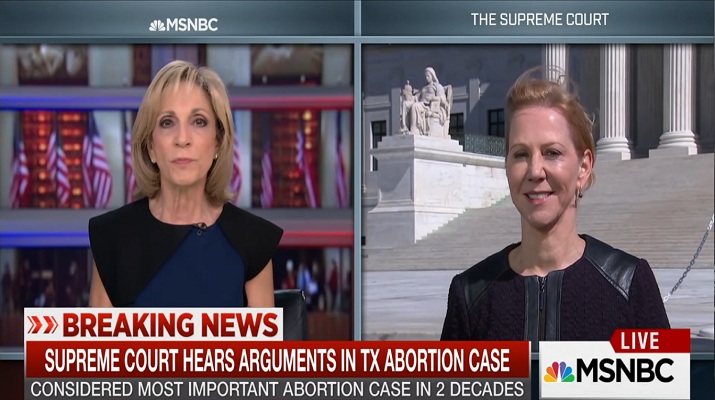
The Supreme Court will hear a challenge to HB 2 on March 2, which puts it on track to issue a final ruling in June. The law has already closed about half of the abortion clinics in Texas. The case, Whole Woman's Health v. Hellerstedt, centers on two provisions. One requires abortion clinics in the state to meet the same building standards as ambulatory surgical centers, and the other requires abortion providers to have admitting privileges at local hospitals.
The Center for Reproductive Rights (CRR), which represents the group of abortion providers challenging the law, argues that HB 2 is unconstitutional, creates an undue burden for Texas women who live far away from the nearest clinic, and does not promote the state's interest in improving health. If the court rules for the state, the number of clinics will fall to about 10, compared with about 40 before the law took effect.
In June 2015, the 5th U.S. Circuit Court of Appeals upheld the law's ambulatory surgical centers provision and admitting privileges requirements except in the case of one clinic, Whole Woman's Health in McAllen, Texas. Later that month, CRR asked the 5th Circuit to stay the decision while the clinics appeal to the Supreme Court. The 5th Circuit rejected the request. CRR then filed an emergency request with the Supreme Court to stay the lower court's ruling and allow the clinics to remain open pending appeal. The Supreme Court in late June temporarily blocked HB 2's ambulatory surgical center requirement. There was debate about whether the high court's order also blocked the law's admitting privileges requirement (Women's Health Policy Report, 2/10).
Clarifying the 'undue burden' standard
The case centers on the meaning of the Supreme Court's ruling in Planned Parenthood v. Casey, which held that states cannot place an "undue burden" on abortion access. Under the Casey precedent, a law is unconstitutional "if its purpose or effect is to place substantial obstacles in the path of a woman seeking an abortion before the fetus attains viability." According to the Times, the Supreme Court in the HB 2 challenge could elaborate on whether courts can "second-guess" lawmakers' claims that a rule helps women's health and whether states can enforce laws that curb abortion access without legitimate medical reasons.
The Times reports that the ruling could be influenced by the recent death of Justice Antonin Scalia. Until Scalia's seat is filled, the court has eight members (New York Times, 2/23). If the court rules 4-4, the 5th Circuit's ruling would remain in effect, allowing the law to stand (Women's Health Policy Report, 2/16). However, such a vote would not set a binding precedent, which would "leav[e] uncertainty" for other states, according to the Times. By contrast, if the court rules 5-3 to strike down the law, the ruling could provide abortion-rights supporters with a defense against antiabortion-rights restrictions (New York Times, 2/24).
The high court could also opt to reschedule the case for re-argument in the next term, which begins in October, by which time the court might again have a full bench (Women's Health Policy Report, 2/16).
CRR President Nancy Northup called the case "a turning point in the battle over access to abortion services." She noted, "The decision is likely to have an effect on a whole range of laws that pretend to be about women's health but actually are designed to close clinics."
Potential ramifications
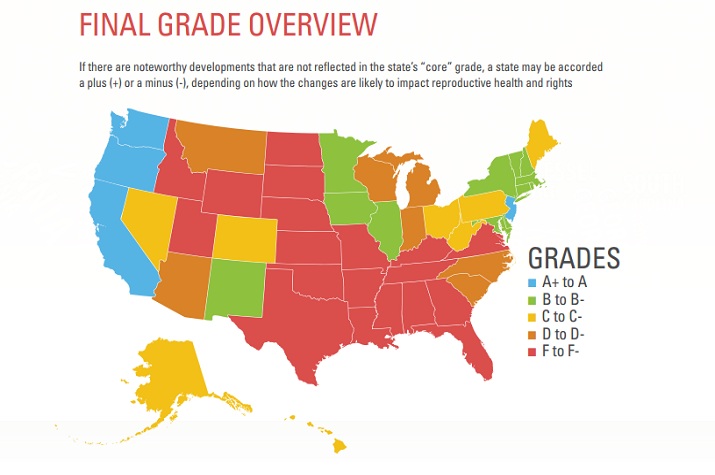
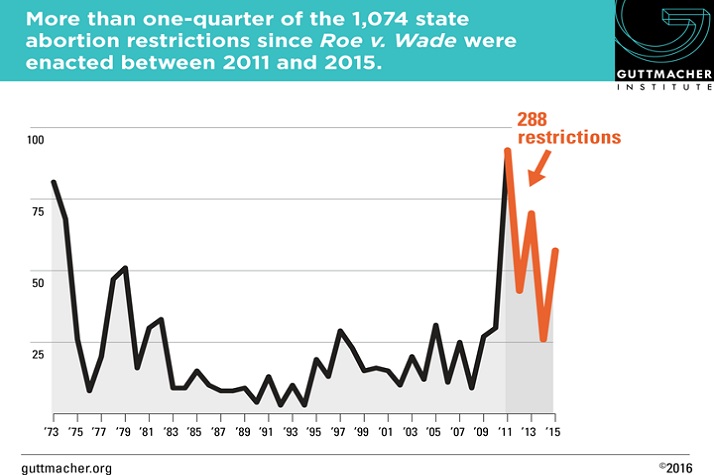
According to the Times, the Supreme Court's ruling in the case will not only affect abortion rights in Texas and in the nine other states that have passed similar restrictions, but it could also affect several other types of abortion restrictions that have been enacted across the United States. These "regulations of disputed medical value" include medication abortion laws, mandatory delays and the targeted regulation of abortion providers, the Times reports.
Further, according to the Times, a recent amicus brief filed in support of the law by 23 conservative-led states suggests that state lawmakers could propose abortion restrictions similar to HB 2, pending the Supreme Court's ruling.
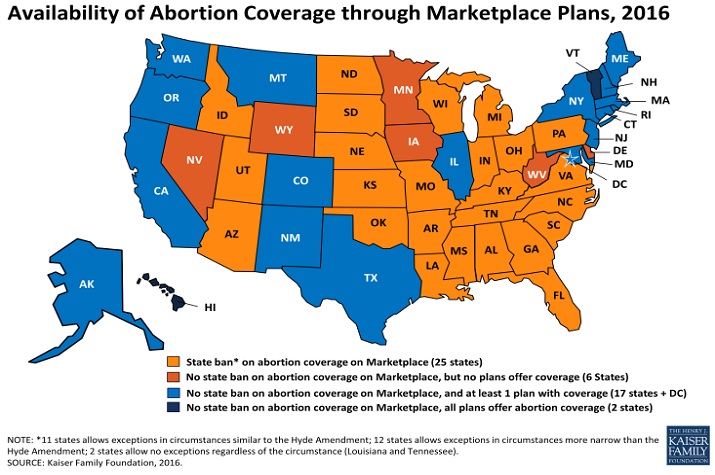
For example, the Times notes that the Supreme Court decision upholding the admitting privileges requirement could have a drastic ramifications in Alabama. Alabama women already have to travel long distances to obtain abortion care at one of the five surviving clinics in the state. In 2014, a federal judge declared Alabama's admitting privileges law (HB 57) unconstitutional, noting that if the requirement did not "constitute an impermissible undue burden...then almost no regulation, short of those imposing an outright prohibition on abortion, would."
If Alabama's admitting privileges law is permitted to take effect following a binding Supreme Court decision, four of the state's five clinics would be forced to close. The single remaining clinic, located in a far corner of the state, would be unable to meet even a fraction of the demand for abortion care in the state, leaving Alabama women without options for care (New York Times, 2/24).