

Read the week's best commentary from bloggers at Care2, Center for American Progress' "ThinkProgress" and more.
ABORTION RESTRICTIONS:
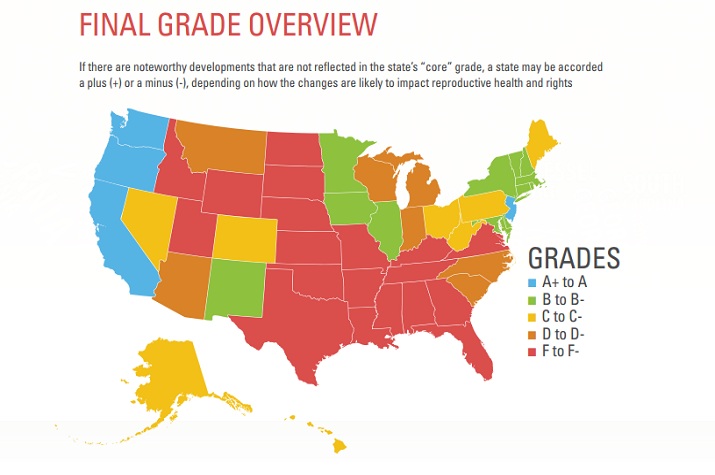
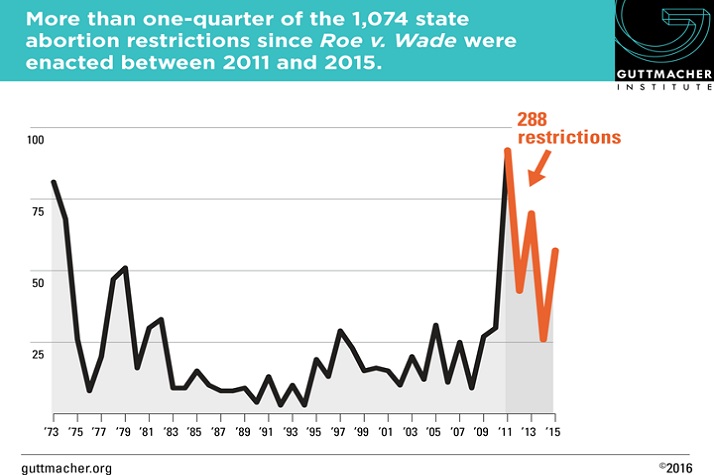
"Notarized parental consent is about blocking minors from abortion," Robin Marty, Care2: "Getting an abortion in a [conservative] state is already a difficult task, what with few clinics, long waiting periods and often protesters to face on the way into the building," but "[g]etting an abortion as a teen is even more difficult," Marty writes. She points to parental involvement laws that require minors to either inform a parent or guardian about the decision or seek judicial bypass, a process that "takes even longer and can put the decision of whether or not an abortion will occur in the hands of the person on the bench rather than the teen carrying the pregnancy." According to Marty, Missouri -- which has only one clinic, requires two trips to a clinic for abortion care and already mandates that minors have parental consent before an abortion -- is trying to "make [the process] even worse" with a bill (HB 1968) that would require minors to have the parental consent document "'notarized and kept on file in the abortion doctor's office for at least seven years.'" Marty explains how the identification paperwork required to have a document notarized, "such as a birth certificate, could be missing and not obtained in time," while obtaining a new document could be costly. Further, notarization imposes additional costs and delays on accessing abortion care and could endanger a minor's privacy, particularly in a small town. Noting that the bill also would make the judicial bypass process more difficult, Marty concludes, "In essence, the new bill would eliminate almost all possibilities for judicial bypass for a minor wanting to end a pregnancy," and "it will make getting an abortion with parental consent much harder as well" (Marty, Care2, 2/19).
What others are saying about abortion restrictions:
~ "Texas' anti-abortion laws are having a grave impact on black women," Kitty Lindsay, Ms. Magazine blog.
~ "John Oliver challenges abortion laws by dropping truth bombs left & right," Melissah Yang, Bustle.
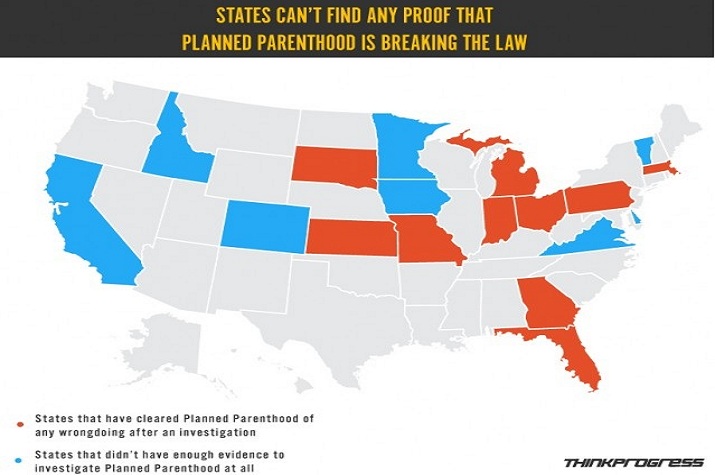
~ "The war against Planned Parenthood is advancing," Tara Culp-Ressler, Center for American Progress' "ThinkProgress."
ABORTION-RIGHTS MOVEMENT:
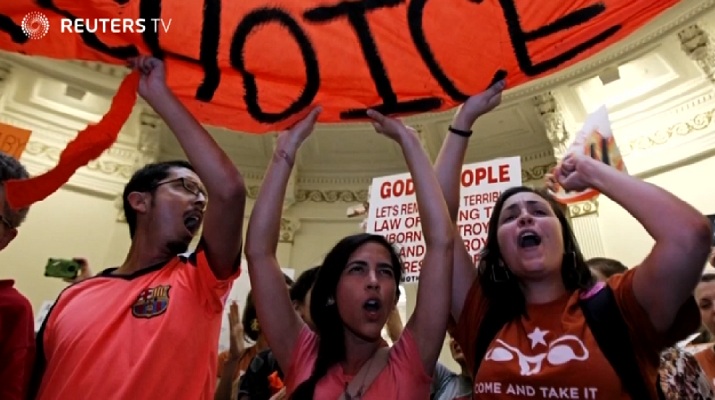
"A new Google extension will change every mention of 'pro-life' to 'anti-choice,'" Tara Culp-Ressler, Center for American Progress' "ThinkProgress": Culp-Ressler writes about a new Google extension, called the "Choice Language" tool, that aims "'to shift the language of [abortion] discussion towards a more accurate framework'" by "chang[ing] every mention of 'pro-life' to 'anti-choice' once it's added to a Chrome browser." According to Culp-Ressler, Andrea Miller -- president of the National Institute for Reproductive Health Action Fund, which partnered with an anonymous activist to develop the tool -- said, "'We agreed [with the activist] that the language in this discussion really matters,'" noting that the organization shared concerns "over the 'pro-life' label, particularly when it's used to describe legislation that ultimately serves to restrict women's access to reproductive health care." Culp-Ressler notes, "The difference between 'pro-life' and 'anti-choice' may not seem like a big deal to some internet users. But reproductive rights proponents often argue that the language we use to talk about issues related to abortion can have a bigger impact." While "the shorthand that Americans use to describe their stances on abortion rights is imperfect," Miller hopes that the new tool "will help open up a larger discussion about the nature of the legislative effort to restrict abortion, and the words our society uses to describe it," Culp-Ressler writes (Culp-Ressler, "ThinkProgress," Center for American Progress, 2/20).
What others are saying about the abortion-rights movement:
~ "'Trapped' documentary goes inside abortion clinics struggling to stay open in the south," Jessica Goldstein, Center for American Progress' "ThinkProgress."
SEXUALITY EDUCATION:
"Why Obama cutting abstinence-only sex ed is a win for feminism," Kristen Sollee, Bustle: President Obama's proposed 2017 federal budget would "cut funding for abstinence-only sex education," which means that, if Congress passes the budget, "$10 million ... won't be spent on a program scientifically proven to not only fail students but to perpetuate dangerous misinformation about human sexuality," Sollee writes. "[A]bstinence-only programs aren't heavy on facts," Sollee notes, citing a 2004 report that found "'11 out of 13 of the most commonly used abstinence-only-until-marriage curricula contain medical misinformation, use fear and shame, blur religion and science, and perpetuate stereotypes about gender roles.'" In addition, a "2007 report found that the sexual behavior of young people in abstinence-only sex ed programs doesn't diffe[r] from that of young people who aren't in those programs," Sollee states. By contrast, she explains that "science-based sexual education has been shown to lower teen pregnancy and STD rates by 17 percent." Sollee outlines a few reasons why the proposal to cut abstinence-only sexuality education "is a feminist win," including that science-based sexual education will help young people "learn the facts about sex and their bodies," and be more inclusive of "all other models of gender identity and sexual expression that fall outside [the] lines" of "a normative model of cis[gender] men and women waiting until marriage" to have sex (Sollee, Bustle, 2/22).