
National Partnership for Women & Families

In the News

Blogs comment on measuring HB 2 under the 'undue burden' standard, the effect of TRAP laws on abortion access, more

Read the week's best commentary from bloggers at RH Reality Check, Feministing and more.

ABORTION-RIGHTS MOVEMENT:

"Is one-sixth a 'large fraction' when it comes to our constitutional rights?" David Cohen/Jeffrey Bingenheimer, RH Reality Check: Cohen and Bingenheimer discuss a recent study that they conducted to determine whether one-sixth is a "large fraction" as defined by the Supreme Court's Planned Parenthood v. Casey decision. According to the authors, the Supreme Court in Casey said "that an abortion restriction will be found unconstitutional if it constitutes an 'undue burden' on a woman's right to choose," noting that "an undue burden exists when the law is a substantial obstacle for a 'large fraction' of people who are subject to that restriction." The authors explain that they chose one-sixth as their unit of measurement because it represents the fraction of Texas women who "would face a serious obstacle in obtaining an abortion" under the state's omnibus antiabortion-rights law (HB 2), which is being challenged in the Supreme Court this week. In their study, the authors asked respondents whether "one-sixth" constituted a large fraction in several different scenarios, such as one-sixth of someone's personal savings or one-sixth of the pills in a bottle of Tylenol being poisoned. The authors found that participations' perception of "whether one-sixth is a large fraction depends heavily upon the baseline expectation in the scenario in which it is presented." Cohen and Bingenheimer write that the Supreme Court "has never specified what exactly a 'large fraction' is under the Casey test, so the everyday English understanding of the phrase matters." The high court "needs to take this study's findings into consideration," the authors write, concluding, "In particular, if the justices value a woman's constitutional right to choose to have an abortion, then one-sixth should be seen as a large fraction -- because our baseline expectation should be that few people have their constitutional rights denied" (Cohen/Bingenheimer, RH Reality Check, 2/29).

What others are saying about the abortion-rights movement:

~ "The Supreme Court decision that made a mess of abortion rights," Nina Martin, Mother Jones.

~ "4 facts that prove just how endangered abortion rights are," Suzannah Weiss, Bustle.

~ "Artist Chi Nguyen creating a giant quilt to represent all the women affected by Texas anti-choice bill," Emma Cueto, Bustle.

~ "What's at stake in the Texas abortion case? A fundamental right and truth in judging," Dorothy Samuels, Huffington Post blogs.

~ "Will the U.S. Supreme Court take precedent seriously on abortion?" Garrett Epps, The Atlantic.

ABORTION RESTRICTIONS:

"Court ruling forces all but one of Louisiana's abortion clinics to close," Maya Dusenbery, Feministing: "As if to underscore just how high the stakes are" in the Supreme Court case challenging Texas' omnibus antiabortion-rights law (HB 2), "an appeals court ruled that Louisiana's own Texas-style [targeted regulation of abortion providers] ... is allowed to be enforced" while litigation challenging the requirement continues, Dusenbery writes. She notes, "Unless SCOTUS steps in, three out of four of [Louisiana's] abortion clinics must close." She adds, "With only one clinic left standing in Louisiana, the nearest abortion provider for many people in the state is the sole clinic in Mississippi, which is only open right now because enforcement of their Texas-style TRAP law has been blocked by the court until SCOTUS gives the final verdict on whether these kinds of laws pose an 'undue burden' on the right to choose." Further, "If that clinic were shut down, the nearest provider for many Louisiana and Mississippi women would be the five clinics in Alabama -- except that four of them would be shut-down if their Texas-style TRAP law currently blocked went into effect," she explains. Noting that a 4-4 tie in the Supreme Court's ruling on HB 2 "would mean abortion is inaccessible in a huge part of the South," and a loss would allow other states to enact similar restrictions, Dusenbery concludes, "this is what we'd call a must-win situation" (Dusenbery, Feministing, 2/26).

What others are saying about abortion restrictions:

~ "Texas's sham abortion laws," Eric Segall, American Constitution Society for Law and Policy's "ACS blog."

~ "How HB 2 left Candice 'choice/less' [Audio]," Jenn Stanley, RH Reality Check.

~ "6 in 10 women now subjected to abortion waiting period laws," Samantha Allen, Daily Beast.
Video Round Up

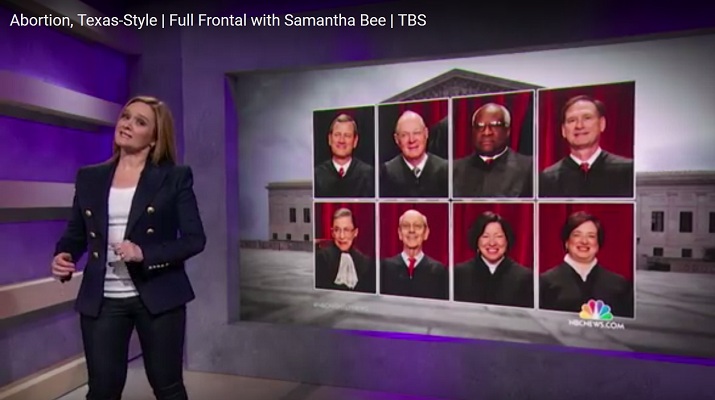
In a segment on HB 2, comedian Samantha Bee interviews Ilyse Hogue, president of NARAL Pro-Choice America, and Texas Rep. Dan Flynn (R), one of the bill's authors, for TBS' "Full Frontal with Samantha Bee," Vox reports.

Video Round Up

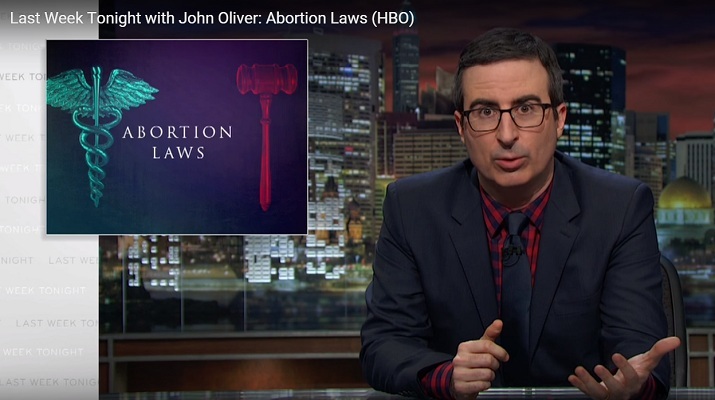
John Oliver on HBO's "Last Week Tonight with John Oliver" discusses the proliferation of attacks on abortion rights in the United States and comments on how such restrictions affect a woman's access to abortion care.

Video Round Up

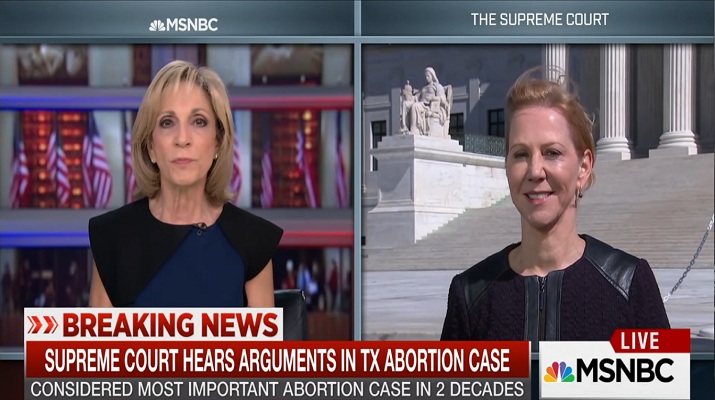
MSNBC's Andrea Mitchell hears from Nancy Northup, president of the Center for Reproductive Rights, about oral arguments before the Supreme Court in a case challenging provisions of Texas' omnibus antiabortion-rights law (HB 2).

Video Round Up

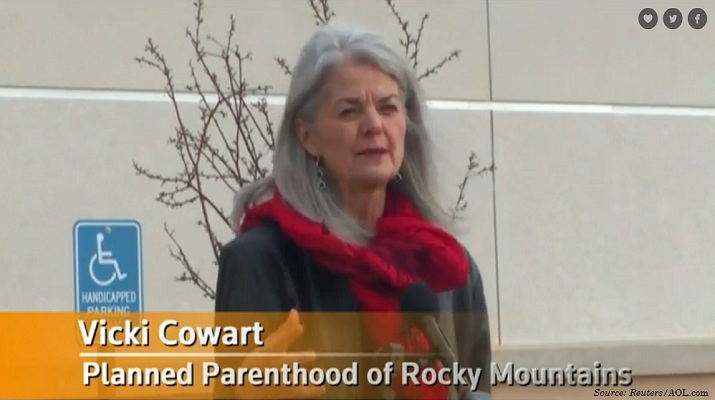
In this clip from Reuters/AOL.com, Vicki Cowart, CEO of Planned Parenthood of the Rocky Mountains, speaks about the reopening of a Planned Parenthood clinic in Colorado that was the site of a deadly shooting last November.

Video Round Up

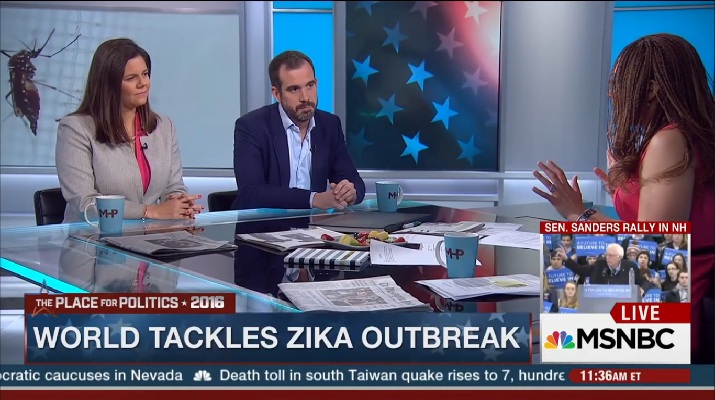
MSNBC's Melissa Harris-Perry hears from guests about the implications of the Zika virus outbreak for women in countries that have limited access to reproductive health care.

Video Round Up

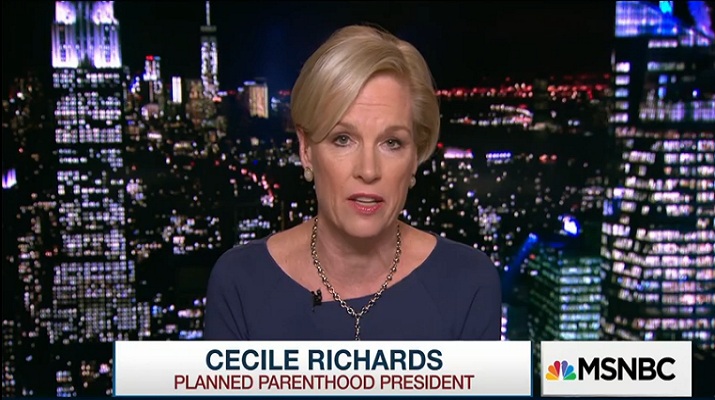
In this clip, Cecile Richards, president of Planned Parenthood Federation of America and Planned Parenthood Action Fund, speaks with MSNBC's Chris Matthews about a Texas grand jury investigation into Planned Parenthood that cleared the organization of wrongdoing and instead resulted in indictments for two abortion-rights opponents involved in filming misleading videos targeting Planned Parenthood.

Video Round Up

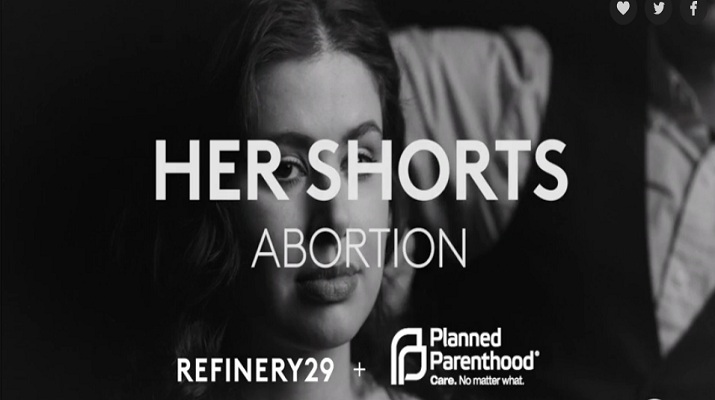
In a short film presented by Refinery29 in partnership with Planned Parenthood, several women share personal abortion stories.

Video Round Up

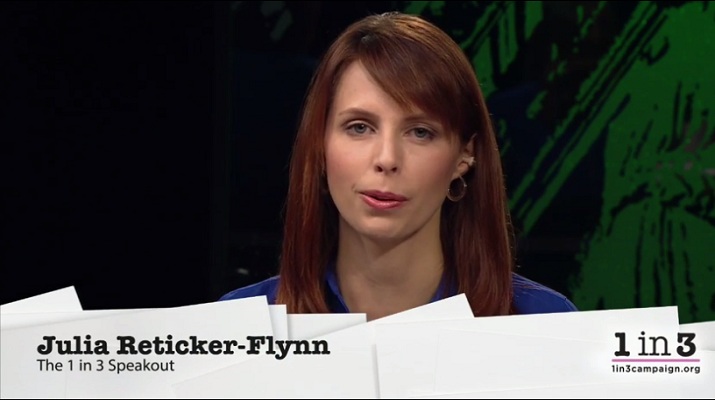
In this video, Julia Reticker-Flynn, campaign director of Advocates for Youth's 1 in 3 Campaign, hosts the project's second annual abortion speakout, which features participants' personal abortion stories and experiences to combat abortion stigma.

Video Round Up

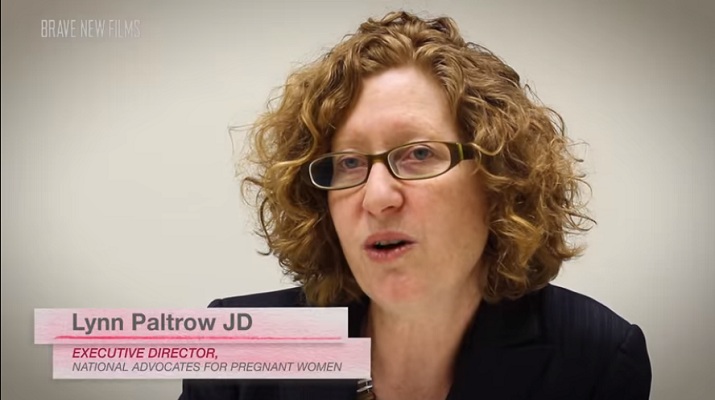
"To Prison for Pregnancy," a documentary presented by Brave New Films, discusses how U.S. feticide laws are being used to penalize pregnant women, particularly minority and low-income women.

Video Round Up

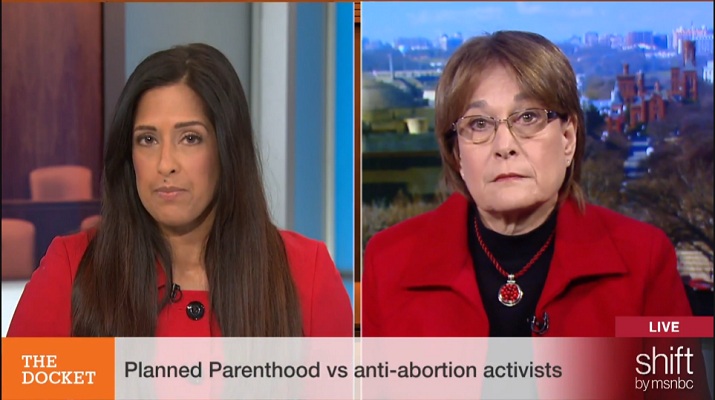
Seema Iyer, host of MSNBC's "The Docket," hears from Vicki Saporta, president of the National Abortion Federation, about legal challenges facing the Center for Medical Progress, an antiabortion-rights group that released a series of misleading videos targeting Planned Parenthood.

See All

Datapoints

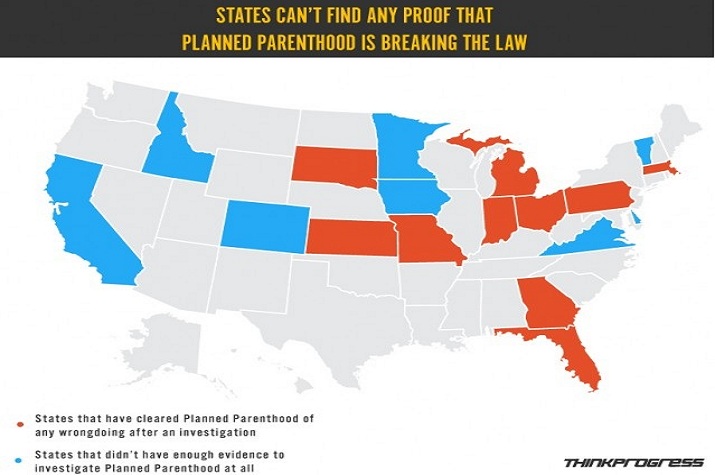
In this map, Center for American Progress' "ThinkProgress" spotlights the 12 states that have cleared Planned Parenthood of any wrongdoing after launching investigations into the organization following the release of misleading videos targeting Planned Parenthood's fetal tissue donation program.

Datapoints

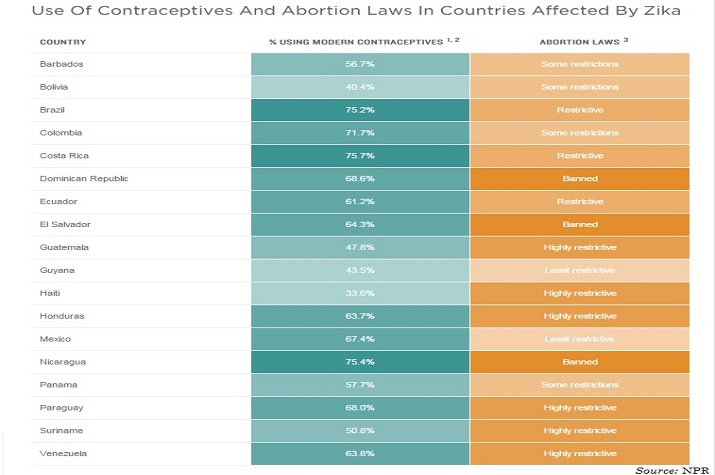
This chart, compiled by NPR, shows how the majority of countries affected by the Zika virus, which might be linked to a severe birth defect, curb access to contraception and abortion care.

Datapoints

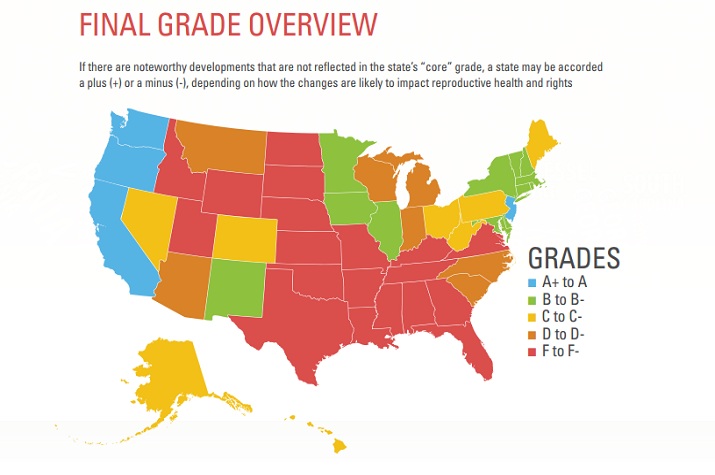
In its latest report card, the Population Institute provides a snapshot of the condition of reproductive rights and health in each state in 2015.

Datapoints

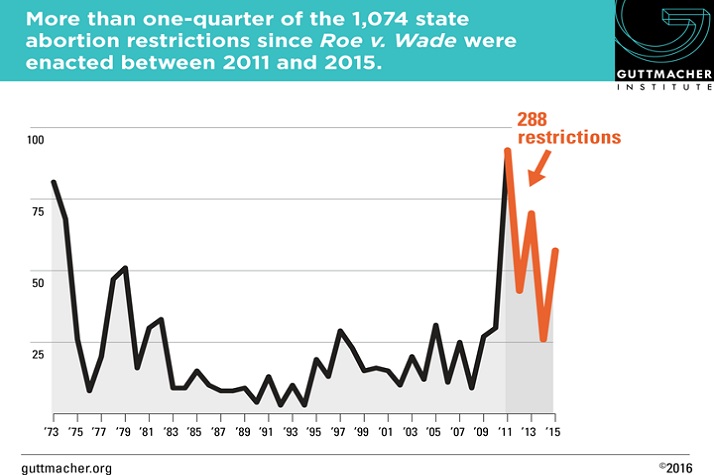
The Guttmacher Institute in this graph shows the rapid increase in the number of state abortion restrictions over the past few years.

Datapoints

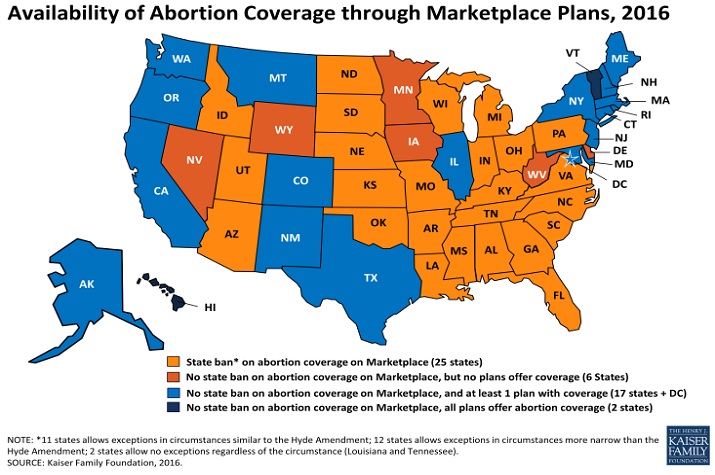
In this map, the Kaiser Family Foundation shows how widely abortion coverage varies from state to state in insurance plans sold through the Affordable Care Act's (PL 111-148) insurance marketplaces.

Datapoints

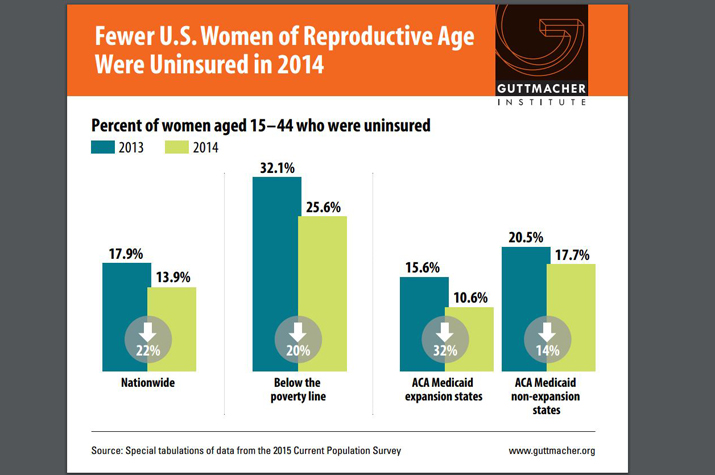
In this infographic, the Guttmacher Institute shows how the proportion of uninsured reproductive-age women in the U.S. declined from 17.9% in 2013 to 13.9% in 2014, the first year in which the Affordable Care Act was implemented fully.

Datapoints

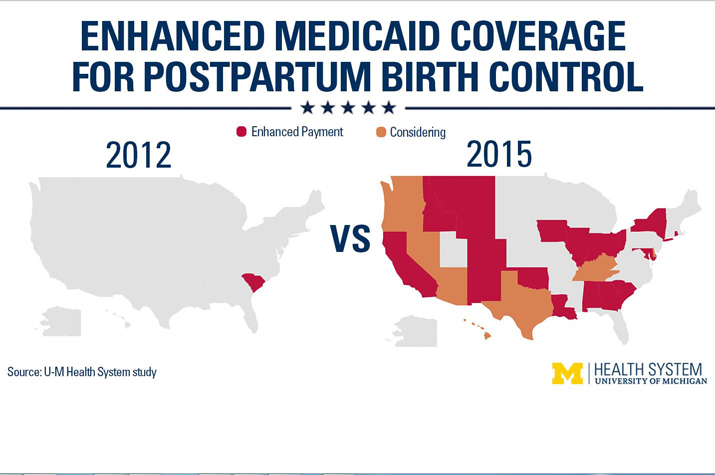
This map, released with a study from the University of Michigan Health System, shows how an increasing number of state Medicaid programs over the last three years are providing reimbursement for immediate postpartum LARC provision.

Datapoints

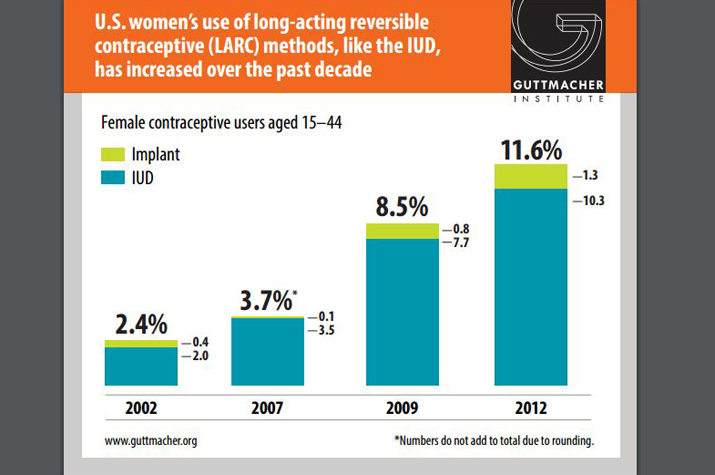
This infographic, released with a new Guttmacher Institute study, shows the increase in use of long-acting reversible contraception among U.S. women between 2002 and 2012.

Datapoints

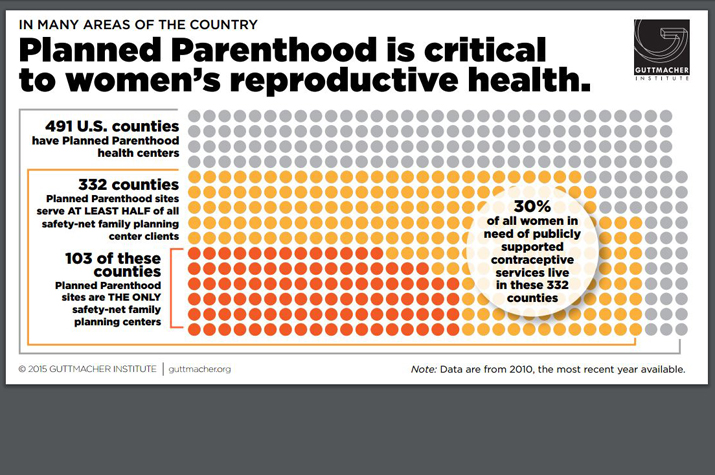
The Guttmacher Institute in this infographic counters antiabortion-rights claims that alternative providers could cover any gaps in health care services if Planned Parenthood is defunded.

Datapoints

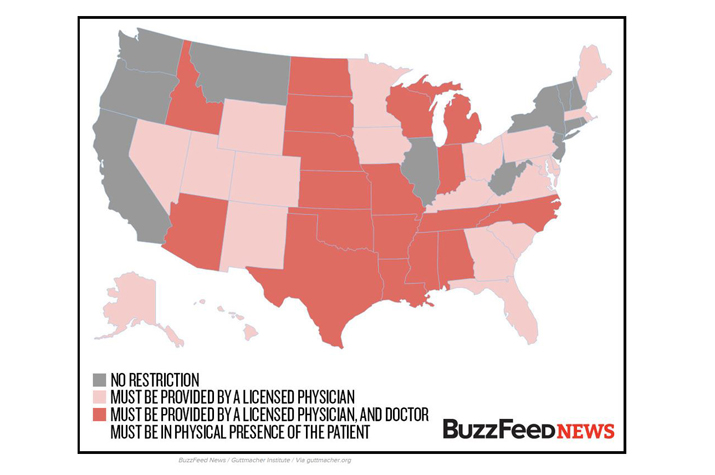
This map marks the 15th anniversary of medication abortion's FDA approval by detailing certain restrictions on the drugs across the country. According toBuzzfeed News, lawmakers in 38 states have passed these medication abortion restrictions.

See All

At a Glance

"A woman's ability to end her pregnancy too often depends on where she lives, her age and how much money is in her pocket."

— Marcela Howell of In Our Own Voice: National Black Women's Reproductive Justice Agenda, discussing ongoing disparities in women's access to abortion care on the 43rd anniversary of Roe v. Wade.