

The Senate on Tuesday voted 68-29 to advance an amendment (SA 3900) that would provide $1.1 billion in emergency funding for efforts to address the Zika virus, the New York Times reports (Herszenhorn, New York Times, 5/17).
According to The Hill's "Floor Action," the vote allows the amendment to be attached, as early as Wednesday, to a more extensive spending bill currently before the Senate (Carney, "Floor Action," The Hill, 5/17).
Background
The Zika virus is a mosquito-borne disease that has spread across Latin America over the past year. Researchers recently learned that Zika can also be transmitted through sexual activity. The virus is not easily diagnosed, and it does not have a cure or vaccine. It is linked to the birth defect microcephaly, a condition in which an infant is born with an abnormally small head and brain. The condition is fatal for some infants, while others experience permanent disabilities.
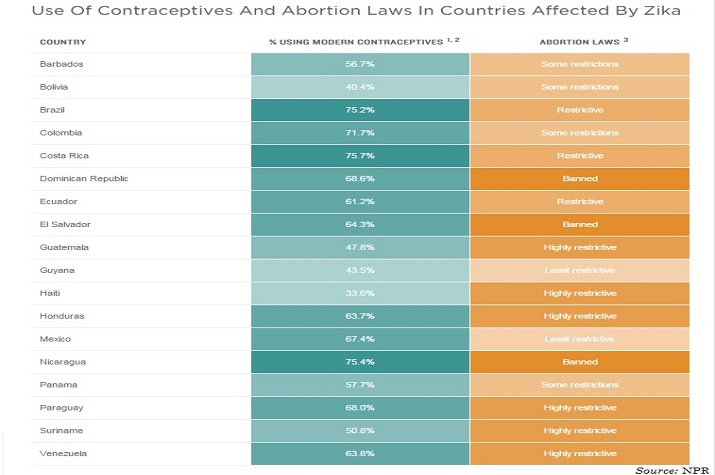
Officials in Brazil and Honduras have issued guidance recommending that women avoid pregnancy. El Salvador's recommendation is that women not get pregnant until 2018. However, many countries in Latin America restrict access to contraception and often ban abortion. In addition, women have been advised to protect themselves against mosquitos, but insect repellant can be unaffordable for low-income women.
The World Health Organization has declared the outbreak and its link to microcephaly a public health emergency of international concern. Separately, the United Nations High Commissioner for Human Rights issued a statement directing nations affected by the Zika virus to remove bans on access to sexual and reproductive health care services.
Zika response funding proposals
The Obama administration in February requested from Congress more than $1.8 billion to combat the Zika virus globally and in the United States. Amid congressional delays on the funding requests, a senior administration official last month said the administration would transfer more than $500 million in funding allocated to combating the Ebola virus to Zika response efforts.
Federal health officials said they are not expecting a widespread outbreak of the virus in the United States (Women's Health Policy Report, 5/11). According to CDC, more than 1,200 Zika virus cases were reported in the United States and its territories from January 2015 to May 11, 2016 (Ross Johnson, Modern Healthcare, 5/16). Five hundred and three of those cases, all of which have been linked to international travel, were reported in U.S. states. Seven hundred and one cases have been reported in U.S. territories as of May 11, including 698 cases linked to local transmission and three cases linked to international travel (CDC website, accessed 5/18).
Senate measure
On Tuesday, the Senate advanced the $1.1 billion funding measure and rejected two other Zika funding proposals (New York Times, 5/17). One of the rejected proposals would have funded the White House request in full, while the other would have allocated $1.1 billion for Zika response efforts while implementing spending cuts on separate funding allocated to the Affordable Care Act (PL 111-148) ("Floor Action," The Hill, 5/17). The proposal that advanced Tuesday would finance Zika efforts through Sept. 30, 2017 (New York Times, 5/17).
According to the AP/Sacramento Bee, the Senate proposal is relatively similar to the White House's request. However, the Senate proposal does not repay much of the reallocated Ebola money, nor does it provide funding to assist the Medicaid program in Puerto Rico, which is considered a Zika "hot spot."
A provision in the measure would allocate $248 million to address Zika abroad through maternal and child health programs, mosquito control and public information campaigns (Taylor, AP/Sacramento Bee, 5/17). Further, under the Senate proposal, NIH would receive $200 million. Anthony Fauci, director of the National Institute of Allergy and Infectious Diseases, said the amount likely would allow him to conduct most of the needed vaccine research (New York Times, 5/17).
Sens. Patty Murray (D-Wash.) and Roy Blunt (R-Mo.) negotiated the Senate proposal (AP/Sacramento Bee, 5/17). According to The Hill's "Floor Action," top liberal lawmakers had urged senators to fill the White House's funding request in full, but agreed to accept the smaller amount to reach a compromise with conservative lawmakers ("Floor Action," The Hill, 5/17).
Lawmakers call for funding
According to the Times, several conservative lawmakers representing Southern states -- which face the most immediate threat of the spreading Zika virus -- on Tuesday urged lawmakers to act quickly on the White House funding request. Sen. Johnny Isakson (R-Ga.), who visited CDC to discuss the virus's potential spread, said, "This is a lot of money, but it is only a pittance compared to what it would cost if the epidemic got out of control and we didn't stop it and we didn't defeat it" (New York Times, 5/17).
Sen. Marco Rubio (R-Fla.), who supported filling the White House's request in full, said, "We see the people of this country facing a public health threat." He added, "Our response should be 'Let's deal with it the way that medical experts are saying we need to deal with it'" (AP/Sacramento Bee, 5/17).
Separately, Sen. Elizabeth Warren (D-Mass.) expressed concerns over the limited funding, but said she and other liberal lawmakers voted to approve the amendment because it was better than not having any funding at all. "We will take whatever the [conservative lawmakers] who control the Senate are willing to give," she said ("Floor Action," The Hill, 5/17).
House proposes $622M
In related news, the House on Tuesday proposed a bill (HR 5243), sponsored by House Appropriations Committee Chair Hal Rogers (R-Ky.), that would redirect $622 million in existing federal health funding toward Zika response efforts (New York Times, 5/17). The House could vote on the proposal as early as Wednesday (AP/Sacramento Bee, 5/17).
According to the Times, the funding in the House proposal would come in large part from money that had been designated for Ebola. Health officials have said funding is still needed for Ebola-related efforts.
Overall, the House measure would finance Zika response efforts through Sept. 30, 2016 (New York Times, 5/17).
Separately, liberal lawmakers in the House have proposed legislation that would fund the White House's request in full.
Obama administration calls House proposal 'woefully insufficient'
The White House on Tuesday threatened to veto the measure proposed by conservative lawmakers in the House, calling the measure an inadequate response to the Zika virus (AP/Sacramento Bee, 5/17).
In a statement, White House press secretary Josh Earnest said, "It is woefully insufficient given the significant risk that is posed by Zika," adding, "The House of Representatives is three months late and more than a billion short of doing what's necessary to protect the American people."
Separately, Director of CDC Thomas Frieden raised concerns with HR 5243. "This is no way to fight an epidemic," he said, adding, "We're scraping together dollars to try to move as quickly as possible." He explained, "We're borrowing money from other programs. We're writing short-term contracts. We can't make long-term contracts with families to follow their kids. We can't do long-term studies on how to stop the mosquito. We want to put together a whole package on how to kill inside, outside, how to kill larvae, how to do what works best. And it's not possible under the House version" (New York Times, 5/17).
Murray also lambasted the House proposal, calling it "a completely unacceptable, inadequate, purely partisan bill intended to give them political cover without actually solving the problem."
Rubio similarly voiced concerns over the House legislation. "Frankly that's just not going to cut it," he said, adding, "I believe the House can and should do better than what it's proposed" ("Floor Action," The Hill, 5/17).
CDC allocates funding for local response efforts
In other related news, CDC on Friday announced that it will allocate more than $85 million to U.S. states and territories to combat the Zika virus.
Specifically, the agency said it would distribute $25 million this year in funding for preparedness and response efforts. Those funds would be allocated to 53 cities, states and U.S. territories that are at risk of experiencing Zika outbreaks (Grover, Reuters, 5/13). The funding aims to aid health officials in identifying, examining and addressing any potential Zika outbreaks.
States, U.S. territories and localities must apply for the funds by June 13. The funding will be distributed through July 17.
CDC also is distributing an additional $60 million to state and city health officials to help laboratories bolster their Zika tracking and monitoring capabilities. That funding is also intended to help labs maintain safe blood supplies. States and localities must apply for such funds, which will be allocated over the summer, by May 27 (Modern Healthcare, 5/16).
Stephen Redd, director of CDC's Office of Public Health Preparedness and Response, said, "These funds will allow states and territories to continue implementation of their Zika preparedness plans, but are not enough to support a comprehensive Zika response and can only temporarily address what is needed" (Reuters, 5/13). He called for additional funding to be appropriated for U.S. Zika response efforts, noting, "Without the full amount of requested emergency supplemental funding, many activities that need to start now are being delayed or may have to be stopped within months" (Modern Healthcare, 5/16).