
National Partnership for Women & Families

In the News

Study: U.S. unintended pregnancy rate reaches lowest level in three decades

The unintended pregnancy rate in the United States reached its lowest level in about 30 years, likely because women increasingly are using long-acting reversible contraceptives (LARCs), a Guttmacher Institute study finds, according to HealthDay/U.S. News & World Report (Thompson, HealthDay/U.S. News & World Report, 3/2).

Study details

For the study, researchers examined 2009 to 2013 data from CDC's National Survey of Family Growth and compared it with data collected between 2006 and 2010. Specifically, the researchers looked at information on about 2,000 pregnancies.

According to CNN, the researchers categorized a pregnancy as unintended if a woman indicated that she never wanted to become pregnant or said she did not yet want to become pregnant (Storrs, CNN, 3/2).

Key findings

The study found that unintended pregnancies decreased by 18 percent between 2008 and 2011, marking the most significant decline in decades.

Between the 1980s, when Guttmacher started tracking unintended pregnancies, and 2008, the unintended pregnancy rate remained between 49 and 59 per 1,000 women ages 18 to 44. By 2011, the rate fell to 45 unintended pregnancies per 1,000 women (Kliff, Vox, 3/2). Lawrence Finer -- lead author of the study and director of domestic research at the Guttmacher Institute -- said, "This is a very exciting thing to see because the rate has been somewhat stagnant for quite a while, and unintended pregnancy is a key measure of the extent to which American women are able to achieve their childbearing goals" (CNN, 3/2).

Overall, 2.8 million of 6.1 million pregnancies in 2011 were unintended, according to the study (Fox/Deo, NBC News, 3/2). The researchers noted that the percentage of unintended pregnancies that were terminated remained relatively stable between 2008 and 2011, from 40 percent to 42 percent (HealthDay/U.S. News & World Report, 3/2).

Despite improvement, disparities remain

Mia Zolna, a research associate at the Guttmacher Institute, said the unintended pregnancy rate declined across all age, income, race and ethnicity groups (NBC News, 3/2). Finer said, "This is really the first time we've seen such a broad-based decline. In the past, more advantaged groups have had declines and more disadvantaged groups have had increases" (CNN, 3/2).

Nonetheless, the study found that black and Hispanic women still were twice as likely as white women to have an unintended pregnancy, while women without a high school degree were three times more likely than women who graduated college to have an unintended pregnancy (HealthDay/U.S. News & World Report, 3/2). Moreover, women with incomes below the federal poverty level were about five times as likely as women with the highest incomes to have an unintended pregnancy (CNN, 3/2).

Increasing LARC use drives decline

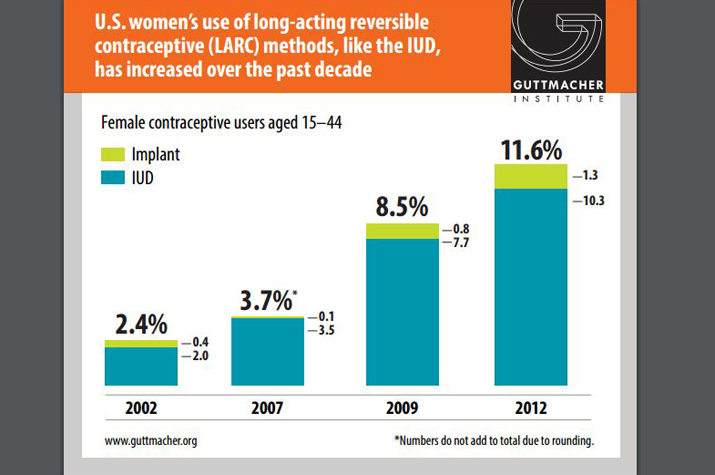
Finer said the rate of unintended pregnancies is falling because women are using more effective birth control methods, particularly LARC (Vox, 3/2). The study found that the percentage of women in the United States who use intrauterine devices (IUDs) or other types of LARC increased from 4 percent in 2007 to 12 percent in 2012 (HealthDay/U.S. News & World Report, 3/2).

According to Vox, it is unclear what exactly drove the increase in LARC use. The Affordable Care Act (ACA) (PL 111-148) expanded access to such contraceptives, but LARC usage already started increasing before the law took effect, Vox reports (Vox, 3/2). Finer noted that the ACA could drive further declines in the unintended pregnancy rate, stating, "Given that we researched a period that was before the Affordable Care Act, we're interested to see what is going to happen going forward ... We may see a continued downward trend" (HealthDay/U.S. News & World Report, 3/2).

He added that the law also allows young adults, who are at risk for unintended pregnancies, to remain on their parents' health insurance plan until age 26. Such coverage could further curb the unintended pregnancy rate if it "translate[s] into improved access to and use of contraception," he said (NBC News, 3/2).

In addition, Finer said major medical groups, including the American Academy of Pediatrics and the American College of Obstetricians and Gynecologists, have recently advised providers to offer IUDs to teenagers and nulliparous women. "Those groups of women have not traditionally been considered candidates for the IUD, but if you look at the evidence on safety and effectiveness, these methods can be used by a wide range of women," Finer said (HealthDay/U.S. News & World Report, 3/2).


Video Round Up

In a segment on HB 2, comedian Samantha Bee interviews Ilyse Hogue, president of NARAL Pro-Choice America, and Texas Rep. Dan Flynn (R), one of the bill's authors, for TBS' "Full Frontal with Samantha Bee," Vox reports.

Video Round Up

John Oliver on HBO's "Last Week Tonight with John Oliver" discusses the proliferation of attacks on abortion rights in the United States and comments on how such restrictions affect a woman's access to abortion care.

Video Round Up

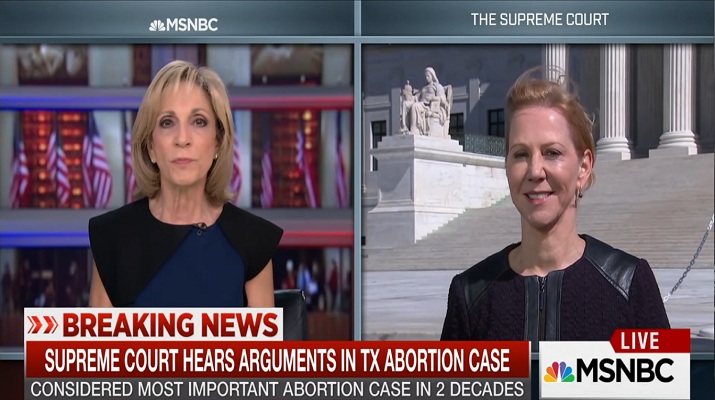
MSNBC's Andrea Mitchell hears from Nancy Northup, president of the Center for Reproductive Rights, about oral arguments before the Supreme Court in a case challenging provisions of Texas' omnibus antiabortion-rights law (HB 2).

Video Round Up

In this clip from Reuters/AOL.com, Vicki Cowart, CEO of Planned Parenthood of the Rocky Mountains, speaks about the reopening of a Planned Parenthood clinic in Colorado that was the site of a deadly shooting last November.

Video Round Up

MSNBC's Melissa Harris-Perry hears from guests about the implications of the Zika virus outbreak for women in countries that have limited access to reproductive health care.

Video Round Up

In this clip, Cecile Richards, president of Planned Parenthood Federation of America and Planned Parenthood Action Fund, speaks with MSNBC's Chris Matthews about a Texas grand jury investigation into Planned Parenthood that cleared the organization of wrongdoing and instead resulted in indictments for two abortion-rights opponents involved in filming misleading videos targeting Planned Parenthood.

Video Round Up

In a short film presented by Refinery29 in partnership with Planned Parenthood, several women share personal abortion stories.

Video Round Up

In this video, Julia Reticker-Flynn, campaign director of Advocates for Youth's 1 in 3 Campaign, hosts the project's second annual abortion speakout, which features participants' personal abortion stories and experiences to combat abortion stigma.

Video Round Up

"To Prison for Pregnancy," a documentary presented by Brave New Films, discusses how U.S. feticide laws are being used to penalize pregnant women, particularly minority and low-income women.

Video Round Up

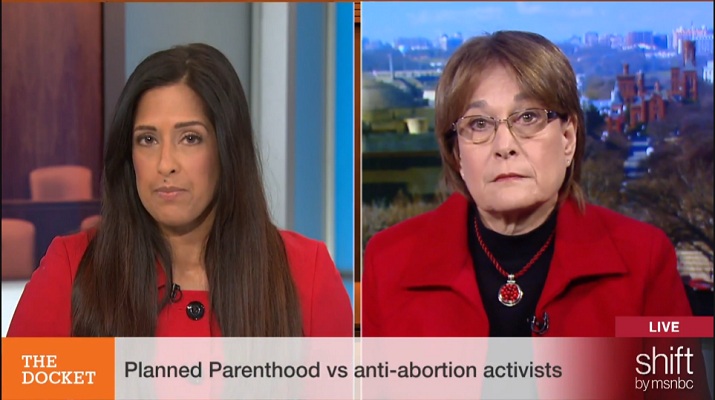
Seema Iyer, host of MSNBC's "The Docket," hears from Vicki Saporta, president of the National Abortion Federation, about legal challenges facing the Center for Medical Progress, an antiabortion-rights group that released a series of misleading videos targeting Planned Parenthood.

See All

Datapoints

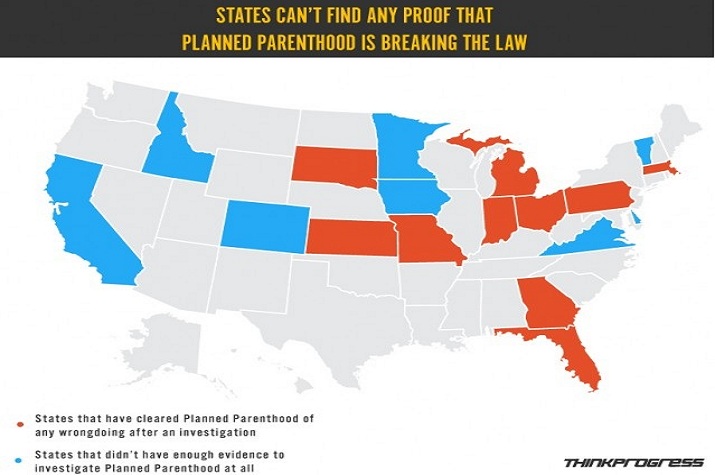
In this map, Center for American Progress' "ThinkProgress" spotlights the 12 states that have cleared Planned Parenthood of any wrongdoing after launching investigations into the organization following the release of misleading videos targeting Planned Parenthood's fetal tissue donation program.

Datapoints

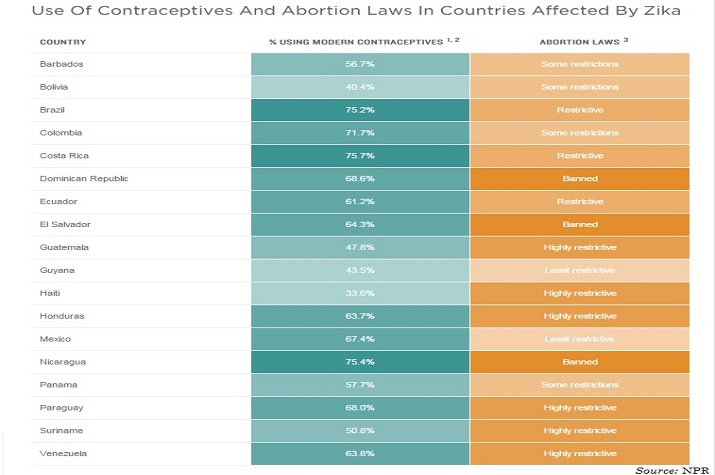
This chart, compiled by NPR, shows how the majority of countries affected by the Zika virus, which might be linked to a severe birth defect, curb access to contraception and abortion care.

Datapoints

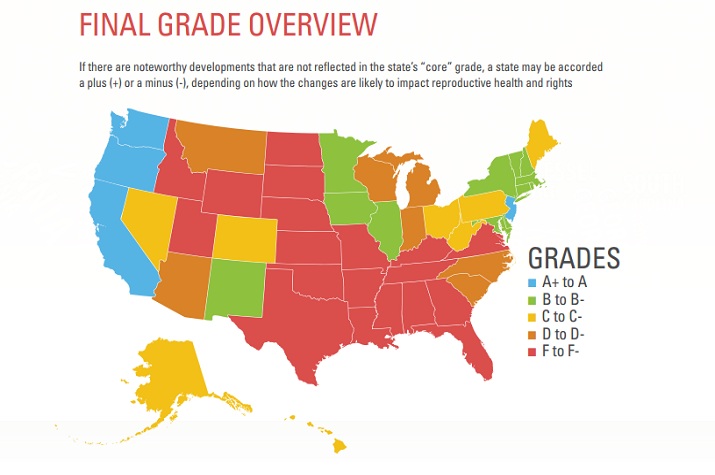
In its latest report card, the Population Institute provides a snapshot of the condition of reproductive rights and health in each state in 2015.

Datapoints

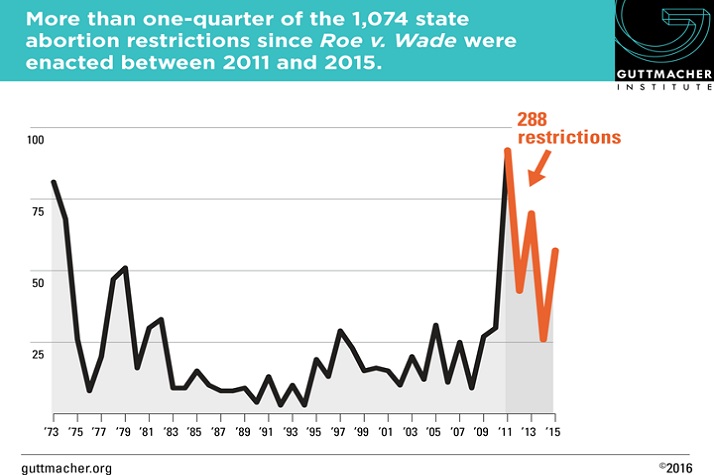
The Guttmacher Institute in this graph shows the rapid increase in the number of state abortion restrictions over the past few years.

Datapoints

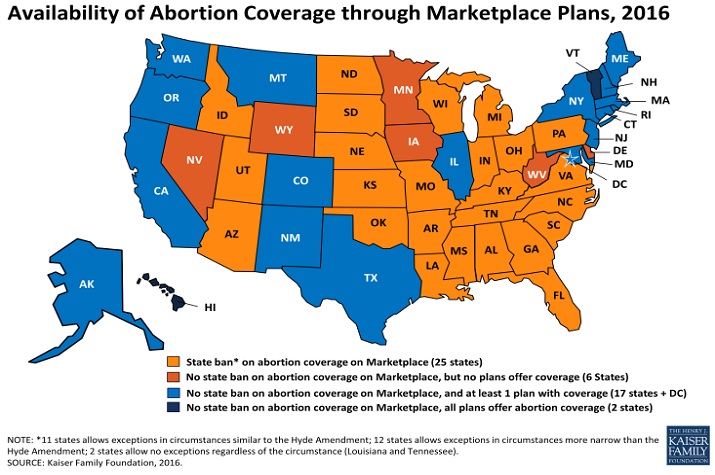
In this map, the Kaiser Family Foundation shows how widely abortion coverage varies from state to state in insurance plans sold through the Affordable Care Act's (PL 111-148) insurance marketplaces.

Datapoints

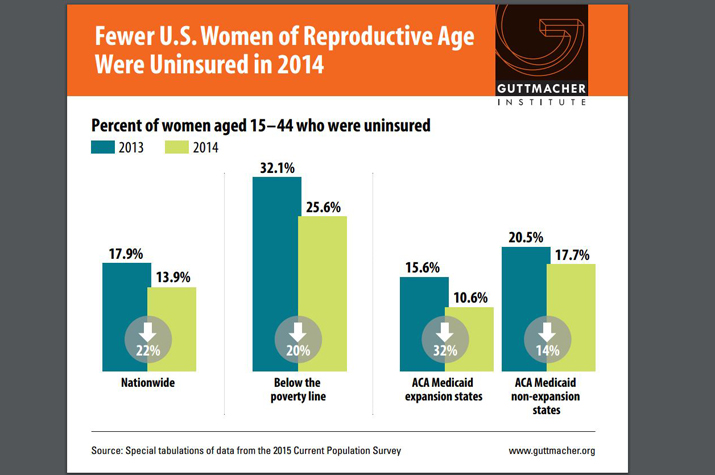
In this infographic, the Guttmacher Institute shows how the proportion of uninsured reproductive-age women in the U.S. declined from 17.9% in 2013 to 13.9% in 2014, the first year in which the Affordable Care Act was implemented fully.

Datapoints

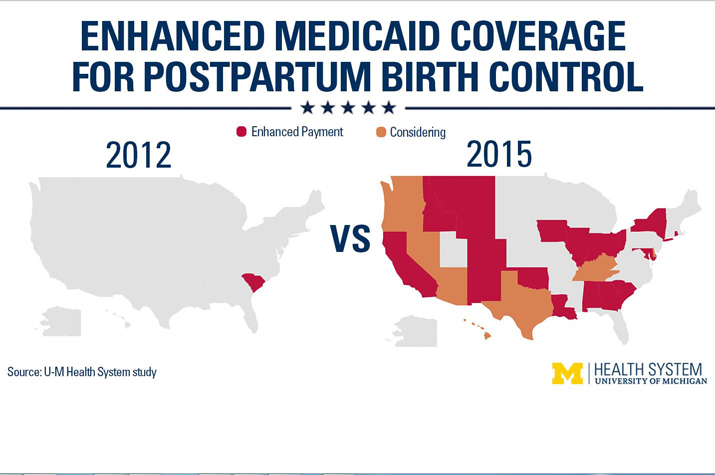
This map, released with a study from the University of Michigan Health System, shows how an increasing number of state Medicaid programs over the last three years are providing reimbursement for immediate postpartum LARC provision.

Datapoints

This infographic, released with a new Guttmacher Institute study, shows the increase in use of long-acting reversible contraception among U.S. women between 2002 and 2012.

Datapoints

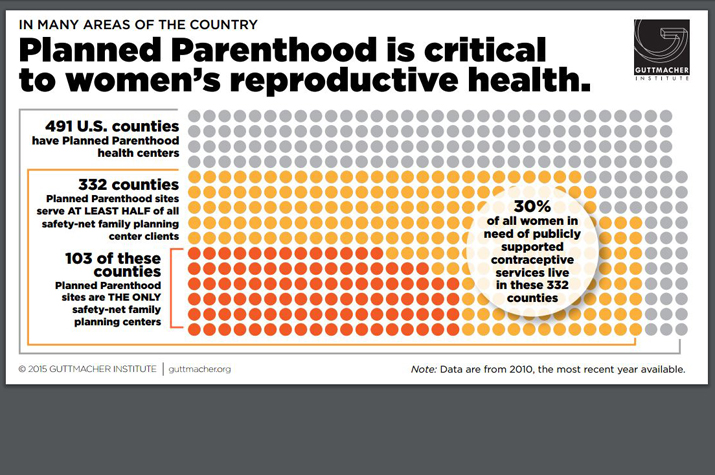
The Guttmacher Institute in this infographic counters antiabortion-rights claims that alternative providers could cover any gaps in health care services if Planned Parenthood is defunded.

Datapoints

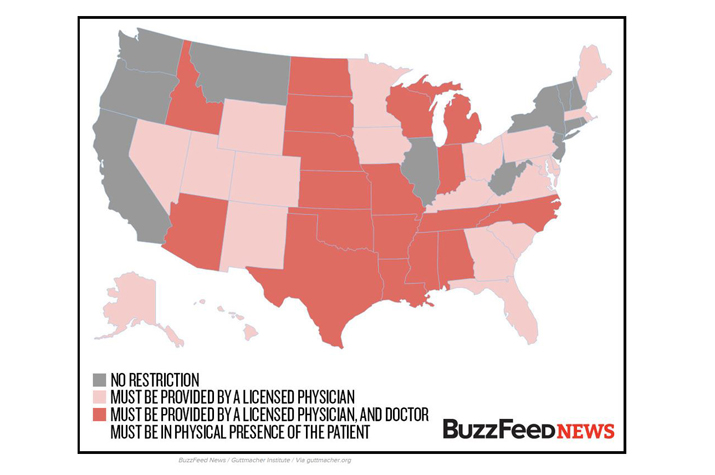
This map marks the 15th anniversary of medication abortion's FDA approval by detailing certain restrictions on the drugs across the country. According toBuzzfeed News, lawmakers in 38 states have passed these medication abortion restrictions.

See All

At a Glance

"A woman's ability to end her pregnancy too often depends on where she lives, her age and how much money is in her pocket."

— Marcela Howell of In Our Own Voice: National Black Women's Reproductive Justice Agenda, discussing ongoing disparities in women's access to abortion care on the 43rd anniversary of Roe v. Wade.