
National Partnership for Women & Families

In the News

Op-eds delve into legal challenge to Texas' HB 2

Editorials from the New York Times and MSNBC take a closer look at the questions at issue in the Supreme Court's upcoming case on Texas' antiabortion-rights law (HB 2). The high court is scheduled to hear oral arguments in the lawsuit on Wednesday. Summaries of the editorials appear below.

~ Linda Greenhouse, New York Times: "At the core of the most important Supreme Court abortion case in a generation is a series of questions about facts," Greenhouse writes, referring to an upcoming challenge to provisions in Texas' omnibus antiabortion-rights law. The provisions at issue "require[e] abortion clinic doctors to have hospital admitting privileges and the clinics themselves to be fitted out as mini-hospitals, even those that simply dispense the pills that bring about a nonsurgical abortion," Greenhouse explains. She notes that abortion-rights opponents advanced these and other targeted regulation of abortion providers (TRAP laws) under the guise of women's health. According to Greenhouse, this strategy arose in response to the Supreme Court's ruling in Casey v. Planned Parenthood, in which the high court said states could impose abortion restrictions so long as they are "'calculated to inform the woman's free choice, not hinder it,'" and do not impose an undue burden on abortion access. Greenhouse explains that as TRAP laws "don't inform and don't persuade," but rather "destroy the infrastructure on which women necessarily depend for the exercise of their constitutional right," state lawmakers used women's health as their justification for the regulations. Given that the restrictions are medically unnecessary and effectively cut off abortion access, Greenhouse writes that the question before the Supreme Court is whether and how to weigh the justification behind such restrictions. She points to the 5th Circuit Court of Appeals' decision largely upholding HB 2, in which the judges wrote, "'In our circuit we do not balance the wisdom or effectiveness of a law against the burdens the law imposes.'" Greenhouse disputes this rationale, writing, "Evidence matters to courts ... The notion that when it comes to restricting abortion, facts shouldn't count, is to give 'abortion exceptionalism' a new meaning. It is a meaning the Supreme Court will reject if it is true to its precedents and principles" (Greenhouse, New York Times, 2/27).

~ Jessica González-Rojas, MSNBC: González-Rojas, executive director of the National Latina Institute for Reproductive Health, states, "The harms of HB 2 on the 2.5 million Latinas of reproductive age in Texas are direct, documented, and disproportionate," noting that for many such women, HB 2 acts as "a de facto ban on abortion." González-Rojas notes that Latina women in Texas "already fac[e] significant barriers to accessing reproductive healthcare," partly because of "higher than average poverty levels ... greater rates of unintended pregnancy" and the state's recent cuts to family planning services. These "obstacles multiply" for Latina women seeking abortion care, she writes, citing work, education and child care obligations, as well as transportation challenges and the increased financial burden on women who are delayed from accessing timely abortion care. To highlight how these barriers affect women, González-Rojas shares the experiences of several women seeking abortion care, including two 32-year-old Houston residents who "reported borrowing money from relatives and co-workers, getting cash advances from their employers, taking out pay day loans at 17 percent interest, and pawning personal possessions" in order to cover the increased cost of accessing abortion care. González-Rojas notes that "[o]ther states are watching closely to decide whether they'll follow Texas' bad example," concluding, "That's why I stand with the Latinas of Texas, and with Latino/a leaders from across the country, in our ardent hope that the Supreme Court will side with women and families and uphold, once more, our constitutional right to abortion. The future of millions of Latinas hangs in the balance" (González-Rojas, MSNBC, 2/25).
Video Round Up

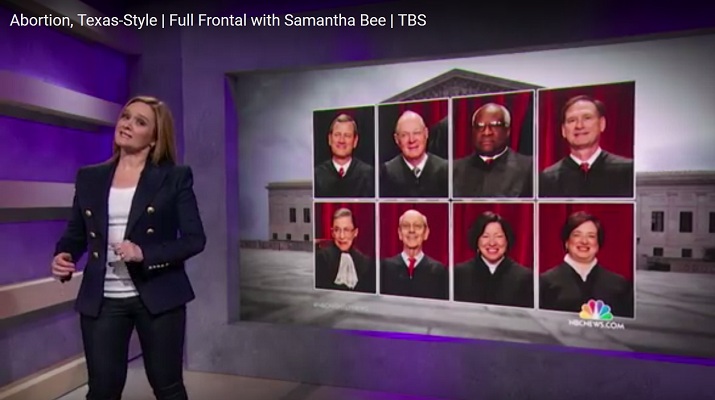
In a segment on HB 2, comedian Samantha Bee interviews Ilyse Hogue, president of NARAL Pro-Choice America, and Texas Rep. Dan Flynn (R), one of the bill's authors, for TBS' "Full Frontal with Samantha Bee," Vox reports.

Video Round Up

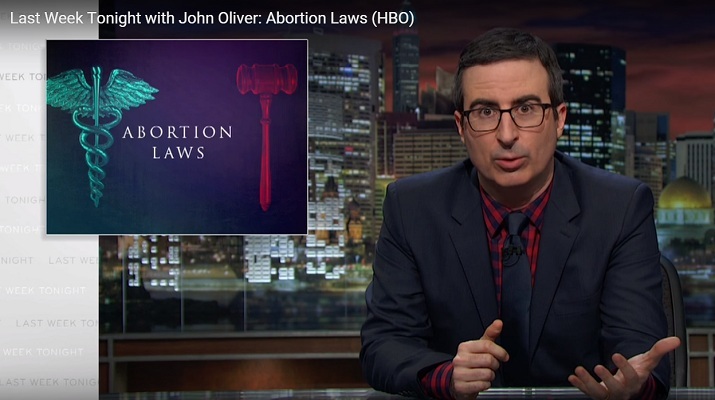
John Oliver on HBO's "Last Week Tonight with John Oliver" discusses the proliferation of attacks on abortion rights in the United States and comments on how such restrictions affect a woman's access to abortion care.

Video Round Up

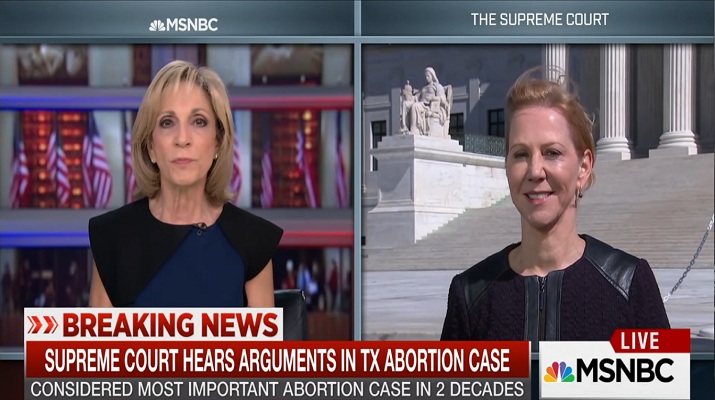
MSNBC's Andrea Mitchell hears from Nancy Northup, president of the Center for Reproductive Rights, about oral arguments before the Supreme Court in a case challenging provisions of Texas' omnibus antiabortion-rights law (HB 2).

Video Round Up

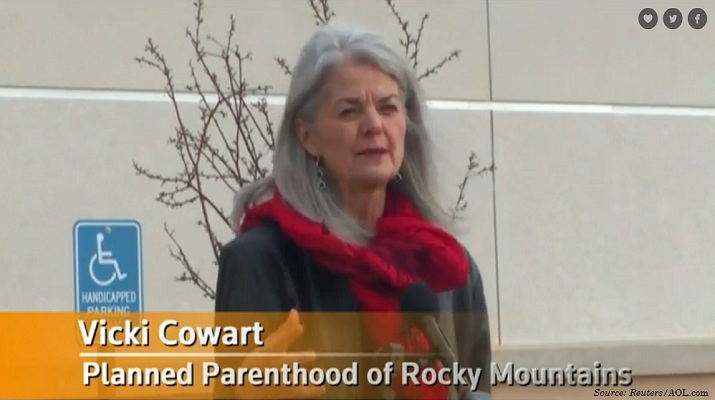
In this clip from Reuters/AOL.com, Vicki Cowart, CEO of Planned Parenthood of the Rocky Mountains, speaks about the reopening of a Planned Parenthood clinic in Colorado that was the site of a deadly shooting last November.

Video Round Up

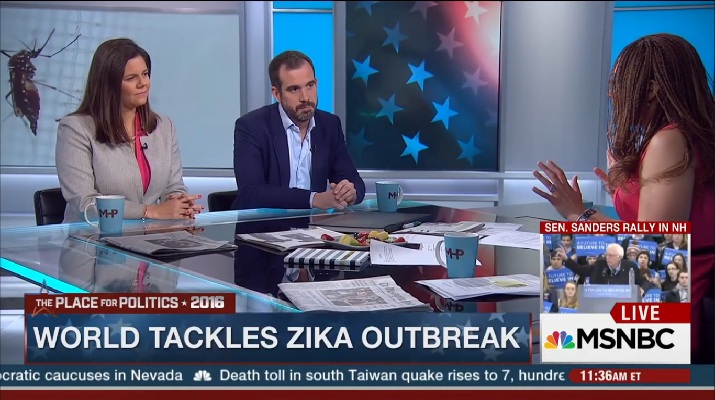
MSNBC's Melissa Harris-Perry hears from guests about the implications of the Zika virus outbreak for women in countries that have limited access to reproductive health care.

Video Round Up

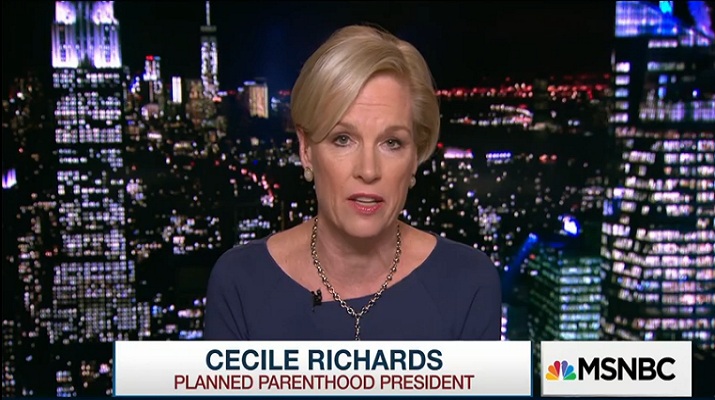
In this clip, Cecile Richards, president of Planned Parenthood Federation of America and Planned Parenthood Action Fund, speaks with MSNBC's Chris Matthews about a Texas grand jury investigation into Planned Parenthood that cleared the organization of wrongdoing and instead resulted in indictments for two abortion-rights opponents involved in filming misleading videos targeting Planned Parenthood.

Video Round Up

In a short film presented by Refinery29 in partnership with Planned Parenthood, several women share personal abortion stories.

Video Round Up

In this video, Julia Reticker-Flynn, campaign director of Advocates for Youth's 1 in 3 Campaign, hosts the project's second annual abortion speakout, which features participants' personal abortion stories and experiences to combat abortion stigma.

Video Round Up

"To Prison for Pregnancy," a documentary presented by Brave New Films, discusses how U.S. feticide laws are being used to penalize pregnant women, particularly minority and low-income women.

Video Round Up

Seema Iyer, host of MSNBC's "The Docket," hears from Vicki Saporta, president of the National Abortion Federation, about legal challenges facing the Center for Medical Progress, an antiabortion-rights group that released a series of misleading videos targeting Planned Parenthood.

See All

Datapoints

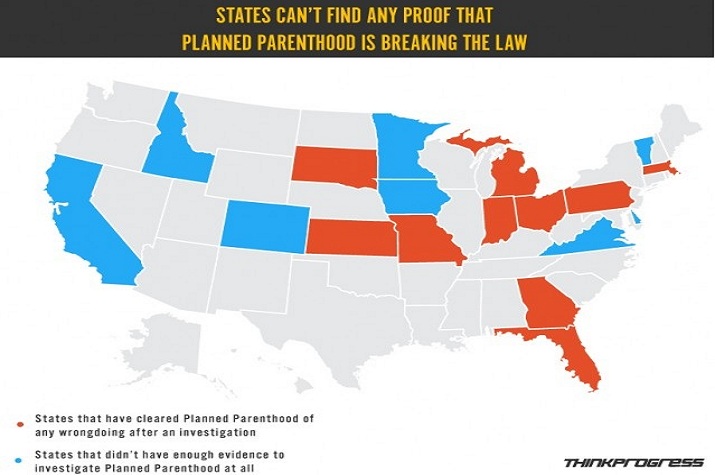
In this map, Center for American Progress' "ThinkProgress" spotlights the 12 states that have cleared Planned Parenthood of any wrongdoing after launching investigations into the organization following the release of misleading videos targeting Planned Parenthood's fetal tissue donation program.

Datapoints

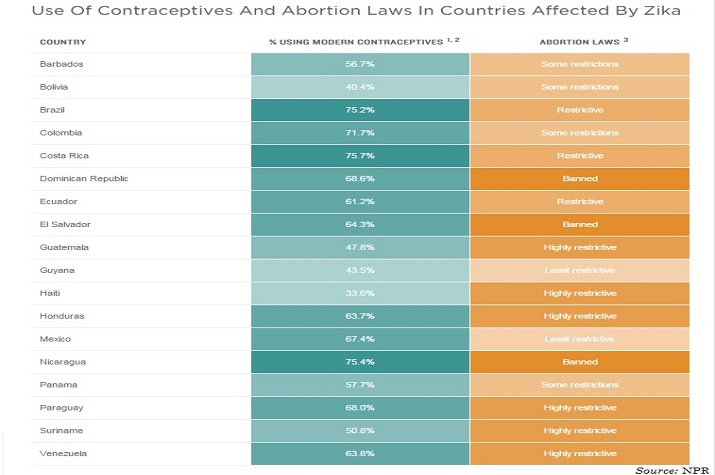
This chart, compiled by NPR, shows how the majority of countries affected by the Zika virus, which might be linked to a severe birth defect, curb access to contraception and abortion care.

Datapoints

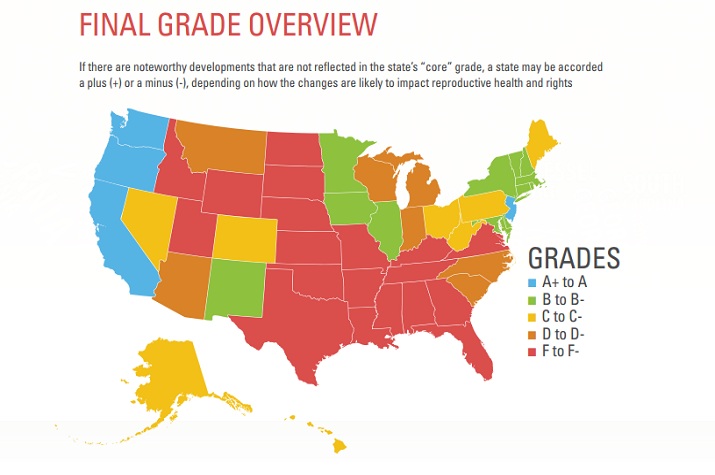
In its latest report card, the Population Institute provides a snapshot of the condition of reproductive rights and health in each state in 2015.

Datapoints

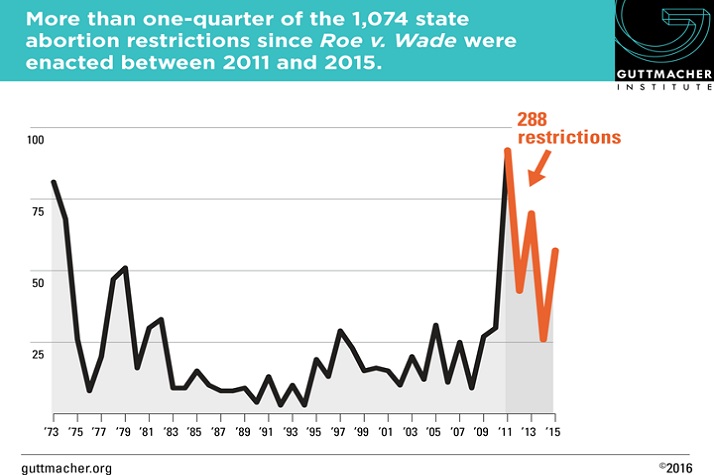
The Guttmacher Institute in this graph shows the rapid increase in the number of state abortion restrictions over the past few years.

Datapoints

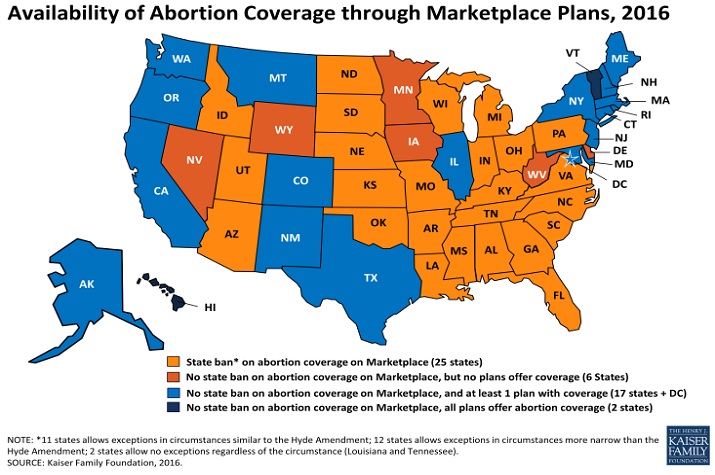
In this map, the Kaiser Family Foundation shows how widely abortion coverage varies from state to state in insurance plans sold through the Affordable Care Act's (PL 111-148) insurance marketplaces.

Datapoints

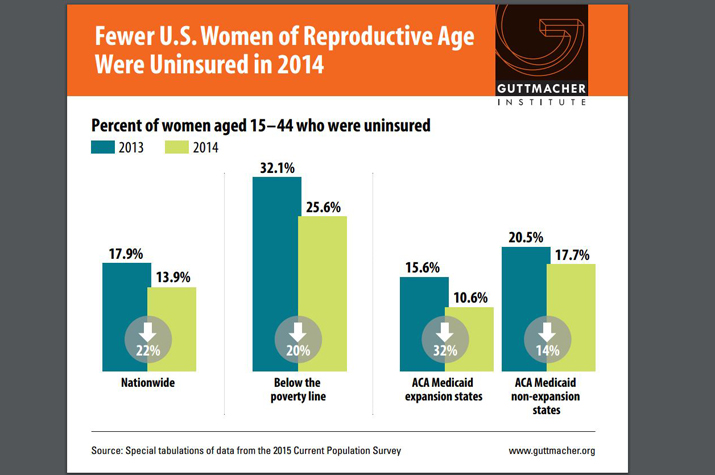
In this infographic, the Guttmacher Institute shows how the proportion of uninsured reproductive-age women in the U.S. declined from 17.9% in 2013 to 13.9% in 2014, the first year in which the Affordable Care Act was implemented fully.

Datapoints

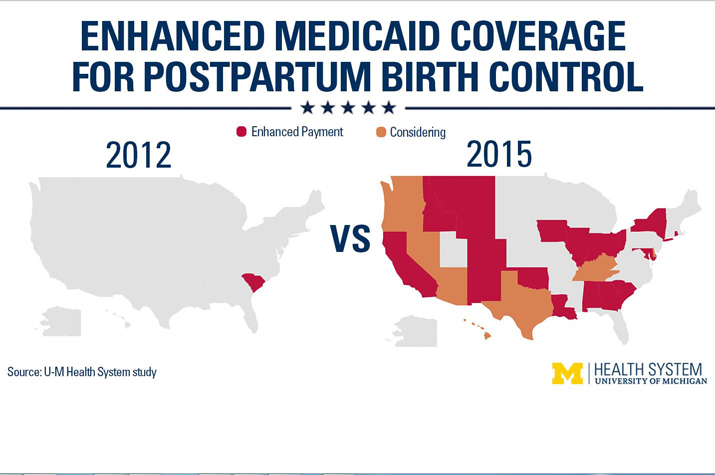
This map, released with a study from the University of Michigan Health System, shows how an increasing number of state Medicaid programs over the last three years are providing reimbursement for immediate postpartum LARC provision.

Datapoints

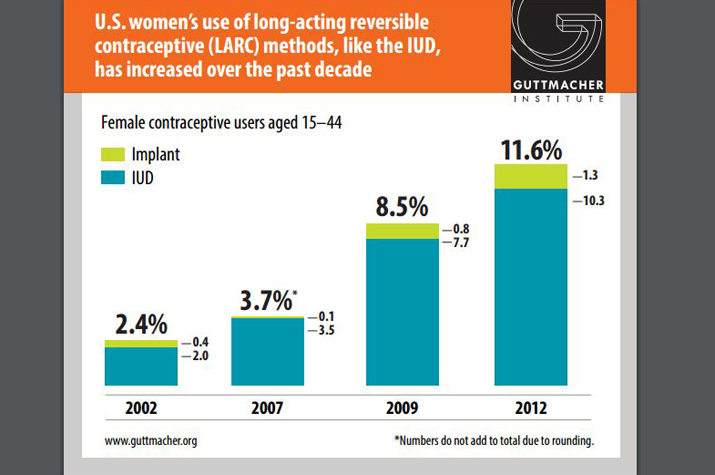
This infographic, released with a new Guttmacher Institute study, shows the increase in use of long-acting reversible contraception among U.S. women between 2002 and 2012.

Datapoints

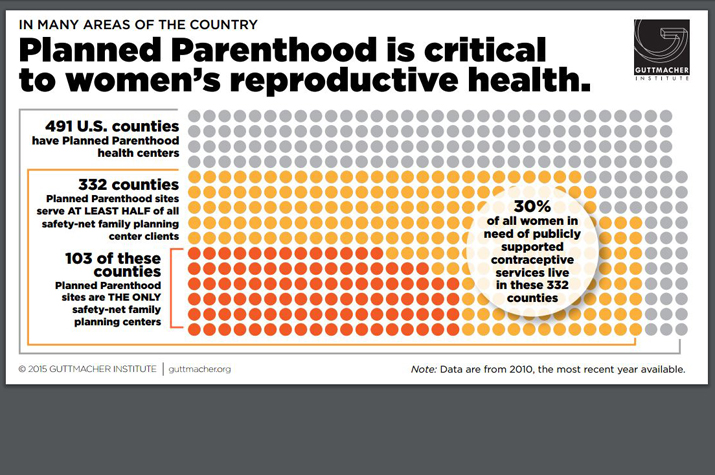
The Guttmacher Institute in this infographic counters antiabortion-rights claims that alternative providers could cover any gaps in health care services if Planned Parenthood is defunded.

Datapoints

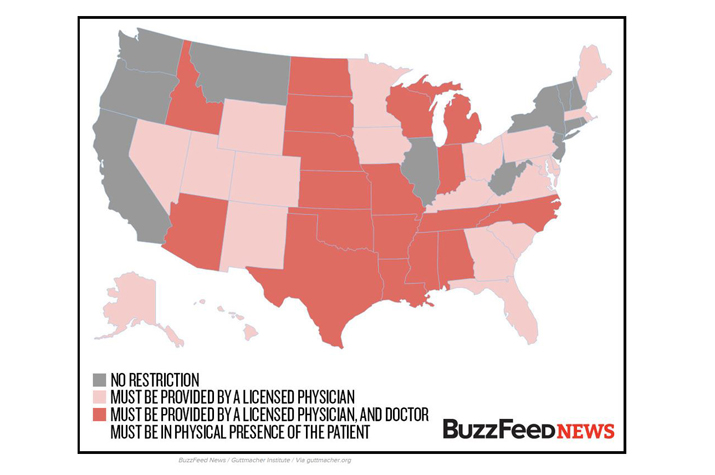
This map marks the 15th anniversary of medication abortion's FDA approval by detailing certain restrictions on the drugs across the country. According toBuzzfeed News, lawmakers in 38 states have passed these medication abortion restrictions.

See All

At a Glance

"A woman's ability to end her pregnancy too often depends on where she lives, her age and how much money is in her pocket."

— Marcela Howell of In Our Own Voice: National Black Women's Reproductive Justice Agenda, discussing ongoing disparities in women's access to abortion care on the 43rd anniversary of Roe v. Wade.