
National Partnership for Women & Families

In the News

Federal judge rejects CPCs' challenge to Calif. law

A federal judge has rejected a challenge to a California law (AB 775) that aims to prohibit antiabortion-rights crisis pregnancy centers (CPCs) from spreading misinformation, Courthouse News Service reports.

According to CNS, the law took effect Jan. 1 (Bruno, Courthouse News Service, 2/12).

Law details

Gov. Jerry Brown (D) signed AB 775 in October 2015. The law, which was introduced by Assembly members David Chiu (D) and Autumn Burke (D), expands protections in a 2011 San Francisco ordinance (212-11) that bars CPCs from disseminating misleading information.

The legislation requires licensed facilities that provide services related to pregnancy and family planning to let women know how and where they could access affordable and timely abortion, contraception and prenatal care services.

Further, the legislation requires unlicensed facilities that provide pregnancy- and family planning-related services to tell patients the facilities are not licensed and that they have no staff members who are licensed providers. Such facilities will be required to disseminate a notice to patients at the facility and in any digital or print advertising materials stating, "This facility is not licensed as a medical facility by the State of California and has no licensed medical provider who provides or directly supervises the provision of services."

CPCs that do not comply with the law will be subject to a $500 fine for the first offense and a $1,000 penalty for any offense thereafter. The state attorney general, county councils and city attorneys will have the authority to enforce the law.

U.S. District Judge Kimberly Mueller upheld the law in a legal challenge from CPCs in December 2015. Mueller rejected the plaintiffs' argument that the law violates the CPC's right to free speech. A separate ruling by a federal judge in Oakland, California, also upheld the state law (Women's Health Policy Report, 12/23/15).

CPCs' case

Three CPCs -- the National Institute of Family and Life Advocates, Pregnancy Care Center and Fallbrook Pregnancy Resource Center -- challenged the law in federal court in Southern California.

The groups asked the court to block city, county and state officials from enforcing the law, which the CPCs contended violated their freedom of speech and religion. Specifically, the lawsuit asked the court to block enforcement of the law by the governor, California Attorney General Kamala Harris (D), San Diego County Counsel Thomas Montgomery and El Cajon, California, City Attorney Morgan Foley.

Governments' arguments

According to District Judge John Houston's order, San Diego County officials contended that CPCs cannot claim loss of constitutional rights, saying the CPCs do not plan to follow the law and thus cannot claim to be harmed by it. Further, San Diego County and El Cajon officials sought to be dismissed from the case because neither had created the state law.

State officials said the complaint is not ripe for review. They said the CPCs' complaint did not identify a "concrete plan" to violate the act and "fails to allege a genuine threat of imminent prosecution." According to the state, the CPCs' effort "to catch all potential defendants" instead of suing a specific entity shows that they lack a credible threat of injury. According to Houston, the state also noted that the law does not prohibit the CPCs from disseminating antiabortion-rights information; rather, the law only requires that the CPCs disclose to women the full range of reproductive health care options.

Ruling details

Houston ruled that the CPCs did have a plan to violate the act, but he refused to block officials from enforcing the law. In his ruling, Houston agreed with the state's contention that the law requires CPCs to disclose a range of options to women and does not bar CPCs from expressing antiabortion-rights views. "The state clearly has a legitimate interest in ensuring pregnant women are fully advised of their rights and treatment options when making reproductive health care decisions and the required disclosure is undeniably related to that interest," he wrote.

Regarding the CPCs' claim that the law violates their freedom of religion, Houston said that the act is neutral, applies to all operations offering reproductive health care and does not target religiously affiliated clinics. Further, Houston held that the clinics cannot show irreparable harm under the law because they have not yet been fined or received warnings for failure to comply.

Houston also agreed with the city's contention that CPCs cannot sue the city in this instance because the law was written and enacted by the state.

Comments

Rachele Huennekens, press secretary for Harris, said, "We are pleased that the courts have thus far upheld the California Reproductive FACT Act and its important goals of protecting women's health and providing women with time-sensitive information about medical services available to them."

Huennekens added, "Attorney General Harris will continue to defend the law through each phase of litigation" (Courthouse News Service, 2/12).
Video Round Up

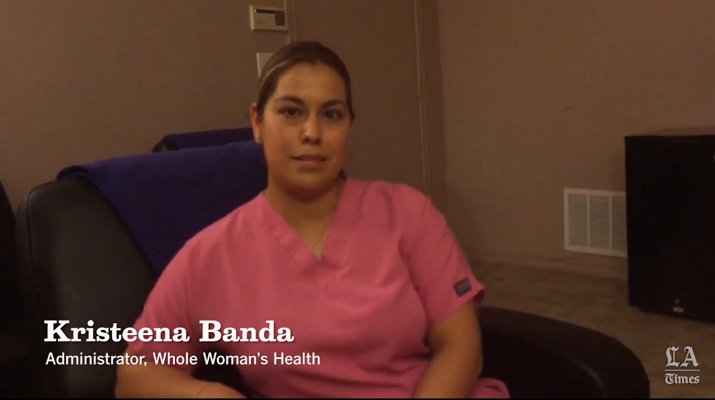
In this clip, Los Angeles Times reporter Molly Hennessy-Fiske hears from Kristeena Banda -- a clinic administrator at Whole Woman's Health, an abortion clinic in McAllen, Texas -- about what is at stake in a legal challenge to parts of Texas' omnibus antiabortion-rights law (HB 2).

Video Round Up

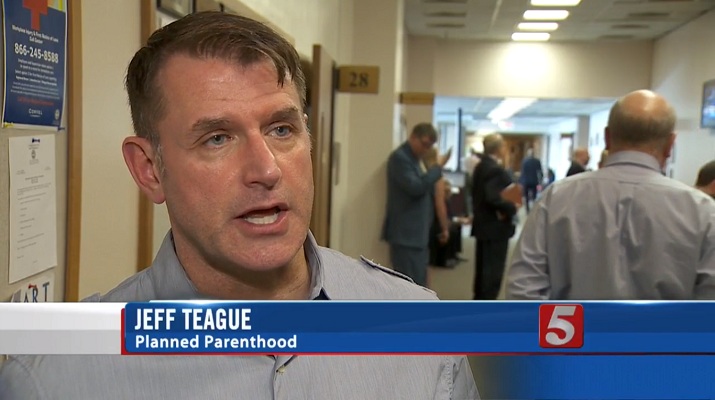
WTVF's Chris Conte reports on the outcome of a Tennessee House subcommittee hearing, which advanced one antiabortion-rights bill while deferring or withdrawing several others.

Video Round Up

13 News WOWK reporter Alyssa Meisner interviews several women in West Virginia about Nurx, a smartphone application that helps women access birth control.

Video Round Up

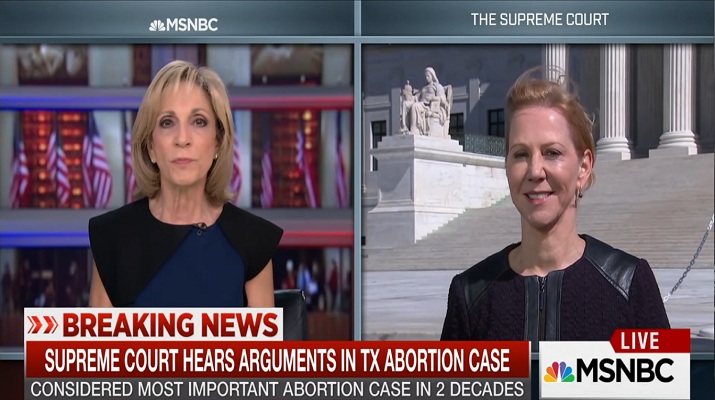
MSNBC's Andrea Mitchell hears from Nancy Northup, president of the Center for Reproductive Rights, about oral arguments before the Supreme Court in a case challenging provisions of Texas' omnibus antiabortion-rights law (HB 2).

Video Round Up

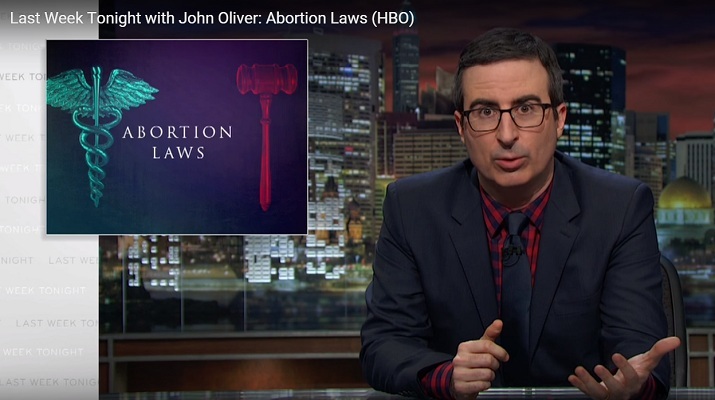
John Oliver on HBO's "Last Week Tonight with John Oliver" discusses the proliferation of attacks on abortion rights in the United States and comments on how such restrictions affect a woman's access to abortion care.

Video Round Up

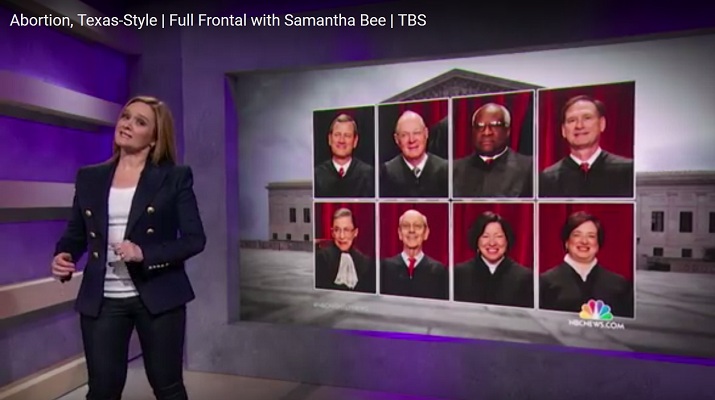
In a segment on HB 2, comedian Samantha Bee interviews Ilyse Hogue, president of NARAL Pro-Choice America, and Texas Rep. Dan Flynn (R), one of the bill's authors, for TBS' "Full Frontal with Samantha Bee," Vox reports.

Video Round Up

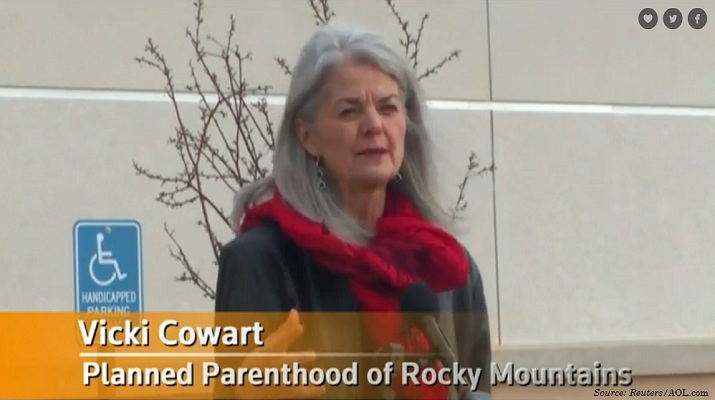
In this clip from Reuters/AOL.com, Vicki Cowart, CEO of Planned Parenthood of the Rocky Mountains, speaks about the reopening of a Planned Parenthood clinic in Colorado that was the site of a deadly shooting last November.

Video Round Up

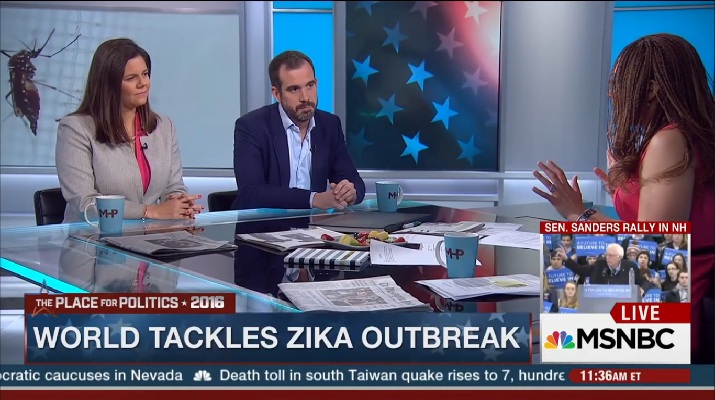
MSNBC's Melissa Harris-Perry hears from guests about the implications of the Zika virus outbreak for women in countries that have limited access to reproductive health care.

Video Round Up

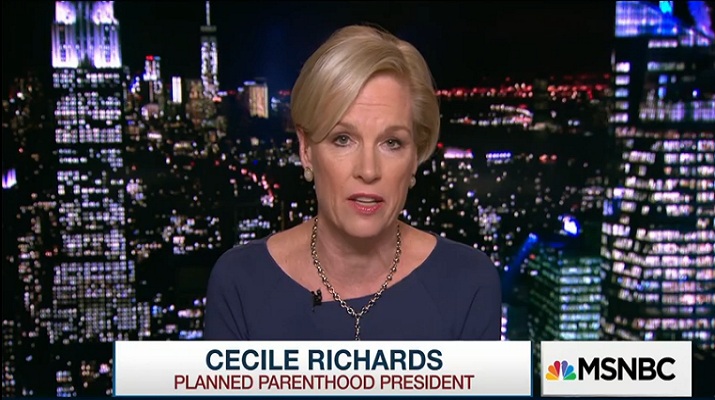
In this clip, Cecile Richards, president of Planned Parenthood Federation of America and Planned Parenthood Action Fund, speaks with MSNBC's Chris Matthews about a Texas grand jury investigation into Planned Parenthood that cleared the organization of wrongdoing and instead resulted in indictments for two abortion-rights opponents involved in filming misleading videos targeting Planned Parenthood.

Video Round Up

In a short film presented by Refinery29 in partnership with Planned Parenthood, several women share personal abortion stories.

See All

Datapoints

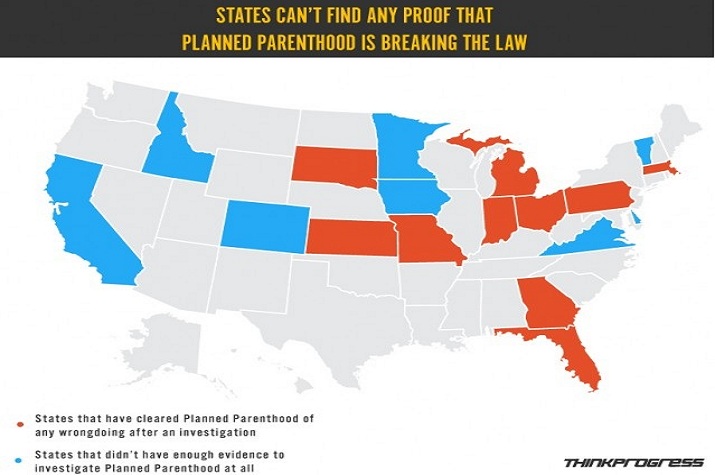
In this map, Center for American Progress' "ThinkProgress" spotlights the 12 states that have cleared Planned Parenthood of any wrongdoing after launching investigations into the organization following the release of misleading videos targeting Planned Parenthood's fetal tissue donation program.

Datapoints

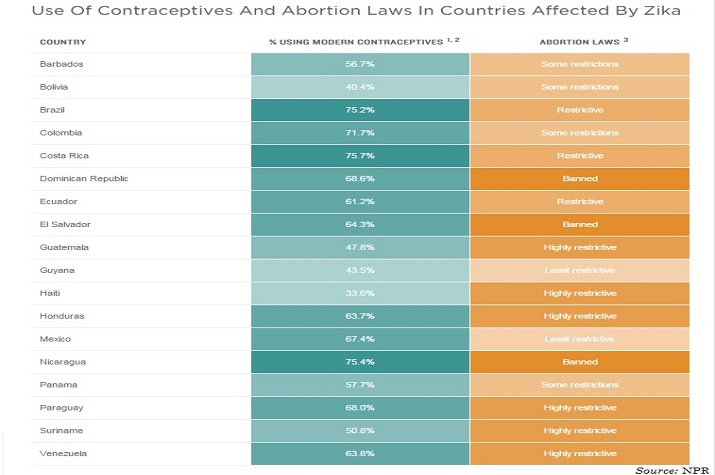
This chart, compiled by NPR, shows how the majority of countries affected by the Zika virus, which might be linked to a severe birth defect, curb access to contraception and abortion care.

Datapoints

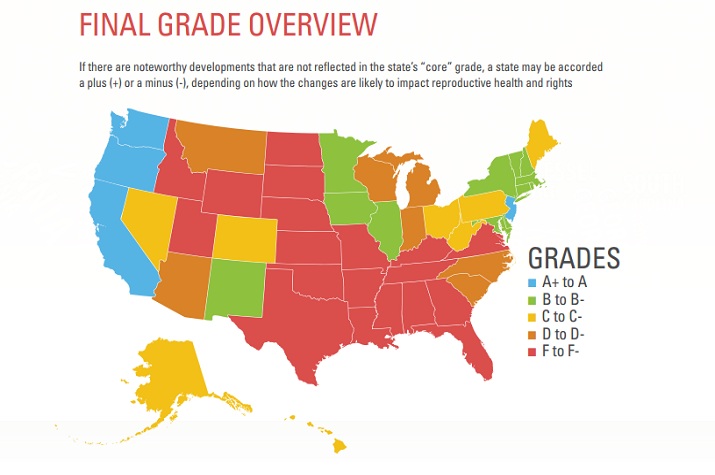
In its latest report card, the Population Institute provides a snapshot of the condition of reproductive rights and health in each state in 2015.

Datapoints

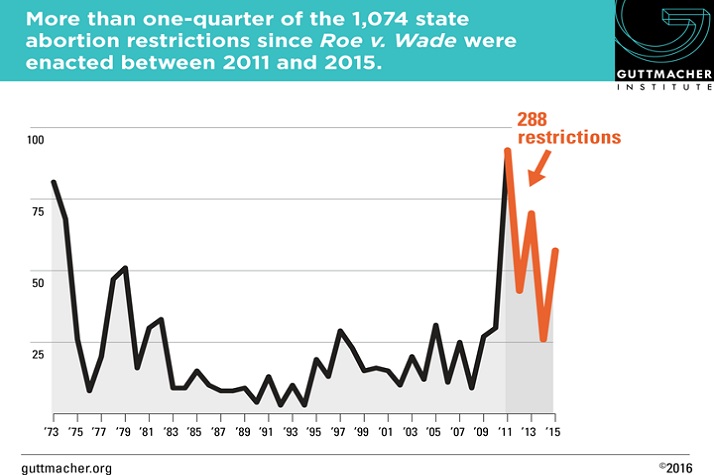
The Guttmacher Institute in this graph shows the rapid increase in the number of state abortion restrictions over the past few years.

Datapoints

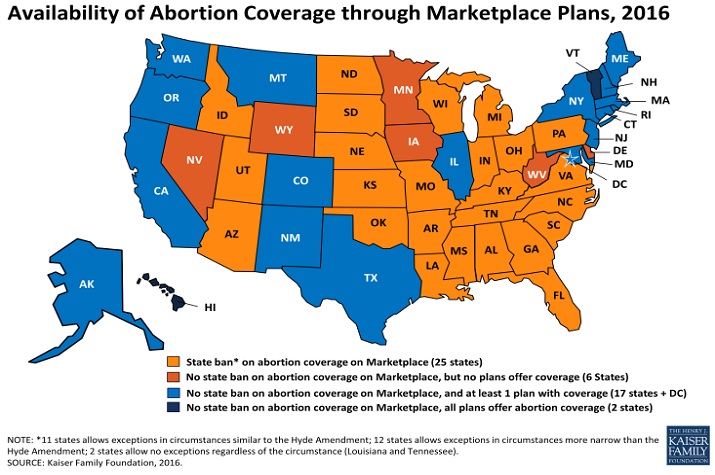
In this map, the Kaiser Family Foundation shows how widely abortion coverage varies from state to state in insurance plans sold through the Affordable Care Act's (PL 111-148) insurance marketplaces.

Datapoints

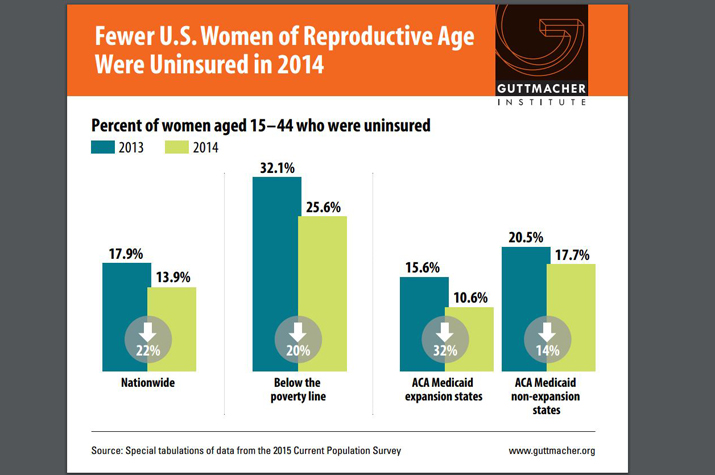
In this infographic, the Guttmacher Institute shows how the proportion of uninsured reproductive-age women in the U.S. declined from 17.9% in 2013 to 13.9% in 2014, the first year in which the Affordable Care Act was implemented fully.

Datapoints

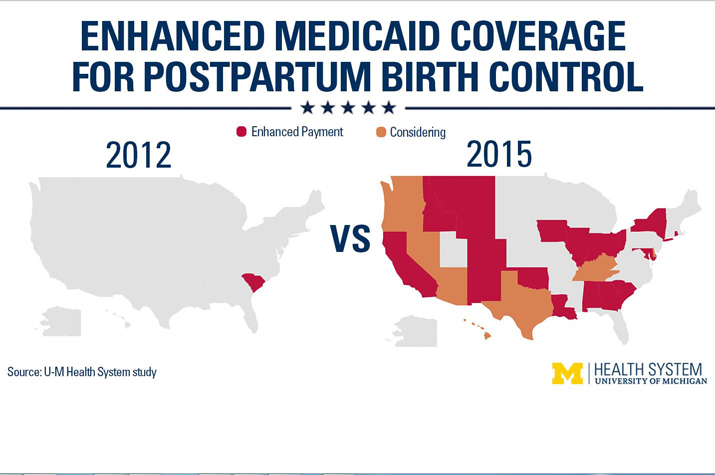
This map, released with a study from the University of Michigan Health System, shows how an increasing number of state Medicaid programs over the last three years are providing reimbursement for immediate postpartum LARC provision.

Datapoints

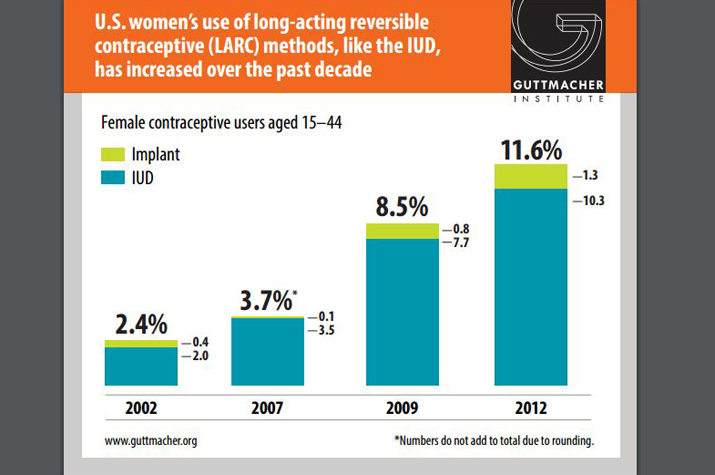
This infographic, released with a new Guttmacher Institute study, shows the increase in use of long-acting reversible contraception among U.S. women between 2002 and 2012.

Datapoints

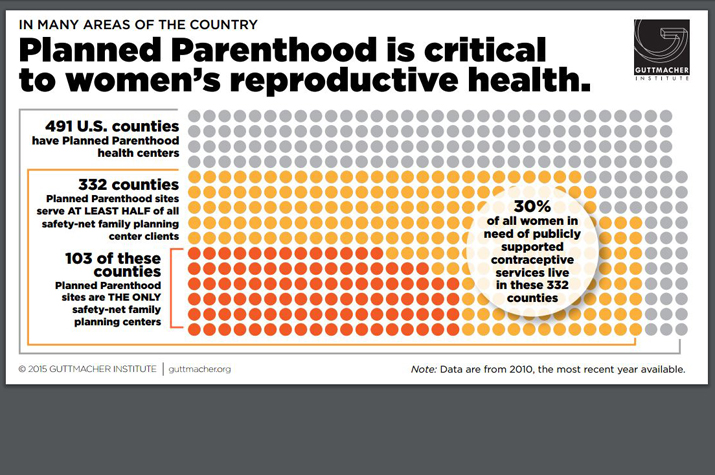
The Guttmacher Institute in this infographic counters antiabortion-rights claims that alternative providers could cover any gaps in health care services if Planned Parenthood is defunded.

Datapoints

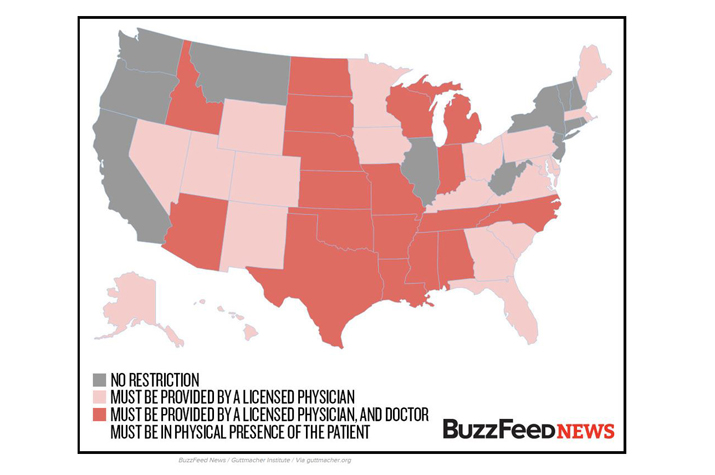
This map marks the 15th anniversary of medication abortion's FDA approval by detailing certain restrictions on the drugs across the country. According toBuzzfeed News, lawmakers in 38 states have passed these medication abortion restrictions.

See All

At a Glance

"A woman's ability to end her pregnancy too often depends on where she lives, her age and how much money is in her pocket."

— Marcela Howell of In Our Own Voice: National Black Women's Reproductive Justice Agenda, discussing ongoing disparities in women's access to abortion care on the 43rd anniversary of Roe v. Wade.

At a Glance

"If women are not free to make decisions about their own lives and health, they are not free. And if women are not free, none of us are."

— Abortion provider Warren Hern, in a STAT News opinion piece on why he continues to offer abortion care despite receiving harassment and death threats throughout his 42-year career.

At a Glance

"Not since before Roe v. Wade has a law or court decision had the potential to devastate access to reproductive health care on such a sweeping scale."

— Nancy Northup, president and CEO of the Center for Reproductive Rights, on a ruling from the 5th U.S. Circuit Court of Appeals that upheld major portions of a Texas antiabortion-rights law.