

Read the week's best commentary from bloggers at Bustle, Feministing and more.
ACCESS TO CARE:
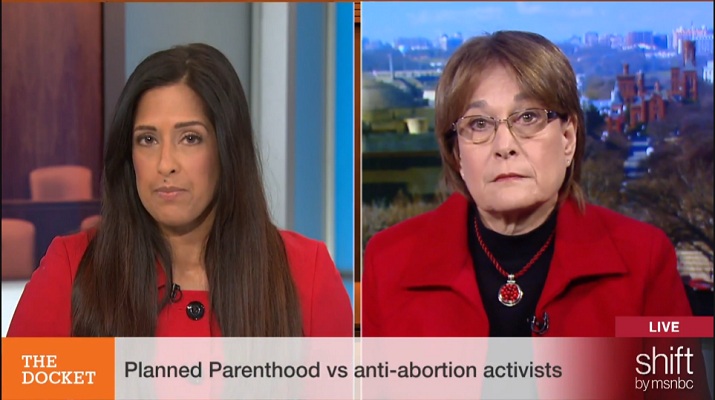
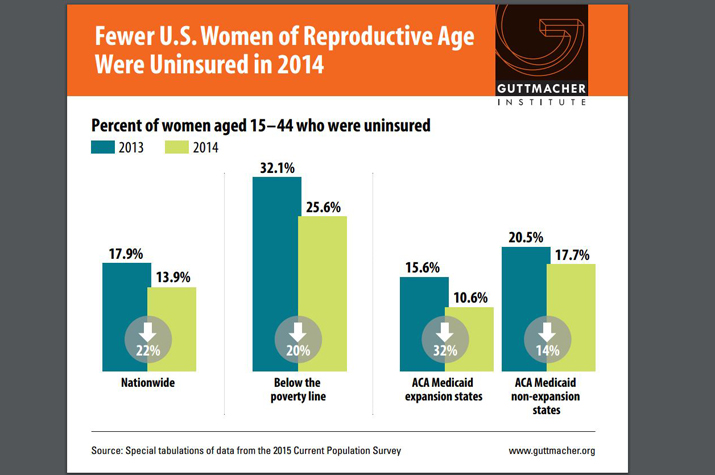
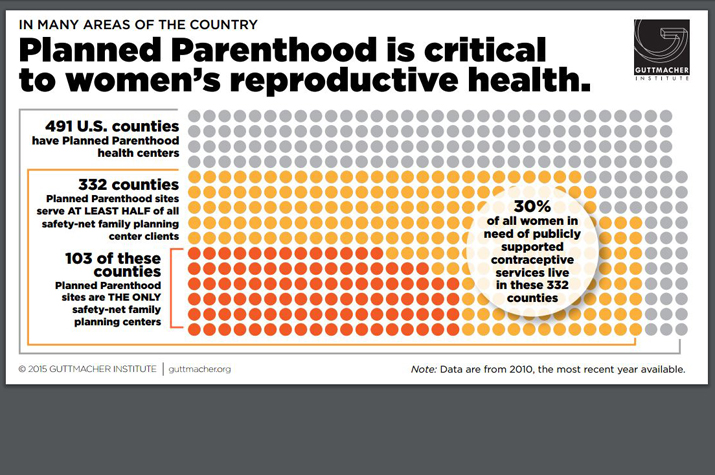
"1 in 5 Women Go To Planned Parenthood -- And I'm Proud To Be Among Them," Lisa Taylor, Bustle: "Underprivileged women all over the country know they can count on Planned Parenthood for healthcare, just as hungry families know where the nearest food pantry is located, and homeless people know the safest places to spend the day," Taylor writes. Taylor describes how she regularly visited Planned Parenthood throughout her youth, when she left home as a teenager, worked several low-income jobs to pay her way through community college and did not have insurance. Noting that one in five women go to Planned Parenthood, Taylor writes, "We all need a little help sometimes, and Planned Parenthood was there to help me when I needed it most." Denouncing the "increasingly vitriolic verbal and sometimes physical attacks" against Planned Parenthood, she concludes, "Millions of women visit Planned Parenthood locations each year, and many of them are probably women like me. Women who visit Planned Parenthood aren't uncommon. I could be your neighbor, your mother, your daughter" (Taylor, Bustle, 1/13).
What others are saying about access to care:
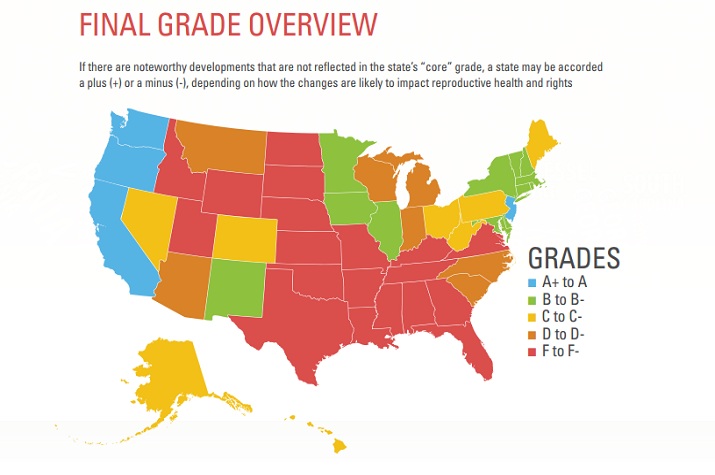
~ "The U.S. Just Got a D+ on Reproductive Health and Rights," Jennie Wetter, Ms. Magazine blog.
ABORTION-RIGHTS MOVEMENT:
"Reasoning From Experience, On Abortion and Beyond," Alexandra Brodsky, Feministing: "Last week, 113 attorneys signed an amicus brief in support of the plaintiffs challenging Texas's draconian abortion restrictions [HB 2] in an upcoming Supreme Court case, [Whole Woman's Health v. Cole]," Brodsky writes. According to Brodsky, "The signatories are public defenders and corporate lawyers and anti-discrimination advocates and retired judges ... Each has had an abortion, and attributes her professional success to access." She explains that the brief targets the lawsuit's "likely swing vote," Justice Anthony Kennedy, who has claimed in other abortion-related rulings that women regret abortions. In a "brilliant" strategy, "[t]he amicus signatories push back on Kennedy's misconception from a powerful position: within his own professional community." She continues, "[I]t's also a big deal for the law, period, to see a group of women arguing from personal experience, not despite personal experience." She explains that the brief's signatories challenge a legal tradition of devaluing personal experience, particularly among disadvantaged groups, "[b]y speaking simultaneously as lawyers and as women who have had abortions." Brodsky adds, "They are urging the Court to rule for the clinics because they know the law and because they know abortion. Personal experience doesn't disqualify them from speaking: it positions them perfectly to protest." Pointing to Kennedy, Brodsky concludes, "The Court's decision in [Whole Woman's Health] must rely on the reality of how the clinic restrictions are actually experienced by people in Texas, and how abortion care actually affects patients' lives, not how [Kennedy] imagines it might" (Brodsky, Feministing, 1/13).
What others are saying about the abortion-rights movement:
~ "New Ads Counter Anti-Choice Hate Speech, Destigmatize Abortion," Nicole Knight Shine, RH Reality Check.
ABORTION RESTRICTIONS:
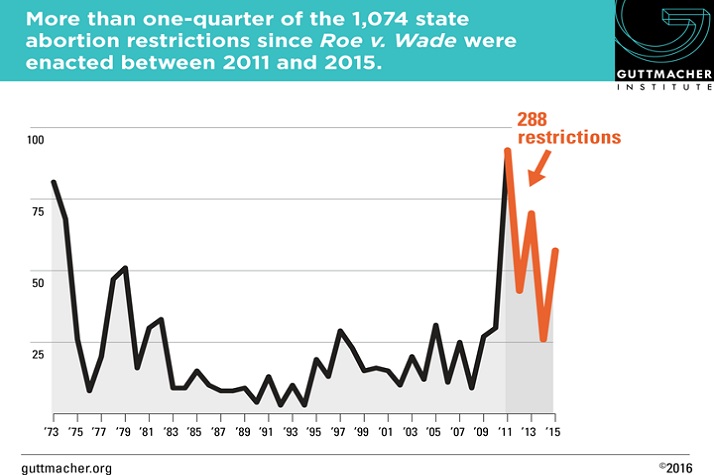
"For Black Women's Lives To Matter, Legislators Must Halt Attacks on Our Bodily Autonomy," Monica Simpson, RH Reality Check: Simpson writes about some conservative lawmakers' recent efforts to distort the Black Lives Matter movement with antiabortion-rights efforts. For example, she points to recent comments by Rep. Sean Duffy (R-Wis.), who "called out the Congressional Black Caucus, and later the Black Lives Matter movement, and essentially said that by not working to limit access to abortion, these groups are not working to protect Black lives." Citing Duffy's efforts to limit abortion access and failure to discuss particularly critical issues among the Black community, Simpson writes, "He is not concerned with Black lives. He is, however, concerned with controlling the ability of women of color to make our own decisions and wants to do so by using this issue to divide our community." Simpson also writes about Rep. Mike Moon (R-Mo.), who is sponsoring a personhood measure, called the 'All Lives Matter Act,' that "would not only deny access to abortion, but could also restrict the use of common forms of birth control and prohibit in vitro fertilization." Simpson explains how the measure "use[s] the mantle of a movement that is about the dignity of the Black community to mount an attack on Black women's access to care." Citing lawmakers' failure to address ongoing "disparities in access to reproductive health care" for Black women, Simpson concludes, "Advocates and allies cannot stand by as politicians drive a wedge between those of us who fight to dismantle white supremacy and those who push back on attempts to control Black women's reproduction" (Simpson, RH Reality Check, 1/14).
What others are saying about the abortion restrictions:
~ "#WeWontGoBack: Why Abortion Must Remain Safe and Legal," Ms. Magazine blog.