
National Partnership for Women & Families

In the News

Appeals Court Temporarily Blocks Utah's Move To End Planned Parenthood Funding

The 10th U.S. Circuit Court of Appeals on Wednesday issued an emergency hold barring Utah Gov. Gary Herbert (R) from blocking funding for Planned Parenthood, the AP/San Francisco Chronicle reports (AP/San Francisco Chronicle, 12/30).

Background

Over the summer, the antiabortion-rights group Center for Medical Progress released a series of misleading videos targeting Planned Parenthood. Following the release of the videos, Utah Gov. Gary Herbert (R) ordered the state Department of Health to stop distributing federal funding to the Planned Parenthood Association of Utah. In response, Planned Parenthood filed a lawsuit against Herbert, asking a federal judge to rule that the governor's orders violate Planned Parenthood's constitutional rights to due process and free speech.

In September 2015, Waddoups issued a temporary restraining order on Herbert's decision through Oct. 15, 2015, ruling that Herbert's actions seem "to have been made on unconstitutional grounds" because there have been no allegations that Planned Parenthood of Utah broke any laws. Further, Waddoups agreed with Planned Parenthood's arguments that cutting off the organization's federal funding would curb women's access to reproductive health care, particularly among low-income women.

In October 2015, Waddoups said he would extend a temporary restraining order until he issued a written ruling on a request from Planned Parenthood to bar Utah from blocking the funding.

However, in December 2015, Waddoups reversed his prior decision and ruled that Utah could end $275,000 in federal funding to Planned Parenthood while the organization continues its lawsuit. The organization uses the funds for sexuality education and testing for sexually transmitted infections. Tom Hudachko, a spokesperson for the Utah Department of Health, said the Planned Parenthood contracts would continue through the end of 2015 (Women's Health Policy Report, 12/23).

Later that month, Planned Parenthood asked the 10th Circuit to review Waddoups' ruling (Sullivan, The Hill, 12/28).

Latest Developments

According to the AP/Chronicle, the 10th Circuit's emergency hold means Planned Parenthood will temporarily continue to receive the funding as the court weighs whether to extend the injunction. The 10th Circuit has not heard arguments in the case, and it has not yet scheduled a hearing.

Karrie Galloway, CEO of Planned Parenthood Association of Utah, praised the decision. "We will continue to stand up for the health and rights of thousands of Utahns who rely on Planned Parenthood for affordable health care and education," she said (AP/ San Francisco Chronicle, 12/30).
Video Round Up

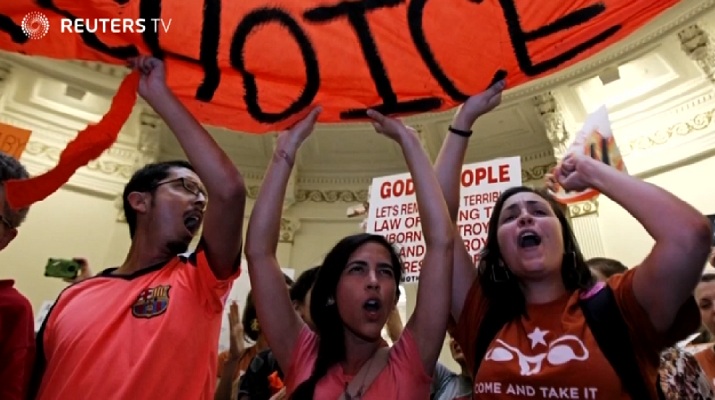
In this clip, Joan Biskupic, legal affairs editor for Reuters, discusses the personal stories shared by abortion-rights supporters in amicus briefs urging the Supreme Court to strike down contested provisions in Texas' omnibus antiabortion-rights law (HB 2).

Video Round Up

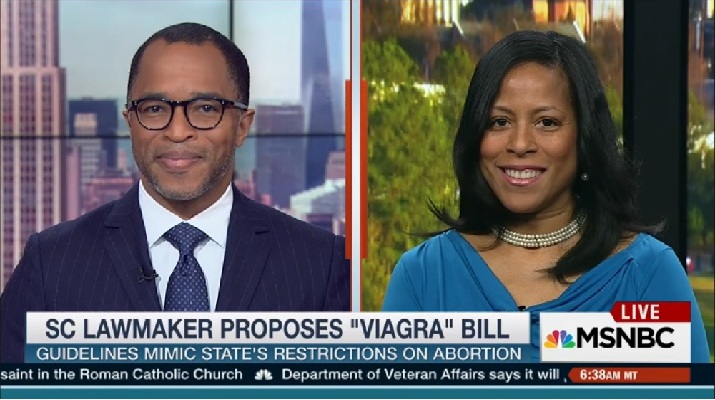
MSNBC's Jonathan Capehart talks with South Carolina Rep. Mia McLeod (D) about a bill (H 4544) she proposed that would apply antiabortion-rights style restrictions to erectile dysfunction drugs.

Video Round Up

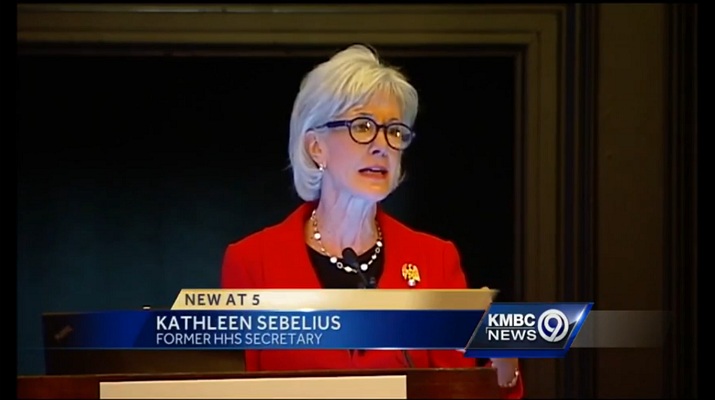
In this clip, KMBC's Micheal Mahoney discusses comments made by former HHS Secretary Kathleen Sebelius at a Planned Parenthood conference in Kansas City, Mo.

Video Round Up

For CNN's "Anderson Cooper 360," CNN National Correspondent Gary Tuchman profiles the security measures in place at an abortion clinic, Cherry Hill Women's Center, in New Jersey.

Video Round Up

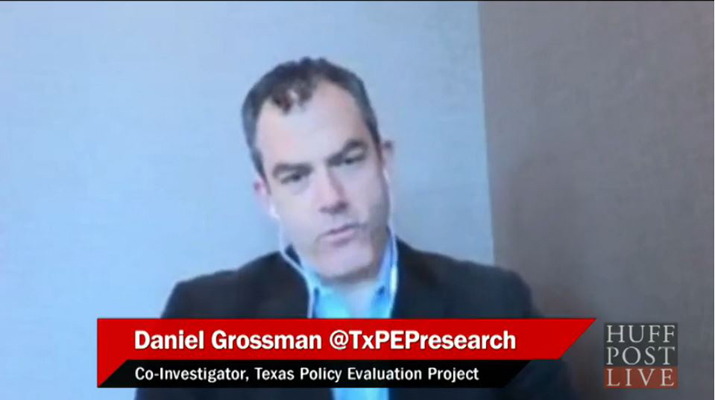
HuffPost Live! talks with Daniel Grossman, a professor of obstetrics and gynecology at the University of California-San Francisco, about a report that finds at least 100,000 Texas women have attempted to terminate a pregnancy without medical assistance.

Video Round Up

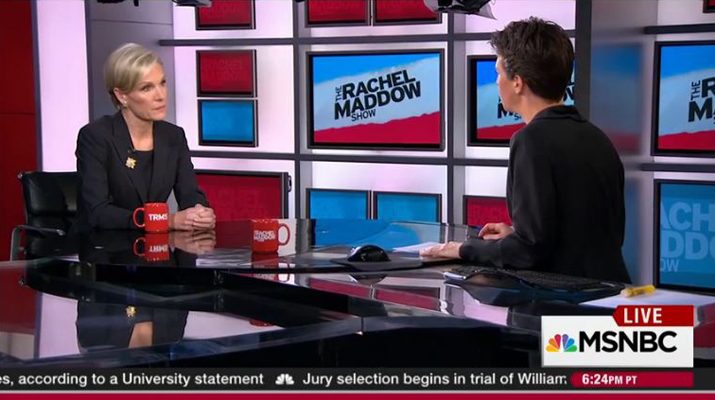
MSNBC's Rachel Maddow hears from Cecile Richards, president of Planned Parenthood Federation of America, in the wake of a deadly shooting at a Planned Parenthood clinic in Colorado.

Video Round Up

Yahoo! News' Katie Couric talks with activist Gloria Steinem on her decision to dedicate her latest book to the physician who helped her access abortion care in the 1950s

Video Round Up

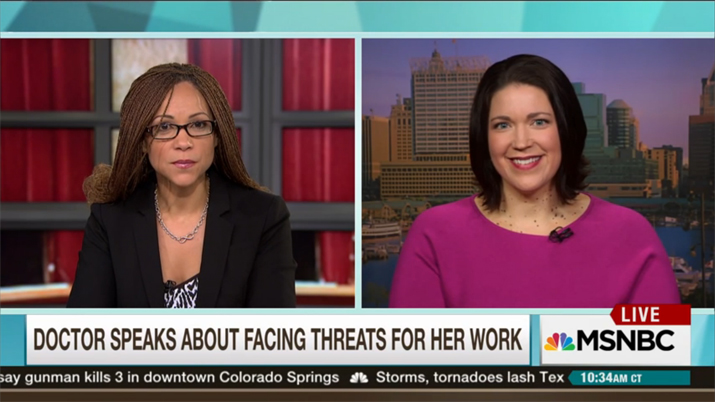
An abortion provider talks with MSNBC's Melissa Harris-Perry about her experience with antiabortion-rights harassment. 

Video Round Up

NBC News Medical Contributor Natalie Azar, a physician, discusses the increase in long-acting reversible contraception use among U.S. women.

Video Round Up

In this clip, NBC justice correspondent Pete Williams talks about the Supreme Court's decision to hear a challenge to parts of an omnibus Texas antiabortion-rights law (HB 2) in "the most notable abortion case in what could be two decades."

See All

Datapoints

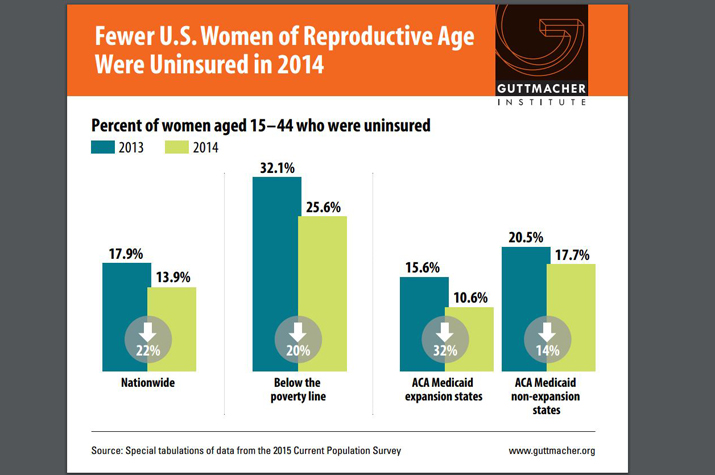
In this infographic, the Guttmacher Institute shows how the proportion of uninsured reproductive-age women in the U.S. declined from 17.9% in 2013 to 13.9% in 2014, the first year in which the Affordable Care Act was implemented fully.

Datapoints

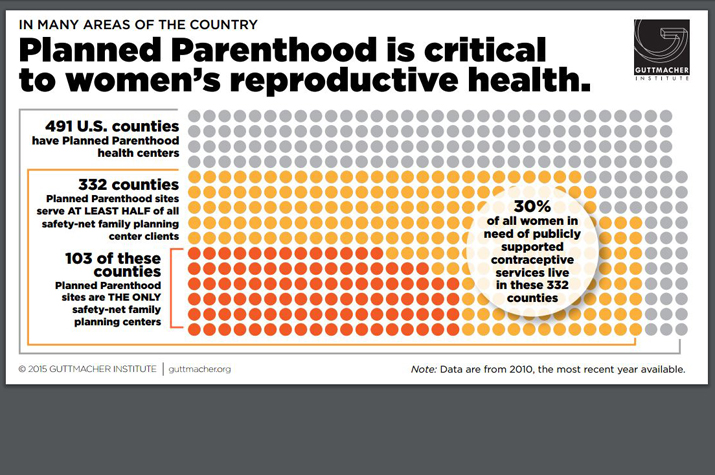
The Guttmacher Institute in this infographic counters antiabortion-rights claims that alternative providers could cover any gaps in health care services if Planned Parenthood is defunded.

Datapoints

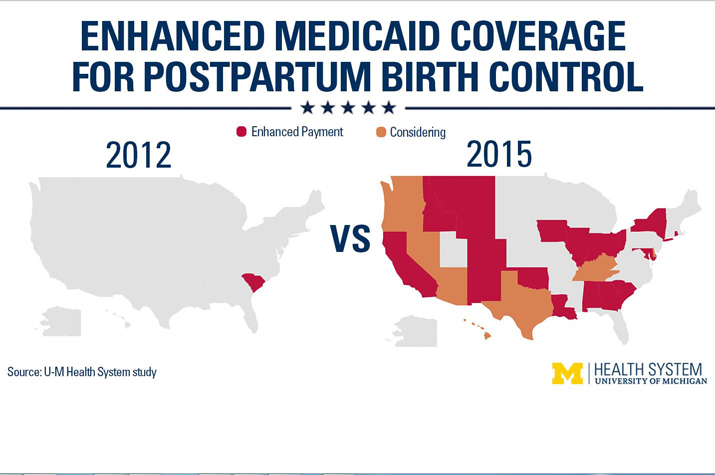
This map, released with a study from the University of Michigan Health System, shows how an increasing number of state Medicaid programs over the last three years are providing reimbursement for immediate postpartum LARC provision.

Datapoints

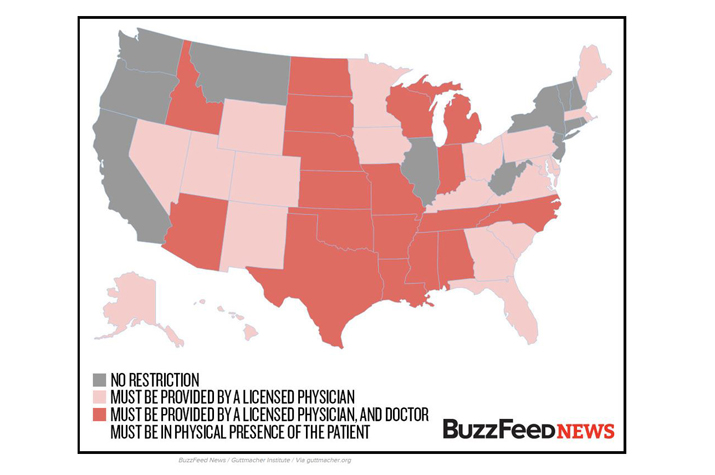
This map marks the 15th anniversary of medication abortion's FDA approval by detailing certain restrictions on the drugs across the country. According toBuzzfeed News, lawmakers in 38 states have passed these medication abortion restrictions.

Datapoints

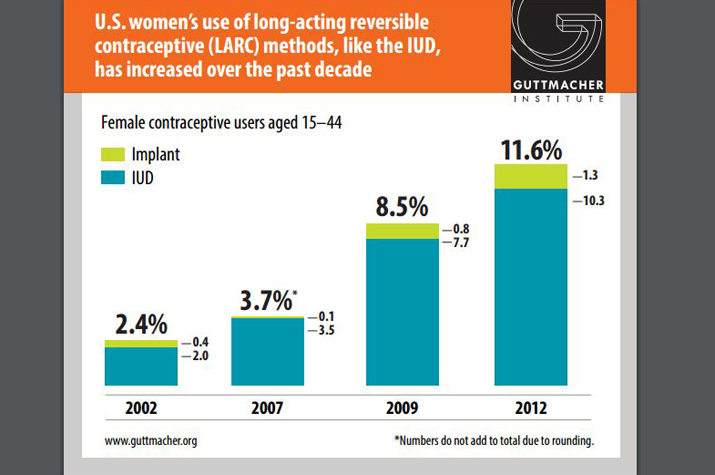
This infographic, released with a new Guttmacher Institute study, shows the increase in use of long-acting reversible contraception among U.S. women between 2002 and 2012.

See All

At a Glance

"If women are not free to make decisions about their own lives and health, they are not free. And if women are not free, none of us are."

— Abortion provider Warren Hern, in a STAT News opinion piece on why he continues to offer abortion care despite receiving harassment and death threats throughout his 42-year career.