
National Partnership for Women & Families

In the News

Op-Ed: Feticide Laws, Bans on Abortion Used To Criminalize Asian-American and Immigrant Women

"Across the country, Asian American women's reproductive rights are being challenged and their family-planning decisions are being policed based on racial stereotypes held by anti-choice activists and officials," Miriam Yeung, executive director of the National Asian Pacific American Women's Forum, writes in a Washington Post opinion piece.

Yeung shares the stories of Purvi Patel, an Indian-American woman who has been imprisoned under Indiana's fetal homicide law, and Bei Bei Shuai, a Chinese immigrant who, after "attempt[ing] suicide and los[ing] her pregnancy in the process ... was charged under Indiana's feticide law."

Yeung writes, "It's no coincidence that both of these women are of Asian descent." She explains that states are using "stories of infanticide in India and gender-based abortions in China" to "adop[t] racially biased" laws banning abortion based on the sex of the fetus. Meanwhile, "laws like feticide, which were intended to protect pregnant women, are being used to criminalize immigrants and Asian Americans," she writes.

According to Yeung, fetal homicide laws, which "are on the books in 38 states," were "originally passed to support pregnant victims of domestic violence and other violent crimes." She explains that while "most states have not yet used these laws to criminalize pregnant women," Katherine Jack, Shuai's attorney, said that "if Patel's conviction is upheld on appeal, it 'basically sets a precedent that anything a pregnant woman does that could be interpreted as an attempt to terminate her pregnancy could result in criminal liability."'

Further, the National Advocates for Pregnant Women has tracked "hundreds of cases where women have been arrested, sentenced, or forced to undergo cesarean sections on the interpretation of laws that were never intended to be used to prosecute pregnant women," Yeung states. "This reproductive oppression disproportionately targets low-income women and women of color," she writes, pointing to "[a] study of arrests of and forced legal interventions on pregnant women" that "found that approximately 71 percent of those targeted were low-income, and 59 percent were women of color, predominantly African American."

Yeung adds that while "only four women in the study were identified as Asian or Pacific Islander, the anti-Asian rhetoric in the push for these laws has heightened since the research ended in 2005." According to Yeung, "cultural misinformation" about Asian women and families "has been used to pass [bans on abortion based on the sex of the fetus] in eight states and bring them up for consideration in at least 21." She adds that while research has shown that "the racist assumptions of proponents of these laws are false," bans on abortions based on the sex of the fetus "were the second most-proposed abortion ban in 2013 and 2014."

"These laws are part of a broader attack on women's health and rights, which cause disproportionate harm to women of color," Yeung continues, noting, "[T]he only two women prosecuted under Indiana's feticide law are of Asian descent -- when Asian residents are only 2 percent of the state's population." She adds that "immigrant women are made more vulnerable to these laws because they are isolated from" health care services, which can make them more likely to "take riskier paths to ending their pregnancies."

"Feticide laws, [bans on abortions based on the sex of the fetus] and similar legislation need to be seen for what they are -- proverbial wolves in sheep's clothing," Yeung contends. She writes, "Instead of criminalizing Asian American and immigrant women with these onerous laws, states should be creating culturally sensitive resources that help them safely exercise their reproductive rights and access quality mental-health care" (Yeung, Washington Post, 11/4).
Video Round Up

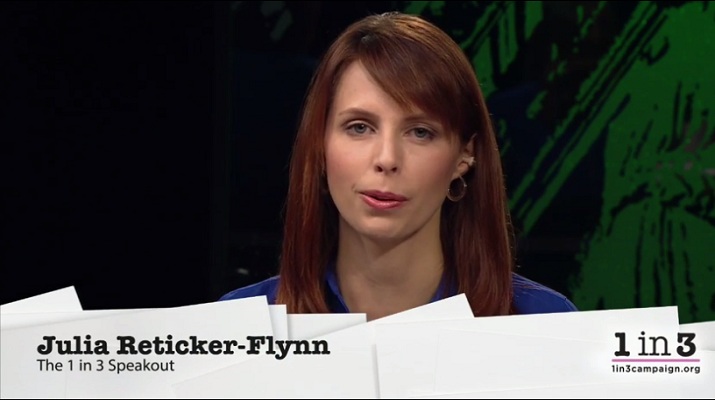
In this video, Julia Reticker-Flynn, campaign director of Advocates for Youth's 1 in 3 Campaign, hosts the project's second annual abortion speakout, which features participants' personal abortion stories and experiences to combat abortion stigma.

Video Round Up

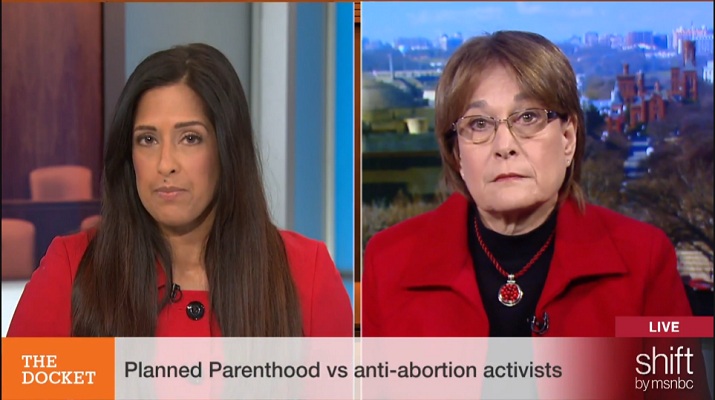
Seema Iyer, host of MSNBC's "The Docket," hears from Vicki Saporta, president of the National Abortion Federation, about legal challenges facing the Center for Medical Progress, an antiabortion-rights group that released a series of misleading videos targeting Planned Parenthood.

Video Round Up

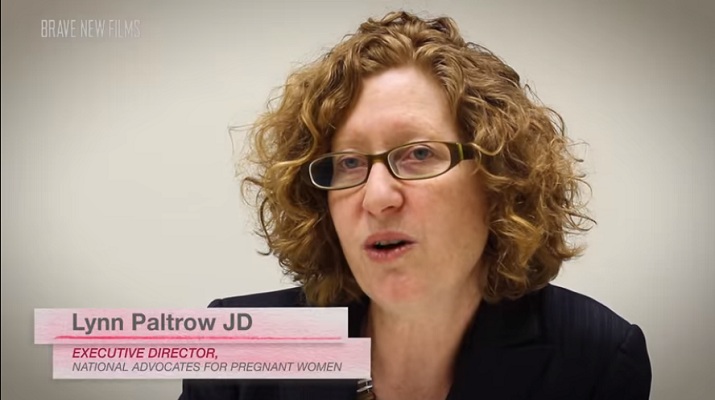
"To Prison for Pregnancy," a documentary presented by Brave New Films, discusses how U.S. feticide laws are being used to penalize pregnant women, particularly minority and low-income women.

Video Round Up

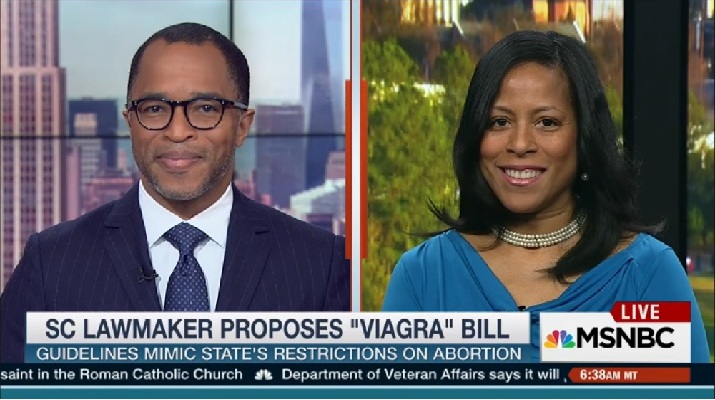
MSNBC's Jonathan Capehart talks with South Carolina Rep. Mia McLeod (D) about a bill (H 4544) she proposed that would apply antiabortion-rights style restrictions to erectile dysfunction drugs.

Video Round Up

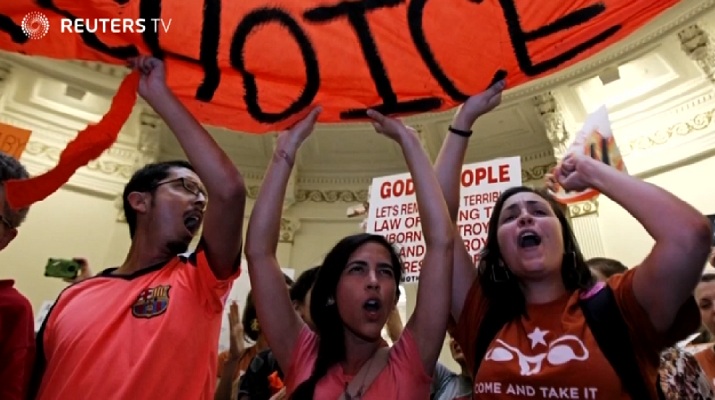
In this clip, Joan Biskupic, legal affairs editor for Reuters, discusses the personal stories shared by abortion-rights supporters in amicus briefs urging the Supreme Court to strike down contested provisions in Texas' omnibus antiabortion-rights law (HB 2).

Video Round Up

For CNN's "Anderson Cooper 360," CNN National Correspondent Gary Tuchman profiles the security measures in place at an abortion clinic, Cherry Hill Women's Center, in New Jersey.

Video Round Up

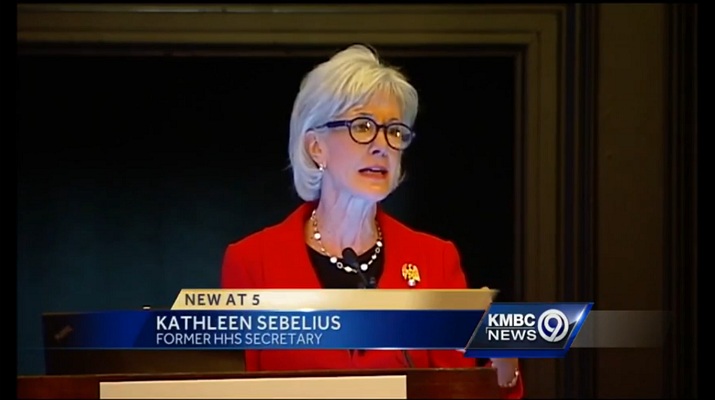
In this clip, KMBC's Micheal Mahoney discusses comments made by former HHS Secretary Kathleen Sebelius at a Planned Parenthood conference in Kansas City, Mo.

Video Round Up

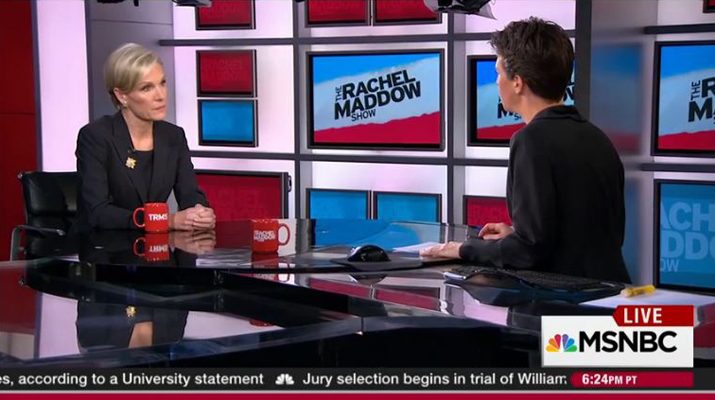
MSNBC's Rachel Maddow hears from Cecile Richards, president of Planned Parenthood Federation of America, in the wake of a deadly shooting at a Planned Parenthood clinic in Colorado.

Video Round Up

HuffPost Live! talks with Daniel Grossman, a professor of obstetrics and gynecology at the University of California-San Francisco, about a report that finds at least 100,000 Texas women have attempted to terminate a pregnancy without medical assistance.

Video Round Up

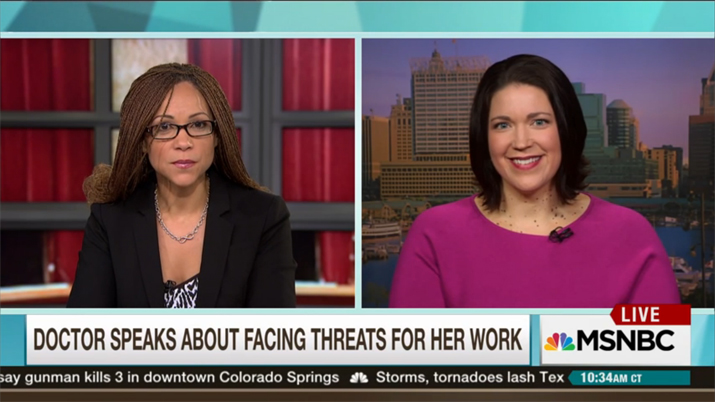
An abortion provider talks with MSNBC's Melissa Harris-Perry about her experience with antiabortion-rights harassment. 

See All

Datapoints

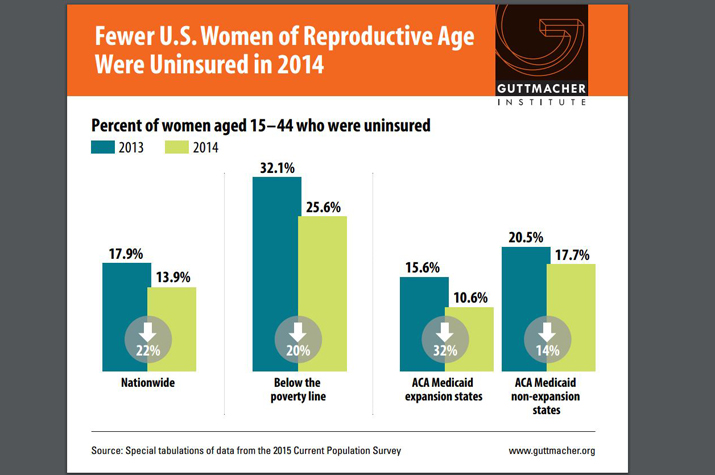
In this infographic, the Guttmacher Institute shows how the proportion of uninsured reproductive-age women in the U.S. declined from 17.9% in 2013 to 13.9% in 2014, the first year in which the Affordable Care Act was implemented fully.

Datapoints

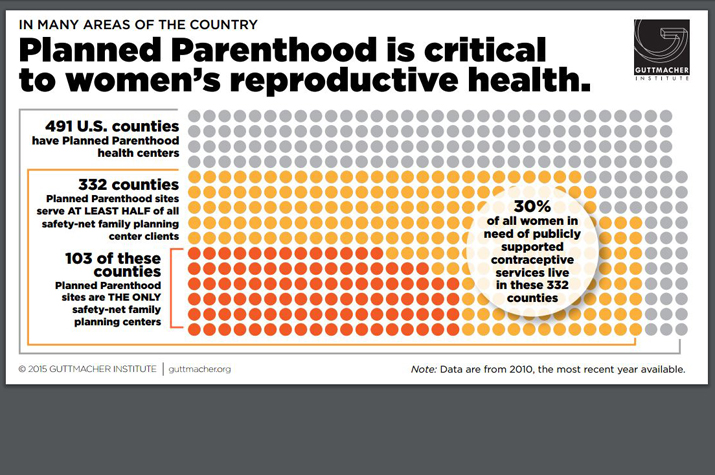
The Guttmacher Institute in this infographic counters antiabortion-rights claims that alternative providers could cover any gaps in health care services if Planned Parenthood is defunded.

Datapoints

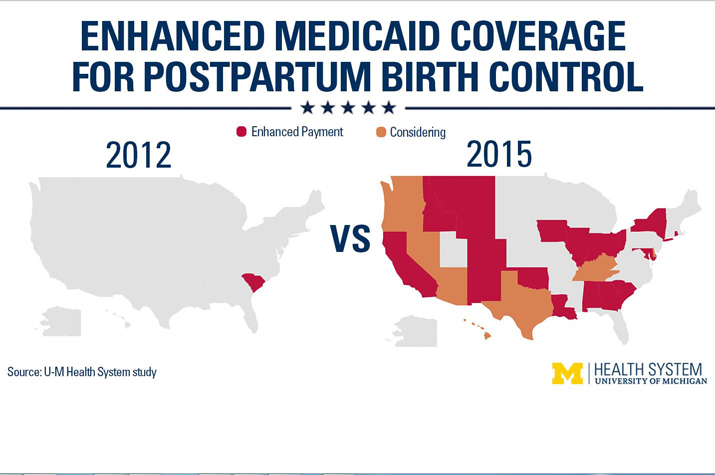
This map, released with a study from the University of Michigan Health System, shows how an increasing number of state Medicaid programs over the last three years are providing reimbursement for immediate postpartum LARC provision.

Datapoints

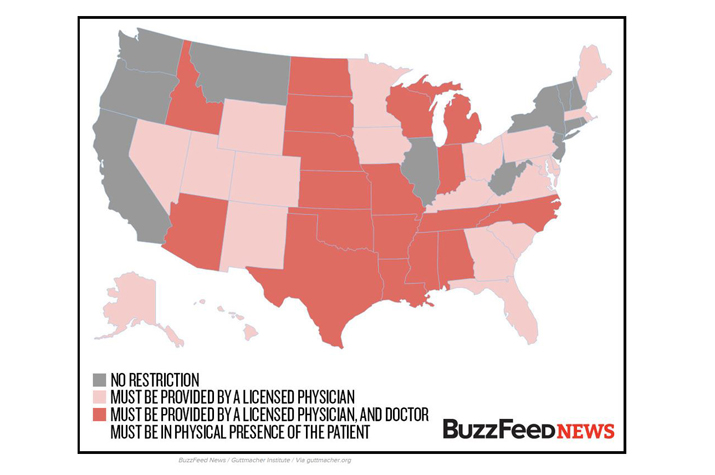
This map marks the 15th anniversary of medication abortion's FDA approval by detailing certain restrictions on the drugs across the country. According toBuzzfeed News, lawmakers in 38 states have passed these medication abortion restrictions.

Datapoints

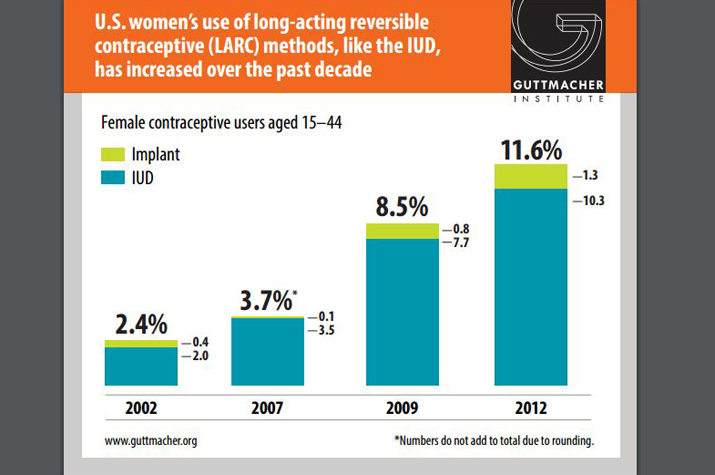
This infographic, released with a new Guttmacher Institute study, shows the increase in use of long-acting reversible contraception among U.S. women between 2002 and 2012.

See All

At a Glance

"If women are not free to make decisions about their own lives and health, they are not free. And if women are not free, none of us are."

— Abortion provider Warren Hern, in a STAT News opinion piece on why he continues to offer abortion care despite receiving harassment and death threats throughout his 42-year career.