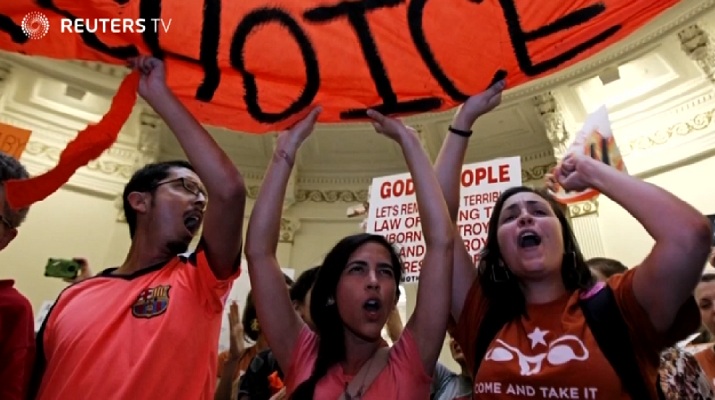

On Tuesday, 100 people shared stories about their own abortions and their experiences with abortion in a six-hour live-streaming event hosted by the 1 in 3 Campaign, the Huffington Post reports.
Speakout Details
The 1 in 3 Campaign works to destigmatize abortion by harnessing the power of storytelling. Tuesday's event was the project's second annual abortion speakout. According to the Huffington Post, the speakout was prompted by the upcoming 43rd anniversary of Roe v. Wade, as well as the Supreme Court's forthcoming ruling on Texas' omnibus abortion law (HB 2) in Whole Woman's Health v. Cole.
The Huffington Post reports that the event included stories by women, who often shared their personal abortion stories, and men, who shared their experience with abortion in their lives. People of all ages and ethnicities were invited to share their stories in their preferred language.
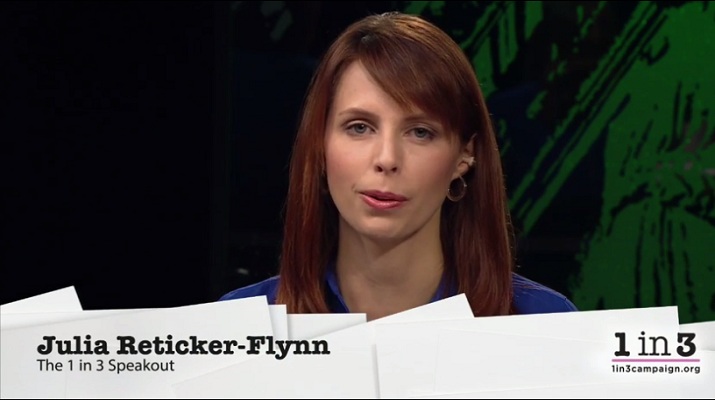
Speaking at the start of the online event, Julia Reticker-Flynn, campaign director for the 1 in 3 Campaign, said the event was "an act of resistance." She said, "These women come from a variety of backgrounds and each face different circumstances as they consider their pregnancy options." She continued, "Despite the fact that abortion is very common, we rarely talk about our decisions to end a pregnancy ... Today we are asking the court to listen to a different conversation, one that is grounded in the lived experiences of real people."
Participant Stories
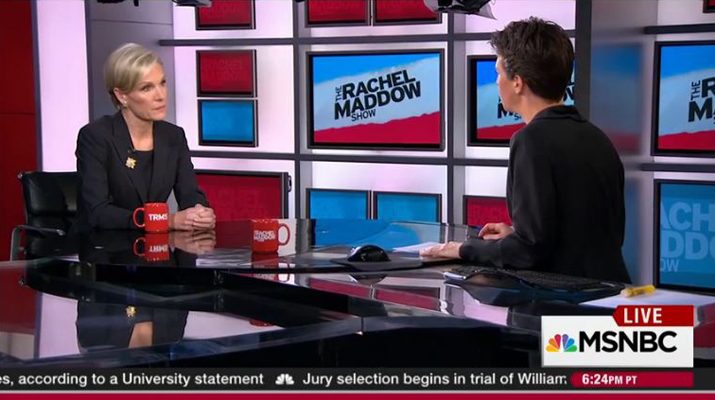
According to Huffington Post, individuals who participated in the event included Amelia Bonow, co-creator of the #ShoutYourAbortion movement; former Texas Sen. Wendy Davis (D); Cecile Richards, president of Planned Parenthood; Rep. Tim Ryan (D-Ohio); and Lizz Winstead, the co-creator of "The Daily Show" (Vagianos, Huffington Post, 1/19).
In her story, Winstead, who also founded the advocacy group Lady Parts Justice, shared how she became pregnant as a teenager. "I was a person who was doing what many people do: exploring my own sexuality without the information that I needed to not get pregnant," she said. She said she had an abortion at a Planned Parenthood clinic after first visiting a misleadingly advertised crisis pregnancy center.
Winstead told the Daily Beast, "Running away from abortion and not talking about abortion and acting like there's something wrong with abortion does a disservice to everyone who's had one and does a disservice to those who provide them." She continued, "And I, for one, refuse to participate in conversation and dialogue and language and sound bites and rhetoric that have been set up and designed to take control out of the hands of people who need it" (Allen, Daily Beast, 1/20).
In her personal story, Favianna Rodriguez, an artist and activist, described her relief after accessing abortion care. "I had my abortion and I didn't have regrets at all," she said, adding, "I realized that the thing that I could do to change the way people perceive abortion is to share my story."
Another participant, Bhavik Kumar, an abortion provider in Texas, said, "I think by speaking out about who I am and the work that I do it helps to show that abortion providers are regular people who care about their patients" (Huffington Post, 1/19).
The event also featured a story from Renee Bracey Sherman, a writer and activist, who said, "I don't regret my abortion. I'm happy about it ... It was the best decision of my life."
Other stories included testimony from women who already had children, including one woman, Dana, who had an abortion after learning her fetus had severe anomalies. "We have a solid family foundation that would not exist had we been forced to make a choice that we did not want to," she said.
A Christian minister named Elizabeth also participated in the event, noting that her decision to have an abortion was "one of the most mature things [she had] ever done" and permitted her to eventually become a minister. Another participant, Anne Hopkins, shared how she had to travel to Mexico to obtain an abortion in 1965, before Roe v. Wade (Daily Beast, 1/20).