

The birth rate among low-income women who previously obtained contraception from clinics in Texas increased after the state cut funding for Planned Parenthood and family planning clinics affiliated with abortion providers, according to a Texas Policy Evaluation Project study in the New England Journal of Medicine, the Los Angeles Times' "Science Now" reports (Netburn, "Science Now," Los Angeles Times, 2/3).
Background on funding cuts
The state Legislature in 2011 cut the state's family planning budget by two-thirds and blocked funding to Planned Parenthood and other women's health clinics (Women's Health Policy Report, 11/16/15). As a result of the cuts, 82 of Texas' family planning clinics closed, according to TxPEP. Of those clinics, about one-third were Planned Parenthood affiliates ("Science Now," Los Angeles Times, 2/3).
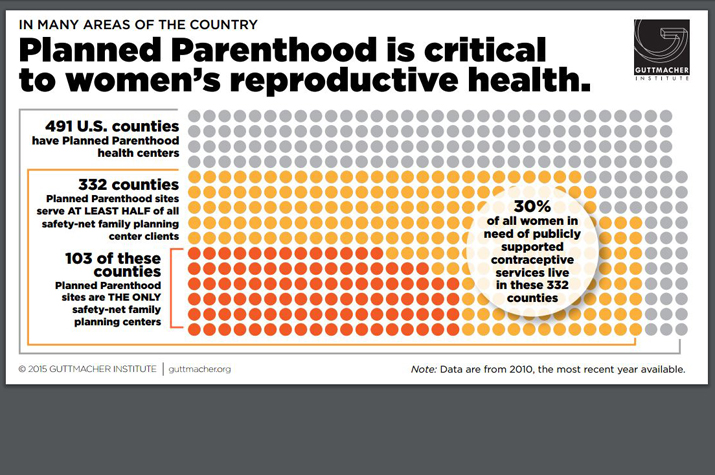
In 2013, the health commission estimated that, due to the budget cuts, unintended pregnancies in 2014 and 2015 would result in an additional 24,000 babies (Women's Health Policy Report, 11/16). According to the study, 60 percent of low-income, reproductive-age Texas women received care at a Planned Parenthood clinic prior to the 2013 cuts ("Science Now," Los Angeles Times, 2/3).
To mitigate the effect of the 2011 cuts, Texas legislators during the 2013 session increased women's health funds for the 2014-2015 state budget. The funds went toward operating the Texas Women's Health Program (TWHP) and replacing the family planning grants that the federal government awarded to another organization to distribute (Women's Health Policy Report, 11/16). Through TWHP, officials could deny funding for clinics affiliated with abortion providers ("Science Now," Los Angeles Times, 2/3). In addition, $100 million was used to establish the Expanded Primary Health Care program, which provides low-income women with contraception and health screenings.
In September 2015, the Texas Health and Human Services Commission announced that, under a legislative order, it will consolidate TWHP and the Expanded Primary Health Care program into the Healthy Texas Women program. Meanwhile, Gov. Greg Abbott (R) said he would cut Planned Parenthood from the Medicaid program (Women's Health Policy Report, 11/16).
Study details
For the study, researchers reviewed pharmacy and medical claims for family planning services between 2011 and 2014 (Weber, AP/ABC News, 2/3). They focused on claims from individuals who qualified for services through TWHP. To qualify for the program, an individual must be a Texas resident between 18 and 44 years old and have an income no higher than 185 percent of the federal poverty level.
The researchers also looked at the birth rate among women covered through Medicaid (Garcia-Ditta, Texas Observer, 2/3).
Key findings on contraceptive use
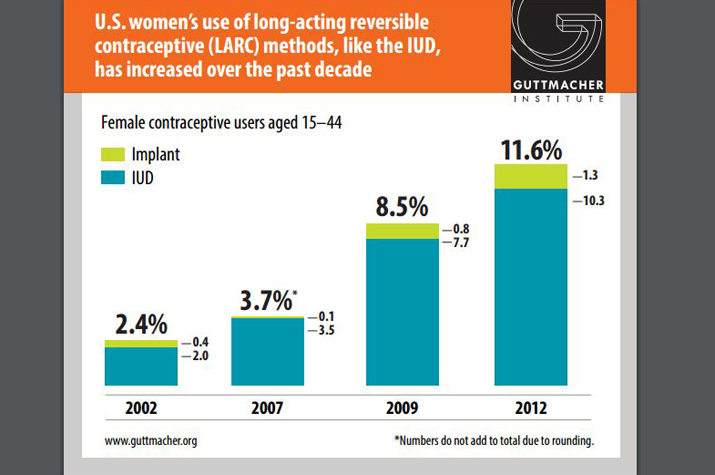
According to the study, after the 2013 funding cuts, there was a "sharp decrease" in the use of long-acting reversible contraception (LARC) among low-income women who lived in counties that had a Planned Parenthood clinic ("Science Now," Los Angeles Times, 2/3).
Specifically, the researchers found that claims for LARC in those counties decreased 35.5 percent, from 1,042 before the cuts to 672 afterward (Stevenson et al., TxPEP study, New England Journal of Medicine, 2/3). There were no similar declines among clinics that did not have a Planned Parenthood clinic.
The researchers also found a decline in follow-up appointments among women who received hormonal contraceptive injections, which prevent pregnancy for three months per dose.
They found that about 57 percent of women who received a shot in the last three months of 2011 received a follow-up in the first three months of 2012, while the clinics were still in operation. In the first three months of 2013, after the clinics had closed, about 38 percent of women who had a contraceptive shot received a follow-up shot. By contrast, in counties that did not have Planned Parenthood clinics, use of contraceptive injection increased from 55 percent at the end of 2011 to about 59 percent at the end of 2012 ("Science Now," Los Angeles Times, 2/3).
According to AP/ABC News, the study did not find a significant change in the number of women accessing short-term birth control methods, including oral contraception and vaginal rings (AP/ABC News, 2/3).
Key findings on birth rates
The researchers found that without access to reliable contraception, pregnancy and birth rates subsequently increased among low-income women.
In counties where a Planned Parenthood clinic had closed, the birth rate within 18 months among women who at some point had received a contraceptive shot increased from 7 to 8.4 percent. In counties where there had not been a Planned Parenthood clinic, the birth rate among women who had used contraceptive shots decreased from 6.4 to 5.9 percent over the same period.
According to the researchers, the findings suggest a 27 percent relative increase in births for women in counties where a Planned Parenthood clinic had closed. The researchers said it was likely that many of these births were unintended because the trend did not appear in counties where women did not lose contraceptive access ("Science Now," Los Angeles Times, 2/3).
Comments
Amanda Stevenson, a graduate student and author on the TxPEP paper said, "What this shows, on a really big level, is that the tradition in the federal government of non-discrimination against medically qualified providers cannot be changed without consequences." She added, "If we change that tradition, if we exclude some medically qualified providers like Planned Parenthood, there are consequences for service delivery" (Texas Observer, 2/3).
According to Stevenson, the findings "directly contradict" claims "that Planned Parenthood can be removed from federally-funded healthcare programs and other providers will just step up to pick up the slack" (Texas Observer, 2/3).
Joseph Potter, lead author on the study and researcher at UT-Austin, said the state's efforts to address the funding cuts "weren't enough to offset the impact of suddenly removing Planned Parenthood" (AP/ABC News, 2/3).
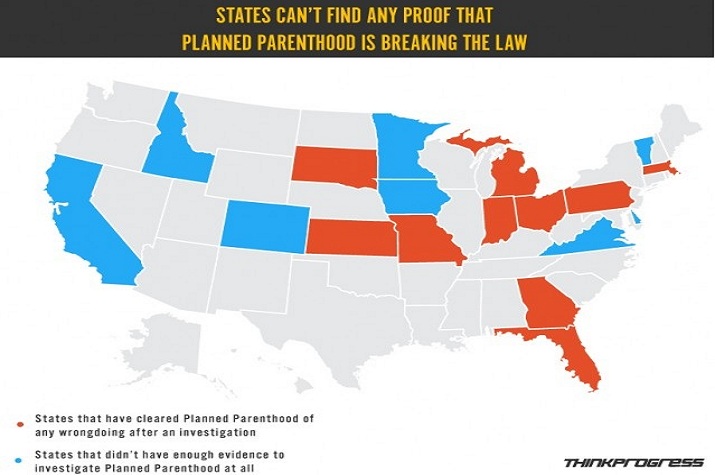
The researchers noted that their findings suggest what could happen if other states defund Planned Parenthood in the wake of misleading videos targeting the organization.
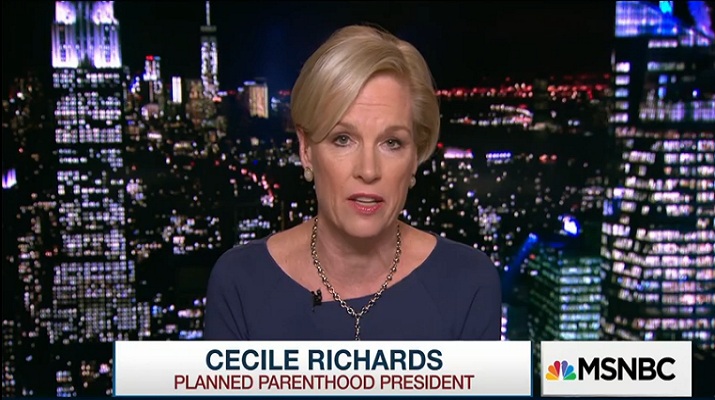
Cecile Richards, president of Planned Parenthood Federation of America, said the TxPEP study "shows the devastating consequences for women when politicians block access to care at Planned Parenthood." She added, "Politicians have claimed time and again that our patients can simply go to other health care providers -- and tragically that's not the case."
Hal Lawrence, executive vice president of the American Congress of Obstetricians and Gynecologists, noted that LARC "are among the most effective ways of preventing [unintended] pregnancy." He said that ending funding for family planning clinics makes contraception "inaccessible for many low-income women, inevitably driving up rates of unintended pregnancies with all their attendant costs and concerns" ("Science Now," Los Angeles Times, 2/3).